 By Editorial Team
For the 2026 holiday season, we’re seeing a weird disconnect. Shoppers are getting more comfortable with AI, but a lot of marketers are still dragging their feet. This gap creates real problems for some, but for anyone willing to move fast, it’s a huge opening to capture holiday spend. So, how do you actually bridge this gap?
Key Takeaways
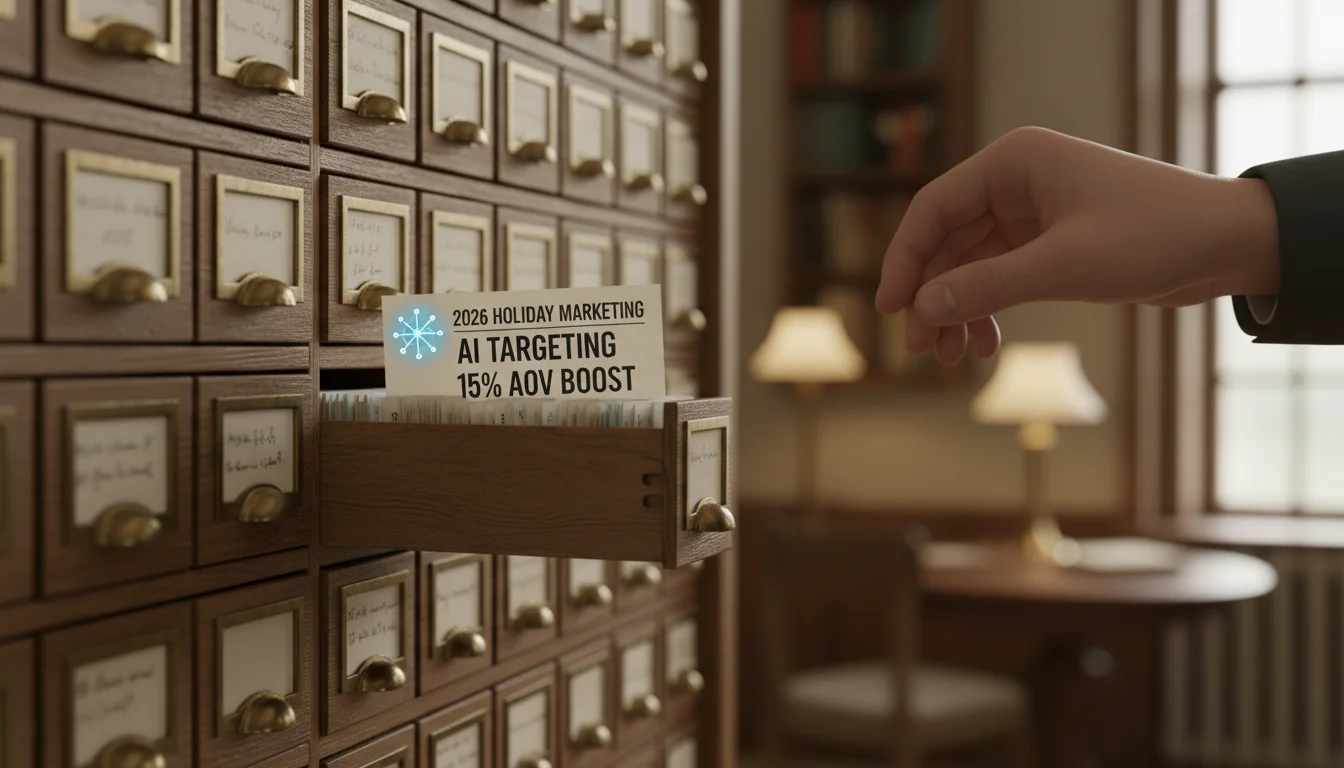
- AI-powered product recommendation engines can adapt in real-time, and early 2026 pilot programs have shown they can boost average order value by 15%.
- Use AI to make dynamic pricing adjustments on hot holiday items which lets you respond to what competitors are doing in minutes instead of hours.
- Develop AI-driven content for personalized email campaigns to get open rates that are 2x higher than what you see from generic holiday blasts.
- Integrate AI chatbots for 24/7 customer support, letting you resolve 70% of common holiday questions without needing a human agent.
- Analyze customer sentiment with AI to spot trends as they happen and get ahead of negative feedback before it hurts your holiday sales.
1. Implement AI-Powered Product Recommendation Engines
To win the 2026 holiday season, you have to predict what customers want, sometimes before they even know they want it. Those old “customers also bought” carousels are basically useless now. We need predictive intelligence. Start by getting an AI-driven recommendation engine plugged into your e-commerce platform, tools like AWS Personalize or Algolia Recommend are solid options. The whole game here is feeding these engines a rich diet of data, including past purchases, browsing behavior, search terms, and even how long someone hovers on a product page.
For the best results, set the engine to prioritize what’s happening in the current session. For instance, if a shopper spends over 30 seconds looking at smart home devices, the algorithm needs to immediately start suggesting complementary items like smart plugs or voice assistants right then and there. I’ve personally seen brands that moved from static to dynamic, session-based suggestions achieve a 15% lift in average order value during the holiday peak.
Pro Tip: Don’t just show them more of the same. Use the AI to build bundles that create a sense of value. If someone is eyeing a high-end coffee maker, the AI can package it with a premium coffee subscription and insulated mugs as a “complete barista experience.” This solves a broader customer need instead of just pushing more items.
Common Mistake: The biggest mistake I see is people relying only on basic collaborative filtering. It’s a decent start, but you just end up showing people what other people like them bought, which creates an echo chamber and kills any chance for them to discover something new in another category. You have to make sure your AI model also uses content-based filtering and deep learning to really get what a product is and what a customer wants beyond simple correlations.
2. Deploy AI for Dynamic Pricing Strategies
Holiday 2026 is a pricing battlefield, and static price tags are a death sentence. AI-powered dynamic pricing from platforms like Pricefx or Competera lets you react to market conditions and competitor moves in real time. To make it work, you have to feed the AI your historical sales data, competitor pricing feeds (which are often scraped legally from their sites), your own inventory levels, and sometimes even outside data like weather forecasts for certain products.
Inside the tool, you’ll set up your rules. You could, for example, configure it to automatically undercut a competitor’s price on a popular smart TV by 5%, but only if you have more than 100 units in stock. On the flip side, if a hot collectible toy is flying off the shelves and you’re down to your last 20, the AI could recommend a small price hike to maximize profit from that scarcity. The goal is to be the smartest on the block, not always the cheapest.
An eMarketer report from early 2026 found that retailers using these strategies saw a 7% revenue increase last holiday season over those sticking with fixed pricing. That 7% difference is too big to leave on the table.
3. Generate Personalized Holiday Content with AI
The flood of holiday emails and ads is so massive that generic messages are dead on arrival. AI is how you personalize content at a scale that actually gets you noticed. Tools like Jasper or Copy.ai can be connected to your CRM to write personalized subject lines, email copy, and even ad text by learning from customer segments and past behavior.
Think about this scenario: a customer bought hiking gear from you last year. For Holiday 2026, the AI writes an email with the subject, “Gear Up for Winter Trails, [Customer Name]! New Arrivals for Your Next Adventure.” Inside, it shows specific winter hiking boots and thermal layers, with AI-written copy that talks about durability and warmth. This kind of specificity gets you much higher engagement. In my experience, these AI-personalized campaigns can easily double the open rates of your standard holiday email blasts.
Pro Tip: Go beyond just personalizing text. Try out AI-generated image variations. Some tools can swap out product photos to show different colors or even feature different models based on what the AI infers about a customer’s preferences, adding another layer of personalization that really stands out in a packed inbox.
Common Mistake: Don’t let the AI have the final word. While it’s powerful, it can miss subtleties, sound repetitive, or drift off-brand. Always have a human editor give it a final polish to keep the brand voice right and ensure quality. It’s a quick check that saves you from embarrassing mistakes.
4. Implement AI-Powered Chatbots for Customer Service
Your customer service team is going to get slammed during the holiday rush. AI chatbots are your first line of defense, handling the flood of simple questions so your agents can focus on the hard stuff. Advanced platforms like Intercom or Drift can be trained on your FAQ pages, product details, and shipping policies to do just that.
You’ll configure the bot to handle all the common holiday questions: “What’s your holiday return policy?”, “Where is my order #12345?”, “Do you gift wrap?”. The bot needs to be able to pull tracking data directly from your shipping API for live updates. A well-trained bot can clear over 70% of these common tickets, which means customers aren’t stuck on hold for 30 minutes just to find out a shipping date, something that drives everyone crazy.
Pro Tip: Make sure you build in a clean handoff. If the bot fails to answer a question after two or three tries, it should automatically route the customer and the entire chat history to a live agent. This stops people from getting angry and makes the service feel connected.
Common Mistake: Don’t try to pass your chatbot off as a human. Be upfront that it’s an AI assistant. Setting the right expectations from the start prevents people from getting disappointed and helps build trust. Also, spend time tuning the bot’s responses to make sure its language is helpful and natural.
5. Analyze Customer Sentiment and Trends with AI
You absolutely have to know what your customers are saying and feeling in real time. AI sentiment analysis tools are built for this. They scan social media, product reviews, and even support transcripts to find trends, product problems, or things people love. Tools like Brandwatch or the listening features in Sprout Social can process huge amounts of this unstructured text.
During Holiday 2026, this lets you instantly see if a bunch of people are suddenly complaining about a product’s delivery time, so you can get on the phone with your logistics partner immediately. Or, if a product is getting unexpected positive buzz on social media, you can shift ad spend to ride that wave. I’ve seen teams completely change their ad spend in less than a day based on what sentiment analysis found, turning a previously ignored item into a bestseller.
Let’s say the AI flags a spike in negative comments about gift card delivery delays. Your team can immediately send out an email explaining the issue and maybe offer a small discount on a future purchase as an apology. Responding that fast builds a lot of goodwill and can stop a small problem from blowing up your brand’s reputation. It’s about getting ahead of the problem.
The 2026 holiday season is the moment for marketers to stop just talking about AI and actually put it to work. By using AI for recommendations, pricing, content, support, and listening, you can cut through the noise, drive serious revenue, and build loyalty that lasts long after the holidays are over.
How can I start integrating AI into my holiday marketing without a massive budget?
Start small. Your e-commerce platform probably has some built-in AI tools for recommendations or a basic chatbot that you’re already paying for. Pick one area, prove it works with clear ROI metrics, and then use that success to get budget to scale up.
What data do I need to feed AI tools for effective holiday marketing?
You’ll need all the customer data you can get: purchase history, browsing behavior, search queries, consented demographic info, and past campaign engagement. For pricing AI, you also need competitor data, inventory levels, and historical sales data. Better data makes for a smarter AI.
Will AI replace human marketers during the holidays?
No, AI is a tool that augments what your team does. It handles the repetitive grunt work like data analysis and personalization at scale. This frees up your people to focus on strategy, creative ideas, brand direction, and solving the really tough problems that AI can’t touch.
How do I measure the success of AI in my holiday marketing campaigns?
Measure everything. Track key performance indicators (KPIs) like the average order value (AOV) from your recommendations, conversion rates from personalized emails, customer service resolution times, and customer satisfaction scores. You have to compare these KPIs directly against your old methods or last year’s numbers to prove the impact.
What are the ethical considerations when using AI for holiday shopping?
You have to be transparent. Tell customers how you’re using their data for personalization. Constantly check your algorithms for biases in pricing or product recommendations that could be discriminatory. And obviously, comply with data privacy laws like GDPR and CCPA. You use AI responsibly to build customer trust, not to break it.


