 By David Carson
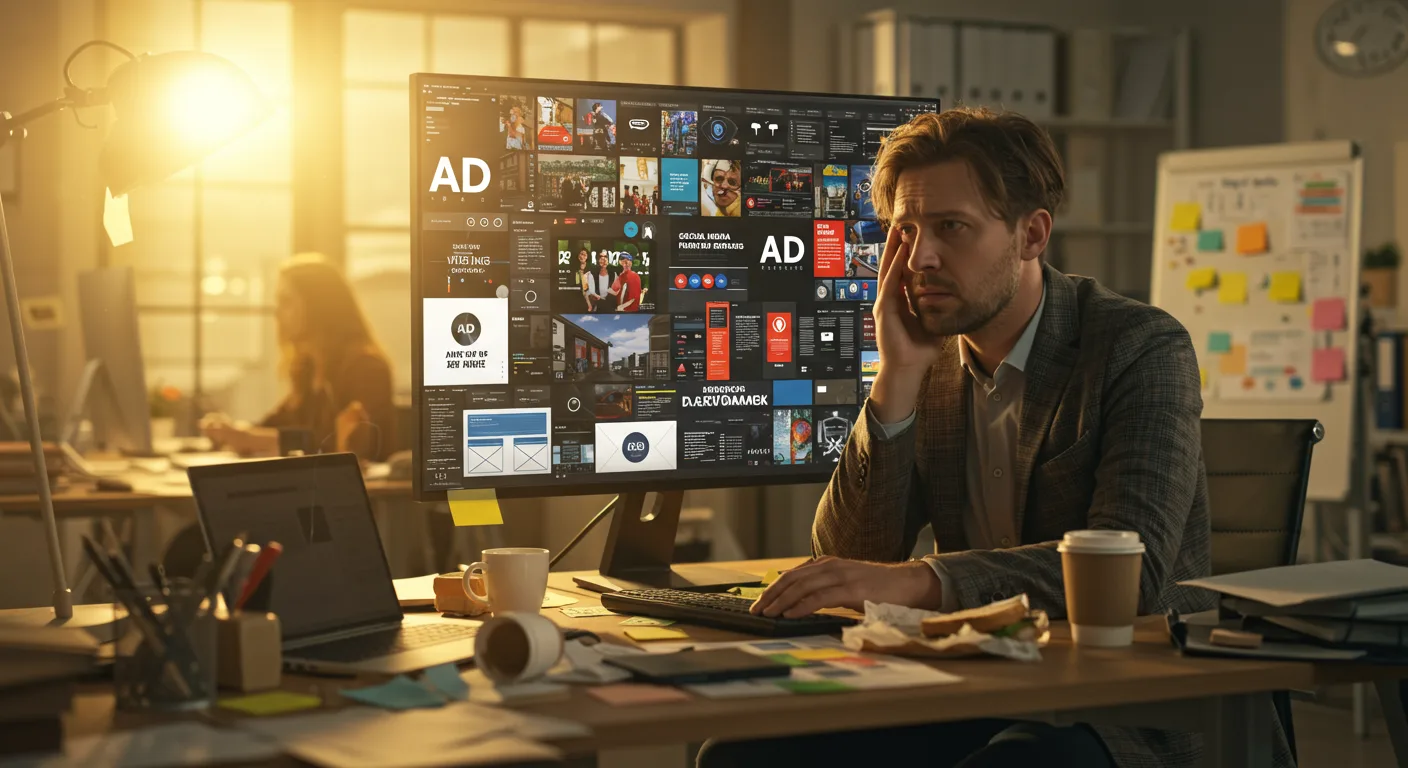
The digital advertising ecosystem has always been a whirlwind of innovation, but the current era of breaking down ad formats is truly transforming the industry. We’re seeing a fundamental shift from rigid, standardized units to highly adaptable, context-aware placements that are forcing marketers to rethink everything from creative development to media buying. Are you prepared for a future where the “ad unit” as we know it might cease to exist?
Key Takeaways
- Dynamic creative optimization (DCO) is no longer a luxury but a necessity, allowing real-time personalization based on user data and context.
- The shift towards fluid, native, and experiential ad formats demands a greater focus on content quality and brand storytelling over traditional banner impressions.
- Marketers must invest in advanced analytics and AI-driven tools to effectively measure the performance of fragmented ad experiences across diverse touchpoints.
- First-party data strategies are becoming paramount for targeting precision as third-party cookies diminish, necessitating direct consumer relationships.
- Agencies and brands need to foster closer collaboration between creative and media teams to design campaigns that are inherently adaptable to evolving ad formats.
The Demise of the Standard Banner: A Necessary Evolution
For decades, the standard banner ad reigned supreme. From the humble 300×250 medium rectangle to the sprawling 728×90 leaderboard, these fixed-size units were the bedrock of digital advertising. They were predictable, easy to implement, and offered a clear canvas for creative. But let’s be honest, they were also often ignored. Their static nature, inability to adapt to diverse screen sizes, and tendency to disrupt user experience led to plummeting click-through rates and rising ad blocker adoption.
I remember a client just last year, a regional furniture retailer in Georgia, who was still pouring significant budget into traditional display banners on local news sites. Their rationale? “That’s what we’ve always done.” The results were abysmal. We’re talking 0.05% CTRs, minimal conversions. It was a classic case of clinging to familiarity while the world moved on. We had to show them the data – a recent eMarketer report highlighted the accelerating shift of ad spend towards video and social formats, away from static display. The message was clear: if you’re still relying solely on those old formats, you’re leaving money on the table, probably a lot of it.
The industry’s response has been a radical deconstruction. We’re not just iterating on existing formats; we’re breaking them down into their fundamental components: image, text, video, interactive elements. This allows for unparalleled flexibility, enabling ads to seamlessly integrate into virtually any digital environment. Think about it: a single creative concept can now be rendered as a vertical video on TikTok, a carousel ad on Instagram, a native article recommendation, an audio ad on Spotify, or even an immersive experience in a metaverse platform. This fluidity is the future, and it’s exhilarating – and a little terrifying – for anyone managing campaigns.
Dynamic Creative Optimization (DCO): The Engine of Adaptability
If breaking down ad formats is the trend, then Dynamic Creative Optimization (DCO) is the engine making it all possible. DCO isn’t just about swapping out a headline or an image anymore; it’s about assembling an entirely new ad experience on the fly, tailored to the individual user, their context, and the specific ad placement. We’re talking about real-time personalization at a scale that was unimaginable even five years ago. Imagine an ad for a local coffee shop in Atlanta. A DCO platform could, for a user browsing near the shop’s Midtown location, display an image of their new seasonal latte, a headline about “20% off for Midtown residents,” and a map with directions. For someone browsing from Buckhead, it might show an image of their brunch menu, a different offer, and a link to online ordering. This level of granular targeting and creative relevance is what drives engagement in a fragmented media landscape.
At my agency, we’ve seen firsthand the power of DCO. For a recent campaign with a national automotive brand, we implemented a DCO strategy across their digital display and video buys. Instead of creating hundreds of static ad variations, we built a modular system with different car models, color options, financing offers, and calls-to-action. The DCO platform then pulled in real-time inventory data from local dealerships and user-segment data (e.g., in-market for SUVs vs. sedans). The result? We saw a 35% increase in lead submissions compared to their previous static ad campaigns, and a 20% reduction in cost per lead. This wasn’t magic; it was simply delivering the right message, in the right format, at the right moment.
The key here is data integration. DCO platforms like Google Ads’ Dynamic Creative or Adobe Advertising Cloud’s DCO capabilities are increasingly sophisticated, pulling data from CRM systems, product feeds, weather APIs, location services, and even browsing behavior. This complexity means that creative teams can no longer operate in a silo. They need to work hand-in-hand with data scientists and media buyers to understand what data points are available and how they can be used to inform the dynamic elements of an ad. It’s a fundamental shift in workflow, but one that is absolutely essential for success.
The Rise of Experiential and Native Formats
As traditional ad formats recede, experiential and native formats are surging forward. Users are fatigued by interruptive advertising; they crave content that adds value, entertains, or seamlessly integrates with their experience. This is where native advertising truly shines, often blurring the lines between editorial content and promotional material (though ethical disclosure remains paramount). Think sponsored articles, in-feed social posts, or recommended content widgets that genuinely match the surrounding user experience. The goal is to provide utility or entertainment, not just a sales pitch. This requires a deeper understanding of the platform’s aesthetic and user expectations.
Experiential formats take this a step further, offering immersive and interactive brand engagements. We’re talking about playable ads in mobile games, augmented reality (AR) filters on Snapchat or Instagram, virtual try-ons for clothing or makeup, or even 3D product configurators embedded directly into ad units. These aren’t just ads; they’re micro-experiences that allow consumers to engage with a brand in a meaningful way. I’ve seen some truly innovative campaigns, like a furniture brand using AR to let users “place” virtual sofas in their living rooms before buying. The novelty alone drives engagement, but the utility fosters genuine interest.
The challenge, of course, is scale and measurement. How do you track the effectiveness of an AR filter compared to a click on a banner? This is where advancements in attribution modeling and AI-driven analytics become critical. According to a Nielsen report on integrated marketing measurement, brands that adopt a holistic view of their customer journey and invest in cross-channel attribution are seeing significantly higher ROI. You can’t just look at last-click conversions anymore; you need to understand the role each touchpoint, however experiential or subtle, plays in guiding the customer towards a purchase.
First-Party Data: The Foundation of Future Targeting
With the gradual deprecation of third-party cookies (yes, it’s still happening, even in 2026, albeit with more fits and starts than originally predicted), first-party data has become the absolute bedrock of effective advertising. Breaking down ad formats means nothing if you can’t precisely target the right audience with those adaptable creatives. The days of relying solely on broad demographic targeting or third-party segments are numbered. Brands that have invested heavily in building robust first-party data strategies – collecting information directly from their customers through websites, apps, loyalty programs, and direct interactions – are now in a supremely advantageous position.
This isn’t just about privacy compliance; it’s about superior performance. When you know your customers directly, you can create hyper-relevant ad experiences that resonate deeply. For a local restaurant chain, first-party data might include past order history, dietary preferences, or even preferred dining times. This allows them to serve an ad for a new vegan dish to known vegan customers, or a happy hour special to those who frequent their bar during off-peak hours. This level of precision is simply not achievable through third-party data alone.
My advice to any marketer not prioritizing this? Start now. Seriously. Build out your CRM, enhance your website’s data capture, offer incentives for email sign-ups, and foster direct relationships. Tools like HubSpot CRM or AWS Customer Data Platform (CDP) solutions are no longer optional for serious marketers; they are foundational infrastructure. Without a strong first-party data strategy, your ability to leverage these new, flexible ad formats will be severely limited, and you’ll be stuck in the past, shouting into the void.
Navigating the Measurement Maze: A Call for Unified Analytics
The proliferation of diverse ad formats and fragmented user journeys presents a significant challenge for measurement and attribution. How do you accurately assess the ROI of an interactive video ad that leads to a store visit, compared to a native article that drives brand lift? The traditional “last-click” model is woefully inadequate in this complex environment. We need sophisticated, multi-touch attribution models that account for every interaction across every format and channel.
This means investing in unified analytics platforms that can ingest data from various sources – ad platforms, website analytics, CRM, offline sales data – and stitch it together to create a holistic view of the customer journey. Many brands are turning to solutions like Google Analytics 4 (GA4), which is designed for cross-platform measurement, or dedicated marketing mix modeling (MMM) tools. The goal is to move beyond simply reporting on impressions and clicks to understanding true business impact: sales, leads, customer lifetime value. It’s a heavy lift, requiring significant data infrastructure and analytical expertise, but it’s non-negotiable for understanding what’s truly working.
One of the biggest mistakes I see brands make is having disparate teams, each measuring their own slice of the pie. The social team looks at engagement, the display team looks at clicks, the video team looks at views. Nobody has a unified view. This siloed approach is a death knell in an era of fluid ad formats. We need integrated teams, common KPIs, and a shared understanding of how different ad experiences contribute to overarching business objectives. Without that, you’re just throwing darts in the dark, hoping something sticks.
The continuous breakdown of ad formats is not just a technological shift; it’s a profound cultural and strategic transformation for the entire marketing industry. Embrace adaptability, invest in data, and foster genuine creative-media collaboration to thrive in this exciting new era.
What does “breaking down ad formats” actually mean?
It refers to the shift from rigid, standardized ad units (like fixed-size banners) to more modular, flexible, and context-aware creative elements that can adapt dynamically to various platforms, devices, and user behaviors. Instead of a single “ad,” marketers work with components that can be reassembled.
How does Dynamic Creative Optimization (DCO) fit into this?
DCO is the technology that powers the breakdown of ad formats. It allows marketers to create ad campaigns with modular assets (images, headlines, calls-to-action) that can be dynamically combined and personalized in real-time based on user data, context, and the specific ad placement. This ensures maximum relevance and engagement.
Why is first-party data so important with these new ad formats?
As third-party cookies diminish, first-party data (information collected directly from your customers) becomes crucial for precise targeting and personalization. Without it, the ability to deliver highly relevant and adaptable ad experiences across diverse formats is severely hampered, reducing effectiveness and ROI.
What are some examples of experiential ad formats?
Experiential ad formats are interactive and immersive. Examples include augmented reality (AR) filters on social media, playable ads within mobile games, virtual product try-ons, 3D configurators embedded in ad units, or interactive video ads that allow users to choose their own journey.
How should marketers measure the effectiveness of these diverse ad formats?
Traditional last-click attribution is insufficient. Marketers need to adopt sophisticated multi-touch attribution models and unified analytics platforms (like GA4) that can track and analyze user interactions across all ad formats and channels. The focus should shift from individual ad metrics to overall business impact, such as sales, leads, and customer lifetime value.


