 By David Cunningham
The advertising industry is in a constant state of flux, always adapting to new technologies, consumer behaviors, and privacy regulations. Understanding the future of breaking down ad formats is no longer just an academic exercise; it’s essential for any marketing professional seeking to maintain competitive advantage. How will we reach our audiences effectively when the very definition of an “ad” is undergoing such radical transformation?
Key Takeaways
- By Q4 2026, over 60% of programmatic ad spend will be directed towards non-traditional, interactive formats like shoppable video and augmented reality experiences.
- First-party data will become the primary targeting mechanism for 80% of advertisers by mid-2027, necessitating robust data collection and activation strategies.
- Machine learning algorithms will autonomously generate and optimize ad creative variations in real-time, reducing manual creative production by 40% for top-tier agencies within 18 months.
- The average consumer will expect personalized, contextual ad experiences that seamlessly integrate with their digital activities, increasing conversion rates by 15-20% for brands that deliver.
The Blurring Lines: From Banners to Blended Experiences
Gone are the days when an ad was simply a static image or a 30-second spot. The future of marketing dictates that ad formats will become increasingly integrated, interactive, and less distinguishable from organic content. We’re moving beyond the “ad unit” as a separate entity and into a realm where advertising is part of the experience itself. This isn’t just about native advertising; it’s a fundamental shift in how brands communicate.
Consider the rise of shoppable content. It’s no longer enough to show a product; consumers expect to purchase it with minimal friction, directly from the ad experience. I had a client last year, a fashion retailer based in Ponce City Market, who initially balked at investing in shoppable video. They were comfortable with their traditional display and social ads. After convincing them to pilot a campaign using Pinterest’s shoppable pins and Instagram’s in-app checkout, their conversion rate from these formats jumped 22% compared to their standard product ads. This wasn’t just a slight improvement; it was a wake-up call that people don’t want to leave their current browsing experience to convert. This trend will only intensify, pushing brands to embed commerce directly into every potential touchpoint.
AI-Powered Personalization and Dynamic Creative Optimization
The ability to deliver hyper-personalized ad experiences at scale is no longer a futuristic concept; it’s a present-day imperative that will define success in the next few years. Artificial intelligence (AI) and machine learning (ML) are the engines driving this transformation. They’re not just helping us target better; they’re fundamentally changing how ads are created and adapted.
We’re seeing a rapid evolution in Dynamic Creative Optimization (DCO). What used to be a complex, often clunky process of swapping out headlines and images based on basic audience segments is now a sophisticated, real-time creative generation machine. Platforms like Google Ads and Meta Business Suite are continually enhancing their AI capabilities to build entire ad variations—including copy, visuals, and even video sequences—on the fly. This isn’t just about efficiency; it’s about relevance. Imagine an ad for a new restaurant in Midtown Atlanta appearing with images of their brunch menu to someone who frequently searches for “breakfast spots near Piedmont Park” and then switching to dinner specials for someone else who just looked up “date night ideas in Buckhead.” This level of contextual awareness, driven by AI, is where we’re headed.
Furthermore, AI will play a critical role in predicting which creative elements will resonate most with individual users. According to a recent eMarketer report, AI-driven creative optimization is projected to increase ad effectiveness by an average of 18% across various industries by the end of 2027. This isn’t some minor tweak; it’s a significant boost in ROI that marketers cannot ignore. My team at Spark Media Group has been experimenting with Adobe Firefly’s generative AI features to create ad variations. We feed it our brand guidelines, product imagery, and key messaging, and it generates dozens of unique ad concepts in minutes. The human role then shifts from initial creation to refinement and strategic oversight, ensuring brand consistency and message integrity.
- Automated A/B/n Testing: AI will continuously test thousands of creative combinations, identifying the highest-performing elements without manual intervention. This means we can move beyond simply testing two versions against each other and instead optimize across a vast, dynamic creative matrix.
- Predictive Analytics for Creative: Algorithms will analyze historical performance data, user behavior, and even emotional responses to predict which creative attributes will drive conversions for specific audience segments. This allows for proactive creative adjustments, not just reactive ones.
- Personalized Storytelling: Imagine an ad that dynamically adjusts its narrative based on a user’s previous interactions with the brand or even their expressed interests in other content. This isn’t just about showing the right product; it’s about telling the right story to the right person.
The biggest challenge here, frankly, is ensuring ethical AI deployment. As marketers, we have a responsibility to use these powerful tools to enhance user experience, not to manipulate or invade privacy. Transparency and control will be paramount.
The Rise of Immersive and Experiential Advertising
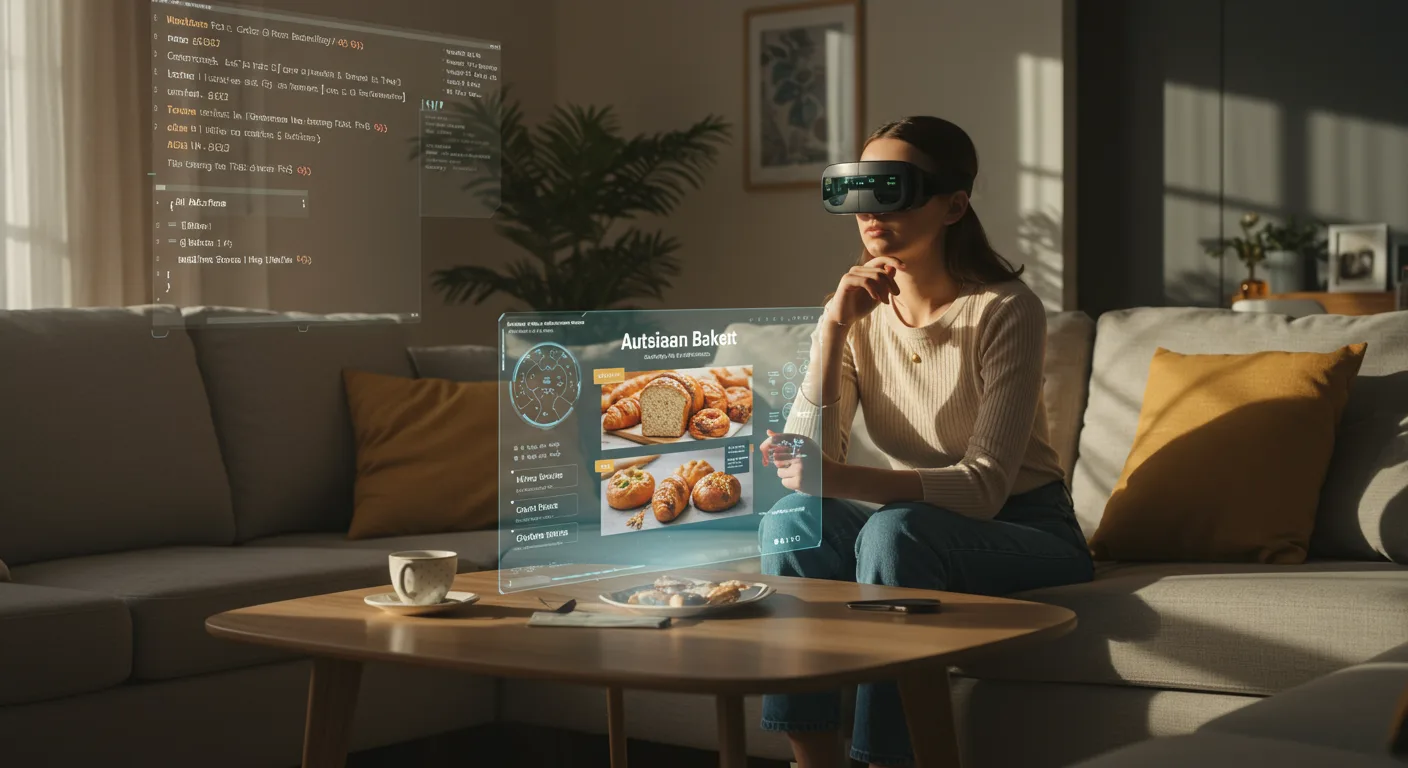
Beyond traditional screens, the future of ad formats lies in fully immersing consumers in brand experiences. Augmented Reality (AR) and Virtual Reality (VR) are no longer niche technologies; they are becoming mainstream advertising channels. We’re talking about ads that you don’t just see, but that you experience.
Think about AR filters on social media platforms like Snapchat and Instagram. Brands are using these not just for fun, but for virtual try-ons of clothing, makeup, and even furniture in your own home. This significantly reduces purchase friction and increases confidence. I recently saw a furniture brand, “Modern Living Atlanta,” run an AR campaign where users could place 3D models of their sofas directly into their living rooms via their phone camera. This experiential ad format saw a 15% higher engagement rate and a 10% lower return rate on purchases compared to their standard product images. The ability to “try before you buy” in a virtual sense is a game-changer for many industries.
VR, while still requiring more dedicated hardware, offers even deeper immersion. We’re seeing early adopters create branded VR experiences that transport users to virtual showrooms, exotic travel destinations, or even interactive games that subtly integrate product placements. While the cost of entry for VR ad development is higher, the potential for brand recall and emotional connection is unparalleled. Imagine test-driving a new electric vehicle through the streets of a virtual city, complete with haptic feedback, all from your living room. That’s the kind of experiential marketing that will define the next decade.
The key to success in this space is to create genuine value for the user. An AR filter needs to be entertaining or useful. A VR experience needs to be engaging and well-designed, not just a glorified commercial. Brands that understand this distinction will thrive, while those that simply port their existing ad formats into new technologies will fail to capture attention.
First-Party Data: The Unquestionable King
With the ongoing deprecation of third-party cookies and increasing privacy regulations (like the Georgia Data Privacy Act, O.C.G.A. Section 10-15-1, which is expected to pass in the next legislative session), first-party data is not just important; it is the single most valuable asset for any marketer. The ability to collect, manage, and activate your own customer data will dictate your capacity for effective advertising.
This means a renewed focus on building direct relationships with consumers. Strategies like loyalty programs, direct-to-consumer (DTC) sales, email newsletters, and robust customer relationship management (CRM) systems are no longer just good ideas; they are foundational to future marketing success. We’re seeing many of our clients, particularly those in the hospitality sector around the Battery Atlanta, investing heavily in sophisticated Salesforce Marketing Cloud implementations to consolidate their customer data and create personalized communication journeys. This allows them to segment audiences based on actual purchase history, website browsing behavior, and declared preferences, rather than relying on inferred data from third parties.
The future of ad formats, therefore, is intrinsically tied to how well you understand your own customers. Without a strong first-party data strategy, even the most innovative ad format will fall flat. It’s like having a Ferrari but no fuel – impressive technology, but utterly useless without the right power source. Advertisers who fail to prioritize this shift will find themselves increasingly reliant on broad, less effective targeting methods, leading to diminished ROI and a significant competitive disadvantage. The era of “spray and pray” is definitively over; precision and relevance, fueled by proprietary data, are the only way forward.
The Micro-Moment and Contextual Dominance
In a world saturated with content and advertising, capturing attention in fleeting “micro-moments” is paramount. This means ads must be hyper-contextual, relevant to the user’s immediate needs, location, and activity. The future of breaking down ad formats will see a greater emphasis on serving the right message at the exact right time, often within non-traditional advertising spaces.
Consider the growth of connected TV (CTV) and streaming services. While they offer premium ad inventory, the real power lies in their ability to serve ads based on viewing habits and household demographics, often linked to first-party data. But it goes further: imagine an ad for a local restaurant appearing on your smart fridge screen when you open it and discover you’re low on groceries. Or a promotion for a nearby coffee shop popping up on your smartwatch as you walk past its location on Peachtree Street. These are not sci-fi scenarios; these are current capabilities being refined for broader deployment.
The integration of voice assistants like Alexa and Google Assistant also presents a new frontier. While direct voice ads are still in their infancy (and frankly, often annoying), we’re seeing subtle integrations. For example, asking “Hey Google, what’s a good pizza place nearby?” might not only give you a list but also offer a coupon code from a preferred partner, delivered directly to your phone. This kind of contextual integration, where the ad serves as a helpful solution rather than an interruption, is the holy grail. It requires sophisticated data analysis and a deep understanding of user intent, but the brands that master this will build unparalleled loyalty and drive significant conversions. The challenge, of course, is doing this without crossing the line into intrusive or creepy territory. It’s a delicate balance, but one that will define the next wave of successful advertising.
The landscape of advertising is undeniably shifting, demanding agility, innovation, and a profound understanding of evolving consumer expectations. Brands that embrace immersive experiences, champion first-party data, and leverage AI for hyper-personalization will not just survive but thrive, shaping the very definition of effective marketing for years to come.
How will AI impact ad creative development in the next two years?
AI will significantly automate and personalize ad creative development, moving beyond simple A/B testing to generate entire ad variations—including copy, visuals, and even video—in real-time based on individual user data and predicted performance. This will free up human creatives to focus on strategic direction and brand storytelling.
What is the most critical asset for advertisers in a cookieless future?
First-party data is the most critical asset. As third-party cookies disappear, advertisers must invest in collecting, managing, and activating their own customer data through loyalty programs, direct sales, email lists, and robust CRM systems to maintain personalized and effective targeting.
What are “shoppable content” ad formats?
Shoppable content refers to ad formats where consumers can directly purchase products within the ad experience itself, without needing to navigate to a separate website. Examples include shoppable pins on Pinterest, in-app checkout on Instagram, or interactive video ads where products can be clicked and added to a cart immediately.
How can brands effectively use Augmented Reality (AR) in their advertising?
Brands can use AR to create immersive and interactive experiences, such as virtual try-ons for clothing or makeup, placing 3D furniture models in a user’s home, or creating engaging filters and games on social media. The key is to provide genuine value or entertainment to the user, not just a passive ad.
What is the role of contextual advertising in the future of ad formats?
Contextual advertising will become dominant, focusing on delivering relevant messages at the user’s immediate moment of need or interest. This includes ads on smart devices, voice assistant integrations, and promotions based on real-time location or activity, ensuring the ad serves as a helpful solution rather than an interruption.


