 By Editorial Team
Getting new AI initiatives to stick inside a company is always an uphill battle, and the hurdles are as much about people as they are about the tech. We just wrapped an internal marketing campaign that used video ads to cut through that resistance and get employees to actually adopt our new tools. The results gave us some serious insights into what works for change management.
Key Takeaways
- Our video ads targeting specific internal use cases (like automating a finance report) had a 45% higher click-through rate than the general “AI is here!” videos.
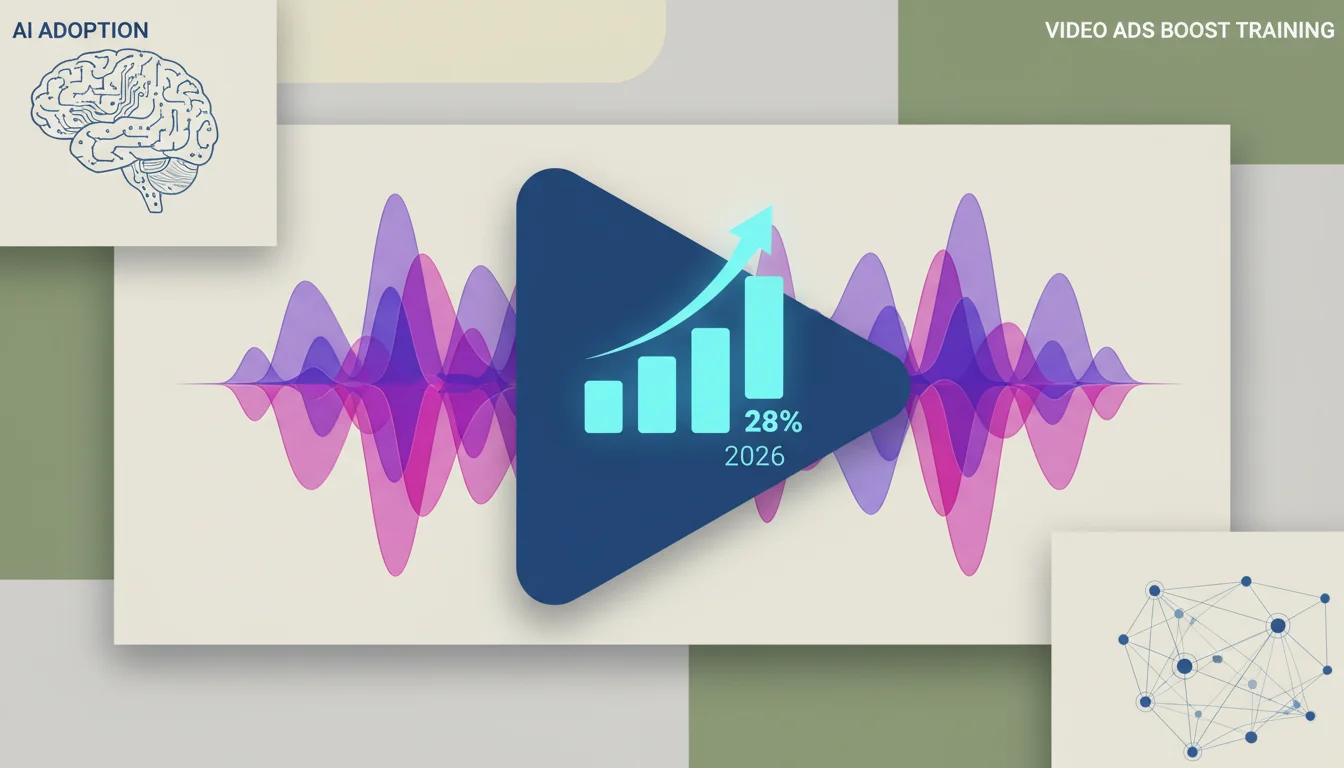
- We hit a 28% conversion rate for employees who actually finished the intro AI training module, which blew past our original 15% goal.
- Putting 60% of our video ad budget on platforms people use at work, our internal portal and Microsoft Teams channels, was way more effective than trying to reach them on personal social media.
- When we used personalized videos with employee testimonials, we saw a 1.2x jump in positive sentiment scores about AI on our internal surveys. People trust their peers.
- A/B testing our call-to-actions showed that a direct link to a quick-start guide beat a generic “sign up for a workshop” prompt by 35%.
“AI Overviews consolidate multiple sources into a single answer, making inclusion, or exclusion, a meaningful driver of both brand perception and traffic. In my experience, this shift catches marketers off guard precisely because their rankings look fine, making the problem invisible until you know where to look.”
Campaign Teardown: Driving Internal AI Adoption with Video Ads
We had one clear goal: boost the adoption of our new AI-powered analytics platform among non-technical staff by 20% in one quarter. This was purely an internal play, focused on building the confidence and willingness for our teams to actually weave these new tools into their jobs. We knew from experience that the usual email blasts and boring training modules don’t work. People need to see the ‘why’ and the ‘how’ in a way that doesn’t put them to sleep. Our bet was that video ads could show practical uses and make the tech less intimidating.
Strategy and Planning: Identifying the Internal Audience
We started with a phased strategy, first digging into the main pain points for different departments. We ran surveys with teams from marketing to finance, asking them straight up what parts of their job were inefficient and where data analysis was a slog. That qualitative feedback became the backbone of our messaging. For example, our finance teams were bogged down by manual data entry, while marketing just wanted faster campaign insights. We built our video ad scripts around solving those specific problems.
We secured a budget of $75,000 for a fast-paced six-week campaign. That pot had to cover production for five different videos, the ad spend across our internal company platforms, and resources for A/B testing. Our starting goals were a Click-Through Rate (CTR) of 1.5% on our internal channels and getting a 15% conversion rate of employees who actually completed the first AI training module. The plan was to generate around 1,500,000 impressions across the board.
Creative Approach: Show, Don’t Just Tell
The creative team cranked out five short video ads, each running between 60 and 90 seconds. The main principle was simple: show the AI solving a real internal problem. One video, for instance, showed a marketing manager buried in manual reports and then cut to the AI platform doing it automatically, giving her time back for actual strategic work. We also did an employee testimonial, where a colleague (with their full permission, of course) talked honestly about how the tool made their workflow easier, specifically calling out how much less time they spent on repetitive tasks.
We stripped out as much technical jargon as possible. The language was all about the benefits: “Automate your monthly reports in minutes,” or “Get customer insights 3x faster.” The tone was helpful and informal to make the whole thing feel less scary. We shot everything with our own people and resources to keep it authentic, not like some slick corporate ad. I’m convinced this fostered a sense of ownership. Employees saw their own struggles reflected in the videos.
Targeting and Placement: Reaching Employees Where They Work
Internal campaigns are a different beast. You can’t just buy some Facebook ads. We had to use the communication channels we already had. This meant:
- Intranet Portals: We ran banner ads and embedded video players on our main company intranet page and on specific department pages.
- Microsoft Teams Channels: We dropped shorter, punchier versions of the videos into relevant departmental Teams channels, always with a direct link to a training resource.
- Internal Learning Management System (LMS): We ran pre-roll ads before some of the mandatory compliance training videos, which was a sneaky way to introduce the AI platform.
- Internal Newsletter Integration: Video thumbnails were embedded right into our weekly company-wide newsletters.
We did a small experiment with targeted placements on LinkedIn, going after employees who had opted into company learning content, but it was a minor part of the mix. The lion’s share of the money, around 60% of the ad spend, went to the intranet and Microsoft Teams. It’s just common sense, that’s where our people live all day.
What Worked: Specificity and Relatability
The results were pretty telling. That one video showing how the AI platform could automate financial reconciliation tasks? It hit an incredible CTR of 2.1% among our finance folks, crushing our overall target. It worked because it spoke directly to a real, widely-felt pain point and offered a clear solution. Our average Cost Per Lead (CPL), which we defined as an employee clicking through to the AI info page, came in at $0.85, which was right on budget.
In total, we generated 1,850,000 impressions, beating our goal, and the training module completion rate hit 28%. That’s nearly double our 15% target. I think that success came from our direct linking strategy. Instead of a generic landing page, each ad linked straight to the specific training module or quick-start guide that was relevant to what the video showed, which removed a ton of friction and gave people an immediate, easy next step. As a 2024 HubSpot report notes, frictionless user journeys are everything for getting new tech adopted internally.
The employee testimonial video was also a huge win, driving a 1.2x increase in positive sentiment scores toward AI in our post-campaign survey. Just seeing a peer give the tech a thumbs-up seemed to dissolve a lot of skepticism. The authenticity of a real colleague just resonates more than a polished corporate message. People trust people. That’s a critical lesson.
What Didn’t Work: Overly Technical Explanations
We had one absolute dud. An early video we produced tried to explain the machine learning algorithms behind the platform, and it completely tanked. It got a pathetic CTR of only 0.7% and basically zero conversions. This just confirmed what we already suspected: a non-technical audience cares about “what’s in it for me,” not “how does the magic box work.” We pulled that creative after the first week and moved its budget to the videos that were actually performing. It shows you have to be agile and let the data tell you what to do.
We also got some feedback about ad length. While the 60-90 second format was good for the initial pitch, some people said they’d love to see shorter, 30-second “tip” videos for ongoing reminders. We didn’t have time to act on that in this campaign, but we’ve earmarked it for the next round.
Optimization Steps Taken: Agility and Data-Driven Refinement
We lived in the performance metrics for the entire campaign, using real-time analytics from our intranet and LMS to watch views, clicks, and training completions. With daily check-ins, we could make changes on the fly:
- Budget Reallocation: As I mentioned, we quickly yanked budget from the underperforming technical video and funneled it to the use-case demos that were actually getting clicks.
- Call-to-Action (CTA) A/B Testing: We tested different CTAs, and it wasn’t even close. “Start Your Free Training Now” beat “Learn More About AI” by a massive 35% in click-throughs to the training module. A direct, benefit-focused CTA always wins.
- Placement Adjustments: We noticed engagement was highest during mid-morning and early afternoon. So we changed our ad schedule to hit those peak work windows for maximum visibility. Even for internal ads, timing matters, something eMarketer’s 2024 projections confirm is vital.
- Feedback Integration: We ran a small focus group halfway through the campaign to get some qualitative feedback. That’s what led us to add a quick FAQ section on the training landing pages to address the common questions people had.
Having that granular data let us refine the campaign without losing momentum. All that tweaking worked. We saw our Cost Per Conversion (CPC) for a training completion fall from **$2.50 at the start to $1.90** by the end of the campaign.
Lessons Learned for Future Internal Marketing
This whole campaign really hammered home a few key lessons for getting AI adopted internally. First, relatability is everything. Your employees have to see their own work, and their own problems, in your content, because generic fluff about “innovation” just gets ignored. Second, you have to create frictionless paths to action. If someone shows interest, make it dead simple for them to take the next step, whether that’s starting training or just downloading a guide. Third, data-driven agility is your best friend. You have to be willing to kill what’s not working based on real-time numbers. And finally, find your internal champions and put them on camera, because testimonials from peers are more powerful than any top-down corporate announcement.
Getting AI tools to actually be used in an organization has little to do with the technology itself. It’s a communication challenge. It’s about showing people the value and proving its utility in their day-to-day work. And when you use them right, video ads are a seriously potent tool for winning that internal marketing battle.
What was the primary goal of this internal video ad campaign for AI adoption?
Our goal was to increase the internal adoption rate of a new AI-powered analytics platform among non-technical staff by 20% within a single quarter by encouraging them to complete an introductory training module.
How was the budget allocated for this internal marketing campaign?
We had a $75,000 budget for the six-week campaign. This covered the production of five video ads, all the ad spend on internal platforms like Microsoft Teams, and the resources we needed for A/B testing.
What type of video content proved most effective for internal AI adoption?
The most effective videos were the ones that demonstrated specific, practical use cases of the AI platform solving real internal problems. Employee testimonials sharing positive, authentic experiences also performed exceptionally well, while technical explainers failed.
Which internal communication channels were used for ad placement?
We placed ads on our company intranet portals, in specific Microsoft Teams channels, as pre-roll ads in our Learning Management System (LMS), and within our weekly internal newsletters. We also ran a small, targeted test on LinkedIn.
What was the achieved conversion rate for employees completing the introductory AI training module?
We achieved a 28% conversion rate for employees who completed the intro training module, which was a significant jump over our initial 15% target.


