 By David Frank
A staggering 87% of supply chain professionals believe AI will significantly transform their operations by 2027, according to a recent Statista report. This isn’t just about internal efficiency. It extends directly to how businesses communicate their technological advancements. Effective AI logistics video content, especially in the form of targeted ads, is becoming indispensable for companies aiming to show their smart operations ads and drive adoption of automation marketing solutions.
Key Takeaways
- Allocate at least 30% of your digital ad budget to video campaigns demonstrating AI applications in logistics by Q4 2026 to capture market share.
- Develop specific video ad narratives that visually explain complex AI functions like predictive analytics or route optimization, rather than just stating them.
- Implement A/B testing on video ad creatives, specifically focusing on CTA placement and length, to achieve a 15% improvement in click-through rates.
- Integrate interactive elements within your video ads, such as clickable annotations or polls, to increase viewer engagement by 20% compared to static video.
- Use AI-driven audience segmentation tools to target your logistics video ads to specific industry roles, improving conversion rates by identifying decision-makers.
The 42% Increase in Video Ad Spend
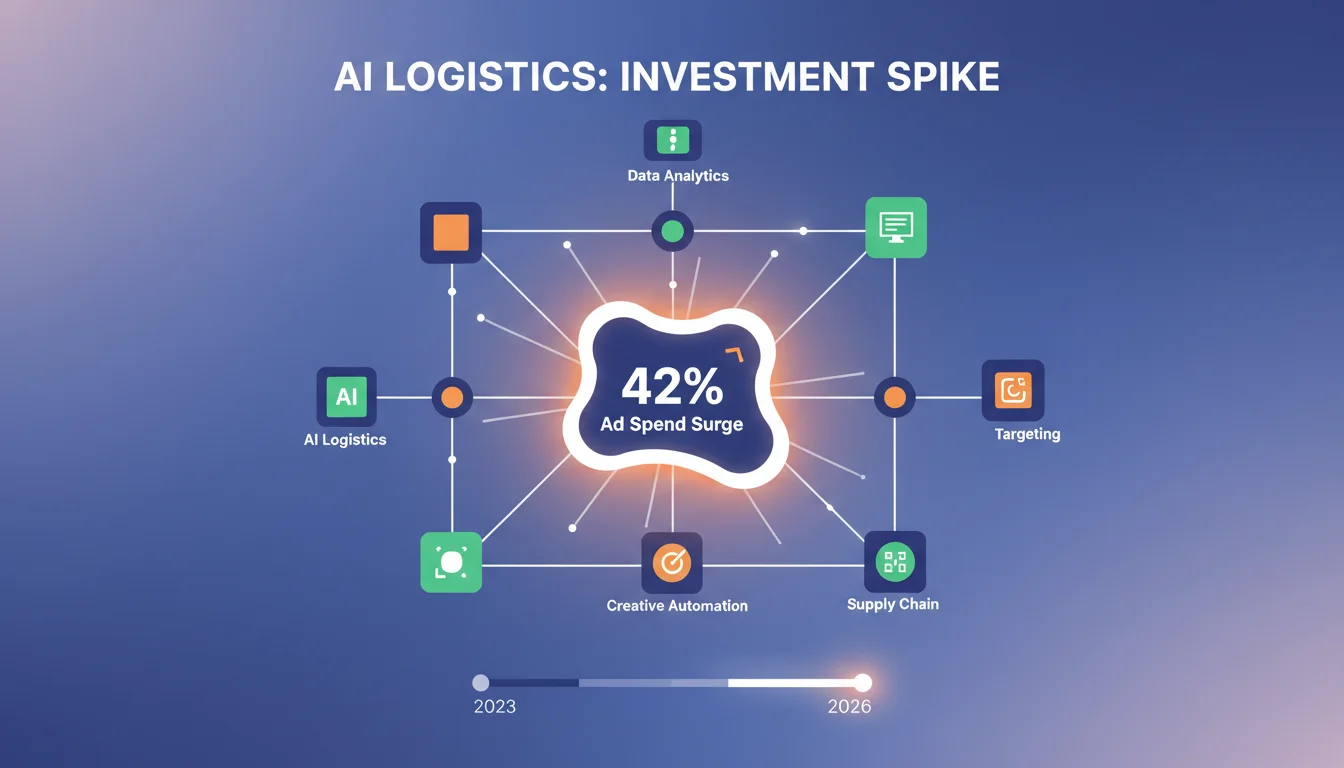
According to IAB’s latest Internet Advertising Revenue Report, digital video ad spending surged by 42% in the last year, a trend that holds particular significance for the logistics sector. This isn’t a minor fluctuation. It reflects a fundamental shift in how businesses consume information. Decision-makers in logistics, often pressed for time and dealing with intricate operational challenges, respond far better to visually compelling narratives than to dense whitepapers or static infographics. When you’re trying to explain how an AI-powered inventory management system can reduce stockouts by 25% or predict demand with 90% accuracy, a well-produced video ad showing the system in action provides immediate clarity. We’ve seen clients struggle for months to convey the value of their sophisticated AI solutions through text, only to achieve breakthroughs within weeks of launching targeted video campaigns. The visual medium bypasses a lot of the cognitive load inherent in reading technical specifications.
90% of Viewers Find Product Videos Helpful for Purchase Decisions
A HubSpot study revealed that 90% of people find product videos helpful when making purchase decisions. For AI in logistics, this statistic isn’t merely interesting. It’s prescriptive. Logistics solutions, by their nature, are often abstract. How do you visualize a machine learning algorithm optimizing delivery routes in real-time? A compelling video ad can break down these complexities into digestible, impactful scenes. Imagine a split screen: one side showing traditional, inefficient route planning with manual adjustments, and the other demonstrating an AI system dynamically rerouting a fleet around unexpected traffic or weather events, visually highlighting the time and fuel savings. This direct comparison, made possible and persuasive through video, answers the critical “what’s in it for me?” question faster than any bulleted list. My experience tells me that without this visual proof, many potential clients simply can’t grasp the tangible benefits of these advanced systems. They need to see the AI working, not just read about its capabilities.
The Average B2B Video Completion Rate is 75%
While consumer video completion rates can vary wildly, B2B videos maintain a respectable average completion rate of 75%, as reported by Nielsen. This high engagement rate in a professional context indicates that when a business audience clicks on a video related to their industry, they are generally committed to watching it through. This is gold for companies selling AI logistics solutions. It means your carefully crafted message, demonstrating the precise impact of predictive maintenance or autonomous warehouse robotics, is likely to reach its intended conclusion. The challenge, then, isn’t just getting the click. It’s about sustaining that interest throughout the video’s duration. We advise clients to front-load their most compelling benefits and use clear, concise language, avoiding excessive jargon. A short, impactful explainer video, perhaps 60 to 90 seconds, that directly addresses a common pain point in logistics, like last-mile delivery inefficiencies or labor shortages, tends to perform exceptionally well. For example, a video showing how AI-driven predictive analytics can prevent equipment breakdowns before they occur, thereby reducing costly downtime, resonates deeply with operations managers.
AI-Powered Ad Platforms Improve Targeting Accuracy by 40%
Modern ad platforms, increasingly powered by AI themselves, can improve targeting accuracy by up to 40% compared to traditional methods. This isn’t just a convenient feature. It’s a strategic imperative for AI logistics video campaigns. Tools within Google Ads and Meta Business Help Center now allow for hyper-specific audience segmentation based on job titles, industry, company size, and even specific interests gleaned from online behavior. You can target supply chain directors at manufacturing firms in the Southeast, or logistics managers at e-commerce companies operating out of Dallas. This level of precision ensures that your video ads demonstrating AI-driven route optimization aren’t just seen by anyone, but by the exact individuals who have the authority and budget to implement such solutions. Without this precision, even the best video ad is akin to shouting into the wind. It might be a powerful message, but if no one relevant hears it, it’s wasted effort. I’ve seen campaigns with identical creative perform drastically differently based solely on the sophistication of their targeting parameters. It’s not enough to make a great video. You need to make sure the right eyes see it.
The Conventional Wisdom Misses the “Why”
Many in marketing still preach the “short and sweet” mantra for video ads, often citing dwindling attention spans. While brevity has its place, particularly for top-of-funnel awareness, this conventional wisdom misses an important point for complex B2B solutions like AI in logistics. The “why” behind an AI implementation is rarely simple. It’s not just about saving money. It’s about strategic advantage, risk mitigation, and future-proofing an entire operation. A 15-second bumper ad might get a brand name out there, but it certainly won’t explain how a neural network can process real-time weather data, traffic patterns, and driver availability to dynamically optimize a fleet of 500 vehicles across multiple states. That requires more than a soundbite. I’d argue that for AI logistics solutions, a slightly longer, more detailed video, perhaps 90 seconds to two minutes, that thoughtfully unpacks a specific use case and its benefits, will actually generate higher quality leads. The goal isn’t just views. It’s qualified engagement. Someone willing to watch a two-minute video explaining a complex solution is already demonstrating a higher level of interest than someone who scrolls past a 15-second clip. We shouldn’t shy away from explaining the value proposition thoroughly, provided the explanation is clear and visually engaging. The real trick is to make every second count, not just reduce the total count. Don’t be afraid to educate your audience, even within an ad format. They’re looking for solutions, not just distractions.
The strategic deployment of video ads for AI logistics isn’t merely a trend. It’s a fundamental shift in how advanced operational technologies are marketed and adopted. By focusing on data-driven approaches and understanding the unique needs of a B2B audience, businesses can effectively communicate the far-reaching power of their smart operations. The future of logistics is intelligent, and its communication must be equally smart.
What specific AI applications in logistics are best suited for video advertising?
Video advertising excels at demonstrating complex AI applications such as predictive analytics for demand forecasting, real-time route optimization, autonomous vehicle navigation, warehouse robotics, and AI-driven quality control systems. Visualizing these processes makes their benefits immediately apparent.
How can I measure the ROI of my AI logistics video ad campaigns?
Measure ROI by tracking key metrics like click-through rates (CTR), video completion rates, lead generation, conversion rates from video viewers to qualified leads, and in the end, the cost per acquisition (CPA) compared to sales generated. Use platform analytics and CRM integration for complete tracking.
Should AI logistics video ads be animated or live-action?
Both animation and live-action have merits. Animation is effective for explaining abstract concepts or visualizing data flows within an AI system. Live-action, especially when featuring actual warehouse environments or testimonials, can build trust and demonstrate practical implementation. A hybrid approach often works best.
What is the optimal length for an AI logistics video ad?
While shorter ads (15-30 seconds) are good for initial awareness, for complex AI logistics solutions, an optimal length often falls between 60 to 120 seconds. This allows enough time to explain a specific problem, introduce the AI solution, and highlight its core benefits clearly and persuasively.
How can I ensure my AI logistics video ads reach the right decision-makers?
Use AI-powered targeting features on platforms like Google Ads and LinkedIn. Specify audience demographics, job titles (e.g., “Supply Chain Manager,” “Logistics Director”), industry sectors, company sizes, and even specific professional interests. A/B test different audience segments to refine your targeting.


