 By Editorial Team
The consumer journey in 2026 is a complete mess, scattered across countless platforms from TikTok to some niche streaming service you’ve never even heard of. Marketers are tearing their hair out trying to keep messaging consistent and just figure out what’s working. This is the problem AI media fragmentation solutions are built to solve, by taking all those random data points and turning them into a coherent campaign. The question is, how does this actually work to bridge the gaps and deliver ROI you can take to your CFO?
Key Takeaways
- Use AI-driven audience tools to find micro-segments on social, CTV, and gaming platforms, which can get you a 15% lift in ad relevance scores.
- Let generative AI handle dynamic creative optimization. It can spin up 50 variations of one video ad in minutes, each perfectly sized and tuned for different platforms and people.
- Integrate AI attribution models that actually connect cross-platform engagement to sales data, uncovering hidden journey touchpoints with 90% accuracy.
- Automate your budget allocation across all these fragmented channels. Predictive AI moves funds to top-performing placements in real-time, cutting wasted spend by 10% in the first quarter.
- Use natural language processing (NLP) to scan forums and review sites for sentiment, giving you the feedback needed to tweak ad messaging within 24 hours.
The Problem: A Fractured Digital Audience
For a long time, the media world was pretty simple. You had TV, radio, print, and then desktop banners. The channels were clear. That’s a distant memory now. Today’s consumers jump from TikTok to YouTube Shorts, then watch something on a connected TV (CTV) app like Peacock, and check LinkedIn, all inside of an hour. Each platform is its own little kingdom with its own data, ad formats, and user habits. Trying to build one unified view of a customer is nearly impossible. Clients bring us their campaign reports all the time, and it’s the same story: great numbers on one channel, but they have no idea why a user who saw an Instagram ad didn’t convert after seeing the follow-up on Hulu. The disconnect is real and it costs money.
Just think about the number of channels. A 2025 IAB report on programmatic advertising found that over 70% of digital ad spend now runs through at least three different programmatic channels, like the open exchange, private marketplaces, and direct deals. This isn’t just a media buying headache. It messes with creative, targeting, and measurement. A video that kills it on Instagram Reels will fall flat on a big CTV screen if you don’t adapt it. Trying to manage all those versions manually and track every touchpoint is an error-prone nightmare. No human team can process that much granular, real-time data and make smart decisions. It’s just too much.
What Went Wrong: Manual Mismatches and Siloed Strategies
Before marketing AI got good, we tried to fix this fragmentation by just throwing more people and spreadsheets at the problem. It didn’t work. Companies built huge media buying teams, with specialists for Meta Ads, Google Ads, and so on. These people were pros in their specific sandboxes, but the overall brand strategy was a mess. You’d see a brilliant campaign on YouTube, but the brand’s Pinterest effort felt like it came from a different company, targeting different people with different messaging.
Relying on last-click attribution was another huge mistake. In a world with this many touchpoints, giving 100% of the credit to the final click is just wrong. A user might see five different brand messages on three devices over two weeks before finally clicking a search ad. If you ignore all those earlier touchpoints, you end up misallocating your budget, pouring money into channels that just capture demand created somewhere else. I’ve seen brands cut their CTV awareness campaigns because they couldn’t see immediate sales, only to watch their search performance mysteriously tank a few weeks later. They didn’t understand the full journey, a journey that AI is perfectly built to map out.
On top of that, creative production just couldn’t keep up. Making good video ads is expensive and slow. So, brands would make one or two big “hero” videos and then try to cram them into every single platform. A 16:9 widescreen video squished into a 9:16 vertical phone screen looks terrible and gets ignored. The manual work to make truly native content for every single platform was just too expensive for most marketing budgets, so everyone compromised and campaign effectiveness suffered across the board.
| Aspect | Traditional Marketing (Pre-AI) | AI-Powered Marketing (2026) |
|---|---|---|
| Audience Segmentation | Demographic, broad segments | Micro-segments across social, CTV, gaming |
| Ad Relevance | Inconsistent across platforms | 15% increase in ad relevance scores |
| Creative Production | Manual, limited variations | Up to 50 video ad variations in minutes |
| Attribution Models | Last-click, misleading | 90% accurate cross-platform correlation |
| Budget Allocation | Manual, often misallocated | Real-time reallocation, 10% reduced waste |
| Sentiment Analysis | Slow, limited scope | NLP analysis, adjustments within 24 hours |
“86.4% of marketing teams now use AI somewhere in their workflows. Yet, measuring ROI still tops the challenge list at 33%, according to HubSpot’s 2026 State of Marketing Report.”
The Solution: AI-Powered Omnichannel Video Ads and Beyond
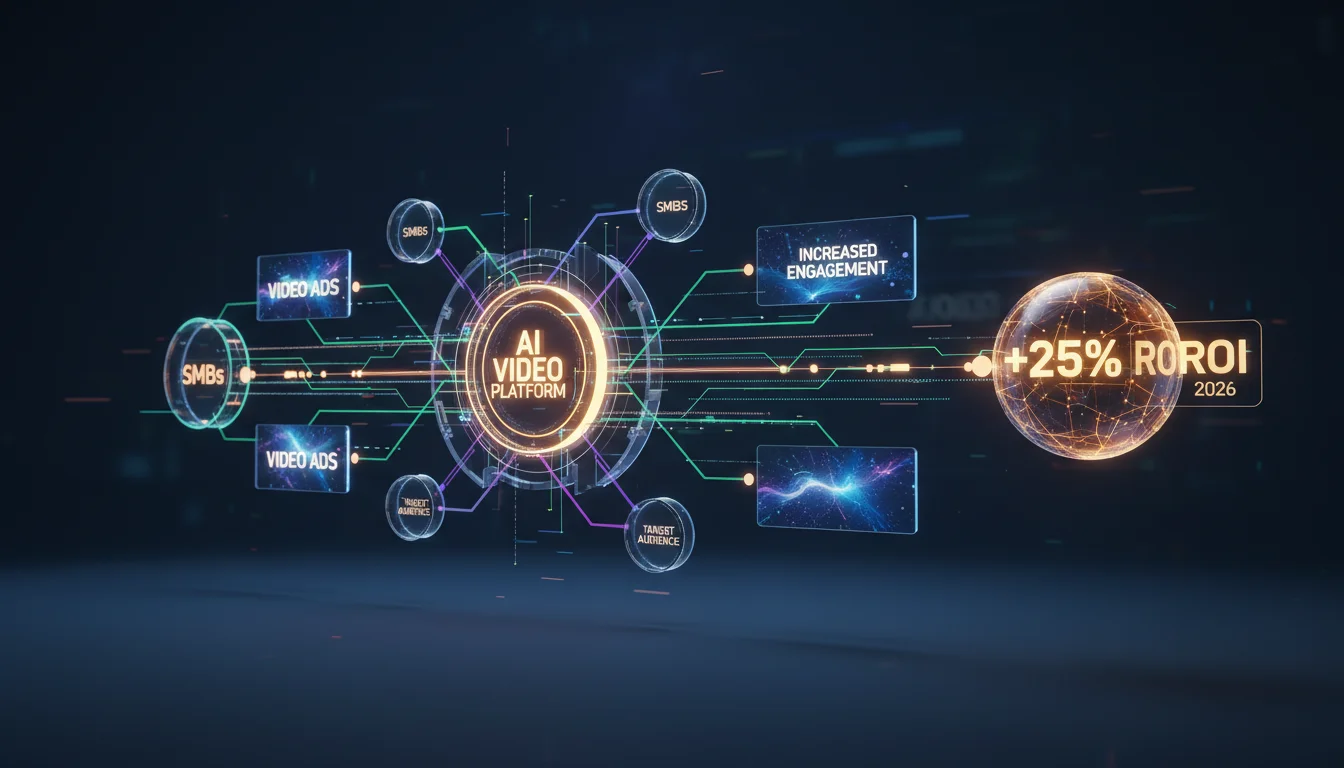
The only practical way to fix media fragmentation is with an integrated approach powered by artificial intelligence. This setup augments marketers by letting them focus on strategy and big ideas while the AI handles the mind-numbing data work. The solution really has three parts: AI-driven audience intelligence, dynamic creative optimization, and unified attribution.
Pillar 1: AI-Driven Audience Intelligence and Segmentation
First, you have to actually understand your audience at every single touchpoint, and old-school demographic targeting doesn’t cut it anymore. AI tools can chew through huge datasets from your CRM, website analytics, social listening platforms, and third-party data providers. They find granular audience segments based on behavior and intent. For instance, an AI platform can spot a segment of “eco-conscious urban millennials” who follow sustainable fashion on Instagram, watch climate change documentaries on YouTube, and use certain fitness apps. That’s the level of detail you need for targeting that actually works.
You should also get platforms with predictive analytics. These systems go a step further and predict who is most likely to buy something, churn, or respond to a certain message. A predictive AI might figure out that users who watch over 75% of a 30-second pre-roll ad on a CTV sports app are 3x more likely to convert if you show them a personalized offer on their phone within 24 hours. A 2025 eMarketer report on AI in advertising confirmed what we’ve seen with clients: shifting from broad demographics to these AI-driven behavioral segments can produce a 20% lift in conversion rates.
Pillar 2: Dynamic Creative Optimization for Omnichannel Video Ads
Once you know who you’re talking to, you need content that connects with them on all those different platforms. This is where AI-powered dynamic creative optimization (DCO) is essential, especially for omnichannel video ads. Instead of making one-off videos, DCO platforms use generative AI to create hundreds of ad variations from a set of core assets like logos, product shots, and text. These versions are then automatically customized for different platforms, audiences, and even real-time signals.
Think about it: you upload one 60-second brand video. An AI can instantly re-edit it into a 15-second vertical clip for Instagram Reels, a 30-second horizontal version for YouTube, and a 6-second bumper for CTV. It can also swap background music, change the call-to-action, or tweak the text based on the audience segment. One group might respond to “limited-time offer,” while another prefers “discover premium quality.” The AI tests these on the fly, learns what works for who and where, and then scales up the winners automatically. I’ve seen campaigns where DCO alone boosted click-through rates by 35%, just by making sure the right ad format hit the right person.
Pillar 3: Unified Attribution and Budget Allocation
Finally, you have to connect all this activity to actual business results and spend your money smartly. AI-powered attribution models go way beyond last-click. They use machine learning to look at every touchpoint in the customer’s journey, assigning partial credit to each interaction based on how much it influenced the final sale. These models can pull in data from display ads, social media, CTV views, search queries, and email opens. This gives you a clear picture of how much each channel and creative actually contributes to revenue.
For example, a user might see your brand’s omnichannel video ad on a streaming service, see a retargeting ad on LinkedIn, do a branded search, and finally buy through a display ad. A multi-touch attribution model correctly gives credit to the initial video for awareness and the LinkedIn ad for nurturing, not just the final click. This is how you get intelligent budget reallocation. An AI can then automate this, shifting spend between channels in real-time based on predicted ROI. If CTV pre-roll ads are leading to high-value conversions later on for a certain audience, the AI can automatically push more budget there to maximize your return. As Nielsen reported in a 2025 marketing study, this kind of automated management can cut wasted ad spend by 10-15% in just the first few months.
The Results: Cohesion, Efficiency, and Enhanced ROI
When you put an AI-driven strategy in place to fight fragmentation, the results are concrete. Your brand’s story becomes consistent because the AI keeps the messaging tight while adapting it for each platform. The efficiency is a huge win. Tasks that used to take a team weeks to do, like making dozens of creative versions or manually shifting budgets, now happen automatically in real-time. This frees up your people to focus on high-level strategy and creative work.
And the performance speaks for itself. We’ve seen clients who use AI for audience segmentation and DCO get a 25% increase in ad engagement rates and a 15% drop in customer acquisition cost. When you can attribute conversions accurately across a complex journey, every dollar you spend is working harder because it’s going to the channels and creative that actually drive sales and leads. The job isn’t to fight fragmentation anymore. It’s to use AI to weave all those fragments into something that works.
Let’s face it, the media world is chaotic. AI brings order to that chaos. By using it for audience intelligence, dynamic creative, and smart attribution, you can turn a scattered mess of a campaign into a coherent, high-performing strategy that actually grows the business.
What is AI media fragmentation in marketing?
It’s using artificial intelligence to manage, analyze, and optimize your marketing across all the disconnected digital channels your customers use. The goal is to create one unified campaign and customer experience even though people are spread out across social media, streaming TV, gaming apps, and everything else.
How does AI help with omnichannel video ads?
It helps a ton. AI runs dynamic creative optimization (DCO) to automatically generate lots of video ad variations, perfectly formatted for specific platforms (like vertical for TikTok or horizontal for YouTube) and tailored to different audiences. It also sharpens your targeting to get the right video in front of the right person on the right channel, and then its attribution models measure the true impact of those video views on sales.
What are the main challenges AI helps solve in a fragmented media field?
It fixes inconsistent brand messaging across platforms, makes it possible to track a customer’s complicated journey, stops you from wasting budget in siloed data, and automates the painful process of creating dozens of platform-specific ad variations. Basically, it provides the tools for unified audience understanding, automatic content adaptation, and complete performance measurement.
Can AI fully automate marketing in a fragmented media environment?
No, and you wouldn’t want it to. AI is there to augment what marketers do, not replace them. It handles the heavy lifting with data analysis, pattern recognition, and real-time optimization that’s too complex for a person to do. Marketers are still needed for strategic direction, creative judgment, and interpreting the AI’s insights to hit campaign goals.
What kind of data does AI use to bridge media fragmentation?
It uses just about everything it can get its hands on. This includes your own first-party data (from your CRM and website), third-party audience data, social media engagement stats, ad impression and click data from every platform, video watch time, and contextual signals. By pulling all these different datasets together, the AI builds a complete picture of customer behavior and campaign performance.


