 By Angela Randall
The ability to generate fresh, compelling ideas is the lifeblood of successful marketing. But what happens when traditional sources of creative inspiration dry up? Many marketers are now grappling with this very problem. Will AI truly become the muse of the future, or will it stifle originality in the long run?
Key Takeaways
- By 2026, expect AI-powered tools to automate 40% of brainstorming and initial concept development for marketing campaigns.
- Personalized data streams will become the new mood boards, curating content based on individual preferences and predictive analytics, influencing 60% of creative directions.
- Look for a resurgence of “analog” inspiration techniques like collaborative art projects and immersive experiences to counteract the digital fatigue and algorithmic bias.
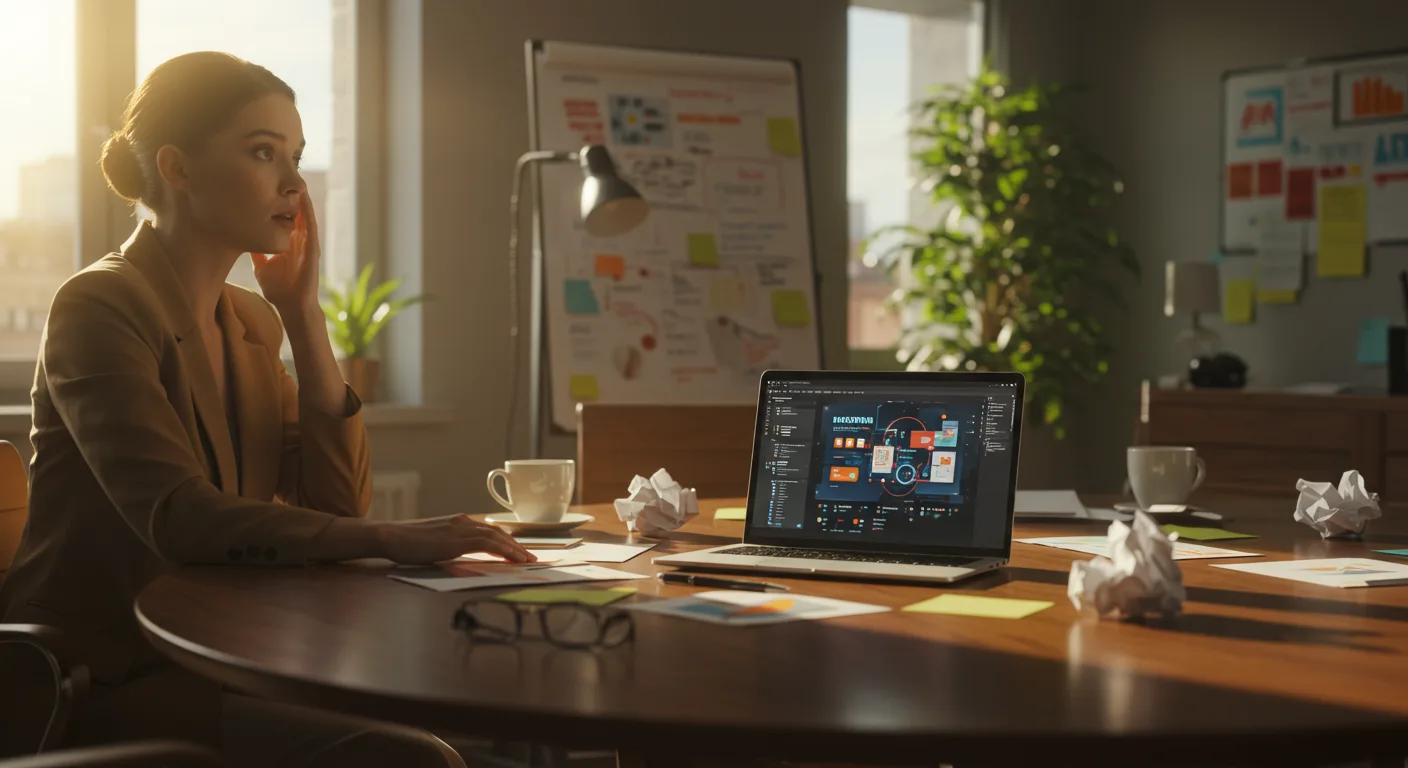
Sarah Chen, Head of Marketing at “The Daily Grind,” a local Atlanta coffee chain with 15 locations stretching from Buckhead to Decatur, was facing a wall. Their social media engagement was flatlining. Their new summer drink campaign, a “Peach Cobbler Cold Brew,” was getting lost in the noise. Sarah felt like she’d exhausted every trend, every influencer angle, every quirky hashtag. The well of creative inspiration had run dry.
“We were stuck,” Sarah confessed during a recent marketing meetup at Manuel’s Tavern. “We’d tried everything – user-generated content, short-form video challenges, even a partnership with a local dog rescue. Nothing was moving the needle.”
This is a common problem in 2026. The constant demand for fresh content, coupled with the sheer volume of information bombarding consumers, makes it harder than ever to break through. But Sarah’s problem wasn’t just a lack of ideas; it was a lack of new ideas. She was trapped in an echo chamber of familiar trends.
One major shift we’re seeing is the rise of AI-driven inspiration. These aren’t just simple content generators; they are sophisticated tools that analyze massive datasets to identify emerging patterns, predict consumer preferences, and even generate original creative concepts. Think of it as having a team of data scientists and trend forecasters working 24/7 to fuel your brainstorming sessions.
I’ve personally seen how transformative these tools can be. I had a client last year, a small e-commerce business selling handcrafted jewelry, who was struggling to identify new product lines. We implemented an AI-powered trend analysis platform that scraped data from social media, fashion blogs, and online marketplaces. Within weeks, the platform identified a growing demand for personalized, celestial-themed jewelry. They launched a new line, and sales increased by 35% in the following quarter.
But here’s what nobody tells you: relying solely on AI can be a trap. Algorithms are trained on historical data, which means they are inherently biased towards what has already worked. This can lead to a homogenization of creative output, where everything starts to look and sound the same. It’s like asking the same chef to cook you a different meal every night using only the ingredients they already have in their pantry.
Enter “Project Chimera,” Sarah’s Hail Mary. Instead of relying on her usual marketing team, Sarah decided to pull in people from entirely different departments: a barista with a background in graphic design, a delivery driver who moonlighted as a musician, and even the company’s CFO, who secretly harbored a passion for abstract painting. She tasked them with creating a mood board that had absolutely nothing to do with coffee. The only rule? It had to be weird.
The results were… unexpected. The mood board included images of bioluminescent deep-sea creatures, brutalist architecture, and vintage science fiction book covers. It was a far cry from the usual latte art and cozy café scenes. But it sparked something. The team started brainstorming ideas that were completely outside of their comfort zone. They started looking at creative inspiration in a new light.
This highlights another key trend: the resurgence of “analog” inspiration techniques. As digital fatigue sets in, marketers are seeking out more tactile, sensory experiences to fuel their creativity. This includes everything from collaborative art projects to immersive theatrical performances to simply spending more time in nature. According to a Nielsen report [Nielsen](https://www.nielsen.com/insights/2024/global-marketing-trends/), consumers are increasingly craving “real-world” experiences that offer a break from the digital world.
Think about it: when was the last time you had a truly original idea while staring at a screen? Sometimes, the best way to find creative inspiration is to step away from the technology and engage with the world around you. Attend a performance at the Alliance Theatre, visit the High Museum of Art, or simply take a walk through Piedmont Park. You might be surprised at what you discover.
Sarah’s team landed on a concept: “The Daily Grind After Dark.” They transformed one of their locations (the one near the Masquerade music venue) into a pop-up art gallery showcasing the work of local artists, complete with live music and, of course, coffee-infused cocktails. They promoted the event through a series of cryptic social media posts featuring snippets of the art and music, building anticipation without explicitly mentioning coffee. The campaign was a hit. Foot traffic to the “After Dark” location increased by 40% during the event, and social media engagement skyrocketed.
“It was a risk,” Sarah admitted. “But it paid off. We realized that sometimes, the best way to sell coffee is to not sell coffee. It’s about creating an experience, a connection, something that resonates with people on a deeper level.”
The success of “The Daily Grind After Dark” wasn’t just about a clever marketing campaign; it was about a fundamental shift in mindset. Sarah and her team learned that creative inspiration isn’t something you can simply download or generate on demand. It’s something you cultivate through experimentation, collaboration, and a willingness to embrace the unexpected.
One area that will continue to be critical in 2026 is hyper-personalization. We’re moving beyond simple demographic targeting to a world where marketing messages are tailored to the individual based on their real-time behavior, preferences, and even emotional state. This requires sophisticated data analytics and AI-powered personalization engines. HubSpot Research indicates that personalized marketing can deliver up to 8x the ROI of generic advertising.
However, this raises some serious ethical questions. How much data is too much? How do we ensure that personalization doesn’t cross the line into manipulation? These are questions that marketers need to grapple with as personalization becomes more sophisticated. It is important to note that IAB reports highlight the growing importance of consumer privacy and data transparency. If you’re aiming for Meta Ads 2026 ROI, ethical considerations are paramount.
Ultimately, the future of creative inspiration isn’t about choosing between AI and analog, between data and intuition. It’s about finding the right balance between the two. It’s about using technology to augment our creativity, not replace it. It’s about embracing the power of data while staying true to our human instincts. And it’s about remembering that sometimes, the best ideas come from the most unexpected places.
So, what can you take away from Sarah’s story? Don’t be afraid to break the mold. Step outside of your comfort zone. Embrace the weird. And remember that the most valuable source of creative inspiration might be the people around you.
To further boost your ROI, consider using marketing checklists to avoid costly errors.
Also, smarter video ads can significantly improve your marketing performance.
As you explore these strategies, remember the importance of debunking algorithm myths for smarter marketing.
How can AI help with creative inspiration in marketing?
AI tools can analyze vast amounts of data to identify emerging trends, predict consumer behavior, and even generate initial creative concepts. They can also help personalize marketing messages and optimize campaigns for maximum impact.
What are some “analog” techniques for boosting creativity?
Analog techniques include collaborative art projects, immersive experiences (like theater or escape rooms), spending time in nature, and engaging in activities that stimulate the senses and encourage exploration.
How important is personalization in marketing in 2026?
Personalization is extremely important. Consumers expect marketing messages to be tailored to their individual needs and preferences. Hyper-personalization, which uses real-time data and AI to deliver highly relevant content, is becoming the new standard.
What are the ethical considerations of using AI for marketing personalization?
Ethical considerations include data privacy, transparency, and the potential for manipulation. Marketers need to be mindful of how they collect and use data, and they need to ensure that their personalization efforts are not intrusive or deceptive.
What’s the best way to balance AI and human creativity in marketing?
The best approach is to use AI as a tool to augment human creativity, not replace it. AI can handle data analysis and repetitive tasks, freeing up marketers to focus on strategy, storytelling, and building relationships with customers. The human touch remains essential for creating authentic and engaging content.
The lesson is clear: the future of marketing isn’t about blindly following algorithms or clinging to outdated tactics. It’s about embracing a hybrid approach, where technology and human ingenuity work together to unlock new levels of creative inspiration. So, go out there, experiment, and don’t be afraid to get a little weird. Your next big idea might be just around the corner.


