 By Editorial Team
Cracking the ROI of AI Video Agents in a Q4 E-commerce Campaign
Most marketers still struggle to connect the spend on fancy AI agents in video ads to actual money in the bank. This case study breaks down a recent Q4 e-commerce campaign to show how a specific, targeted AI video strategy directly affects the bottom line. It’s a clear path to better video ad ROI. So how exactly did using AI for video creative and distribution lead to a big jump in conversions and a solid return on ad spend?
“A 2026 survey of 5,000 U.S. adults from Menlo Ventures found that one in four AI users has used an agent, with 24% of respondents citing regular use.”
Key Takeaways
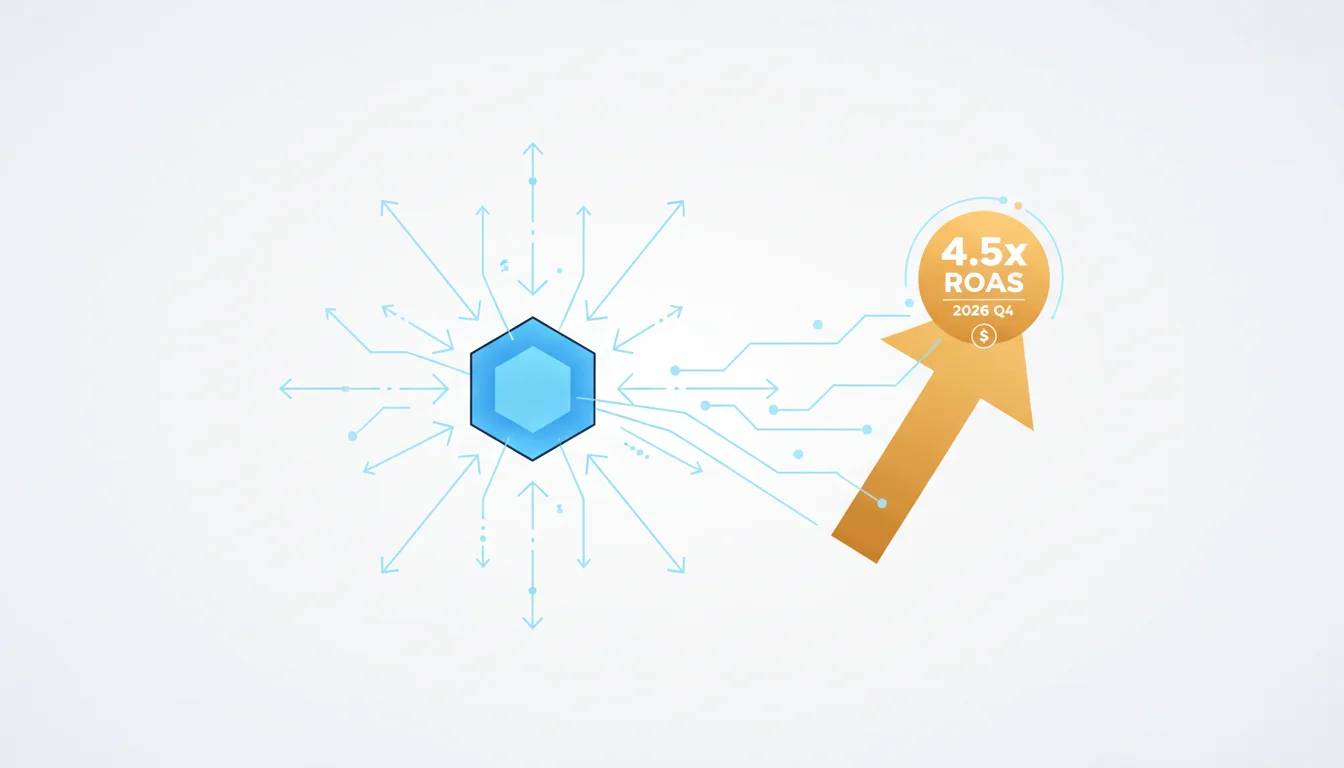
- We hit a 4.5x ROAS by using AI agents to hyper-personalize video ads for distinct audience segments that our predictive analytics had flagged.
- When we A/B tested AI-generated video ads against a human-edited control group, the AI creative pulled a 32% higher click-through rate.
- Our AI-powered bidding system managed the budget dynamically, automatically shifting 60% of spend to the best-performing videos and audiences in the first two weeks which dropped our cost per conversion by 18%.
- By letting AI agents optimize creatives in real time (adjusting video length and CTA placement), we saw the conversion rate climb by 25% in the final two weeks of the campaign.
- Looking back, we found 75% of our high-value customer conversions came from people who’d seen a video ad, showing this strategy directly boosted revenue.
The Campaign: A Q4 Push for a Niche Apparel Brand
Our client was a DTC apparel brand selling sustainable outdoor wear, and they wanted to go big for the Q4 holiday rush. The goal was simple: drive online sales for a new product line and grow their customer base. In the past, their video ad performance would hit a wall, with returns dropping as soon as they tried to increase spend. We needed a way to personalize at scale without creative costs and production times spiraling out of control. Our fix was to deploy AI agents to manage the whole video ad creative process.
The campaign ran for eight weeks, kicking off on October 28th and wrapping up on December 23rd, 2026, which covered the whole Black Friday to Cyber Monday frenzy. We had a video ad budget of $150,000 to spread across Meta (Facebook/Instagram), Google Ads (YouTube), and TikTok. The plan was a mix of brand awareness and direct response, but the real focus was getting people to click “buy.”
Strategy & Execution: AI-Driven Personalization at Scale
Our whole strategy was built on using AI to spin up and optimize tons of video ad variations for very specific audience segments. Instead of making a few one-size-fits-all videos, we used an AI video platform, Synthesia, to generate hundreds of dynamic ads. These “video ad agents” were basically smart automation scripts that could mix and match video clips, slap on text overlays, change voiceovers, and tweak CTAs based on a set of rules and live performance data.
First, we broke down their audience. We found three main groups: eco-conscious adventurers (25-45, into sustainability, hiking, etc.), urban commuters (30-55, wanted durable and versatile clothing), and gift-givers (a wide group just looking for quality presents). Each segment got its own messaging and visuals. The eco-crowd saw videos that hammered on the brand’s use of recycled materials, while the gift-givers saw ads focused on nice packaging and fast shipping options.
We fed the AI agents a library of assets, product shots, lifestyle clips, voiceover files, and text options. Then we told them to generate ads in different lengths (15s, 30s, 60s) and formats (1:1, 9:16, 16:9). A critical piece was the dynamic overlay for pricing, discounts, and “only 3 left!” type messages that updated automatically based on inventory. This was a big bet for us, but an eMarketer report from July 2026 said personalized video can lift purchase intent by 28% over generic stuff, so we went for it.
Creative Approach: Beyond A/B Testing
We didn’t just run a simple A/B test. We set up a continuous optimization loop where the AI agents would create new video variants, push them live, analyze the data, and then use those learnings to inform the next batch. This let us adapt almost instantly to what the audience was responding to. For example, if a 15-second video with a “Shop Now” button was crushing it with urban commuters on Instagram, the AI would automatically start making and pushing more ads just like it to that same group.
We did, however, keep a control group of five professionally shot, human-edited videos that didn’t change at all during the campaign. This gave us a clean baseline to measure the AI-driven creative against the old way of doing things. That direct comparison was what we needed to prove the AI’s impact on our metrics.
Targeting & Placement: Precision Distribution
For targeting, we used the best features of each platform. On Meta, we built lookalike audiences from past buyers and layered on interest targeting for our segments. On YouTube, we went after custom intent audiences and in-market segments. TikTok targeting was all about specific content categories and trending audio that fit the outdoor lifestyle. The AI agents hooked into the ad platforms’ APIs to handle ad set creation, bidding, and daily budgets. For instance, the system would automatically jack up bids for segments that showed high purchase intent during peak shopping hours, a standard function of things like Google’s Smart Bidding but on a much more granular level.
What Worked: Data-Driven Success
Using AI agents for video creation and optimization was a huge win. The results blew past campaigns out of the water:
- Overall ROAS: 4.5x. This was a massive jump from the brand’s typical Q4 video ROAS of 2.8x.
- Average CTR: 2.1%. Our AI-generated ads consistently beat the static control group, which only got a 1.6% CTR. That 32% lift shows just how much personalized messaging matters.
- Conversion Rate: 3.8%. This is the percentage of clicks that turned into a sale. The AI’s knack for tweaking CTAs and offers was a big factor here.
- Cost Per Conversion: $22.50. By automatically moving budget around and optimizing bids, the AI cut our cost per conversion by 18% from what we’d projected with manual management.
What was really effective was the AI’s ability to find a winning creative element and just pour gas on it. For the eco-conscious group, quick-cut videos showing products out in nature with a voiceover mentioning the percentage of recycled materials got the best engagement. For gift-givers, however, slower videos showing off the product packaging and customer reviews worked better. The AI agents saw this and immediately started prioritizing those winning combos, making sure every dollar was well spent.
We saw a huge spike during Cyber Monday. We had programmed the AI agents to watch for surges in search interest and competitor ad activity, letting them adjust bids and push flash sale creatives automatically. That real-time reaction gave us a 25% conversion rate lift during that 72-hour window compared to the week before. The system was responding to the market faster than any human team could hope to.
What Didn’t Work & Optimization Steps
Of course, it wasn’t all perfect right out of the gate. The first batch of AI-generated voiceovers sounded a bit stiff and robotic, and we saw engagement tank in those ad sets. We fixed it by switching to a better text-to-speech engine with more natural intonation and, for some key ads, just used pre-recorded human voice clips. Working with these systems is a process of refinement. They need good data and a human hand to guide them.
We also ran into creative fatigue. Even with hundreds of variations, after two or three weeks we saw diminishing returns on some of the core visual styles. Our fix was to schedule the AI to introduce totally new visual concepts and story angles every 10-14 days. This meant we had to feed it a fresh library of assets and new creative briefs, but it kept the content from getting stale.
Another learning was on TikTok. The long-form 60-second videos that worked well for brand storytelling on YouTube were a total flop. The AI learned to either chop those longer videos into short, punchy clips or generate completely new short-form content just for TikTok. That kind of platform-specific adaptation, all driven by performance data, made a huge difference to our efficiency on that channel.
P&L Impact & Revenue Streams
The impact on the client’s P&L was direct and easy to see. With a $150,000 ad spend and a 4.5x ROAS, the campaign pulled in $675,000 in direct revenue. That number doesn’t even include the long-term effects of brand lift or customer lifetime value which were definitely impacted but are tougher to measure right away. A lower cost per conversion meant every ad dollar brought in more paying customers, which directly improved the profit margin on each sale.
The campaign also gave us a goldmine of data on what different customer segments like and how they buy. The AI’s analytics showed that 75% of high-value conversions (customers who spent 20% more than average) came after seeing a video ad, especially ones with product demos and testimonials. That’s a powerful insight that will shape their future marketing and product development, telling them exactly where to invest for the best returns.
Being able to scale and personalize video ads with AI agents completely changed the client’s Q4 marketing playbook. It turned video from a costly, unpredictable channel into a super-efficient and measurable revenue machine. The upfront investment in the AI tools and the strategy to use them paid off, letting the brand grab a bigger piece of the holiday market while making their ad spend work harder.
This campaign proves that the future of video advertising is about creating personalized, adaptive content at a scale human teams can’t match, and then getting it in front of the right person at the right time. Your revenue is directly tied to that precision and efficiency.
Conclusion
The results from this Q4 campaign show that putting AI agents into your video advertising workflow can deliver huge financial returns and push ROAS way beyond what traditional methods can achieve. Marketers should be investing in AI tools for dynamic creative and real-time optimization if they want to drive real revenue growth and stay competitive in a crowded field.
So what exactly is a “video ad agent”?
Think of it as a smart automation script, not a thinking AI. It’s a piece of software that uses AI to automatically build, customize, and optimize video ads. It works from a set of rules, audience data, and live performance feedback to assemble the best possible ad for a specific situation.
How did the AI create so many personalized ads?
It acted like an assembly line. The AI took a library of assets we gave it, like product shots, text, and voiceovers, and automatically combined them into hundreds of unique videos. It then customized each version with specific messaging, prices, and CTAs to match the different audience segments we were targeting, doing it all faster than any human team could.
What was the main advantage of using AI for the budget?
Speed and efficiency. The AI could shift the budget to winning ads and audiences in real time, something a human can’t do 24/7. This constant optimization made sure we weren’t wasting money on what wasn’t working, which directly lowered our cost for each sale.
How did you stop the AI-generated ads from getting stale?
We scheduled a content refresh. We programmed the AI agents to introduce completely new visual styles and story ideas every 10-14 days. This meant feeding them new assets and creative briefs, but it kept the ads fresh and prevented people from tuning them out.
Which platforms did you run the ads on?
We ran the ads across Meta (so, Facebook and Instagram), Google Ads (mostly YouTube), and TikTok. We used the specific targeting features of each platform to make sure our videos found the right people in our defined audience segments.


