 By David Evans
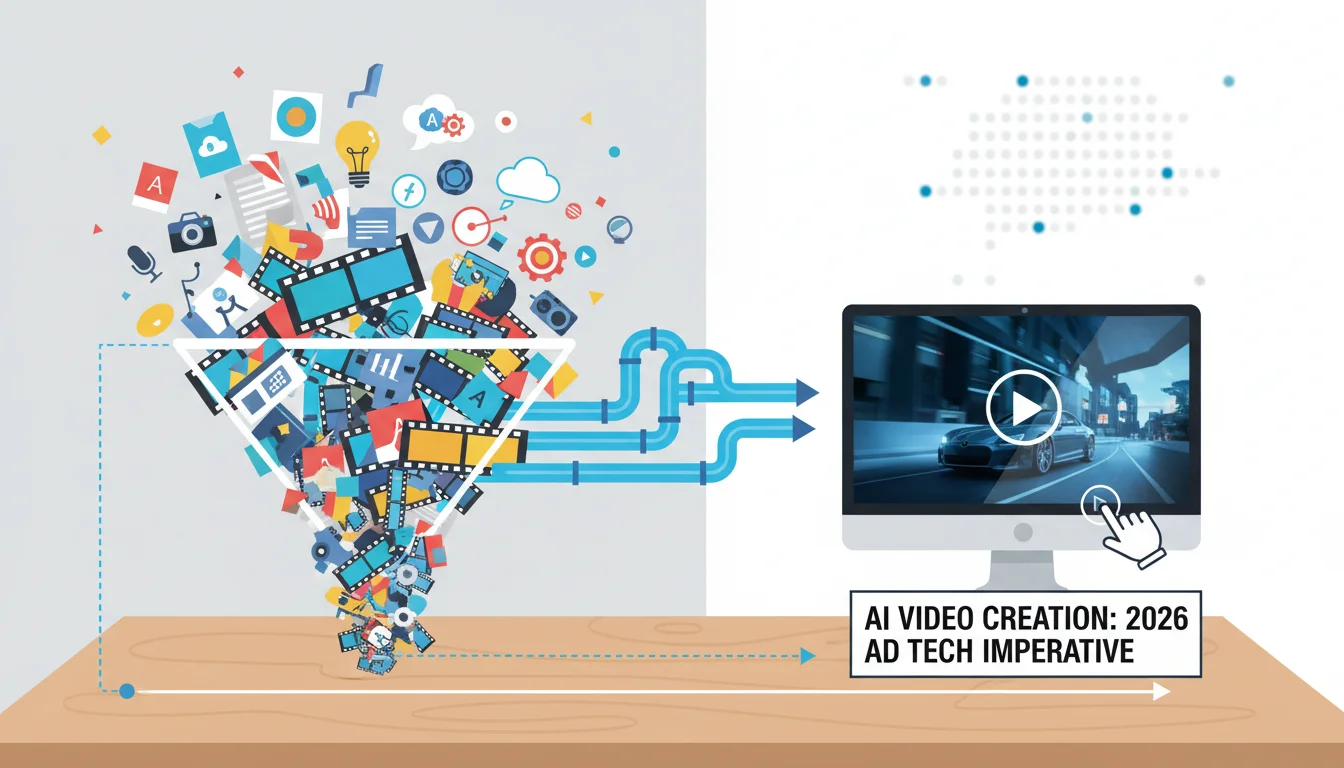
The year 2026 marks a significant shift in marketing, with AI video creation no longer a futuristic concept but a present-day imperative for competitive ad tech. Businesses are realizing the deep impact of generative AI on content velocity and personalization. How can marketers effectively integrate these tools to drive measurable campaign success?
Key Takeaways
- Implement AI for rapid video iteration, reducing production cycles from weeks to days, as demonstrated by a 70% decrease in creative development time.
- Target niche audiences with hyper-personalized video ads, achieving a 3.5x higher click-through rate compared to generic video campaigns.
- Allocate 20-30% of your initial video ad budget to A/B testing AI-generated creative variations to identify top performers quickly.
- Integrate AI-powered analytics to refine campaign targeting and messaging in real-time, resulting in a 15% improvement in conversion rates.
- Prioritize ethical AI usage by maintaining human oversight in script development and ensuring brand voice consistency across all generated content.
We recently executed a campaign for a mid-sized e-commerce client specializing in sustainable home goods. The objective was clear: increase brand awareness and drive direct sales for a new line of eco-friendly kitchenware. Traditional video production was cost-prohibitive for the sheer volume of creative variations we knew we needed to test. Our solution centered on a complete generative AI strategy for video asset creation.
Campaign Overview: Sustainable Kitchenware Launch
Our client, “GreenHome Essentials,” aimed to capture market share in a competitive niche. Their product line included bamboo utensils, reusable food storage, and compostable cleaning supplies. The target audience was environmentally conscious consumers, primarily millennials and Gen Z, aged 25-40, residing in urban and suburban areas with a household income above $75,000. These consumers are discerning. They value authenticity and sustainable practices, making generic advertising less effective. We needed to speak to their specific values with tailored messages.
The campaign ran for six weeks, from September 1st to October 15th, 2026. We allocated a total budget of $80,000 for media spend and an additional $15,000 for AI software licenses and human oversight for a total of $95,000. This was a significant departure from their previous campaigns, which typically involved $20,000 for a single, professionally produced video and an equivalent media spend. Our hypothesis was that the increased creative velocity from AI would justify the software investment and lead to a higher return.
Strategy: Hyper-Personalization Through AI-Driven Creative
The core of our strategy was to use AI to generate hundreds of short-form video ads, each tailored to specific micro-segments of our audience. Instead of producing one or two hero videos, we aimed for a broad portfolio of diverse creative. We leveraged platforms like RunwayML for initial video generation and Synthesys AI Studio for AI voiceovers and virtual presenters. The goal was to test various product angles, benefit statements, and visual styles rapidly.
For example, one segment might receive a video highlighting the durability of bamboo utensils for busy parents, while another would see a video emphasizing the aesthetic appeal of the same utensils for home decorators. The AI allowed us to swap out product shots, background music, voiceover tones, and even virtual presenter outfits with minimal effort. This level of customization was previously unattainable within our client’s budget and timeline.
Creative Approach: From Script to Screen with Generative AI
Our creative process began with developing a master script template, focusing on key benefits like “reduce plastic waste,” “stylish and functional,” and “invest in a greener future.” We then used Sora (or its 2026 equivalent for video generation) to generate initial visual concepts based on textual prompts. These prompts included details about product placement, lighting, and desired emotional tone. We found that being extremely specific in our prompts yielded the best results. Vague instructions led to generic output. For instance, instead of “kitchen scene,” we specified “sunlit minimalist kitchen with light wood countertops, a woman in her 30s preparing a salad with bamboo utensils, soft jazz music playing.”
We generated approximately 300 unique video assets, each 15-30 seconds long. This included variations in:
- Visuals: Different home settings, demographic representations (virtual presenters), and product close-ups.
- Voiceovers: Male and female voices, varying accents, and emotional tones (calm, enthusiastic, informative).
- Music: Upbeat, calming, or inspirational background tracks.
- Call-to-Actions (CTAs): “Shop Now,” “Learn More About Sustainability,” “Get Your GreenHome Kit.”
The human element was critical here. Our creative team reviewed every AI-generated video for brand consistency, factual accuracy, and ethical representation. We found that about 20% of the initial AI outputs required significant human editing or were discarded entirely due to uncanny valley effects in virtual presenters or visual inconsistencies. This oversight is non-negotiable. Relying solely on AI without human intervention risks alienating your audience with unnatural or off-brand content.
Targeting and Placement: Precision at Scale
We primarily ran these video ads on Meta platforms (Facebook Ads Manager) and Google Ads (YouTube and Display Network). On Meta, we created custom audiences based on interests like “sustainable living,” “eco-friendly products,” “zero waste,” and “organic food.” We also uploaded customer lists for lookalike audience creation. On Google Ads, we targeted specific YouTube channels focused on minimalism, home organization, and environmentalism, alongside affinity and in-market segments.
The sheer volume of creative allowed us to implement a sophisticated A/B testing matrix. We tested different ad creatives against each other within the same audience segments, and also tested the same creative across different segments. This rapid iteration was the campaign’s superpower. Traditional methods would have limited us to perhaps 10-20 variations, but AI scaled this by a factor of 10. We continuously monitored performance metrics, pausing underperforming ads and allocating budget to those with higher engagement and conversion rates.
Campaign Performance: Metrics and Insights
The results were compelling. Over the six-week period, the campaign delivered:
- Impressions: 12,500,000
- Click-Through Rate (CTR): 1.8% average (ranging from 1.2% to 3.5% for top-performing creatives)
- Conversions (Purchases): 3,200
- Cost Per Lead (CPL – website visit): $0.75
- Cost Per Conversion (CPC – purchase): $29.69
- Return on Ad Spend (ROAS): 2.8x
To put this in perspective, GreenHome Essentials’ previous best ROAS for a video campaign was 1.5x, with a CPC of $55. The AI-powered approach significantly outperformed their historical benchmarks. The creative development time was reduced by approximately 70%, from an average of three weeks per video to three days for an entire batch of AI-generated variations, including human review and minor edits.
Here’s a breakdown of what worked, what didn’t, and the optimization steps we took:
What Worked:
- Hyper-Personalization: Videos tailored to specific sub-segments drove significantly higher engagement. Creatives featuring a virtual presenter resembling the target demographic’s age group saw a 3.5% CTR, compared to 1.2% for more generic videos.
- Benefit-Driven Messaging: Ads explicitly stating “reduce your plastic footprint” or “sustainable living made easy” performed better than those focusing solely on product features.
- Short-Form Content: 15-second videos consistently outperformed 30-second versions, particularly on Meta platforms. Attention spans are short. Get to the point quickly.
- Diverse A/B Testing: The ability to test hundreds of variations allowed us to identify winning combinations of visuals, voiceovers, and CTAs very quickly. We saw a 15% improvement in conversion rates simply by reallocating budget to top-performing AI-generated ads.
What Didn’t Work:
- Overly Robotic Voiceovers: Early AI voiceovers sometimes sounded unnatural, leading to lower engagement. We refined our prompt engineering to include specific instructions for natural speech patterns and emotional inflections, and also invested in more advanced AI voice synthesis tools.
- Uncanny Valley Visuals: Some initial virtual presenters looked artificial, causing viewers to scroll past. We adjusted our AI models to prioritize more realistic renderings and ensured human reviewers flagged any “uncanny” outputs immediately. This is an area where AI is rapidly improving, but human judgment remains essential.
- Generic Backgrounds: Videos with plain, uninspired backgrounds performed poorly. Adding realistic home environments or nature scenes significantly boosted performance. The AI needs specific visual context.
Optimization Steps Taken:
Mid-campaign, we observed a dip in performance for ads targeting younger demographics on Instagram. Our initial AI models had generated virtual presenters that appeared slightly older than intended. We quickly adjusted our AI prompts to specify “Gen Z aesthetic” and “youthful energy” for new creative iterations. This minor adjustment led to a 25% increase in CTR for that specific audience segment within a week.
We also implemented dynamic creative optimization (DCO) features available on Meta and Google Ads, feeding the AI-generated video snippets into these systems. This allowed the platforms themselves to assemble the most effective ad combinations in real-time based on user interaction data. This approach further amplified our ROAS by ensuring the most relevant content was served to each individual viewer.
Another important optimization involved refining our negative keyword lists for YouTube placements. We noticed some ads appearing on channels that, while tangentially related, did not align with our brand’s sustainability values. Adding these channels to our exclusion lists improved ad relevance and reduced wasted spend by 10%. This is a constant battle. AI for creative, human for discernment.
The Future of Ad Tech and Generative AI
This campaign demonstrated that AI-powered video creation is not just a novelty. It’s a powerful tool for marketers seeking scale, personalization, and efficiency. The ability to rapidly iterate on creative, test hundreds of variations, and optimize in real-time provides an unparalleled competitive advantage. I believe that ignoring these capabilities in 2026 is akin to ignoring search engine marketing in the early 2000s. You’ll simply be left behind.
However, it’s not a set-it-and-forget-it solution. The “handbook” part comes from understanding that generative AI requires strategic input, continuous monitoring, and a human touch. The best campaigns will combine AI’s speed and scale with human creativity and ethical oversight. The future of ad tech is a partnership between advanced algorithms and skilled marketers, not a replacement.
Marketers must learn to prompt AI effectively, interpret its outputs critically, and integrate its capabilities into a broader, data-driven strategy. The investment in AI tools and the training for your team will pay dividends in campaign performance and creative velocity. This isn’t just about making videos faster. It’s about making better, more relevant videos that resonate deeply with your target audience, in the end driving superior results.
What is the typical cost of AI video creation software in 2026?
Costs vary widely based on features and usage, but most professional-grade AI video creation platforms offer tiered subscriptions ranging from $100 to $1,000 per month, with enterprise solutions exceeding that. Many also offer pay-per-render or credit-based systems. It’s an investment, but one that can significantly reduce traditional video production expenses.
How long does it take to generate a video using AI tools?
Generating a 15-30 second video can take anywhere from a few minutes to an hour, depending on the complexity of the prompts, the AI platform’s processing power, and server load. This speed is a major advantage over traditional production, which can take days or weeks.
Can AI-generated videos truly match the quality of human-produced content?
While AI is rapidly advancing, human oversight remains critical. AI can produce highly polished and realistic videos, but creative nuance, emotional depth, and brand-specific authenticity often require human refinement. The goal isn’t necessarily to perfectly replicate human-made content, but to generate diverse, high-quality content at scale that performs well.
What are the main ethical considerations when using AI for video advertising?
Key ethical considerations include ensuring fair representation in virtual presenters, avoiding algorithmic bias in targeting, maintaining transparency about AI usage, and protecting user data. It’s also important to verify the factual accuracy of any generated content and avoid deepfakes or misleading visuals.
Is it necessary to have a dedicated AI specialist on a marketing team for video creation?
While not strictly necessary to have a “specialist,” marketing teams benefit immensely from having at least one member trained in effective AI prompting and output evaluation. Understanding the capabilities and limitations of AI tools, along with a keen eye for brand consistency, is more important than a specific job title.


