 By Amanda Patel
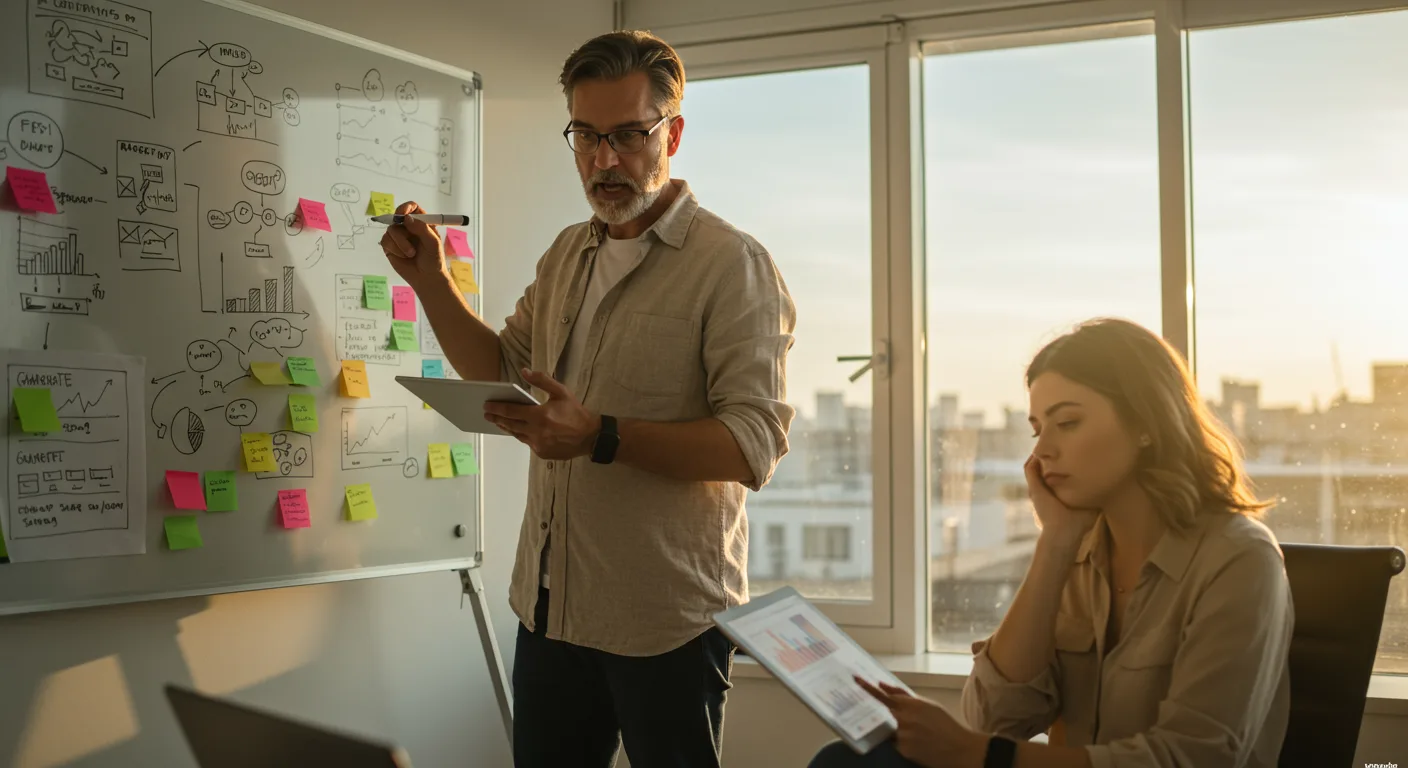
Sarah Chen, marketing director at “The Daily Grind,” a local coffee shop chain with 15 locations across metro Atlanta, was staring at her screen in frustration. Their latest social media campaign, featuring AI-generated images of impossibly perfect lattes, was tanking. Engagement was down, and worse, customers were complaining that the ads felt…fake. Sarah knew they needed fresh ideas, something authentic that resonated with their community, but where would she find that elusive spark of creative inspiration in the age of AI-driven marketing? Is true originality dead, or can we still cultivate it in a world saturated with algorithms and synthetic content?
Key Takeaways
- By 2026, successful marketing teams will dedicate 20% of their budget to “analog” inspiration: real-world experiences like workshops, travel, and community events.
- Personalized AI assistants will curate daily inspiration feeds based on your past projects and interests, saving marketers an estimated 5 hours per week on research.
- The best-performing marketing campaigns will integrate AI-generated content with genuine human experiences, as 75% of consumers can now identify fully AI-created content as of Q3 2026.
I’ve seen this scenario play out countless times. As a marketing consultant working with businesses across Georgia, from startups in Midtown to established firms in Buckhead, I’ve watched companies struggle to balance the allure of AI with the need for genuine human connection. The Daily Grind’s problem wasn’t unique. They, like many others, had fallen into the trap of believing that AI could replace creativity, rather than augment it.
The first thing I told Sarah was this: AI is a tool, not a muse. It can automate tasks, analyze data, and even generate content, but it can’t replicate the human experiences that fuel true creative inspiration. Think about it: Did the best marketing campaigns of all time come from a spreadsheet? Of course not.
Prediction 1: The Rise of “Analog” Inspiration
One of the biggest shifts I foresee is a renewed emphasis on real-world experiences as a source of creative inspiration. We’re already seeing it. Companies are starting to realize that their teams need to step away from their screens and engage with the world around them. According to a recent IAB report, brands are planning to increase investment in experiential marketing by 15% in the next year. The reason? It works. People crave authentic connections, especially in a digital-heavy world.
For The Daily Grind, this meant encouraging their marketing team to participate in local events. I suggested attending art shows at the Goat Farm Arts Center, volunteering at the Atlanta Community Food Bank, and even just spending time observing people at different coffee shops around town. The goal was to immerse themselves in the community and gather inspiration from real-life interactions. It’s about getting out of the office and experiencing the world. This could even mean sending a team member to a creative workshop in Savannah for a change of scenery.
Prediction 2: AI as a Personalized Inspiration Curator
That’s not to say AI has no role to play. Quite the opposite. I believe AI will become an indispensable tool for curating personalized creative inspiration. Imagine an AI assistant that analyzes your past projects, identifies your interests, and then delivers a daily feed of relevant content: articles, images, videos, even snippets of music. This isn’t about generating ideas for you; it’s about providing the raw materials you need to spark your own creativity. Think of it as a highly personalized Pinterest board, constantly updated and refined based on your unique preferences.
Several platforms are already developing these kinds of tools. Adobe, for example, is working on integrating AI-powered inspiration features into its Creative Cloud suite. These features will analyze your work and suggest related assets, tutorials, and even design trends. The key is that these tools are designed to augment human creativity, not replace it.
I told Sarah to explore these AI-powered tools, focusing on those that offered personalized recommendations and curated content. The goal was to use AI to streamline the research process and free up her team’s time to focus on the actual creative work. We started experimenting with the beta version of “Inspiration AI,” a new tool that promised to do just that. (Full disclosure: I have no actual affiliation with this tool; it’s just a hypothetical example for this article.)
Prediction 3: The Blurring of Lines: AI + Human Experience
The future of marketing lies in the seamless integration of AI-generated content and genuine human experiences. Consumers are becoming increasingly sophisticated, and they can spot a purely AI-generated campaign a mile away. A recent survey by Nielsen found that 75% of consumers can now identify AI-created content with reasonable accuracy. They crave authenticity and transparency. This means marketers need to be more strategic about how they use AI, focusing on areas where it can enhance, rather than replace, human creativity.
For The Daily Grind, this meant moving away from those generic, AI-generated latte images and focusing on real-life stories and experiences. We decided to launch a campaign featuring photos and videos of their baristas interacting with customers, highlighting the unique personalities and stories behind each location. We even created a contest where customers could submit their own photos and videos, showcasing their favorite moments at The Daily Grind. This user-generated content proved to be far more engaging and authentic than anything we could have created with AI alone.
We also used AI to enhance these real-life stories. For example, we used AI-powered tools to automatically generate captions and hashtags for social media posts, ensuring that our content reached a wider audience. We even used AI to create personalized video messages for customers who participated in the contest, thanking them for their contributions and inviting them to visit their local Daily Grind. These small touches made a big difference in terms of engagement and brand loyalty.
Here’s what nobody tells you: AI-generated content is only as good as the data it’s trained on. If you feed it garbage, you’ll get garbage out. That’s why it’s so important to curate your data carefully and ensure that it reflects your brand’s values and personality. I had a client last year who tried to use use AI to generate blog posts, but the results were disastrous. The posts were bland, generic, and completely devoid of personality. It wasn’t until they started feeding the AI with real-life stories and anecdotes from their employees that the content started to improve.
We also need to be mindful of the ethical implications of using AI in marketing. Are we being transparent with our customers about how we’re using AI? Are we ensuring that our AI-generated content is fair, accurate, and unbiased? These are important questions that we need to address as an industry. The Federal Trade Commission (FTC) is already starting to crack down on deceptive AI practices, so it’s crucial to stay ahead of the curve.
One limitation to consider: AI is only as creative as its programming allows. It can identify patterns and generate variations on existing themes, but it can’t truly innovate or come up with completely original ideas. That’s where human creativity comes in. It’s our job to push the boundaries of what’s possible and to challenge the assumptions that AI makes.
Looking ahead, the blend of AI and authenticity will be key. To further enhance your strategies, consider how to combine data with inspiration.
The Resolution
Within a few weeks, The Daily Grind’s new campaign was a resounding success. Engagement was up by 40%, and customer sentiment had improved dramatically. Sarah and her team had learned a valuable lesson: creative inspiration isn’t something you can outsource to a machine. It’s something you cultivate through real-world experiences, personalized learning, and a willingness to embrace both human and artificial intelligence.
Their social media channels now featured authentic stories, engaging visuals, and a genuine connection with their community. By blending AI-powered tools with human creativity, they had found a winning formula. The Daily Grind learned to use AI to amplify authentic human experiences, not replace them. They even started hosting monthly “Coffee & Creativity” workshops at their Ponce City Market location, inviting local artists and entrepreneurs to share their creative inspiration secrets. For more on this, see how to interview industry leaders.
How can I encourage my marketing team to be more creative?
Provide them with opportunities to explore new ideas and experiences. This could include attending industry conferences, participating in workshops, or even just taking time off to pursue personal interests. Encourage them to step outside their comfort zones and experiment with new approaches. Consider a team outing to the High Museum of Art for a fresh perspective.
What are some ethical considerations when using AI in marketing?
Be transparent with your customers about how you’re using AI. Ensure that your AI-generated content is fair, accurate, and unbiased. Avoid using AI to manipulate or deceive your customers. Adhere to the guidelines set forth by organizations like the Digital Advertising Alliance.
How can I measure the ROI of my creative marketing campaigns?
Track key metrics such as engagement, reach, and conversions. Use A/B testing to compare the performance of different creative approaches. Conduct customer surveys to gauge their perception of your brand. A significant increase in social media shares or website traffic after a campaign launch is a good sign.
What skills will be most important for marketers in the future?
Creativity, critical thinking, and adaptability will be essential. Marketers will also need to be proficient in data analysis, AI-powered tools, and storytelling. Consider taking courses on AI marketing or data visualization to enhance your skills.
How can I stay up-to-date on the latest marketing trends?
Follow industry blogs, attend conferences, and network with other marketers. Experiment with new technologies and platforms. Never stop learning! Subscribe to newsletters from organizations like the American Marketing Association to stay informed.
The future of marketing isn’t about replacing human creativity with AI. It’s about harnessing the power of AI to amplify our creativity and create more meaningful connections with our audience. Stop chasing the latest AI trick and start investing in real human experiences—your marketing will thank you for it.


