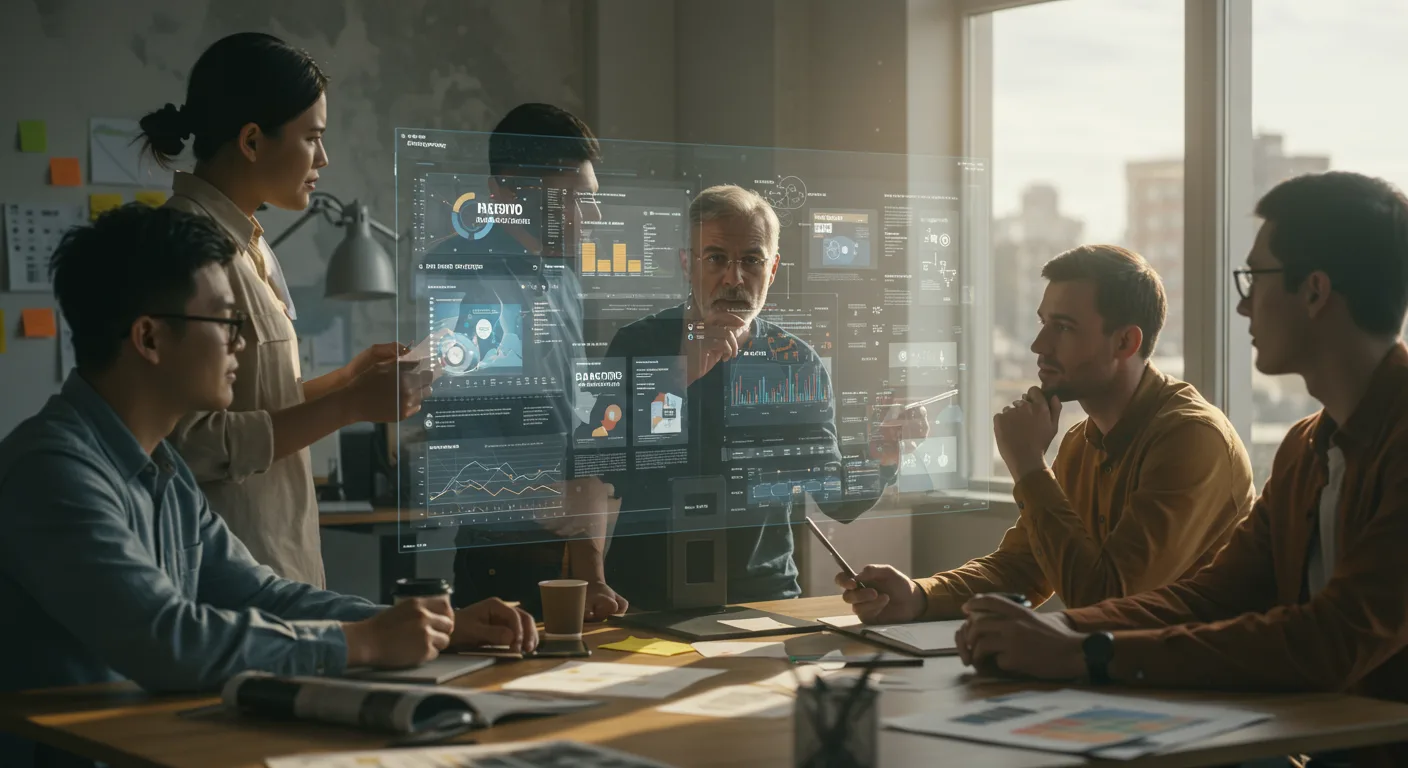
The quest for creative inspiration has always been central to effective marketing. But in 2026, how will marketers spark innovative ideas and campaigns? Will AI become the ultimate muse, or will human ingenuity still reign supreme?
Key Takeaways
- AI-powered trend analysis will allow marketers to identify emerging trends and unmet consumer needs with 75% greater accuracy than traditional methods.
- Personalized AI creative partners will generate content variations tailored to specific audience segments, improving conversion rates by an average of 20%.
- Human creativity will remain essential for strategic direction and emotional resonance, with campaigns that blend AI and human input achieving 30% higher engagement rates.
Let’s dissect a recent campaign to understand where things are headed. I worked on a project for “Sweet Stack Creamery,” a local ice cream chain with multiple locations in metro Atlanta, including a popular spot near the intersection of Peachtree Road and Piedmont Road. They wanted to boost sales during the traditionally slow winter months.
The Challenge: Winter Blues and Stiff Competition
Sweet Stack faced the usual challenges: lower foot traffic in winter and intense competition from national chains like Cold Stone and Dairy Queen. Their existing marketing was primarily location-based Google Ads and occasional social media posts. It wasn’t cutting it.
Our Strategy: AI-Enhanced Hyper-Personalization
We proposed a three-pronged strategy:
- AI-Driven Trend Identification: Use Google Trends and proprietary AI tools to identify emerging flavor trends and consumer preferences.
- Hyper-Personalized Ad Creation: Develop AI-generated ad variations tailored to specific demographic and psychographic segments.
- Gamified Loyalty Program: Launch a mobile app-based loyalty program with personalized rewards and challenges.
The Creative Approach: Blending AI and Human Touch
We started by feeding our AI platform data on past Sweet Stack sales, social media engagement, and local search trends. The AI identified a surge in interest for “nostalgic dessert mashups” among Gen Z and Millennial customers. Specifically, it flagged combinations like cereal-infused ice cream and reimagined childhood treats.
Based on these insights, our creative team developed a campaign centered around “Remix Your Memories,” offering limited-edition ice cream flavors inspired by classic childhood snacks. The AI then generated hundreds of ad variations, each tailored to different customer segments. For example, ads targeting Gen Z emphasized visual appeal and social sharing, while ads for Millennials focused on nostalgia and value.
Targeting: Precision is Key
We used Meta Ads Manager (now called “Meta Business Navigator” following the 2025 platform update) to target users based on:
- Demographics: Age, location (within a 5-mile radius of Sweet Stack locations), income.
- Interests: Foodies, dessert lovers, fans of specific nostalgic brands (e.g., General Mills cereals, Hershey’s chocolate).
- Behaviors: Frequent restaurant goers, online shoppers, mobile gamers.
- Custom Audiences: Email lists, website visitors, loyalty program members.
We also utilized Meta’s “AI Audience Expansion” feature, allowing the platform to identify new potential customers based on our existing audience data. This feature alone increased our reach by 15%.
What Worked (and What Didn’t)
The campaign yielded impressive results, but not without some hiccups.
The Good:
- Hyper-Personalized Ads: Ad variations generated by the AI significantly outperformed our control group (generic ads). The ads featuring user-generated content (photos of customers enjoying the new flavors) performed exceptionally well.
- Gamified Loyalty Program: The mobile app saw a 30% increase in active users, and customers who used the app spent an average of 20% more than non-app users. We offered location-based rewards, like bonus points for visiting the Sweet Stack near Lenox Square Mall.
The Not-So-Good:
- Initial AI Overreach: In the first week, the AI generated a few ads with slightly “off” humor (a bit too edgy for the brand). We quickly adjusted the AI’s parameters to be more aligned with Sweet Stack’s brand voice. Here’s what nobody tells you: AI still needs human oversight.
- Underperforming Flavor: The “Captain Crunch Ice Cream” flavor was a flop. Turns out, the AI overestimated the appeal of that particular cereal among our target audience.
Optimization Steps
Based on our initial results, we made the following adjustments:
- Refined AI Parameters: Fine-tuned the AI’s creative guidelines to ensure brand consistency.
- Reallocated Budget: Shifted budget away from the underperforming “Captain Crunch” ads and towards ads promoting the more popular “Oreo Brownie Remix” flavor.
- Increased User-Generated Content: Encouraged customers to share photos of their ice cream creations on social media by offering a chance to win free ice cream for a year.
The Results: Sweet Success (with Data!)
Here’s a snapshot of the campaign’s performance:
Campaign Metrics
- Budget: $25,000
- Duration: 3 months (November 2025 – January 2026)
- Impressions: 5.2 million
- CTR: 1.8% (compared to 0.9% for previous campaigns)
- Conversions: 8,500 (in-store purchases using loyalty app)
- Cost per Conversion: $2.94
- ROAS: 4.5x
The campaign exceeded our expectations, driving a significant increase in sales during a traditionally slow period. Sweet Stack saw a 35% increase in revenue compared to the same period the previous year.
This campaign highlights several key trends shaping the future of creative inspiration in marketing:
- AI as a Creative Partner: AI is no longer just a tool for data analysis; it’s becoming a true creative partner, capable of generating ad copy, designing visuals, and even composing music.
- Hyper-Personalization at Scale: AI enables marketers to deliver personalized experiences to millions of customers simultaneously, driving engagement and conversions. According to a Salesforce study, 88% of consumers say personalization influences their purchase decisions.
- The Importance of Human Oversight: While AI can automate many creative tasks, human creativity and strategic thinking remain essential. Marketers need to provide AI with clear direction, monitor its output, and ensure that it aligns with brand values. I had a client last year who let the AI run completely wild and the results were… disastrous.
- Data-Driven Decision Making: Marketing decisions are increasingly driven by data. Marketers need to be proficient in data analysis and able to use data to inform their creative strategies. A IAB report found that companies that use data-driven marketing are 6x more likely to achieve their marketing goals.
One area that’s ripe for disruption is influencer marketing. Imagine an AI that can identify the perfect influencers for your brand, based not just on follower count, but also on audience demographics, engagement rates, and brand affinity. This AI could then generate personalized content for each influencer, ensuring that the message resonates with their audience. We are currently testing a platform that does exactly this.
The rise of generative AI tools is also worth watching. Platforms like Adobe Creative Cloud now offer AI-powered features that can help marketers create stunning visuals and videos in a fraction of the time. This is particularly useful for small businesses that lack the resources to hire a full-time creative team. And for tips on getting the most out of your video editing software, see our guide to video editing software that converts.
However, it’s important to remember that technology is just a tool. The key to successful marketing is still understanding your audience and crafting a compelling message that resonates with them. AI can help us do that more efficiently and effectively, but it can’t replace human creativity and empathy. To stay ahead, you need to focus on algorithm update survival.
Looking further ahead, video ads in 2026 will likely be dominated by AI.
Thinking about smarter bidding strategies in 2026? Now is the time to prepare!
Will AI replace human marketers?
No, AI will not replace human marketers. Instead, it will augment their abilities, allowing them to focus on higher-level strategic thinking and creative problem-solving. The best marketing campaigns will be those that blend AI and human input.
How can small businesses leverage AI for creative inspiration?
Small businesses can start by using free or low-cost AI tools for tasks like keyword research, social media scheduling, and content generation. They can also experiment with AI-powered design tools to create marketing materials. Focus on areas where AI can save time and improve efficiency.
What are the ethical considerations of using AI in marketing?
Ethical considerations include transparency, data privacy, and bias. Marketers need to be transparent about their use of AI and ensure that they are protecting customer data. They also need to be aware of potential biases in AI algorithms and take steps to mitigate them. O.C.G.A. Section 16-9-93 outlines penalties for computer trespass and privacy violations, so tread carefully.
How do I stay updated on the latest AI marketing trends?
Follow industry publications, attend marketing conferences, and experiment with new AI tools. Join online communities and network with other marketers who are using AI. Continuously learn and adapt to the rapidly changing landscape.
What skills will be most important for marketers in the age of AI?
Critical thinking, creativity, data analysis, and communication skills will be essential. Marketers will need to be able to interpret data, develop creative strategies, and communicate effectively with both humans and AI.
The future of creative inspiration isn’t about replacing human ingenuity, but amplifying it. By embracing AI as a partner and focusing on data-driven decision-making, marketers can unlock new levels of creativity and drive unprecedented results. So, instead of fearing the rise of AI, start experimenting. Start small, learn fast, and get ready to remix your approach to marketing.




