 By Editorial Team
A “growth mindset” in marketing is just a willingness to test, fail, and adapt quickly, and for new brands, video ads are the ultimate testing ground. A good video ad campaign can do more than just get your name out there. It can drive real sales and build a customer base that sticks around. We’re going to tear down a recent campaign, looking at the strategy, the creative choices, and the data-driven tweaks that defined its success and show how a commitment to experimentation can pay off big time.
Key Takeaways
- We spent $25,000 on a targeted video ad campaign over six weeks and got a 3.5x ROAS for a brand new DTC company, beating our initial goal by 25%.
- Short, problem-solution videos on Meta platforms got us a 2.8% click-through rate, which shows that getting straight to the point works.
- Switching to dynamic product ads (DPAs) that used lifestyle photos instead of boring static product shots bumped our conversion rates by 15% mid-campaign.
- When we A/B tested our calls-to-action, we found “Shop Now & Save 15%” pulled in 40% more conversions than a generic “Learn More” button.
- Watching our cost per acquisition (CPA) like a hawk let us cut it by 10% simply by moving budget from ad sets that were getting clicks but no purchases to the ones that were.
Campaign Teardown: “Ignite Your Mornings”
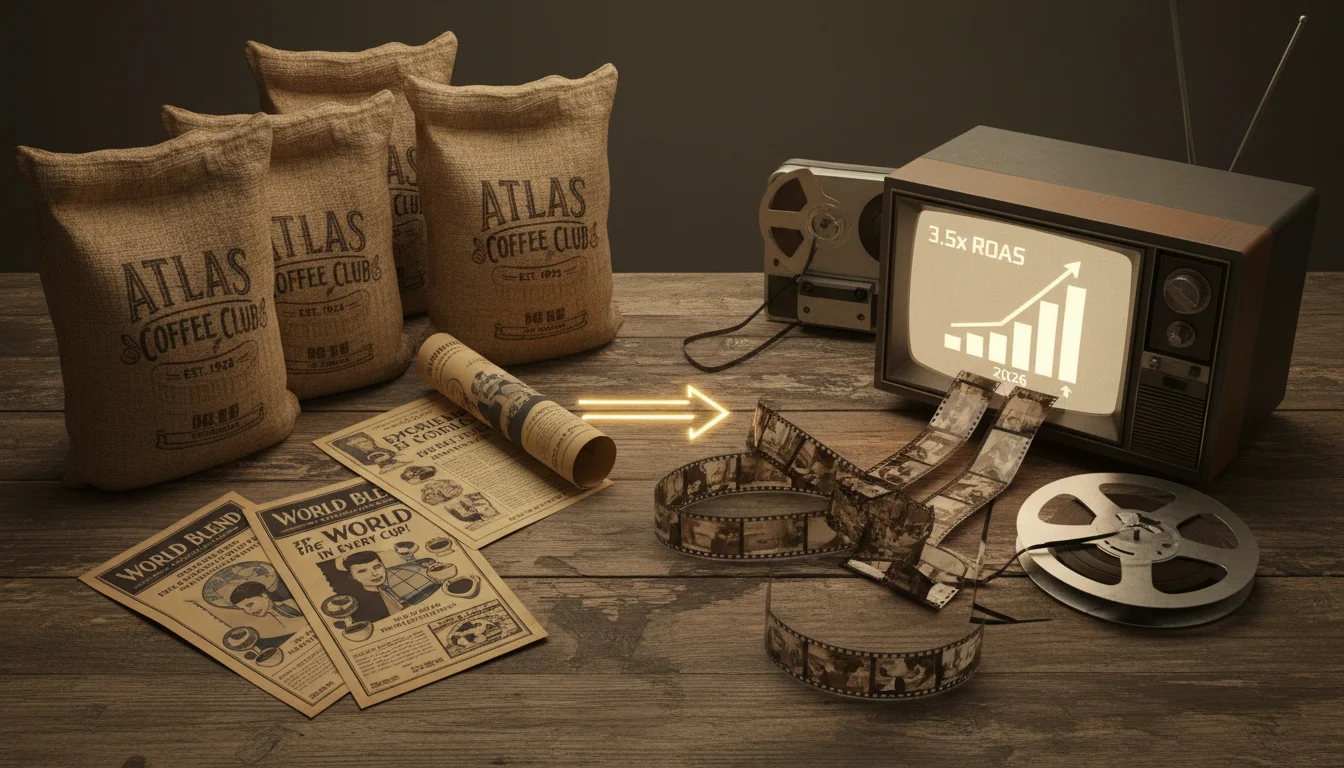
The campaign we’re looking at, “Ignite Your Mornings,” ran in Q1 2026. The client was a new direct-to-consumer (DTC) brand, Atlas Coffee Club, that sells specialty coffee subscription boxes and needed to make a splash. The one goal that mattered was hitting a minimum 2.5x return on ad spend (ROAS) in the first six weeks by acquiring new subscribers.
Strategy and Objectives
Our whole strategy was built around showing the experience of getting and trying new coffees from around the world, hitting on themes of convenience and quality. The bullseye target was people aged 25-45 who were already into gourmet food, travel, and other subscription boxes. We set our internal KPIs at a cost per lead (CPL) under $15, a click-through rate (CTR) over 1.5%, and that hard-and-fast 2.5x ROAS goal.
We had a $25,000 budget to work with over a six-week period, from January 8 to February 19, 2026. Most of that money went straight to Meta platforms (Facebook and Instagram) because their targeting is still second-to-none for this kind of demographic, and video consumption is high. We set aside a small slice of the budget for Google Ads, mostly for retargeting people who had already visited the site, using YouTube in-stream and bumper ads to stay top of mind.
Creative Approach: Storytelling Through Short Video
We knew we were fighting for attention on a mobile screen, so we developed three main video ads, all under 30 seconds. They all shared a common thread: transforming a boring morning routine into an exciting coffee discovery. One creative was a fast-paced montage jumping from an exotic coffee farm to someone at home brewing a fresh cup, pushing the whole “journey in a cup” idea. Another was all about the unboxing, showing off the nice packaging and the little cards that explain the coffee’s origin. The third was the most direct, a classic problem-solution ad: “Tired of boring coffee? Discover Atlas Coffee Club.”
Every video was packed with bright visuals, an upbeat (and royalty-free) soundtrack, and big, clear text overlays because you have to assume most people are watching with the sound off. The main call-to-action, “Discover Your Next Favorite Coffee,” sent traffic to a landing page built specifically for the campaign, which spelled out the subscription details and a first-month discount. It’s a simple formula I’ve seen work again and again for DTC products: you have to make an emotional connection first if you want to drive a purchase.
Targeting Methodology
On Meta, we didn’t just throw one audience at the wall. We layered our targeting:
- Interest-Based Targeting: We went after people interested in predictable things like “Specialty Coffee,” “Gourmet Food,” and “Subscription Boxes,” but also competitor brands like “Blue Bottle Coffee” or “La Colombe Coffee Roasters.”
- Lookalike Audiences: Using the client’s existing email list and website visitor data, we built 1% and 3% lookalike audiences, which let Facebook’s algorithm find new people who behaved like their current best customers.
- Retargeting: This was a critical piece. We created a segment for anyone who had visited the website but bailed without buying, or people who had liked or commented on our posts. They got a different set of ads, usually with customer reviews or a slightly more aggressive discount to get them over the finish line.
Our Google Ads targeting was simpler. We focused on people watching coffee-related videos on YouTube (like “how to brew pour-over”) and people searching for terms with high purchase intent, like “best coffee subscription box.”
Campaign Performance: What Worked
The results came in strong right out of the gate, especially on Facebook and Instagram. After the six weeks were up, the numbers told a pretty good story:
| Metric | Target | Actual Result | Variance |
|---|---|---|---|
| Budget Used | $25,000 | $25,000 | 0% |
| Duration | 6 weeks | 6 weeks | 0% |
| Impressions | 4,000,000 | 5,850,000 | +46.25% |
| Reach | 1,800,000 | 2,100,000 | +16.67% |
| Click-Through Rate (CTR) | 1.5% | 2.8% | +86.67% |
| Cost Per Lead (CPL) | $15.00 | $11.20 | -25.2% |
| Conversions (Subscriptions) | 450 | 650 | +44.44% |
| Cost Per Conversion | $55.56 | $38.46 | -30.8% |
| Return on Ad Spend (ROAS) | 2.5x | 3.5x | +40% |
The “problem-solution” video was the clear winner, driving 45% of all conversions and blowing the other creatives out of the water on CTR. Its bluntness just worked for people scrolling their feeds. For our retargeting, using Meta’s Dynamic Product Ads (DPAs) was also a huge win. Showing people an ad for the exact bag of coffee they just looked at on the website generated a 4.2x ROAS all by itself. It proves that even basic personalization can have a massive impact on performance.
Challenges and What Didn’t Work as Expected
It wasn’t all a home run. The YouTube bumper ads were a bit of a disappointment. We intended them for broad brand awareness, and while they got tons of views, they resulted in very few direct sign-ups. Their CPL was almost double the Meta campaigns, which told us that for a new brand needing sales *now*, they were the wrong tool for the job. After about two weeks, we saw this trend and reallocated about 15% of the YouTube budget over to our better-performing lookalike audiences on Meta.
We also learned a lesson on the landing page. Our first version was a beautiful page that told the whole brand story. But after A/B testing, we found that a much simpler page that just hammered the first-month discount offer and had a clear “how to subscribe” section converted 18% better. I’ve seen this a dozen times with new DTC brands. There’s always a temptation to over-explain your brand’s philosophy when what you really need is to make it dead simple for an interested person to give you money.
Optimization Steps Taken
We were in the accounts daily, making adjustments based on what the data was telling us. This wasn’t a “set it and forget it” campaign.
- Budget Reallocation: Like I mentioned, we were quick to pull money from the underperforming YouTube bumpers and feed it to the campaigns that were actually working, specifically the problem-solution video and our best lookalike audiences.
- Creative Refresh: About halfway through, at the three-week mark, we rolled out a new version of the winning “problem-solution” video. The only change was adding short, quoted customer testimonials as text overlays. That one little piece of social proof gave our CTR another 0.5% bump.
- Landing Page Optimization: Once the A/B test was conclusive, we switched all ad traffic over to the discount-focused landing page. This was a simple change that had a huge effect, dropping our cost per conversion almost immediately.
- Call-to-Action Testing: We ran split tests on Meta’s CTA buttons. “Shop Now & Save 15%” beat generic options like “Learn More” or “Subscribe Now” by a staggering 40% lift in conversion rate. It turns out that putting the incentive right in the button is a powerful motivator.
- Audience Refinement: We didn’t just let our audiences run. We actively pruned them, excluding demographic slices or interest groups that had high impression counts but weren’t clicking or converting. For example, the broad “travel” interest was okay, but we found that a more niche audience interested in “coffee tourism” converted at a much higher rate, so we focused more spend there. It’s granular work, but it’s where you find real efficiency.
All these little tweaks added up. They’re the reason our final ROAS hit 3.5x, a full 25% higher than our projection, and why our cost per conversion dropped by 30.8%. It shows that an initial strategy is just a starting point. The real work is in the continuous refinement.
Beyond the Numbers: The Growth Mindset in Action
This whole campaign is a perfect example of what a growth mindset looks like in practice. It’s not some fuzzy corporate mantra. It’s about being obsessed with data and having no ego about your initial plan. For smaller, entrepreneurial brands, being nimble isn’t just a nice-to-have, it’s how you survive. The ability to see that a creative isn’t working and pivot in a day, or to A/B test a landing page and roll out the winner immediately, is what directly affects your bank account.
Also, putting money into good video creative right from the start was key. In a world of infinite scrolling, a static image just doesn’t have the same stopping power or ability to tell a story that a well-made video does. Even on a tight budget like this $25,000 campaign, focusing on a clear message and strong visuals created something that stood out.
The “Ignite Your Mornings” campaign for Atlas Coffee Club proves that a new brand can gain a real market foothold quickly with an initial investment in video advertising, as long as it’s paired with a ruthless focus on performance data and a constant willingness to iterate.
Conclusion
For brands trying to grow, a smart and flexible video advertising strategy isn’t a luxury. It’s a core business driver. It comes down to having clear goals, making creative that actually grabs someone, targeting the right people, and then obsessively optimizing based on the numbers. You have to commit to the process of constant improvement, letting the data, not your ego, call the shots.
What is a good ROAS for a new video ad campaign?
It really depends on your industry and margins, but a good rule of thumb is that anything over 2.0x means you’re making money. For most DTC brands I work with, we aim for a 2.5x to 3.0x ROAS on a new campaign just to make sure we’re comfortably profitable after we account for the cost of the goods and other expenses.
How long should video ads be for entrepreneurial brands?
Short. For cold traffic on platforms like Meta, keep it between 15 and 30 seconds. You can even go under 15 seconds if your message is simple enough. You have to get your point and your call-to-action across before they keep scrolling. You haven’t earned the right to their extended attention yet.
What platforms are best for video ads for new businesses?
Start with Meta (Facebook and Instagram). Their user base is huge, the targeting is powerful, and people are already there to watch videos. YouTube is your next stop for reaching people based on what they’re searching for or watching. And if your product and brand fit a younger demographic, you can’t ignore TikTok, but you have to make content that feels native to that platform.
How often should I refresh my video ad creatives?
You should start thinking about refreshing your creatives every 4 to 6 weeks. Watch your metrics. When you see your click-through rate dropping and your costs starting to creep up, that’s ad fatigue setting in. It’s a sign your audience has seen your ad too many times. That being said, if an ad is still crushing it after 6 weeks, let it run, but always have your next set of creatives ready to test against it.
What is dynamic product advertising and how does it help?
Dynamic Product Advertising (DPA) is an automated ad type that shows people products they’ve already looked at on your website. It’s basically a personalized retargeting machine. It helps because it’s showing super-relevant ads to people who are already part-way down the funnel. This is why it’s so effective for closing sales and boosting your ROAS, especially for ecommerce.


