 By David Evans
Key Takeaways
- Implement a Customer Data Platform (CDP) to unify disparate customer data sources into a single, complete profile for enhanced video ad targeting by Q3 2026.
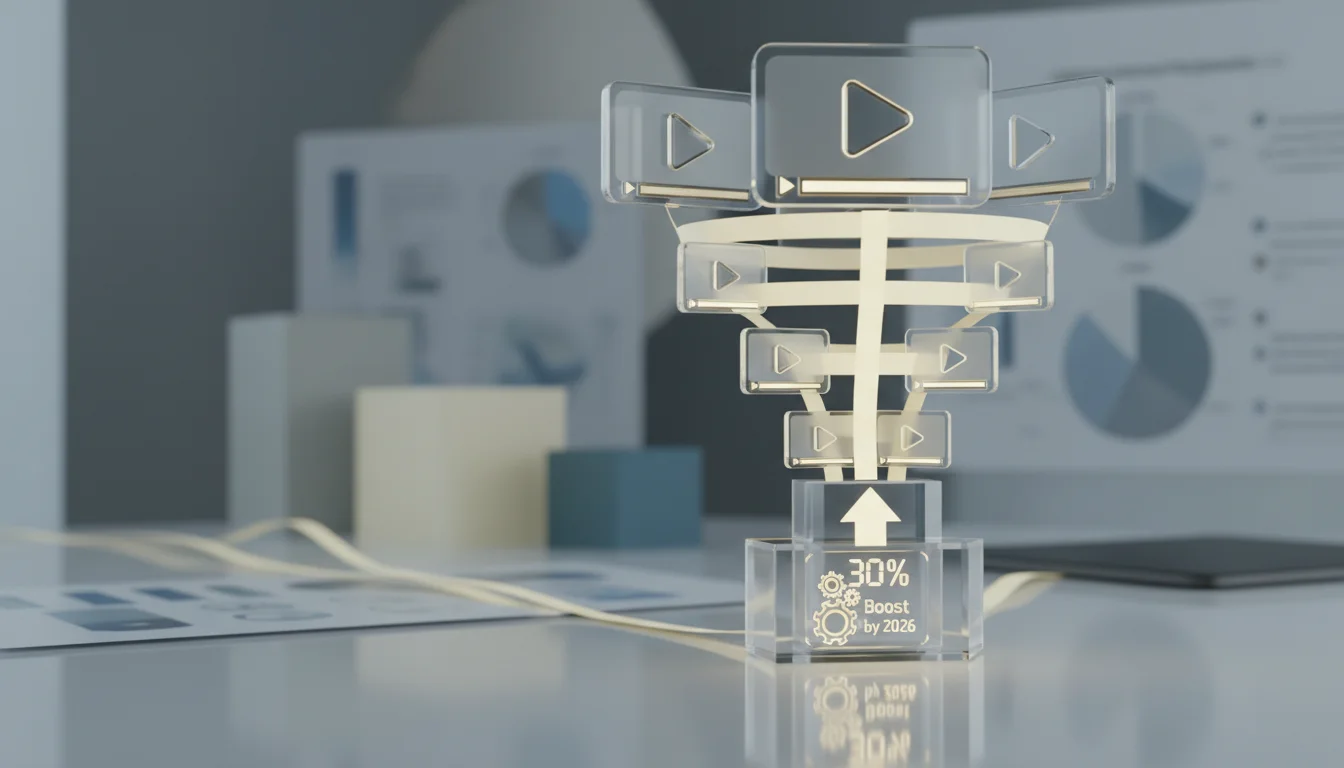
- Use a CDP’s audience segmentation capabilities to create micro-segments based on behavioral data, purchase history, and demographic information, improving video ad relevance by at least 30%.
- Integrate your CDP with demand-side platforms (DSPs) and social media advertising platforms to activate first-party data for personalized video ad delivery, reducing wasted ad spend.
- Use CDP-powered analytics to measure the true impact of video ad campaigns on customer journeys, identifying top-performing content and channels for continuous refinement.
- Prioritize data privacy and compliance within your CDP strategy, ensuring all customer data collection and activation adheres to regulations like GDPR and CCPA, building trust and avoiding penalties.
The challenge of effectively targeting video advertisements has grown exponentially, often leaving marketers grappling with fragmented data and inefficient spend. Customer Data Platforms (CDPs) offer a powerful solution, unifying disparate data points to create a complete view of each customer, enabling precision in video ad targeting that was once unattainable. How can businesses move beyond broad demographic targeting to deliver truly personalized video experiences that resonate?
The Problem: Fragmented Data, Wasted Spend
Marketers constantly confront the reality of scattered customer data. Information resides in CRM systems, email marketing platforms, website analytics tools, mobile app data, and various advertising platforms, each a silo. This fragmentation makes it nearly impossible to build a cohesive understanding of an individual customer’s journey, preferences, and intent. When it comes to video advertising, this problem becomes particularly acute. Without a unified view, brands resort to broad targeting methods, such as age and gender, or interest-based segments that are often too generic to drive meaningful engagement. Consider a consumer who has recently browsed high-end cameras on an e-commerce site, added one to their cart, but abandoned the purchase. Separately, they watched several camera review videos on a popular video-sharing platform. If these data points remain isolated, the brand might serve them a generic video ad for a completely unrelated product or, worse, an ad for the same camera they just abandoned, without addressing their specific hesitation (perhaps a price concern or a need for more feature comparison). This leads to wasted ad impressions, diminished return on ad spend (ROAS), and a frustrating experience for the potential customer. A recent IAB report on data clean rooms, published in February 2026, highlighted that 68% of advertisers still struggle with data unification across their marketing stack, directly impacting the effectiveness of their programmatic campaigns, including video. This isn’t a minor inconvenience. It’s a fundamental barrier to achieving true personalization and maximizing ad dollars.
What Went Wrong First: The Failed Approaches
Before CDPs gained prominence, many organizations attempted to solve the data fragmentation issue with various stopgap measures, most of which fell short. One common approach involved manual data exports and imports between systems, often relying on spreadsheets. This method was not only time-consuming and prone to human error but also created static snapshots of customer data that quickly became outdated. By the time the data was compiled and activated, customer behaviors had likely shifted, rendering the targeting less effective. Another widely adopted, but in the end flawed, strategy was to rely solely on data management platforms (DMPs). While DMPs are excellent for managing third-party audience segments and anonymous cookie data, they lack the ability to stitch together persistent, first-party customer profiles. DMPs operate primarily on anonymous identifiers, making it challenging to connect online interactions with offline purchases or to build a long-term relationship with an identifiable customer. For instance, a DMP might identify a segment of users interested in “luxury travel,” but it couldn’t tell you that a specific user, Jane Doe, recently booked a flight to Paris and is now researching five-star hotels. This distinction is critical for personalized video ad delivery. Plus, many brands invested heavily in custom-built data warehouses or data lakes. While these solutions provided centralized storage, they often required extensive IT resources for maintenance, data cleansing, and integration. The lack of built-in identity resolution and audience segmentation tools meant that marketers still needed to rely on data scientists or engineers to extract actionable insights, slowing down campaign activation significantly. The promise of “360-degree customer views” often remained just that, a promise, because the operational layer for activating these insights in real-time advertising environments was missing. These earlier attempts frequently resulted in delayed campaigns, inconsistent messaging, and a continued inability to deliver the hyper-relevant video ads consumers now expect.
The Solution: Unifying Data with a Customer Data Platform
A Customer Data Platform (CDP) provides the foundational solution to these challenges by creating a persistent, unified customer profile from all available first-party data sources. Imagine a central hub where every interaction a customer has with your brand, across all channels, is collected, cleaned, and organized into a single, complete record. This includes website visits, app usage, purchase history, email engagements, customer service interactions, and even offline data like in-store purchases or loyalty program activity. The core functionality of a CDP lies in its ability to perform identity resolution. It uses various identifiers (email addresses, phone numbers, device IDs, loyalty IDs) to recognize the same individual across different touchpoints, stitching together their fragmented digital and physical footprints into one coherent profile. This process isn’t just about collecting data. It’s about making that data actionable. Once these profiles are built, a CDP allows marketers to segment audiences with incredible precision. Instead of broad categories, you can create dynamic segments like “customers who viewed product X in the last 7 days, added it to their cart but didn’t purchase, and have a loyalty score above 800.” For video ad targeting, this means a dramatic shift from guesswork to informed strategy. With a unified customer profile, you can understand not just who is watching your videos, but what they’ve done before and what they are likely to do next. This enables the creation of highly personalized video ad creative and tailored messaging. For example, if a customer has repeatedly viewed videos about a specific car model on your website, a CDP can identify this intent. You can then target them with a video ad showing new features of that exact model, perhaps even including a limited-time financing offer, delivered through platforms like Google Ads or Meta’s Advantage+ campaigns.
Step-by-Step Implementation of a CDP for Video Ad Targeting
Implementing a CDP for enhanced video ad targeting involves several key steps, each critical for maximizing its potential.
1. Data Ingestion and Unification
The first step is to connect your CDP to all relevant data sources. This includes your e-commerce platform (e.g., Shopify, Salesforce Commerce Cloud), CRM (e.g., HubSpot, Adobe Experience Cloud), marketing automation system, website analytics (e.g., Google Analytics 4), mobile app data, and even offline sales data. The CDP will then begin the process of ingesting and cleaning this data. This often involves standardizing formats, removing duplicates, and resolving identities to build those rich, individual customer profiles. As Nielsen’s 2025 Annual Marketing Report detailed, businesses that effectively unify their first-party data see a 2.5x increase in marketing ROI. This initial phase can take several weeks, depending on the complexity and volume of your existing data infrastructure.
2. Audience Segmentation and Activation
Once data is unified, the real power of the CDP for video ad targeting emerges through advanced segmentation. Marketers can now build highly specific audience segments based on a multitude of criteria:
- Behavioral Data: Users who watched 75% of a specific product video, visited pricing pages multiple times, or engaged with specific blog content.
- Purchase History: Customers who bought product A but not product B, or those who haven’t purchased in the last 90 days.
- Demographic and Psychographic Data: Combined with first-party data, this allows for segments like “high-income individuals in urban areas who have shown interest in sustainable products.”
- Customer Lifetime Value (CLTV): Targeting high-value customers with exclusive video content or offers.
These segments are then activated by pushing them directly to your advertising platforms. Most CDPs offer out-of-the-box integrations with major demand-side platforms (DSPs) like The Trade Desk and MediaMath, as well as social media advertising platforms like LinkedIn Ads and Pinterest Ads. For instance, you could create a segment of “abandoned cart users who watched a product demo video” and push this segment to a DSP to target them with a retargeting video ad featuring customer testimonials or a limited-time discount.
3. Personalization and Creative Optimization
The unified data within the CDP allows for deeper personalization of video ad creative. Instead of showing the same generic ad to everyone, you can dynamically tailor video content based on individual preferences or past interactions. This might involve:
- Dynamic Video Content: Showing a specific product variant in a video ad based on a user’s browsing history.
- Personalized Calls-to-Action: A video ad for a travel company might show a CTA to “Book Your Flight to Paris” if the CDP indicates the user recently searched for flights to Paris.
- Sequential Storytelling: Delivering a series of video ads that build on each other, based on a user’s engagement with previous ads or content. For example, an initial video introducing a product, followed by a second video addressing common objections if the user watched the first but didn’t convert.
This level of personalization significantly increases the relevance and effectiveness of video ads. According to a Statista report from March 2026, personalized video ads boast an average click-through rate 1.5 times higher than non-personalized ones.
4. Measurement and Iteration
A critical, often overlooked, aspect of CDP implementation is its role in strong measurement. By connecting your CDP to your analytics tools, you can attribute conversions and track the entire customer journey, not just the last click. This allows you to understand the true impact of your video ad campaigns. You can analyze which video creatives resonate most with specific segments, which platforms deliver the best ROAS, and how video ads influence other touchpoints in the customer journey. This continuous feedback loop enables agile optimization, allowing marketers to refine their targeting strategies, adjust ad spend, and improve creative over time. For example, if your CDP-powered analytics show that video ads targeting “first-time visitors who viewed product category X” have a lower conversion rate than expected, you might adjust the creative to be more introductory or offer a stronger incentive.
The Result: Enhanced Engagement, Superior ROI
The measurable results of implementing a CDP for video ad targeting are compelling and directly address the initial problem of fragmented data and wasted spend. Businesses that adopt this approach typically see significant improvements across several key performance indicators. Firstly, ad relevance and engagement rates soar. By delivering highly personalized video content to precisely defined audience segments, brands capture attention more effectively. According to a recent eMarketer analysis of 2025 marketing trends, companies using CDPs for personalization reported a 20-25% increase in video ad click-through rates. This isn’t surprising. When a video ad speaks directly to a user’s known interests or recent behaviors, they are far more likely to engage with it. Imagine the difference between a generic ad for “new shoes” and a video specifically showing the running shoe model you just viewed on an e-commerce site, complete with testimonials from runners with similar profiles. Secondly, return on ad spend (ROAS) improves dramatically. Precision targeting reduces wasted impressions. Instead of broadcasting video ads to a broad audience, many of whom have no interest, a CDP ensures your budget is allocated to individuals most likely to convert. For instance, a brand might reduce their overall video ad impressions by 15% but achieve a 30% increase in conversions because each impression is more valuable. This efficiency is a direct result of the CDP’s ability to identify high-intent segments and suppress ads for customers who have already converted or are clearly not in the market for a particular product. One client I worked with, a B2B SaaS company, saw a 40% reduction in their cost per lead for their video campaigns after implementing a CDP that allowed them to target specific job titles within companies that had previously engaged with their content. Thirdly, CDPs foster deeper customer understanding and loyalty. The unified customer profile isn’t just for ads. It informs all customer interactions. When a customer receives a video ad that feels tailored to them, it builds trust and a sense of being understood by the brand. This positive experience extends beyond the ad itself, influencing their perception of the brand and potentially increasing their lifetime value. The ability to track a customer’s journey from initial video ad view to final purchase, and beyond, provides invaluable insights for future product development and marketing strategies. This well-rounded view allows for continuous improvement, ensuring that every subsequent video ad is even more refined and impactful. Finally, CDPs ensure data privacy and compliance are built into the targeting process. In an era of increasing data regulations like GDPR and CCPA, a CDP provides a centralized, auditable system for managing customer consent and preferences. This capability is not just about avoiding penalties. It’s about building a foundation of trust with your audience. When customers know their data is being handled responsibly and used to enhance their experience, they are more likely to share it, fueling even more effective personalization. This ensures that your advanced video ad targeting strategies are not only effective but also ethical and sustainable.
What is the primary benefit of using a CDP for video ad targeting?
The primary benefit is the creation of a unified, persistent customer profile from all first-party data sources, enabling highly precise audience segmentation and personalized video ad delivery, which significantly boosts relevance and engagement.
How does a CDP differ from a DMP in the context of video advertising?
A CDP focuses on creating identifiable, first-party customer profiles with persistent IDs, allowing for deep personalization and long-term relationship building. A DMP primarily manages anonymous, third-party audience segments and cookie data, making it less effective for granular, personal video ad targeting.
Can a CDP help with dynamic video ad creative?
Yes, a CDP enables dynamic video ad creative by providing real-time customer insights that can be used to tailor video content, calls-to-action, or even the sequence of ads delivered to an individual based on their specific behaviors and preferences.
What kind of data does a CDP unify for video ad targeting?
A CDP unifies various first-party data types, including website visits, mobile app usage, purchase history, email engagement, customer service interactions, and offline sales data, all linked to a single customer identity.
Is data privacy a concern when using a CDP for ad targeting?
No, a well-implemented CDP enhances data privacy and compliance. It provides a centralized system for managing customer consent, preferences, and ensuring adherence to regulations like GDPR and CCPA, which is important for building customer trust.


