 By Editorial Team
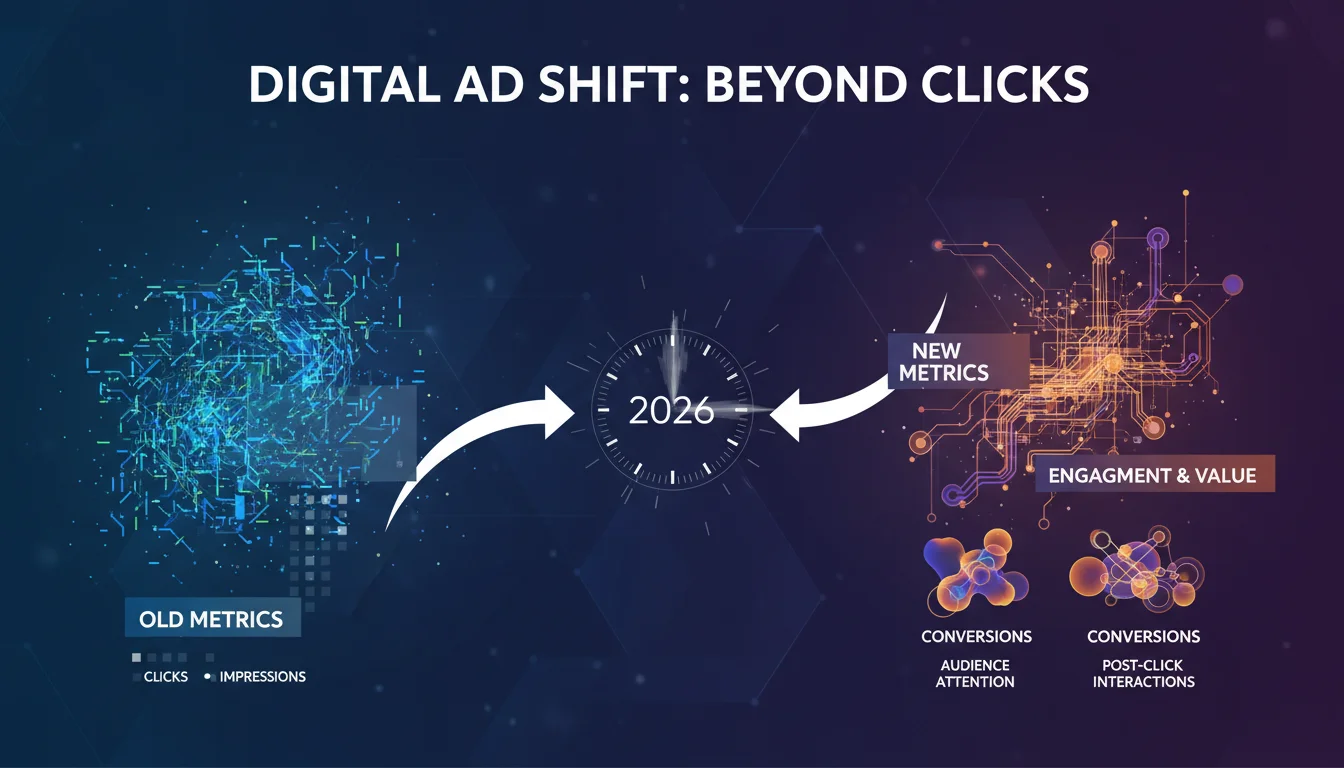
A recent report by eMarketer projects global digital ad spending to reach an astounding $876 billion by 2026, with video capturing a significant and growing share. This massive investment shows a critical digital ad shift, demanding more sophisticated performance metrics beyond basic impressions and clicks. How can marketers truly measure the impact of their video campaigns in this evolving field?
Key Takeaways
- Advertisers should prioritize viewable completion rate (VCR), aiming for over 75% on platforms like YouTube and connected TV, to ensure actual engagement with video content.
- Implementing attention metrics, such as gaze duration and active viewing time, provides a more accurate understanding of audience receptivity than traditional view counts.
- Focus on brand lift studies using control groups to directly attribute changes in brand perception and purchase intent to video ad exposure.
- Analyze conversion paths beyond the last click, incorporating multi-touch attribution models to credit video ads for their influence earlier in the customer journey.
Only 37% of Video Ad Impressions Are Truly Viewable: Why VCR is the New CPM
The notion that an ad impression equals an ad seen is a relic of a bygone era. According to a 2023 IAB report, a substantial portion of video ad impressions never actually register with a human viewer in a meaningful way. This isn’t just about ads loading below the fold. It’s about ads playing in background tabs, or only partially rendered before a user scrolls past. For me, this statistic is a wake-up call. We’ve spent years optimizing for Cost Per Mille (CPM) or Cost Per View (CPV), but if a significant chunk of those views aren’t even viewable, what are we really paying for?
The true metric to focus on for video is viewable completion rate (VCR). This isn’t just whether the ad loaded, but whether a significant portion (typically 50% of pixels for 2 seconds or more, per Media Rating Council standards) was in view and the ad played to completion. A high VCR indicates that your ad had a genuine opportunity to convey its message. Think about a 30-second spot on a connected TV platform. If only 37% of those impressions are truly viewable, and then only a fraction of those are completed, your effective reach is dramatically lower than your impression count suggests. We’ve seen clients significantly improve their campaign effectiveness by shifting focus from raw impressions to optimizing for VCR, particularly for brand awareness initiatives. It’s a fundamental re-evaluation of what constitutes a “view.”
Average Gaze Duration for Video Ads is Declining: The Rise of Attention Metrics
Even if an ad is viewable, is anyone actually paying attention? Data from Nielsen’s 2023 Attention Economy report indicates a concerning trend: the average gaze duration for digital video ads is on a downward trajectory. Users are increasingly adept at filtering out or ignoring advertising content, even when it’s technically “in view.” This is where the concept of attention metrics becomes paramount. It’s no longer enough to measure if an ad was served. We need to measure if it was observed.
Platforms like Google Ads and Meta Business Suite are starting to integrate more sophisticated signals, moving beyond simple view counts. We’re looking at metrics like active viewing time (the duration a user actively watched the ad with audio on and the ad in the foreground), and even eye-tracking data for more advanced research. For instance, some programmatic advertising platforms are now offering bid optimizations based on predicted attention scores rather than just viewability. My take? If your video ad isn’t capturing attention within the first 3-5 seconds, you’ve likely lost the battle. This demands a renewed focus on creative quality and compelling storytelling right from the start, rather than relying on sheer volume of placements.
Only 15% of Marketers Consistently Use Brand Lift Studies: Proving Impact Beyond Clicks
A significant blind spot in many video ad strategies is the underutilization of brand lift studies. A recent HubSpot survey revealed that only a small minority of marketers consistently employ these studies to measure the true impact of their video campaigns. This is a missed opportunity, especially for brands investing heavily in video for awareness and consideration goals. Brand lift studies directly measure changes in key brand metrics like brand awareness, ad recall, message association, and purchase intent among exposed vs. unexposed (control) groups. They are, in my professional opinion, the gold standard for understanding video’s upper-funnel impact.
Without brand lift, you’re essentially guessing at the effectiveness of your video creative. Did that new product launch video actually make people more aware of your brand, or did it just rack up views? Did it shift perception? Platforms like YouTube and Meta offer integrated brand lift measurement tools, making it more accessible than ever. The process involves showing your video ad to a test group and a control group seeing no ad, then surveying both groups. The difference in responses provides a direct attribution of your video ad’s influence. It’s a non-negotiable for any serious video advertising strategy, especially when demonstrating ROI to stakeholders who might be too fixated on immediate conversion metrics.
Video’s Influence on Conversion Paths Often Underestimated: Multi-Touch Attribution is Key
The traditional last-click attribution model often severely undervalues the role of video ads in the customer journey. Many marketers still operate under the assumption that if a video ad doesn’t lead to an immediate click or conversion, it wasn’t effective. This perspective ignores the powerful influence video has earlier in the funnel. Consider a scenario where a consumer watches a captivating video ad for a new electric vehicle, sparking their interest. They don’t click immediately, but later search for the brand, visit the website, and eventually purchase. The video played a critical role, yet a last-click model would credit the search ad or the website visit.
The solution lies in adopting multi-touch attribution (MTA) models. These models assign credit to all touchpoints a customer engages with before converting. Whether it’s linear, time decay, or data-driven attribution, MTA provides a more well-rounded view of video’s contribution. For example, a client running a campaign for a new line of athletic wear found that while their video ads rarely resulted in direct clicks, they frequently served as the “first touch” that introduced customers to the brand, significantly shortening the overall conversion cycle. By implementing a position-based attribution model in their analytics platform, they were able to properly allocate budget to video campaigns that were demonstrably driving initial interest and awareness, even if they weren’t the final click. This shift in perspective is absolutely essential for understanding video’s true value.
The Conventional Wisdom: Cost Per View (CPV) is Sufficient
Many marketing teams, particularly those with smaller budgets or less experience in advanced video analytics, still lean heavily on Cost Per View (CPV) as their primary performance metric. The conventional wisdom suggests that a low CPV means an efficient campaign, implying that you’re getting more eyeballs for your buck. I wholeheartedly disagree with this. While CPV has its place as a directional metric, relying on it solely is akin to measuring the effectiveness of a billboard by how many cars drove past it, without considering if anyone actually looked at it, let alone remembered what it advertised. A view, as defined by many platforms, can be as little as two seconds of playback, often without sound or in a non-visible context. This is a fundamentally flawed measure of engagement or impact.
My contention is that a low CPV can be a deceptive vanity metric. You might be achieving a low cost per view because your ad is placed in low-quality inventory, or in contexts where users are highly distracted. What’s the point of a cheap view if it doesn’t lead to awareness, recall, or in the end, conversion? I’ve seen campaigns with incredibly low CPVs perform poorly on actual brand lift metrics, while campaigns with slightly higher CPVs, but better viewable completion rates and attention scores, delivered significantly stronger results. We need to move beyond this simplistic understanding and embrace metrics that reflect genuine human engagement. It’s not about how many views you get. It’s about how many meaningful interactions your video ad creates.
The evolving digital ad field demands a re-evaluation of how we measure video performance, moving beyond superficial metrics to embrace deeper indicators of engagement and impact. By prioritizing viewable completion rates, attention metrics, brand lift studies, and multi-touch attribution, marketers can gain a far more accurate understanding of their video campaigns’ true value and make more informed strategic decisions.
What is viewable completion rate (VCR) and why is it important?
VCR measures the percentage of video ad impressions that were not only in view according to industry standards (e.g., 50% of pixels for 2 seconds) but also played to completion. It’s important because it indicates genuine exposure and engagement with your ad’s full message, moving beyond basic “impressions” that might not be seen.
How do attention metrics differ from traditional video ad metrics?
Traditional metrics often focus on views or impressions. Attention metrics delve deeper, measuring whether a user actively engaged with the ad, considering factors like gaze duration, active viewing time (with sound and in foreground), and even eye-tracking data. They aim to quantify genuine audience receptivity, not just technical ad delivery.
What is a brand lift study and when should it be used?
A brand lift study is a research method that measures the direct impact of an advertising campaign on key brand metrics like awareness, recall, and purchase intent. It’s typically conducted by comparing a group exposed to the ad with a control group that wasn’t. These studies are essential for campaigns focused on brand building and should be used whenever a significant investment is made in video for upper-funnel objectives.
Why is multi-touch attribution better than last-click attribution for video ads?
Multi-touch attribution models assign credit to all touchpoints a customer engages with on their path to conversion, providing a more complete view of how different channels, including video, contribute. Last-click attribution only credits the final interaction, often undervaluing video’s role in initial awareness and consideration phases. MTA offers a more accurate picture of video’s influence throughout the customer journey.
What are some common pitfalls to avoid when measuring video ad performance?
A common pitfall is over-reliance on vanity metrics like low Cost Per View (CPV) without considering viewability or actual engagement. Another is neglecting brand lift studies for campaigns designed to build awareness. Also, failing to implement multi-touch attribution can lead to undervaluing video’s impact on conversions further down the funnel. Don’t chase cheap views. Chase meaningful interactions.


