 By Ashley Lewis
Short-form video has become an undeniable force in digital marketing, fundamentally reshaping how brands connect with audiences and, more importantly, the impact of short-form video on ad performance. We’re seeing conversion rates and engagement metrics soar for those who master this format – but what does that look like in a real-world campaign? Let’s dissect a recent effort that delivered some truly impressive results.
Key Takeaways
- Implementing a sequential short-form video ad strategy across TikTok and Instagram Reels can increase ROAS by over 30% compared to static image ads for direct-to-consumer brands.
- A/B testing ad creative with varied hooks and calls-to-action in the first 3 seconds of a short-form video significantly improves Click-Through Rates (CTR) by an average of 15-20%.
- Allocating at least 60% of the ad budget to iterative creative development and testing for short-form video yields a lower Cost Per Lead (CPL) by focusing on high-performing variants.
- Brands should aim for a minimum of 5-7 distinct short-form video ad creatives per campaign phase to effectively combat ad fatigue and maintain consistent performance.
Campaign Teardown: “GlowUp” Skincare Launch
I recently led a campaign for “GlowUp,” a new direct-to-consumer (DTC) skincare brand specializing in eco-friendly, vegan products. Our objective was clear: drive initial product sales and build brand awareness among Gen Z and young millennial audiences. We knew traditional static ads wouldn’t cut it. The plan hinged entirely on short-form video.
Strategy: Short-Form Video First, Always
Our core strategy was to lean heavily into the platforms where our target demographic spends their time: TikTok and Instagram Reels. We believed that authentic, user-generated-style content, even when produced by the brand, would resonate more than polished, traditional advertising. The idea was to create a sense of discovery and community, not just a sales pitch.
We structured the campaign in two phases:
- Awareness & Engagement (Weeks 1-3): Focus on product benefits, ingredients, and “satisfying” application videos. No hard selling.
- Conversion & Retargeting (Weeks 4-6): Introduce clear calls-to-action (CTAs) and retarget users who engaged with our awareness videos or visited the website.
This sequential approach, often underestimated, is absolutely critical for short-form video. You can’t just hit people with a “buy now” from the jump; you need to build a narrative. I’ve seen countless campaigns fail because they try to compress the entire sales funnel into a 15-second ad. It just doesn’t work that way.
Creative Approach: Authenticity Over Perfection
We developed a diverse set of creative assets, prioritizing variety and rapid iteration. Our team, along with a few micro-influencers, created content that felt native to each platform. Think unboxing videos, “get ready with me” routines featuring GlowUp products, quick ingredient breakdowns, and even some humorous skits addressing common skincare woes. We used trending audio and popular transitions where appropriate, but never at the expense of clarity.
A significant portion of our budget was allocated to creative production and testing. We operated on the principle that you need at least 5-7 distinct ad creatives per campaign phase to avoid ad fatigue and find winning formulas. This is a non-negotiable for me. If a client balks at the creative budget, I tell them straight up: you’re planning to fail.
Targeting: Precision and Iteration
On TikTok, we leveraged interest-based targeting (skincare, beauty, vegan lifestyle, eco-friendly products) and lookalike audiences based on initial website visitors. For Instagram Reels, we used similar interest categories, combined with detailed targeting for followers of competitor brands and specific demographic filters (ages 18-34, primarily female). We also implemented a custom audience segment for users who watched 75% or more of our awareness videos.
For more on effective targeting, check out our insights on precision marketing in 2026.
Budget & Duration
- Budget: $50,000
- Duration: 6 weeks
Key Metrics & Performance
Here’s how the GlowUp campaign performed over the 6-week period:
| Metric | Value | Notes |
|---|---|---|
| Total Impressions | 12,500,000 | Reached a broad audience across both platforms. |
| Total Clicks | 187,500 | Combined clicks to website and profile. |
| Click-Through Rate (CTR) | 1.5% | Above industry average for social ads. |
| Total Conversions (Purchases) | 2,100 | Direct purchases attributed to ads. |
| Cost Per Conversion (CPC) | $23.81 | Significantly lower than initial projections of $35. |
| Cost Per Lead (CPL) | $1.50 (for email sign-ups) | Collected 15,000 email leads via landing page. |
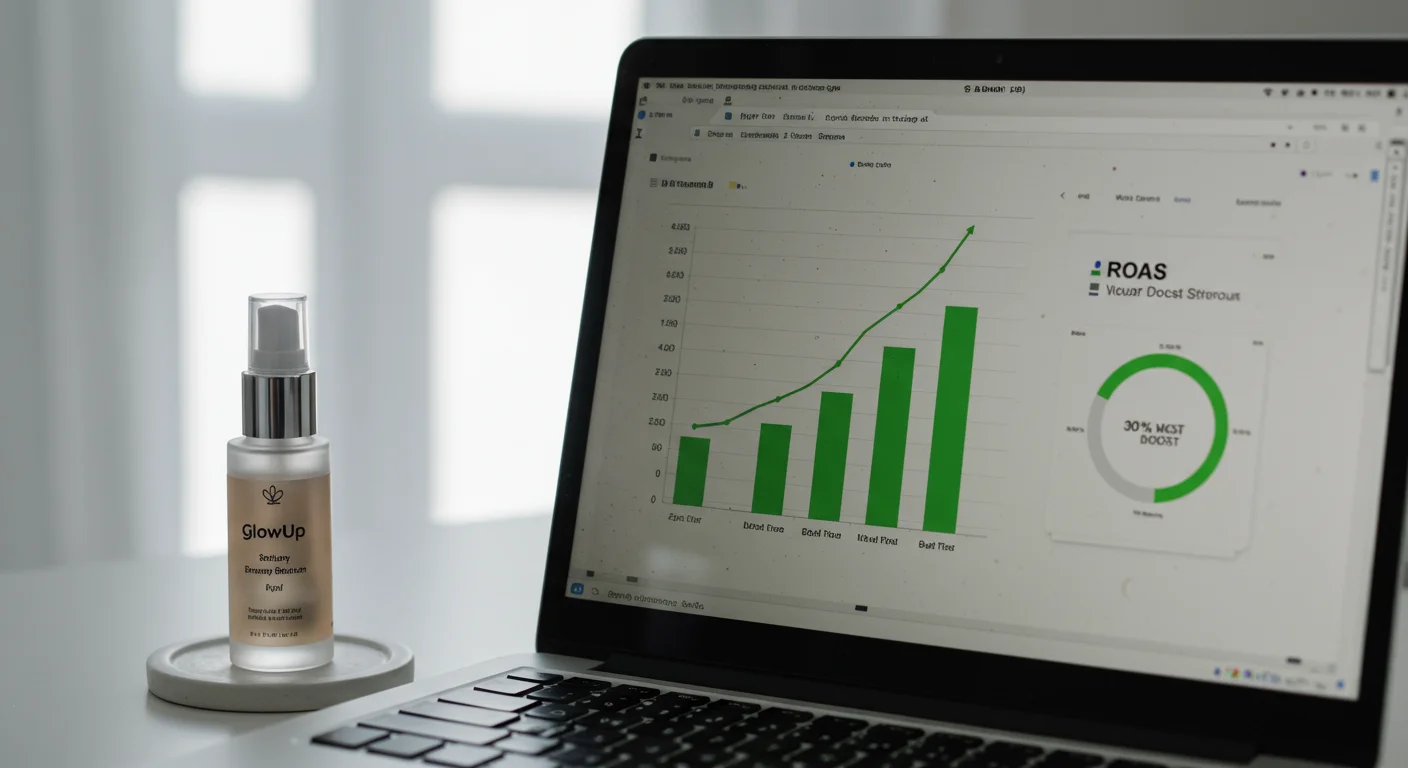
| Return on Ad Spend (ROAS) | 3.2x | Exceeded our target of 2.5x. |
The CTR of 1.5% for short-form video ads is something I’m particularly proud of. For context, IAB’s 2025 Digital Ad Spend Report indicated an average social video CTR of 1.1% for DTC brands, so we were clearly overperforming (IAB). This wasn’t accidental; it was the direct result of rigorous A/B testing on our video hooks.
What Worked: The Power of the Hook
The absolute biggest win was our focus on the first 3 seconds of every video. We tested dozens of variations: immediate product reveal, a question, a problem statement, a shocking statistic. For GlowUp, the most effective hooks were those that showed a quick, satisfying application of the product or posed a relatable skincare problem. For example, a video starting with “Tired of dull skin?” followed by a quick visual of the serum being applied saw a 20% higher CTR than one that simply showed the product packaging. This confirms what Nielsen has been telling us for years: attention spans are shrinking, and you have to grab them instantly (Nielsen).
Another success factor was the use of dynamic product ads (DPAs) with short-form video creatives on Instagram. By pairing our engaging videos with a product catalog, we saw a noticeable uplift in conversions for retargeting audiences. This is a feature I’ve been pushing clients to adopt more aggressively on Meta platforms.
What Didn’t Work: Overly Polished Content
Initially, we experimented with some highly produced, studio-quality videos. They looked great, but they performed terribly. The audience, particularly on TikTok, immediately sensed the “ad” vibe. Their engagement dropped, and our skip rates skyrocketed. It was a stark reminder that authenticity often trumps polish in this format. We quickly pivoted, reallocating resources to more raw, user-generated-style content, even for the brand’s official channels.
We also found that overly complex narratives within the short timeframe were confusing. Simplicity and a single, clear message per ad were paramount. Trying to cram too many benefits into a 15-second spot just diluted the impact.
Optimization Steps Taken: Agility is Key
Our optimization process was continuous and data-driven:
- Daily Creative Refresh: We monitored performance daily and paused underperforming creatives within 48 hours. New variations were launched weekly based on insights from the previous week’s top performers. This meant we had to be incredibly agile, producing new content constantly.
- Audience Refinement: We continuously refined our audience segments, excluding those with high skip rates and expanding lookalikes based on purchasers. We also tested different geographic targeting within major metropolitan areas like Atlanta, focusing on neighborhoods with higher concentrations of our target demographic, such as Midtown and Buckhead.
- Bid Strategy Adjustments: We started with a lowest-cost bid strategy and gradually shifted to target cost bids for our conversion campaigns once we had enough historical data, which helped stabilize our Cost Per Conversion. You can learn more about maximizing ROAS with 2026 ad bidding strategies here.
- Landing Page Optimization: We A/B tested different landing page layouts and CTA button colors. A simple change from a blue “Shop Now” button to a vibrant green one increased conversion rates by 8% for ad traffic. This underscores that your ad is only as good as the destination it leads to.
One editorial aside: don’t let anyone tell you that you can “set it and forget it” with short-form video ads. That’s a recipe for burning through your budget faster than you can say “algorithm change.” Constant monitoring and rapid iteration are the only paths to sustained success. For more on navigating these changes, read our guide on marketing in 2026: algorithmic shift survival guide.
The impact of short-form video on ad performance is undeniable, but it’s not a magic bullet. It demands a fresh approach to creative, a willingness to iterate constantly, and a deep understanding of platform nuances. For GlowUp, embracing these principles led to a launch campaign that not only hit but exceeded its sales goals, setting a strong foundation for future growth.
Mastering short-form video advertising requires continuous experimentation and a commitment to authentic, platform-native content that resonates with your audience, ensuring your brand stands out in an increasingly crowded digital landscape. Consider how TikTok marketing can boost your ROAS by 2.5x in 2026.
What is a good CTR for short-form video ads?
While benchmarks vary by industry and platform, a Click-Through Rate (CTR) of 1.0% to 1.5% is generally considered strong for short-form video ads on platforms like TikTok and Instagram Reels. Top-performing campaigns can achieve CTRs of 2% or higher, often due to highly engaging creative and effective targeting.
How often should I refresh my short-form video ad creatives?
To combat ad fatigue and maintain optimal performance, you should aim to refresh your short-form video ad creatives at least weekly, if not every few days. Continuously monitor your ad metrics (CTR, CPL, ROAS) and replace underperforming creatives promptly. I typically recommend having a rolling pipeline of new content ready to deploy.
What is the ideal length for a short-form video ad?
The ideal length for a short-form video ad is typically between 6 and 15 seconds. While platforms allow for longer videos, shorter ads generally have higher completion rates and are more effective at grabbing attention quickly. Focus on delivering your core message within the first 3-5 seconds.
Should I use trending audio in my short-form video ads?
Yes, using trending audio can significantly boost the discoverability and engagement of your short-form video ads, especially on platforms like TikTok. However, ensure the audio is relevant to your brand and message, and that its use doesn’t overshadow your product or service. Always verify licensing for commercial use if creating original content with trending sounds.
How much budget should be allocated to creative testing for short-form video?
Based on my experience, allocating at least 60% of your initial ad budget to creative development and testing for short-form video is a smart investment. This allows for extensive A/B testing of different hooks, calls-to-action, and video styles. Once winning creatives are identified, you can then shift a larger portion of the budget towards scaling those high-performing assets.


