 By Editorial Team
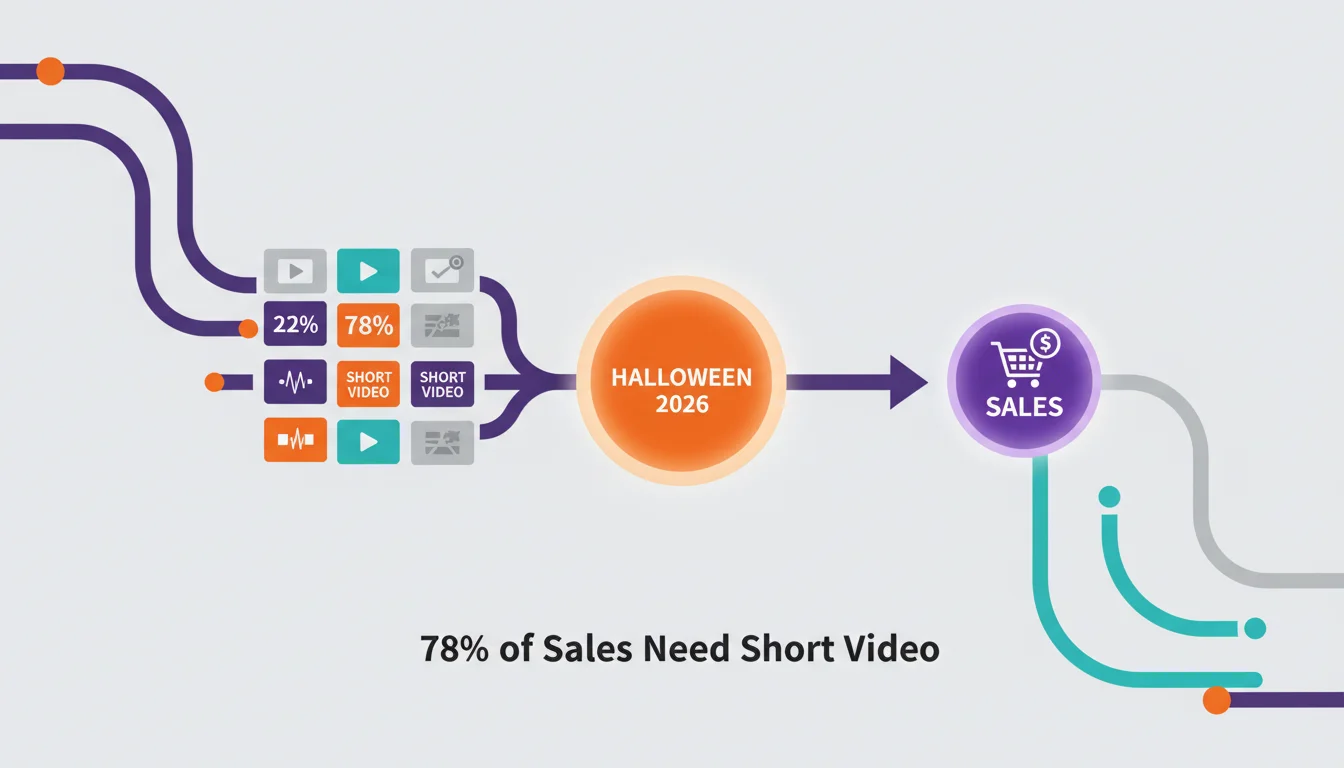
A 2025 study from eMarketer found that 78% of consumers discover new products in short-form video ads which signals a massive change in how you need to run holiday campaigns, particularly for something like Halloween. With so many people engaging with e-commerce video, it has to be part of your plan if you expect to capture any meaningful Halloween sales this year.
Key Takeaways
- Put at least 40% of your Halloween ad budget into short-form video platforms, TikTok, Instagram Reels, and YouTube Shorts, to get maximum reach.
- Use interactive elements like shoppable tags and polls inside your video ads to give people a faster path to buying your Halloween costumes and decor.
- Create your videos for mobile first. Every Halloween e-commerce video ad must be vertical and designed to be watched quickly on a phone.
- You’ll need a minimum of five different video ad variations for each product category so you can test what’s actually driving engagement and sales throughout the Halloween season.
78% of Consumers Discover Products Via Short-Form Video
That 78% figure from eMarketer’s 2025 study is a direct warning for anyone still relying on static images for product discovery. For Halloween e-commerce, your customers are scrolling through feeds, not browsing catalogs. They expect quick, engaging clips that catch their eye between other videos. My take on this is straightforward: if your Halloween products aren’t showing up in short-form video, they’re practically invisible to a huge part of the market. Imagine you’re selling unique Halloween props. A 15-second video that shows the prop in action, maybe with a quick jump scare, is going to beat a plain product photo every single time. Video offers demonstration, emotion, and storytelling that other formats can’t touch. Your presence on these platforms has to count, which means your content needs to fit right in with typical user behavior.
Conversion Rates for Video Ads Outperform Static Ads by 30%
A 2025 HubSpot report showed that video ads consistently pull in conversion rates about 30% higher than static ads. For Halloween e-commerce, where impulse buys and a sense of urgency drive sales, a 30% lift in conversions means a direct and serious gain in revenue. Think about the psychology. A static ad for a vampire costume shows the product, sure, but a video can show someone actually wearing it, moving around, and creating a scene. That visual context builds a much stronger emotional link and helps the person watching picture themselves using the product. When we build campaigns, we always show the product in its intended context. For Halloween, that means showing costumes being worn at parties or makeup being applied. Seeing a product “in action” just reduces that hesitation to buy. This does mean you have to be ready to produce more creative assets, but one strong video ad often outperforms ten static banners.
Average Watch Time for E-commerce Video Ads Decreased by 15% in 2025
While video’s importance is growing, our attention spans are shrinking. Nielsen’s 2025 data on digital ad consumption pointed to a 15% drop in the average watch time for e-commerce video ads from the year before. You don’t abandon video because of this. You refine your approach. The first three seconds of your Halloween video ad are everything. If you haven’t grabbed their attention by then, they’ve already scrolled past. You have to throw out the traditional ad structure of a slow build-up. Your ad must start with a bang, a visually arresting moment, or a clear product benefit. If you’re a Halloween candy retailer, maybe that’s a quick shot of a kid’s excited face. For a costume shop, it could be a fast-paced transition showing five different costumes in five seconds. We always tell clients to front-load their best visuals. A/B testing multiple opening hooks for your video ads is now fundamental for campaign success, so plan on using tools like Google Ads’ A/B testing features to find the intros that work.
Interactive Video Ad Features Drive 2x Higher Engagement Rates
The Interactive Advertising Bureau (IAB) released findings in late 2025 showing that video ads with interactive parts like polls, quizzes, and shoppable tags got twice the engagement of non-interactive videos. This is especially effective for Halloween e-commerce, where people are trying to make decisions. Imagine a video ad for Halloween decor that asks “Which haunted house theme is your favorite?” and then lets users tap an option that takes them to a product page for that theme. Or a costume ad that lets users vote on the “scariest” mask. These features grab attention and actively involve the customer which makes them feel more invested. Brands need to explore platforms that offer this, like Meta’s Advantage+ Creative for video, which lets you add dynamic, interactive overlays. The goal is to accelerate the path from inspiration to purchase. A direct link from a shoppable tag on a character’s prop in a video can cut out several steps and drastically improve your chances of getting a conversion. This is what makes video both engaging and transactional.
The Conventional Wisdom: “Just Get Your Ads Out Early”
A lot of marketers still operate on the old wisdom that for a seasonal event like Halloween, you just need to “get your ads out early” and keep them running. Early planning is good, but this thinking completely overlooks the fast-moving nature of consumer behavior and platform algorithms. My disagreement with this singular focus is that it undervalues the impact of timing and creative freshness. Just launching ads weeks ahead without changing them leads to creative fatigue and worse results over time. For Halloween, interest doesn’t peak in early September. It spikes in the 10 days before October 31st. A 2024 analysis of Halloween retail trends by Statista, for example, showed that over 40% of costume purchases happened in the last two weeks of October. So while that early push builds some brand awareness, you’re making a mistake if you neglect that final surge. What’s more, platforms like TikTok and Instagram Reels thrive on what’s new. An ad that does well in early October can feel stale and get ignored by mid-month. You need to plan for multiple creative refreshes. The better approach is to launch early with foundational campaigns, then aggressively iterate and refresh your video ad wins during that peak purchasing window. This keeps your brand relevant and engaging when people are actually ready to buy. Platforms reward freshness, so your campaign should reflect it. The challenge is strategically deploying and optimizing your video content to align with how people are behaving and how the platforms are changing day-to-day.
What are the best platforms for Halloween video ads?
For Halloween e-commerce, you should put your money on platforms built for short-form video where users are highly engaged. That means TikTok for Business, Instagram Reels, and YouTube Shorts. Their visual, sound-on experience is perfect for seasonal content and driving impulse buys.
How short should my Halloween video ads be?
Keep your Halloween e-commerce video ads between 15 and 30 seconds max. Since average watch times are dropping, the best ads get their main message and call to action across in the first 5 to 10 seconds.
What type of content does best in Halloween video ads?
The content that works best is visually grabbing, uses trending sounds or music, and shows your products in a fun or spooky way. Think quick costume transformations, tutorials for DIY decor using your items, or funny skits that feature what you’re selling.
Should I use user-generated content (UGC) for Halloween video ads?
Yes, definitely. User-generated content usually feels more real and trustworthy to shoppers. You can encourage your customers to share photos or videos of their Halloween costumes or decorated homes, and then (with their permission) repurpose the best content for your ad campaigns.
How can I track my Halloween video ad performance?
You can track performance using the analytics dashboards inside the ad platforms you’re using (like Meta Ads Manager or Google Ads). You need to watch key metrics like impressions, reach, click-through rate (CTR), conversion rate, cost per acquisition (CPA), and return on ad spend (ROAS) to see how well your Halloween sales efforts are actually working.


