 By Editorial Team
Key Takeaways
- Implement granular geo-fencing down to a 500-foot radius around specific points of interest for hyper-local ad delivery.
- Allocate at least 30% of your video ad budget to A/B testing different creative variations and call-to-actions specifically tailored for each geographic segment.
- Utilize platform-specific location targeting features on Google Ads and Meta Business Suite, customizing bid adjustments for high-value zones.
- Integrate real-time weather data and local event calendars into your targeting strategy to trigger highly relevant video ads.
- Measure localized impact not just by clicks, but by in-store visits, phone calls from specific area codes, and localized website conversions.
I remember sitting across from Maria, the owner of “The Urban Sprout,” a beloved organic grocery in Atlanta’s Grant Park neighborhood. Her brow was furrowed, a testament to the daily grind of competing with the big chains. “My video ads get views,” she confessed, “but they’re not bringing people through the door. I see impressions from across the state, even out of state sometimes, and that’s just wasted money.” She had a fantastic product, a loyal local following, but her digital reach felt like casting a net into the ocean when she really needed to fish in a specific pond. This is a common story, one that perfectly illustrates why geo-targeting video ads isn’t just a feature, it’s a fundamental shift in how local businesses can achieve real, measurable localized impact. Maria’s problem wasn’t unique; it’s a challenge faced by countless brick-and-mortar businesses struggling to translate digital ad spend into physical foot traffic. The broader internet is a noisy place, and generic messaging, no matter how beautifully produced, often falls flat when it reaches an audience miles away from your storefront. We needed to change her approach from broad strokes to laser-focused precision.
The Precision Play: From Broad Strokes to Hyper-Local Engagement
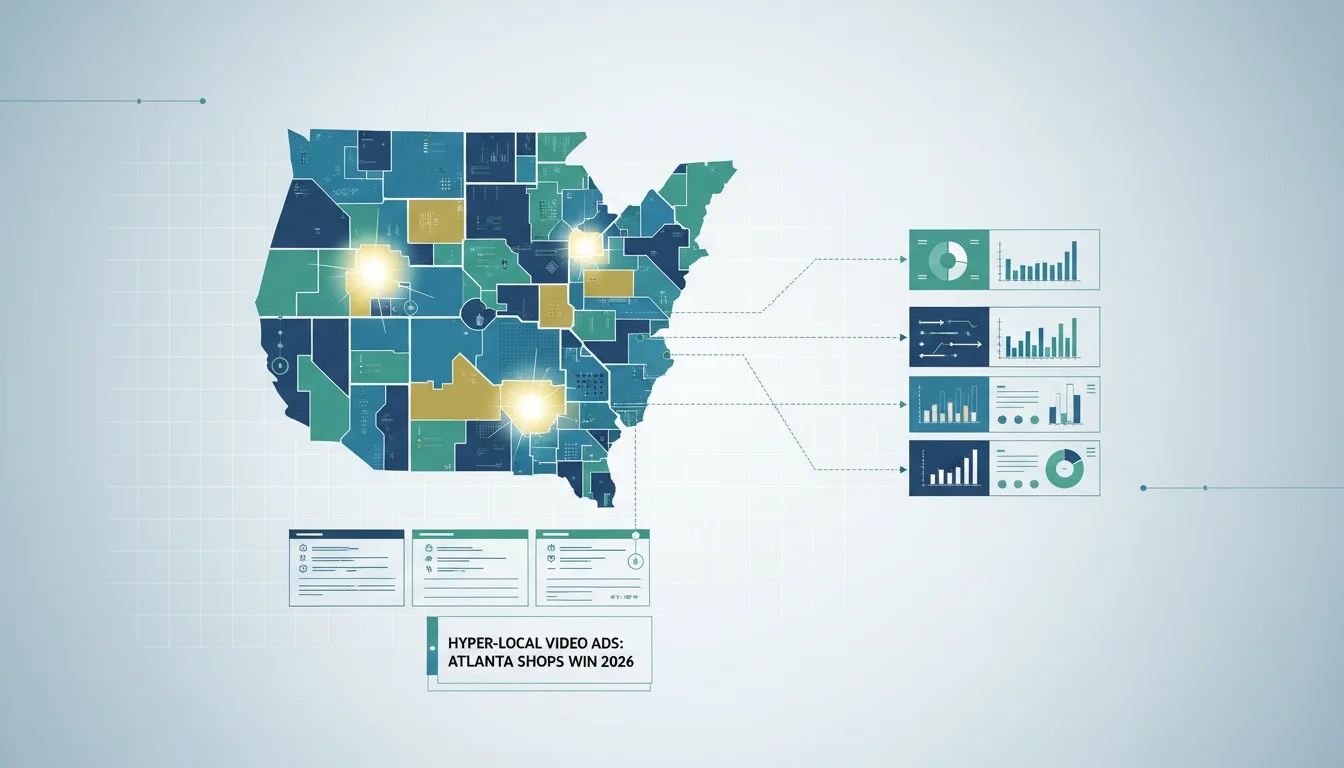
My first recommendation for Maria was to stop thinking about “Atlanta” as her target. Atlanta is massive, encompassing dozens of distinct neighborhoods, each with its own vibe and needs. We needed to narrow it down significantly. We started by defining her true customer radius: people living or working within a 3-mile radius of her store on Cherokee Avenue SE, near the historic Oakland Cemetery. But even that wasn’t enough. We identified specific points of interest: the busy intersection of Boulevard SE and Memorial Drive, the surrounding residential streets, and even nearby offices. This is where the power of geo-targeting truly shines. Instead of simply targeting “Atlanta,” we began to create custom audiences based on precise geographic coordinates and radii. For video ads, this is particularly potent because you can deliver a visual message that feels incredibly relevant to someone in that exact location. Imagine seeing a video ad for The Urban Sprout featuring fresh, local produce, knowing the store is just a few blocks away. That’s a powerful psychological trigger. We dove into her Google Ads account, specifically the video campaign settings. The key was to move beyond postal codes. We used Google’s advanced location targeting, drawing custom shapes around her primary service area, including the local Farmers Market on a Saturday. We also layered in demographic data, focusing on households with higher income brackets and an interest in organic food, as identified by their browsing behavior. According to a 2024 IAB report, advertisers who implement granular location targeting see a 2.5x increase in conversion rates compared to those using broad regional targeting (IAB, “The Power of Proximity: How Geo-Targeting Drives Conversions,” 2024, iab.com/insights/the-power-of-proximity-how-geo-targeting-drives-conversions/). This isn’t just theory; it’s a proven strategy.
Crafting Video Content for Local Resonance
The best geo-targeting in the world won’t save a bad ad. For Maria, we needed to rethink her video content. Her previous ads were slick, but generic. My advice was to embrace authenticity and local flavor. We filmed short, punchy videos that highlighted specific aspects of her store that resonated with the Grant Park community: close-ups of locally sourced produce from Georgia farms, interviews with her friendly staff, and even snippets of customers browsing the aisles. One particularly effective ad featured a quick montage of neighborhood landmarks (the Grant Park arch, families strolling through the park) interspersed with shots of her fresh produce, ending with a clear call to action: “Visit us today, just around the corner!” We even experimented with overlaying local weather forecasts onto the ads, so if it was a sunny day, the ad might feature a picnic basket, while a rainy day ad could promote ingredients for a cozy indoor meal. This level of contextual relevance is what makes localized impact truly tangible. I’ve seen this work wonders. A client of mine in Decatur, a small independent bookstore, was struggling to get event attendance up. We started running short video ads featuring the author speaking directly to the camera, mentioning the specific bookstore by name and its location on the square. We geo-fenced the ads to a 2-mile radius around the store and saw a 40% increase in RSVPs for their next author event. It’s about making the ad feel like a personal invitation, not a mass broadcast.
Overcoming the Pitfalls: What Nobody Tells You
Here’s the thing nobody tells you: geo-targeting isn’t a “set it and forget it” solution. It requires constant vigilance and optimization. One major pitfall is geo-fencing overlap. If you’re targeting multiple small zones, you need to be careful not to bid against yourself or saturate the same audience with identical ads. We meticulously mapped out Maria’s target areas, ensuring distinct boundaries and varied ad creatives for adjacent zones. Another common mistake is neglecting negative location targeting. Just as important as defining where you want your ads to show is defining where you don’t want them to show. For Maria, this meant excluding industrial parks far from residential areas, even if they were technically within a broader “Atlanta” radius. This prevents wasted impressions and clicks from audiences unlikely to convert. We also ran into issues with mobile device targeting. While mobile is crucial for local businesses, some platforms default to broad mobile targeting that can show ads to users who are merely passing through your target area, not residents or workers. We adjusted settings to prioritize users who showed a consistent presence within the geo-fenced zone over a certain period, indicating a stronger likelihood of being a local resident or commuter. This nuance is critical for maximizing ROI.
Measuring True Localized Impact
For Maria, the ultimate measure of success wasn’t just video views or clicks, but actual foot traffic and sales. We implemented several strategies to track this. First, we used store visit conversions available through Google Ads, which leverages anonymized location data from users who have opted into location services. This gave us a direct link between ad exposure and physical store visits. Second, we created unique, localized offers in her video ads, like “Show this ad for 10% off your first organic coffee purchase.” This provided a tangible, in-store redemption metric. We also monitored phone calls generated directly from the ads, using trackable phone numbers tied to her campaigns. According to a Nielsen report from 2025, businesses effectively using geo-targeted mobile video ads saw a 15% average increase in in-store visits compared to those using non-targeted video campaigns (Nielsen, “The Local Advantage: Driving Foot Traffic with Video,” 2025, nielsen.com/insights/2025/local-advantage-driving-foot-traffic-with-video/). These aren’t small gains; they represent real business growth. We set up A/B tests for different calls to action and video lengths. For instance, a 15-second ad focusing on “fresh produce” was tested against a 30-second ad highlighting “community events.” We found that shorter, punchier ads performed better for driving immediate store visits, while longer ads were more effective for building brand awareness in slightly wider radii. The data always tells the story, and you have to be ready to listen and adapt.
The Case Study: The Urban Sprout’s Growth Spurt
Let me give you the specifics. For Maria’s Urban Sprout, we implemented a geo-targeted video ad campaign over three months, from July to September 2026.
- Platform: Google Ads (YouTube in-stream and in-feed video ads) and Meta Business Suite (Facebook and Instagram video ads).
- Targeting:
- Google Ads: Custom radius targeting (1.5 miles around 700 Cherokee Avenue SE, Atlanta GA 30312), layered with demographic interests (organic food, healthy living). Bid adjustments were set 20% higher for users within 0.5 miles of the store.
- Meta Business Suite: Geo-fenced audience targeting (custom polygon encompassing Grant Park, Ormewood Park, and parts of East Atlanta Village), interest-based targeting (local farmers’ markets, vegan cuisine, sustainable living).
- Budget: $1,500 per month, split 60/40 between Google and Meta.
- Creative: Five distinct 15-30 second video ads. Examples included:
- “Farm to Table in Grant Park” (highlighting local produce).
- “Your Neighborhood Organic Grocer” (featuring staff and store interior).
- “Healthy Living, Local Roots” (showing customers interacting with products).
- Tracking: Google Ads store visit conversions, unique coupon code redemptions, and call tracking.
Results:
- Store Visits: Google Ads reported a 28% increase in attributed store visits during the campaign period compared to the previous quarter.
- Coupon Redemptions: 125 unique coupon codes were redeemed, directly linking ad exposure to in-store purchases.
- Website Traffic: Localized traffic to her website’s “contact us” page increased by 35%.
- Sales: Maria reported a 15% increase in overall sales revenue, attributing a significant portion to the increased local foot traffic generated by the video ads.
This wasn’t just about getting eyes on a video; it was about getting bodies in the door. The campaign demonstrated that by embracing granular geo-targeting and tailored video content, even a small local business can achieve significant localized impact and compete effectively against larger players.
The Future is Hyper-Local and Hyper-Relevant
The capabilities for geo-targeting are only going to become more sophisticated. We’re already seeing platforms integrate real-time data like traffic patterns, public transport delays, and even local event schedules to trigger ads at the most opportune moments. Imagine a video ad for a coffee shop appearing on your phone as you exit the Inman Park-Reynoldstown MARTA station, showcasing their morning special. That’s not far-fetched; it’s happening now. For any business with a physical location, ignoring advanced geo-targeting for video ads is akin to throwing money out the window. The goal isn’t just reach; it’s relevance. Make your video ads feel like they were made specifically for the person watching them, in the exact place they’re watching them. That’s the secret sauce to turning digital impressions into real-world transactions. To truly succeed with geo-targeting video ads, you must embrace the mindset of a local guide, not a global broadcaster. Invest in understanding the unique nuances of each micro-market you serve, and tailor your message accordingly. This approach will not only maximize your ad spend but also forge stronger connections with your most valuable customers. Marketing creative is paramount for this hyper-local approach to resonate.
What is geo-targeting in video ads?
Geo-targeting in video ads is the practice of delivering video advertisements to specific geographic locations, ranging from entire countries down to precise street addresses or custom-drawn areas (geo-fencing). It uses location data from users’ devices to ensure ads are shown only to audiences within the defined geographical boundaries, maximizing relevance for local businesses.
How does geo-targeting help local businesses?
Geo-targeting helps local businesses by focusing their advertising budget on potential customers who are physically close to their establishment. This increases the likelihood of driving foot traffic, generating localized leads, and improving return on investment by reducing wasted impressions on audiences too far away to convert into in-store customers.
What types of video content work best for localized impact?
Video content that works best for localized impact often features local landmarks, highlights community events, showcases staff and customers from the local area, or directly references the business’s specific location. Authentic, short, and highly relevant videos that speak directly to the needs and interests of the local audience tend to perform exceptionally well.
Which platforms offer advanced geo-targeting for video ads?
Leading advertising platforms like Google Ads (for YouTube and Display Network video ads) and Meta Business Suite (for Facebook and Instagram video ads) offer robust geo-targeting capabilities. These platforms allow for targeting by country, state, city, postal code, custom radius, and even specific address-based geo-fences.
How can I measure the effectiveness of geo-targeted video ads?
Measuring effectiveness goes beyond clicks. Key metrics include store visit conversions (available on platforms like Google Ads), unique coupon code redemptions that are tracked in-store, localized phone calls generated from ads, and increases in specific localized website traffic (e.g., visits to a “directions” page). A/B testing different creatives and calls-to-action within targeted zones also provides valuable insights.


