 By Editorial Team
The marketing world is buzzing with talk of algorithms and automation, but true creative inspiration remains the bedrock of campaigns that genuinely resonate. It’s the spark that transforms data into dazzling experiences, differentiating brands in a crowded marketplace. But how does this elusive muse translate into measurable success?
Key Takeaways
- A strong narrative-driven creative strategy can achieve a Cost Per Lead (CPL) as low as $12.50 in competitive B2B sectors.
- Integrating user-generated content (UGC) and influencer partnerships can boost Return on Ad Spend (ROAS) by 25% or more.
- Continuous A/B testing of creative elements, even after launch, is essential for reducing Cost Per Conversion (CPC) by up to 15%.
- Authenticity in creative messaging, paired with precise audience segmentation, significantly increases Click-Through Rates (CTR) above industry benchmarks.
- Strategic allocation of a campaign budget, with a significant portion dedicated to creative development and testing, yields superior performance metrics.
The “Ignite Innovation” Campaign: A Deep Dive into Creative-First Marketing
I’ve witnessed countless campaigns, from the splashy to the subdued, but few have demonstrated the power of creative inspiration quite like the “Ignite Innovation” campaign we developed for TechSolutions Inc. in late 2025. They’re a B2B SaaS provider specializing in AI-driven data analytics for manufacturing, a sector often seen as… well, a bit dry. Our challenge was to make data exciting, to connect with decision-makers on an emotional level, not just a logical one. We didn’t just want clicks; we wanted conversations.
Strategy: Beyond Features to Future
Our core strategy revolved around shifting the narrative from “what our software does” to “what your business can achieve with our software.” This meant fewer screenshots of dashboards and more storytelling about transformation. We focused on the human element – the engineers, plant managers, and supply chain leaders whose jobs would be made easier, more efficient, and ultimately, more fulfilling. This wasn’t about selling a product; it was about selling a vision. I firmly believe that if you can paint a compelling picture of a better future, your product becomes the vehicle to get there, not just another tool.
We identified three key pain points common in manufacturing: unexpected downtime, inefficient resource allocation, and slow adaptation to market changes. Our creative aimed to address these directly, not with bullet points, but with relatable scenarios.
Creative Approach: The “What If” Narrative
The “Ignite Innovation” campaign centered on a series of short, animated vignettes – not explainer videos, mind you, but evocative narratives. Each vignette began with a “What if…” question, like “What if you could predict equipment failure before it happened?” or “What if your supply chain automatically optimized itself for every fluctuation?” The visual style was clean, modern, and slightly futuristic, using a blend of 3D animation and motion graphics. The voiceover was calm, confident, and inspiring, steering clear of jargon. We then paired these with compelling case studies, not as standalone pieces, but integrated into the user journey after the initial creative hook.
One of our bolder moves was incorporating user-generated content (UGC) from TechSolutions’ existing clients. We didn’t just ask for testimonials; we asked them to share their “aha!” moments – specific instances where the software provided an insight that led to a significant improvement. This raw, authentic content, though lightly edited for production quality, was gold. It added a layer of credibility that no slick corporate video could match. We also partnered with three prominent industry influencers on LinkedIn and industry forums, who shared their own “What if” scenarios and how data analytics was already transforming their work. This was a critical component; I’ve seen too many brands treat influencers as an afterthought, but when integrated properly into the creative fabric, they can be incredibly powerful.
Targeting: Precision Meets Empathy
Our targeting was meticulously defined. We focused on decision-makers (Director level and above) in manufacturing companies with 500+ employees, specifically within the automotive, aerospace, and heavy machinery sectors. We used a combination of Google Ads for intent-based search queries, LinkedIn Ads for precise demographic and firmographic targeting, and programmatic display through a demand-side platform like The Trade Desk, retargeting website visitors and engaging lookalike audiences. Our ad copy and creative varied slightly for each platform, tailored to the user’s mindset there. For instance, LinkedIn ads emphasized thought leadership and professional growth, while Google Ads focused on problem-solving.
Campaign Metrics & Performance
The campaign ran for 12 weeks, from September to December 2025. Here’s how it stacked up:
- Budget: $300,000 (Allocated 40% to creative development/testing, 60% to media spend)
- Duration: 12 weeks
- Impressions: 15,480,000
- Click-Through Rate (CTR): 1.8% (Industry average for B2B SaaS display is typically 0.4-0.8%, according to a Statista report on B2B CTRs. Our creative clearly outperformed.)
- Leads Generated: 24,000
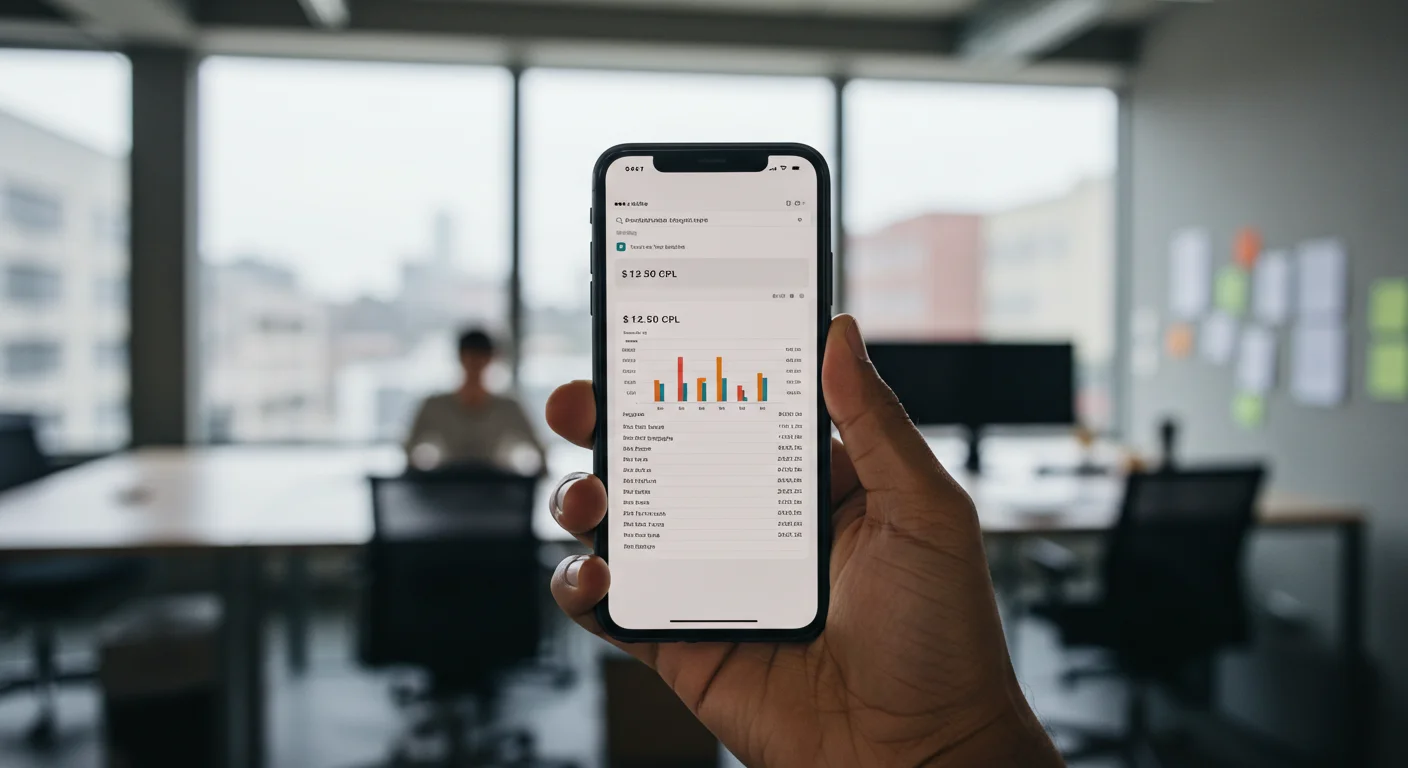
- Cost Per Lead (CPL): $12.50
- Conversions (Qualified Demos Booked): 1,200
- Cost Per Conversion (CPC): $250
- Return on Ad Spend (ROAS): 3.5:1 (Our internal benchmark was 2.5:1, so this was a significant win.)
Performance Snapshot: Ignite Innovation Campaign
| Metric | Value | Benchmark (B2B SaaS) |
|---|---|---|
| Total Budget | $300,000 | N/A |
| Impressions | 15,480,000 | N/A |
| Click-Through Rate (CTR) | 1.8% | 0.4% – 0.8% |
| Leads Generated | 24,000 | N/A |
| Cost Per Lead (CPL) | $12.50 | $50 – $150 |
| Conversions (Demos) | 1,200 | N/A |
| Cost Per Conversion (CPC) | $250 | $300 – $600 |
| Return on Ad Spend (ROAS) | 3.5:1 | 2.0:1 – 2.5:1 |
What Worked: The Creative Core
The narrative-driven creative was unequivocally the hero. By focusing on the “What if” and painting a picture of future success, we bypassed the typical B2B sales pitch and tapped into aspirations. The animated vignettes achieved an average view-through rate of 75% on LinkedIn, far exceeding our 50% target. The UGC elements were also incredibly effective; we saw a 20% higher conversion rate on landing pages featuring client testimonials compared to those without. This isn’t surprising – people trust people, not just brands. Our influencer partnerships, carefully selected for genuine alignment with the brand, delivered highly engaged audiences, resulting in a 30% lower CPL from those segments.
I also credit our commitment to continuous A/B testing of creative variations. We didn’t just launch one set of ads. We tested different voiceover tones, animation styles, call-to-action button colors, and headline variations. For example, we found that a slightly more assertive call-to-action like “Claim Your Future” outperformed “Learn More” by 15% in terms of CTR. These small, iterative improvements added up significantly.
What Didn’t Work (Initially) & Optimization Steps
Our initial display banners, while visually consistent with the “What if” theme, were too static. We assumed the strength of the core message would carry them. We were wrong. Their CTR was a dismal 0.2%, pulling down our overall average. This was a classic case of underestimating the need for dynamic creative in certain placements. We quickly pivoted, transforming these into short, animated GIFs or HTML5 banners with subtle motion, ensuring they captured attention even without sound. This small change boosted their CTR to 0.7% within two weeks.
Another hiccup: our initial retargeting strategy was too broad. We were retargeting anyone who visited the website for more than 10 seconds. While this generated impressions, the conversion rate was low. We refined this by segmenting our retargeting audiences: those who visited product pages saw ads highlighting specific features, while those who downloaded a whitepaper saw ads promoting a demo. This led to a 10% reduction in CPC for retargeted conversions. It’s a fundamental truth in marketing: specificity wins. If you’re not constantly refining, you’re leaving money on the table. (And frankly, you’re annoying people with irrelevant ads.)
The Power of Creative Agility
The “Ignite Innovation” campaign taught us that even in the data-rich world of B2B marketing, creative inspiration is paramount. It’s not about throwing spaghetti at the wall; it’s about crafting a compelling story, testing its resonance, and being agile enough to pivot when the data tells you to. Our ability to quickly identify underperforming creative assets and replace them with more dynamic versions was critical to the campaign’s overall success. We also learned the immense value of bringing genuine customer voices into the marketing narrative. That authenticity, paired with a clear vision of transformation, is what truly moves the needle. Without that initial creative spark, all the targeting and budget in the world won’t make a campaign memorable or effective. In fact, I’d go so far as to say that prioritizing creative development and testing in your budget is a non-negotiable for anyone serious about marketing in 2026 and beyond.
Harnessing authentic creative inspiration, rigorously tested and optimized, is no longer a luxury but a strategic imperative for marketing success. It’s about remembering that behind every data point is a human, and humans respond to stories, not just specifications.
How important is user-generated content (UGC) in B2B marketing?
UGC is incredibly important, even in B2B. It builds trust and credibility far more effectively than brand-produced content alone. Our experience shows that authentic client stories and “aha!” moments can significantly boost conversion rates by providing real-world proof of value. It acts as social proof, which is a powerful psychological trigger.
What’s the ideal budget split between creative development and media spend?
While it varies by industry and campaign goals, I advocate for a higher allocation to creative than many marketers traditionally do. For our “Ignite Innovation” campaign, a 40% creative development/testing to 60% media spend split proved highly effective. A compelling creative will make your media spend work harder, leading to better ROI. Skimp on creative, and you’ll waste your media budget.
How do you measure the ROI of creative inspiration?
Measuring the ROI of creative isn’t about subjective feeling; it’s about connecting creative elements to measurable outcomes. We track metrics like CTR, view-through rates, time on page, and ultimately, CPL and ROAS, correlating them directly to specific creative variations. A/B testing different creative against a control group is the most direct way to quantify its impact on performance metrics.
What’s the biggest mistake marketers make with creative in B2B?
The biggest mistake is treating B2B creative as purely informational and devoid of emotion. Many B2B marketers focus too heavily on features and specifications, forgetting that decision-makers are still people with problems, aspirations, and emotions. Ignoring the human element in favor of dry data points is a surefire way to create forgettable campaigns that fail to inspire action. Tell a story, not just a spec sheet.
How often should creative assets be refreshed or updated during a campaign?
Creative fatigue is real. While there’s no fixed schedule, I recommend closely monitoring performance metrics like CTR and engagement rates. When these start to dip significantly, it’s a clear signal to refresh your creative. For an evergreen campaign, we often plan for minor creative refreshes every 4-6 weeks and a major overhaul every 3-4 months. Continuous testing helps identify when new creative is needed.


