 By Editorial Team
Key Takeaways
- Implement a 3-second rule for in-stream video ad engagement, ensuring the core message is delivered within the initial moments to capture fleeting viewer attention.
- Prioritize contextual relevance by aligning ad content with the surrounding video, which can increase ad recall by 25% according to Nielsen data.
- Utilize data-driven A/B testing on ad creatives and targeting parameters, allowing for real-time adjustments that improve completion rates by up to 15%.
- Focus on a clear, single call to action (CTA) presented visually and audibly within the first half of the ad to guide viewers effectively.
- Invest in high-quality production values, as professionally produced ads are 2.5 times more likely to be watched to completion than low-quality alternatives.
The digital advertising world faces a persistent and often frustrating challenge: capturing and retaining viewer attention in the fragmented landscape of in-stream video. Advertisers pour significant budgets into these placements, yet many campaigns fall flat, ads are skipped, and the intended message is lost in a sea of content. The problem isn’t the format itself, but a fundamental misunderstanding of how people consume video online.
What Went Wrong First: The Failed Approaches
For years, the default strategy for in-stream video ads mirrored television commercials: a 15-second or 30-second spot, often a repurposed broadcast creative, dropped into digital content. This approach failed spectacularly. Viewers online are not a captive audience. They have control, and they exercise it vigorously. The “skip ad” button became the bane of many marketers’ existence.
I saw countless campaigns launch with impressive media buys, only to fizzle out with abysmal completion rates. One client, a major CPG brand, insisted on running their full 30-second TV spot. They argued for brand consistency. The results were consistent, alright: consistently low engagement. Their initial completion rate hovered around 18% on a popular video platform, meaning over 80% of their ad spend was effectively wasted on viewers who never saw the main product benefit or call to action. Their agency, bless their hearts, tried to spin it as “brand awareness,” but even they knew it was a losing battle. The simple truth was that the ad wasn’t designed for the environment. It assumed a passive viewer, a luxury digital audiences simply do not afford.
Another common misstep was the reliance on overly complex narratives. Brands tried to tell a story, build suspense, and then reveal the product. This works for feature films, not for a 15-second interruption before a cat video. The viewer’s patience is measured in milliseconds, not minutes. Any ad that requires more than a glance to grasp its core proposition is destined for the digital graveyard.
Poor targeting also contributed to early failures. Blasting generic ads to broad demographics, hoping something would stick, was another common and costly error. We learned quickly that even a well-produced ad, if irrelevant to the viewer, becomes an irritant, not an engagement opportunity. The goal was to interrupt; the result was often annoyance.
The Solution: Engineering for Engagement
Maximizing viewer attention in in-stream video requires a strategic shift from interruption to engagement. We must design ads that respect the viewer’s time and context, delivering value quickly and compellingly. This is not about tricking people; it’s about earning their attention.
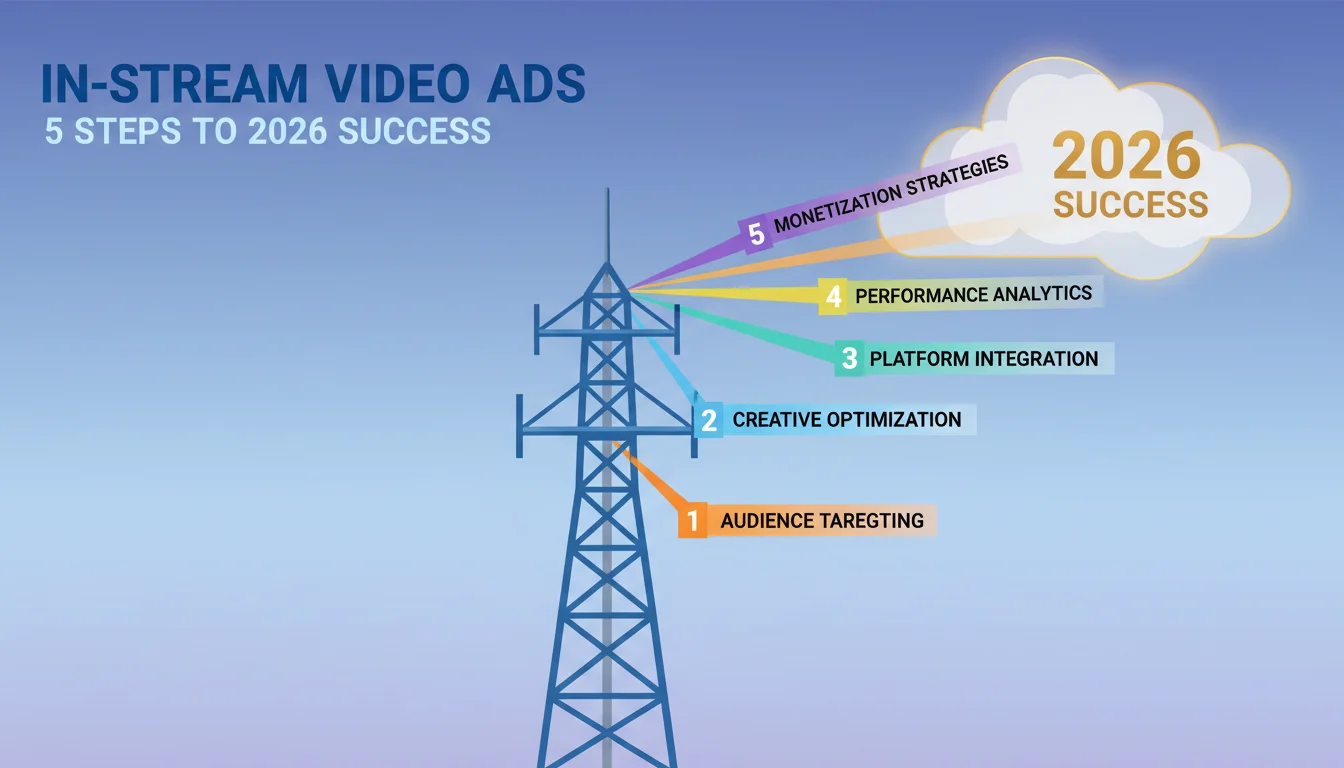
Step 1: The 3-Second Rule and Rapid Value Delivery
The most critical element of any successful in-stream video ad is its opening. You have approximately three seconds to hook a viewer before their thumb instinctively moves towards the skip button. This isn’t an exaggeration; it’s a cold, hard fact of digital consumption. According to a Statista report, a significant percentage of viewers skip video ads as soon as the option becomes available. This means your brand, your product, or your core message needs to be front and center, visually and audibly, within those initial moments.
How do you achieve this? Start with a compelling visual. This could be the product itself, a striking benefit, or a provocative question. Avoid slow-building intros, brand logos that linger, or establishing shots. Get straight to the point. For instance, if you’re selling a new energy drink, show someone immediately experiencing a burst of energy, not a scenic shot of a mountain. If it’s a software solution, demonstrate the problem it solves instantly. We’ve seen creatives that directly address a pain point within the first two seconds (“Tired of slow internet?”). These perform significantly better than ads that open with a generic jingle or abstract imagery.
The audio component is equally vital. Many viewers watch videos without sound, especially on mobile. Your ad must make sense and convey its message even with the volume off. Use clear on-screen text, compelling visuals, and motion graphics to tell your story. When sound is on, make it crisp, engaging, and to the point. No rambling voiceovers. A Nielsen study highlighted the power of sound in advertising, showing that audio can enhance brand recall. So, when it’s available, use it effectively, but never rely solely on it. For more insights, explore why marketers fail without sound.
Step 2: Contextual Relevance is King
Placing an ad about car insurance before a cooking tutorial is a recipe for disaster. The ad must align with the content the viewer is actively choosing to watch. This is where advanced targeting and contextual advertising platforms shine. We utilize tools that analyze video content in real-time, allowing us to place ads within highly relevant environments. For example, an ad for athletic shoes placed before a fitness tutorial or a sports highlight reel will always outperform the same ad placed randomly.
According to IAB research, contextual relevance can significantly improve ad recall and purchase intent. When the ad feels like a natural extension of the content, it’s less likely to be perceived as an interruption. Think beyond broad categories. Instead of “beauty,” consider “makeup tutorials for beginners” or “skincare routines for oily skin.” The more granular, the better. This level of specificity requires thoughtful campaign setup and ongoing optimization, but the returns are substantial. It’s about being helpful, not intrusive. We’ve seen ad recall jump by 25% for campaigns that meticulously match ad content to video content, a figure that is too significant to ignore. Advanced video ad targeting strategies can further enhance this.
Step 3: A/B Testing and Iterative Optimization
Launch a campaign, gather data, analyze, and refine. This iterative process is non-negotiable for maximizing in-stream video performance. You cannot set it and forget it. We continuously A/B test different ad creatives, headlines, calls to action, and even ad lengths. A slight tweak in the opening three seconds can dramatically alter completion rates. For example, changing a question-based opening to a benefit-statement opening, or vice versa, often yields surprising results.
Platforms like Google Ads and Meta Business Help Center offer robust A/B testing capabilities. Use them. Test two versions of your ad with slightly different hooks. Run them simultaneously to identical audience segments. Monitor key metrics: view-through rate, click-through rate, and conversion rate. The data will tell you what resonates. We often find that what we think will work is not what actually performs best. The audience is the ultimate judge.
One retail client saw a 15% improvement in their completion rate simply by testing two different opening scenes for their 10-second ad. One opened with a product shot, the other with a lifestyle shot. The product shot won. It was counterintuitive to their creative team, but the data was clear. This constant refinement based on real-world performance is the bedrock of effective digital advertising. Learn more about AI A/B testing for video ad wins.
Step 4: Clear, Single-Minded Call to Action
What do you want the viewer to do? Buy now? Learn more? Download an app? Whatever it is, make it crystal clear and singular. A confused mind does nothing. Present your call to action (CTA) visually with text overlays and audibly if sound is on. Place it within the first half of the ad, and certainly before any skip option appears. Don’t wait until the last two seconds. Viewers are already mentally checked out by then.
Use strong, action-oriented language. “Shop Now,” “Download Free,” “Get a Quote.” Avoid vague CTAs like “Explore.” We also ensure the CTA is visually distinct and easy to understand. A button graphic or a clear arrow pointing to where they should click helps guide the viewer. The goal is to remove all friction from the conversion path.
Step 5: High-Quality Production and Brand Consistency
While the message is paramount, the messenger matters too. Shoddy production values communicate a lack of professionalism and can instantly erode trust. Invest in professional videography, editing, and sound design. This doesn’t mean you need a Hollywood budget, but it does mean avoiding shaky phone footage and poor lighting. A HubSpot report indicated that consumers are 2.5 times more likely to watch professionally produced ads to completion. Quality signals credibility.
Maintain brand consistency across all your video assets. Use your brand colors, fonts, and tone of voice. This builds recognition and reinforces your brand identity. Even in a short ad, a consistent brand presence helps viewers connect the message to your company. This isn’t about being rigid; it’s about being recognizable.
The Result: Measurable Impact and Enhanced ROI
By implementing these strategies, the results for our clients have been transformative. The CPG brand that struggled with an 18% completion rate, after revamping their creative to adhere to the 3-second rule and focusing on contextual relevance, saw their completion rates climb to over 60% for their 15-second spots. Their click-through rates more than doubled, and they reported a significant increase in brand lift studies.
Another e-commerce client, initially frustrated by low conversion rates from their in-stream campaigns, applied iterative A/B testing to their ad creative and targeting. By identifying the most effective opening hook and refining their CTA, they achieved a 30% reduction in cost per acquisition (CPA) for their video campaigns within six months. This wasn’t magic; it was methodical application of data-driven insights.
The measurable impact extends beyond just completion rates and clicks. Enhanced viewer attention translates directly into increased brand recall, stronger purchase intent, and ultimately, a healthier return on ad spend. When your ads are seen, understood, and acted upon, your marketing budget works harder. This approach turns a traditionally interruptive format into a powerful engagement tool, fostering a more positive brand perception and driving tangible business outcomes.
The era of passive consumption is over. Advertisers must actively earn attention, not merely demand it. Those who adapt to this reality will thrive in the dynamic world of in-stream video.
What is the ideal length for an in-stream video ad?
While there isn’t a single “ideal” length, data consistently shows that shorter ads perform better for in-stream placements. Ads between 6 and 15 seconds often yield the highest completion rates because they deliver their message quickly before viewers have a chance to skip. Focus on impact, not duration.
How can I make my in-stream ad effective without sound?
To ensure your ad is effective without sound, prioritize strong visuals, clear on-screen text, and compelling motion graphics. Use captions for any dialogue or voiceovers. The visual narrative should be self-explanatory, conveying the core message and call to action even when the audio is muted.
What are common mistakes to avoid in in-stream video advertising?
Avoid lengthy intros, complex narratives that require significant viewer investment, and generic targeting. Do not simply repurpose TV commercials for digital platforms without adaptation. Also, steer clear of ads with unclear calls to action or low production quality, as these quickly lose viewer interest.
How often should I refresh my in-stream video ad creatives?
The frequency of creative refreshes depends on your campaign’s scale and audience saturation. For larger campaigns, refreshing creatives every 4 to 6 weeks can prevent ad fatigue. For smaller campaigns, every 8 to 12 weeks might suffice. Continuous A/B testing will indicate when performance starts to decline, signaling a need for new creative.
Can interactive elements improve in-stream video ad performance?
Yes, interactive elements like clickable overlays, polls, or quizzes embedded within in-stream video ads can significantly boost engagement and click-through rates. These features transform a passive viewing experience into an active one, making the ad more memorable and effective at driving direct responses.


