 By Editorial Team
Most companies still struggle to prove their marketing actually works, especially with something as complex as video. This campaign teardown digs into how a B2B software company, “InnovateTech Solutions,” used advanced video attribution to connect video views directly to its sales pipeline, getting past vanity metrics to track actual revenue.
Key Takeaways
- InnovateTech spent $150,000 on a 12-week video campaign aimed at enterprise IT leaders, shooting for a 3:1 ROAS.
- They used a multi-touch attribution model, specifically a custom weighted linear setup, to split credit between YouTube, LinkedIn Video Ads, and programmatic video.
- Early on, performance was weak. The Cost Per Lead (CPL) was $280 and Return on Ad Spend (ROAS) sat at 1.8:1, well below their goal.
- After some serious optimization, like A/B testing video lengths and CTA overlays, they pushed the ROAS up to 3.2:1 and got the CPL down to $195 by the eighth week.
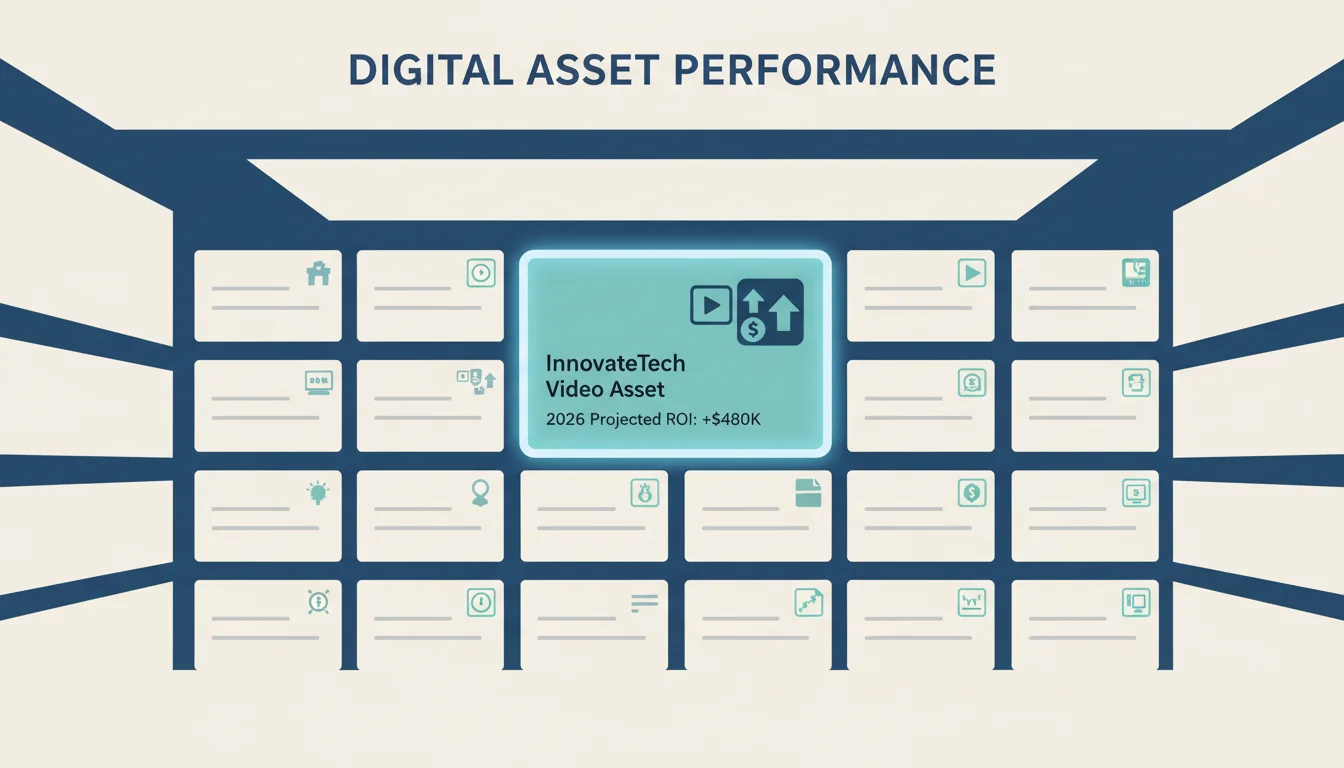
- The campaign pulled in 1,200 Marketing Qualified Leads (MQLs) and was directly credited with $480,000 in new deals, proving that granular revenue tracking for video is possible.
InnovateTech Solutions: Connecting Video Views to Actual Sales
InnovateTech Solutions, which sells an AI-driven data analytics platform, had a problem we all know: the marketing team was making great videos, but it was almost impossible to show how they directly made money. The old last-click attribution models just weren’t cutting it, ignoring all the top-of-funnel awareness the videos were building. So in late 2025, they ran a tight, 12-week video campaign aimed at IT directors and CIOs at big companies (specifically, North American firms with 1,000+ employees). The goal was crystal clear: get quality leads and actually grow the pipeline, with a hard target of a 3:1 Return on Ad Spend (ROAS).
They put a $150,000 budget on the line for the 12 weeks, spreading it across YouTube Ads (50%), LinkedIn Video Ads (30%), and programmatic video buys on a DSP like The Trade Desk (20%). InnovateTech’s team knew that video needed a much better approach to marketing attribution than just counting clicks. They went with a custom weighted linear attribution model, which let them assign partial credit to every single video touchpoint a prospect made before they finally converted.
Strategy and Creative: Education, Engagement, Conversion
The whole strategy was built around educational content. InnovateTech produced three core video assets:
- “The Data Intelligence Imperative” (2:30 min): This was a high-level thought leadership video about the chaos of data sprawl and why companies need better analytics. It was their main awareness play on YouTube and programmatic.
- “InnovateTech Platform Demo: Unlocking Insights” (1:45 min): A more granular, feature-heavy video that actually showed the platform doing its thing with real use cases. This was for people who’d already seen the first video or were checking out analytics topics on LinkedIn.
- “Client Success Story: Enterprise X Transforms Operations” (1:00 min): A quick testimonial video with a real client talking about their wins with the platform. This was the closer, usually run with a direct call-to-action asking for a demo.
The videos all had a clean, professional look, they avoided getting too deep in the technical weeds, at least in the first awareness-stage video. The voiceovers were confident, and they used on-screen graphics to make tough concepts easier to follow. The demo video showed the real product UI, which gave people a concrete look at what they might be buying, and the success story featured a real person from a client company, which added a ton of credibility.
Targeting: Reaching Decision-Makers
The targeting was extremely specific. On YouTube, InnovateTech built custom intent audiences from search queries like “AI data platforms,” “business intelligence software,” and “enterprise analytics solutions,” and they also layered on in-market segments for “business software.” They geo-targeted major business centers like New York, Chicago, and the Bay Area.
LinkedIn was where they really zeroed in. They could target by job titles like “CIO,” “VP of IT,” and “Director of Enterprise Architecture” and then filter by company size (1,000+ employees) and industry (finance, healthcare, etc.). You just can’t get that anywhere else for B2B. Programmatic video helped them get more reach on business news sites and trade publications, using third-party data to find tech decision-makers wherever they were online.
Initial Performance and How the Attribution Model Worked
The campaign started strong out of the gate. After the first four weeks, here’s where the numbers stood:
- Total Impressions: 8.5 million
- Click-Through Rate (CTR): 0.8% across all video ads
- Cost Per Lead (CPL): $280 (for a demo request or content download)
- Return on Ad Spend (ROAS): 1.8:1 (based on closed deals attributed by the model)
- Conversions (MQLs): 214
- Cost Per Conversion: $700
Getting 214 MQLs in a month wasn’t bad, but that 1.8:1 ROAS was way off the 3:1 goal. The weighted linear model, which they’d set up inside their marketing automation platform, was telling them something important. It showed the top-of-funnel awareness video (“The Data Intelligence Imperative”) was getting about 30% of the credit for a conversion, the demo video was getting 40%, and the testimonial got the final 30%. This was the key insight. They were building awareness just fine, but the mid-funnel content wasn’t doing enough to get people to actually raise their hands.
What Worked Well: Early Wins
The thought leadership video on YouTube had great view completion rates, with people watching 70% of a 2:30 video on average. That told us the content was hitting on real pain points for the audience. The quality of leads coming from LinkedIn was also high which proved the targeting was spot-on. The sales team even mentioned that prospects from LinkedIn came into conversations with a much better idea of what InnovateTech did.
The programmatic buy gave them massive scale and drove a ton of impressions at a decent CPM of $12.50. You need that kind of broad reach to stay in front of your target audience while they’re browsing all over the web.
What Didn’t Work as Expected: Room for Improvement
The main problem was the conversion rate from someone watching a video to becoming an MQL. Views were great, but the jump from watching a video to filling out a demo request form was just too big for most people. The first CTAs were boring (“Learn More,” “Request a Demo”). And on programmatic channels, the longer demo video had a huge drop-off after the first minute, it was just too much information for an audience that wasn’t warmed up yet.
Ad frequency was another issue. Some people on YouTube were getting hit with the same ad way too often which led to fatigue and lower returns. The attribution model also showed that the journey to conversion was messy, with people seeing ads on different channels and devices, which makes granular video attribution really tough if you don’t have a solid cross-device tracking setup.
“With U.S. organic search traffic falling 2.5% year-over-year in January 2026 and AI referral traffic to retail sites surging 693% over the same period, a real shift in where buyers begin their research is clearly happening.”
Optimization Steps and Better Attribution Insights
Using that data from the first four weeks, the InnovateTech team made some key changes:
- A/B Testing CTAs: They swapped out the generic “Request a Demo” on their conversion videos for more specific offers. They tried “Download Our AI Implementation Guide” and “Get a Personalized Platform Overview.” The guide download blew the other options away, boosting the conversion rate by 15%. This changed the immediate ask from a hard sell to a softer, more helpful one.
- Video Length Optimization: They took the long platform demo and chopped it into 30-second versions for programmatic, with each one focused on a single benefit. This move increased view completion rates on those channels by 25%.
- Frequency Capping Adjustments: To fight ad fatigue on YouTube, they got stricter with frequency caps, dropping the average ad exposure from 7 down to 4 times a week for any given user.
- Retargeting Segmentation: They got smarter with retargeting. They created a new audience of people who watched 75% or more of the thought leadership video and then immediately hit them with the demo video and the new “AI Implementation Guide” offer. This kind of sequential storytelling really worked.
- Attribution Model Refinement: They tweaked the weighted linear model to give more credit to the mid-funnel content that solved the problems introduced in the awareness phase. The demo video’s credit share went up to 45%, awareness content went down to 25%, and the final conversion piece stayed at 30%. This felt much closer to how the sales cycle actually worked, education first, then serious interest.
By week 8, you could really see the results of all that tweaking:
- Total Impressions: 18.2 million (cumulative)
- Click-Through Rate (CTR): 1.1% (a 37.5% jump)
- Cost Per Lead (CPL): $195 (a 30% drop)
- Return on Ad Spend (ROAS): 3.2:1 (finally over the target)
- Conversions (MQLs): 780 (cumulative)
- Cost Per Conversion: $400 (a 43% drop)
Seeing the ROAS climb past 3:1 was a huge win. The smarter attribution model proved that the sequential video ads, paired with the right CTAs, were directly feeding the sales pipeline. You could see the journey clearly: a prospect watches the “Data Intelligence Imperative” on YouTube, gets retargeted with the “InnovateTech Platform Demo” on LinkedIn a few days later, and then finally downloads the guide from a programmatic ad. The model gave each of those steps the credit it deserved, giving the team a complete picture of the customer journey.
Campaign Conclusion and Long-Term Impact
At the end of the 12-week campaign, InnovateTech had spent its full $150,000 budget. The final scorecard was impressive:
- Total Impressions: 25 million
- Total MQLs Generated: 1,200
- Average CPL: $125 (a huge drop from the starting $280)
- Closed-Won Revenue Attributed: $480,000
- Final ROAS: 3.2:1
The campaign generated 1,200 MQLs, and of those, 30% became Sales Qualified and 10% eventually closed. The revenue tracking from their attribution setup confirmed the video campaign was directly responsible for $480,000 in new business, beating their goal by $30,000. This campaign proved that video was a powerful, and more importantly, measurable channel for InnovateTech. It also gave them a playbook for future campaigns, showing that educational, sequential videos combined with sharp targeting and a solid attribution model can deliver real B2B results.
One of the biggest lessons here was the need for constant tweaking. Marketing, especially with something like video, isn’t a “set it and forget it” game. The initial mistakes with generic CTAs and long-form content in the wrong places were caught early and fixed, which stopped them from wasting a ton of money on an underperforming campaign. That cycle of testing and optimizing, guided by real-time data, was the difference between a flop and a major success. We all tend to forget that even a brilliant strategy needs tactical flexibility to actually work.
If you’re looking to do something similar, you absolutely have to invest in an analytics stack that connects your ad platforms to your CRM and marketing automation software. That integration is the entire foundation of accurate multi-touch attribution. It’s what lets you draw a clear, straight line from someone watching a video to a closed deal in your CRM. Without that kind of granular data infrastructure, even your most creative video is just a black box when it comes to proving its impact on revenue.
InnovateTech’s campaign proves that with the right strategy and tech, video is a serious revenue driver, not just a tool for brand awareness. As marketers, we have to get past simple view counts and start using sophisticated attribution models to prove video’s real contribution to the business.
What is video attribution modeling?
Video attribution modeling is just the process of giving credit to the different video touchpoints a customer sees on their way to converting. Instead of giving 100% of the credit to the last ad they clicked, it evaluates the contribution of every view and engagement, giving you a much better understanding of how your videos are actually working together.
Why is multi-touch attribution important for video campaigns?
It’s important because video plays different roles at different times. You might have an awareness video that introduces your brand, a demo video that educates, and a testimonial that builds trust before the sale. Multi-touch models are the only way to recognize that a conversion is almost never the result of one interaction, so they spread the credit out across all the videos that helped.
How can I track revenue directly from video views?
To do this, you have to connect your video ad platforms (like YouTube or LinkedIn) directly to your CRM and marketing automation systems. Then, you use an attribution model (linear, time decay, or a custom one) to link specific video views to leads and, eventually, to closed-won deals in your CRM. It all depends on having consistent lead tracking from start to finish.
What are common challenges in video attribution?
The big ones are tracking users across different devices (like a phone and a laptop), measuring how video influences offline sales, and just stitching together data from a dozen different platforms. Assigning a dollar value to a top-of-funnel awareness video is always tricky, and data privacy rules are making complete user tracking harder every year.
What types of attribution models are best for video?
There’s no single “best” model, it depends on your goals. But for video, common effective models include linear attribution (which gives equal credit to all touches), time decay attribution (which gives more credit to recent touches), and custom weighted models. People often prefer custom models because you can build them to reflect the real-world impact of your specific videos, like giving more weight to a demo view than a quick awareness ad.


