 By Editorial Team
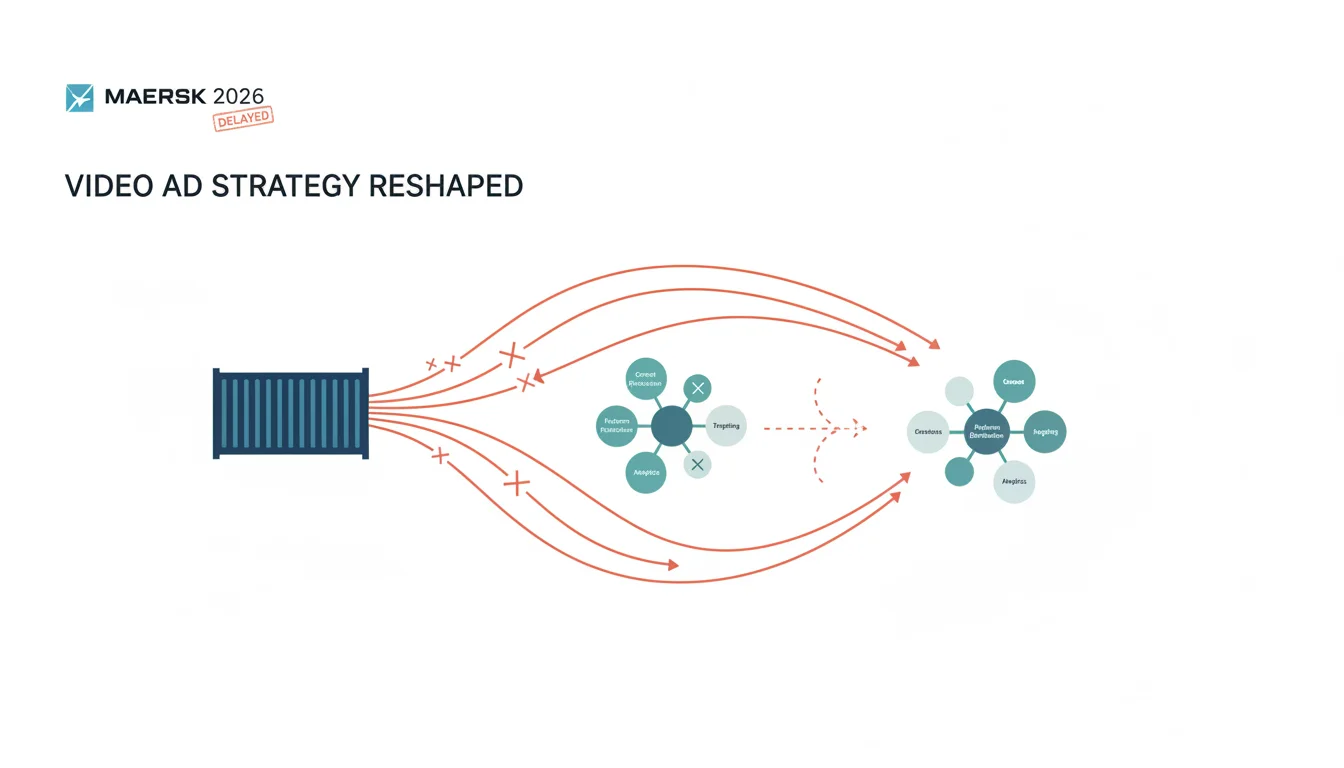
When the October 2026 Maersk delays hit, the operational disruptions sent shockwaves through global shipping and straight into sales forecasts. For anyone depending on a predictable supply chain, those delays meant immediate lost revenue. But the secondary blast radius hit digital advertising, specifically the performance of our video ads. The whole mess forced us to ask a hard question: how on earth do shipping problems completely change the way we run and measure video campaigns?
Key Takeaways
- You have to pipe real-time supply chain data into your video ad targeting so you’re not burning money promoting products that aren’t on the shelf.
- Dynamic creative optimization for video can be a lifesaver, automatically changing your ad’s message based on stock levels and shipping ETAs.
- When your inventory is volatile, switch your video campaigns to brand-building to keep customers warm without promising a delivery date you can’t hit.
- Shift your video ad spend from performance-based campaigns (that you can’t fulfill) to top-of-funnel awareness content when product availability tanks.
The Unseen Connection: Supply Chain and Ad Performance
Before this, the link between a container ship in the Suez and the ROI on a YouTube pre-roll ad seemed pretty academic. Marketing teams were off in their own world, worrying about audience segments and creative, while a totally separate logistics team dealt with moving boxes. The October 2026 Maersk incident, with its insane port congestion and endless rerouting, blew that silo apart. We saw companies running brilliant video campaigns that drove huge demand for products that were, unfortunately, sitting in a container stack off the coast of Singapore. This created an awful customer experience: they’d see a great video, click to buy, and slam right into an “out of stock” page or a six-week delivery estimate.
This immediately wrecked several key video ad metrics. We saw conversion rates for performance campaigns completely fall off a cliff during the worst of the delays. An IAB (Interactive Advertising Bureau) report on Q4 2026 video ad spend even showed a weird plateau in e-commerce conversions which everyone pointed to as a direct result of supply chain friction. While click-through rates (CTR) often held steady (people still wanted the stuff), the downstream effect was a disaster. Product page bounce rates shot up, and we saw a wave of angry comments on social media. Beyond just lost sales, this was brand trust, built with expensive ad placements, getting torched in real time.
Adapting Video Creative for Volatile Inventory
The first and most urgent change we had to make was to the creative itself. Running a slick, aspirational video ad with a “buy now” button for a product that’s weeks away is just asking for trouble. The smart play wasn’t to turn off advertising, but to completely pivot the message. Brands that reacted fast moved their video content away from direct-response CTAs and toward evergreen, brand-building stories. Instead of pushing a specific item with a direct purchase link, they ran videos about their brand’s mission, their sustainability work, or teasing future collections without tying themselves to a delivery date.
This forced a much more agile creative process. You had to have a library of different video assets ready to go, deployable based on what your inventory data was telling you moment to moment. For instance, a fashion brand that was previously running a video for a hot new dress would, during the Maersk mess, switch to a video showing their ethical sourcing or a behind-the-scenes at their design studio. This kept the brand visible and preserved customer goodwill instead of creating frustration. It’s a strategic play that many missed, because they were so focused on the immediate hit to transactions they couldn’t see the long-term brand damage they were causing.
Dynamic Creative Optimization (DCO) and Data Integration
The October 2026 fiasco made integrating supply chain data directly into ad platforms a non-negotiable. While some of the more advanced advertisers were already playing with this, the Maersk delays pushed it into the mainstream. Dynamic Creative Optimization (DCO) was the key piece of tech here. Using a DCO platform, like the creative tools inside Display & Video 360, meant advertisers could automatically change parts of their video ads based on an external data feed. So a video for a gadget could show an “In Stock” banner when it was available, switch to “Pre-order for November” when it was backordered, or even pivot the ad to feature a different product entirely if the main one was stuck at sea indefinitely.
Making this work required deep API integrations between ERP systems, warehouse management systems (WMS), and the ad platforms. This was not a simple flip to switch. It demanded that IT, marketing, and logistics teams actually talk to each other and collaborate, which was a new concept for a lot of organizations back in 2026. The data feeds had to be nearly real-time, refreshing every couple of hours, because even a small lag could mean you’re still advertising a product that just sold out. The companies that had already invested in this setup saw their ad performance hold up much better, keeping bounce rates down and customers happier through the chaos. It’s a complex build, sure, but the alternative is lighting ad dollars on fire to make your customers mad.
Refining Targeting and Budget Allocation
On top of changing the creative, we had to totally rethink targeting and where the money was going. We learned to segment audiences not just by who they were, but by how likely they were to be affected by the shipping problems. For example, you might show a different video ad to customers in a landlocked state waiting on goods from a blocked port versus customers near a port that was still flowing. That kind of granular targeting was what it took to manage expectations and stop people from getting angry.
Budgets also saw a major shift. The money flowing to performance-based campaigns (which are all about getting that immediate sale) was cut way back. That budget got reallocated to awareness campaigns and consideration campaigns. Video ads that were about building brand love, explaining the whole product line, or promoting digital goods not dependent on shipping (like gift cards) became the priority. In fact, eMarketer‘s ad spending forecasts for 2027 reflect this, showing a continued focus on brand safety and flexible creative, a direct lesson from the 2026 supply chain nightmare. This required a temporary but critical pivot from chasing direct ROI to measuring softer brand engagement metrics.
| Aspect | Pre-Maersk Delays (Q4 2026) | Post-Maersk Delays (Strategic Shift) |
|---|---|---|
| Video Ad Strategy Focus | Performance-based (direct sales) | Brand-building (awareness, goodwill) |
| Creative Content | Aspirational, “buy now” calls to action | Evergreen narratives, brand values, upcoming collections |
| Product Availability Messaging | Often promoted unavailable products | Adjusted based on real-time inventory |
| Supply Chain Data Integration | Siloed, disconnected from marketing | Wired directly into ad platforms |
| Key Technology | Some DCO experimentation | Dynamic Creative Optimization (DCO) as a standard tool |
| Impact on Conversion Rates | Sharp dips for e-commerce | Stabilized with creative and data adaptation |
The Long-Term Repercussions for Video Advertising
The Maersk delays of October 2026 weren’t a one-off event. They permanently changed how smart marketers approach video advertising. The whole episode exposed just how brittle global supply chains were and forced a much more integrated approach to marketing. Marketing teams now have to be plugged into the operational reality of the business.
We’re now seeing real, sustained investment in the tech that enables this data flow, from advanced DCO platforms to predictive analytics that try to spot the next supply chain bottleneck before it happens. Agencies are seeing a surge in demand for people with strong data science skills, not just good creatives. There’s also a huge new focus on omnichannel consistency. If a product is out of stock on your website, that status better be reflected everywhere, in your video ads, on social media, even on in-store displays. Getting that level of sync is a heavy lift, but it’s the only way to keep customer trust in a market where everyone knows everything. The old “set it and forget it” approach to video advertising is completely gone. Continuous monitoring and adaptation are just the cost of doing business now.
Another major change is the heightened attention on brand safety and reputation management in video advertising. When shipping problems make customers angry, that anger spreads fast on social media. Brands now have to think hard about how their video ads might be received by a customer who’s currently waiting on a delayed order. This has led to more careful messaging, clearer communication about potential shipping times, and a bigger investment in customer service to put out fires. It’s a proactive defensive posture that was born from the hard lessons of the Maersk mess.
Looking Ahead: Proactive Strategies for 2027 and Beyond
If you want to operate in a world where supply chain chaos is always a possibility, you need a proactive video ad strategy. First, build the data pipelines that connect your inventory and logistics data to your ad platforms. This is foundational. It’s not optional. Second, invest in dynamic creative tools that let you change ads in real time as stock levels fluctuate, which protects both your ad budget and your brand’s reputation. Third, build a diverse library of video creative so you can instantly switch between direct-response and brand-building messages without having to scramble and start a new production.
Finally, you have to build a culture where marketing, logistics, and IT are one team. They need to be sharing data and insights constantly to make sure the ads you’re running are in sync with what’s actually happening on the ground. The October 2026 Maersk delays were a painful, expensive lesson, but they taught us something invaluable: the performance of your video ads is now welded to the efficiency and transparency of your supply chain. And serious marketers can no longer afford to pretend otherwise.
How did the Maersk delays specifically affect video ad conversion rates?
Conversion rates on video ads dropped because customers would click on a compelling ad only to find the product was “out of stock” or had a very long delivery time. This led directly to cart abandonment and wasted ad spend.
What is Dynamic Creative Optimization (DCO) and how did it help during the delays?
DCO is tech that automatically changes parts of a video ad, like text or images, based on a real-time data feed. During the delays, it let advertisers instantly update their video creative to show accurate inventory status (like “Pre-order” or “In Stock”), which stopped them from promoting products they couldn’t ship.
Should businesses stop running video ads during supply chain disruptions?
No, you shouldn’t stop completely. The right move is to shift your strategy. Pivot from direct-response ads that push for an immediate sale to brand-building campaigns that focus on brand values or other product lines. This keeps your brand visible without frustrating customers.
What data integrations became essential for video advertising due to the 2026 delays?
The most important integration was connecting inventory data from enterprise resource planning (ERP) and warehouse management systems (WMS) directly into ad platforms. This is what allowed for real-time inventory information to automatically update video ad content and targeting.
How did the Maersk delays impact budget allocation for video ads?
Ad budgets were moved away from performance-based video campaigns (which were failing due to stockouts) and reallocated to awareness and consideration campaigns. The goal became building long-term brand affinity instead of chasing immediate sales for products that might not be available.


