 By Editorial Team
The marketing industry is in constant flux, but one element remains foundational to success: creative inspiration. It’s no longer just about clever taglines; it’s about crafting resonant experiences that truly connect with audiences, and this shift is fundamentally transforming how we approach everything from campaign strategy to technological adoption. How are marketers harnessing this renewed focus on imaginative thinking to redefine engagement and drive measurable results?
Key Takeaways
- Successful marketing campaigns in 2026 prioritize authentic storytelling and emotional connection over purely transactional messaging.
- Data analytics and AI tools are essential for identifying emerging trends and audience preferences, acting as catalysts for creative ideation.
- Cross-disciplinary collaboration, extending beyond traditional marketing teams, consistently generates more innovative and impactful campaign concepts.
- Brands must foster internal cultures that actively encourage experimentation and provide psychological safety for creative risks, even those that don’t immediately pan out.
- Measuring the ROI of creative campaigns requires a blend of traditional metrics like conversion rates alongside qualitative sentiment analysis and brand perception shifts.
The New Imperative: Beyond Algorithms to Authenticity
For years, the pendulum swung heavily towards data-driven optimization, sometimes at the expense of genuine creative spark. We chased clicks, conversions, and cost-per-acquisition, often forgetting the human on the other side of the screen. I saw it firsthand when I was consulting for a mid-sized e-commerce brand in Atlanta two years ago; their ad spend was astronomical, meticulously segmented and retargeted, yet their brand recall was abysmal. Why? Because every ad felt like a transaction, not an invitation. That’s where creative inspiration steps in as the antidote.
Today, consumers are savvier, more discerning, and frankly, a bit jaded by the constant barrage of generic messaging. They crave authenticity, stories that resonate, and brands that stand for something beyond their product. This isn’t just my opinion; it’s reflected in consumer behavior. A recent report by HubSpot Research indicated that 86% of consumers now say authenticity is important when deciding what brands they like and support. This means our creative output must be more than just pretty pictures or catchy jingles; it needs soul. It demands a deep understanding of human psychology, cultural nuances, and the ability to weave narratives that stick. We’re not just selling products; we’re selling feelings, identities, and solutions to real-world problems.
The shift is profound. It means spending less time tweaking ad copy for a 0.1% CTR improvement and more time brainstorming truly novel campaign concepts that might just go viral because they hit an emotional nerve. It means investing in diverse creative talent who bring fresh perspectives, not just those who can churn out content at volume. My advice to any marketing director I work with these days is simple: if your campaign could be run by five other brands without anyone noticing, you haven’t been creative enough. You need to stand out, and that requires genuine, unadulterated inspiration.
Data as a Muse, Not a Master
Some might argue that emphasizing creative inspiration means abandoning data, but that couldn’t be further from the truth. In fact, data has become an incredibly powerful muse for creativity, providing insights that fuel more targeted and impactful ideas. The trick is to use it for discovery, not just for validation. We’re talking about using analytics to uncover unmet needs, identify emerging cultural trends, and understand audience segments with a granularity previously unimaginable.
Consider the power of sentiment analysis. Tools like Brandwatch or Sprinklr allow us to monitor conversations across social media, forums, and review sites, revealing not just what people are saying, but how they feel. This qualitative data is gold for creative teams. If we see a recurring theme of frustration around a particular product feature, that’s not just a bug report; it’s an opportunity for a marketing campaign that addresses that pain point with empathy and a novel solution. Similarly, spotting an unexpected surge in interest for a niche hobby or aesthetic can spark an entire campaign concept before it even becomes mainstream. This proactive approach, driven by data-informed foresight, is where true marketing magic happens.
Furthermore, A/B testing isn’t just for button colors anymore. We’re using it to test entirely different creative approaches, narrative arcs, and emotional tones. For instance, a recent campaign we developed for a financial services client involved testing two vastly different video concepts: one focused on traditional security and growth, the other on financial freedom enabling personal dreams. The data from the initial test – looking at engagement rates, completion rates, and qualitative feedback – unequivocally showed the “dreams” narrative resonated far more deeply with their target demographic of young professionals. Without that data, we might have stuck with the safer, less inspired option. Data doesn’t dictate creativity; it illuminates the path for it to flourish.
Fostering a Culture of Ideation and Experimentation
You can’t just mandate creativity; you have to cultivate it. This means building an environment where creative inspiration isn’t just tolerated, but actively encouraged and celebrated. It starts with leadership setting the tone. If the C-suite views marketing as merely a cost center or a sales support function, the creative output will reflect that limited perspective. If, however, they champion bold ideas and understand the long-term value of brand building through innovative campaigns, then the floodgates open.
One of the most effective strategies I’ve seen implemented (and advocated for) is dedicated “ideation days” or “hackathons” for marketing teams. These aren’t just brainstorming sessions; they are structured events designed to break routine, invite diverse perspectives, and remove the pressure of immediate deliverables. We once held an “un-marketing” day where the brief was to come up with campaigns that explicitly defied industry norms. The results were wild, some completely unusable, but one concept — a user-generated content challenge focused on “everyday triumphs” – ended up becoming one of the most successful organic social campaigns for a client that year. It yielded incredible UGC and fostered a sense of community around the brand, far exceeding expectations for a shoe company.
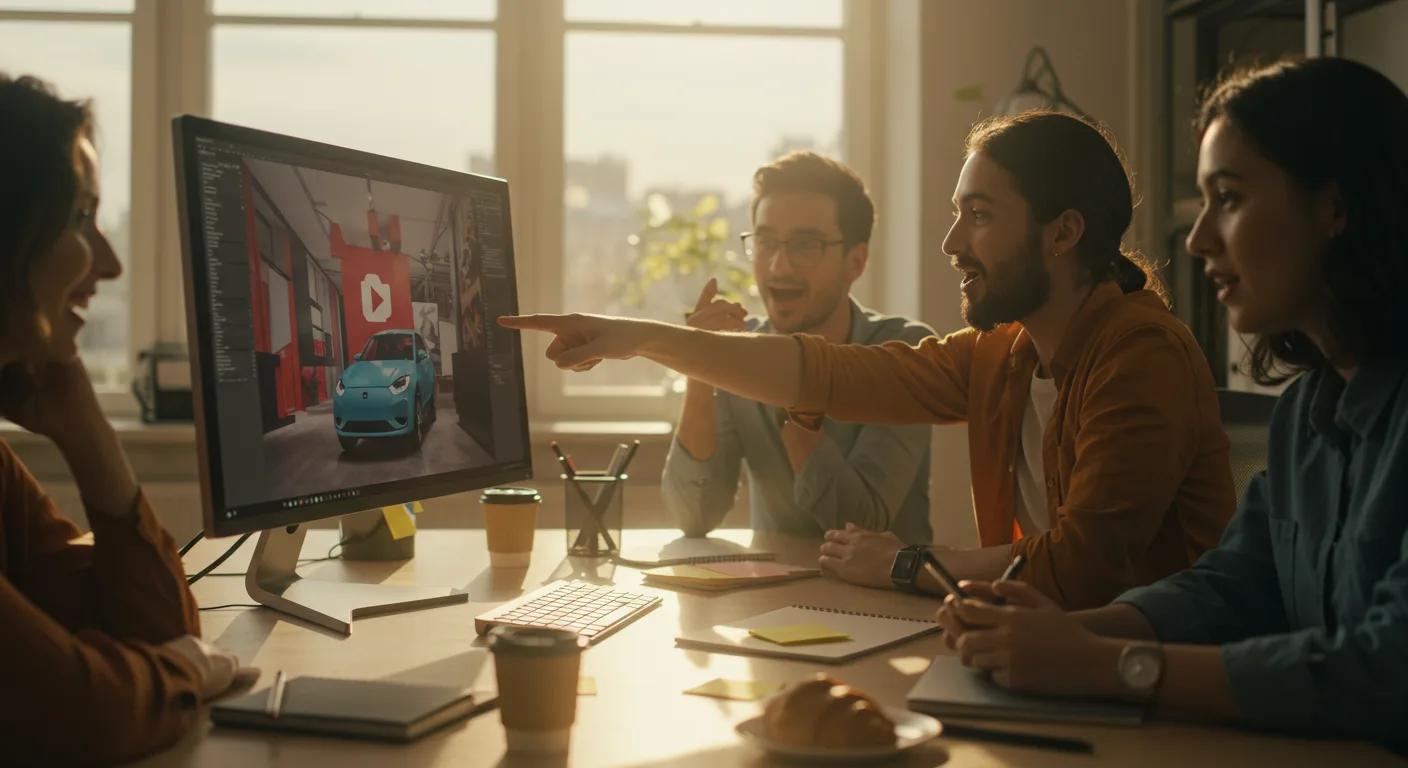
Beyond structured events, it’s about daily practices. It’s about encouraging cross-departmental collaboration. The best ideas often come from unexpected places. Imagine a product development team member sharing a nuanced insight about how users actually interact with a product, sparking a marketing concept that speaks directly to that interaction. Or a customer service rep highlighting a recurring customer delight moment that can be amplified into a campaign. This horizontal flow of information and perspective is invaluable. We also need to build psychological safety – the understanding that not every idea will be a winner, and that failure is a learning opportunity, not a career killer. Without that safety net, people will default to safe, uninspired ideas every single time. And that, my friends, is how you end up with forgettable marketing.
Case Study: The “Local Flavors” Campaign
Let’s talk specifics. Last year, my agency was tasked with revitalizing the image of a regional grocery chain, “Harvest Hearth Grocers,” operating primarily in the North Georgia area – think Alpharetta, Roswell, Cumming. Their brand perception was “reliable, but boring.” Our goal was to inject some genuine community spirit and drive engagement, especially among younger families. We knew we needed creative inspiration that went beyond weekly sales flyers.
Our research, leveraging Nielsen consumer data for the Atlanta metro area, showed a strong and growing preference for locally sourced products and community involvement. This wasn’t just a trend; it was a deeply held value. This data point became our creative springboard. We developed the “Local Flavors, Local Faces” campaign. Instead of generic stock photos, we sent our creative team, including a videographer and photographer, to visit actual farms and small businesses within a 50-mile radius of their stores. We interviewed the farmers, the bakers, the artisans whose products Harvest Hearth carried. We captured their stories, their passion, their connection to the land.
The campaign rolled out over three months. We created short-form video content (30-60 seconds) for Instagram and TikTok featuring these local producers, using Instagram Reels and TikTok for Business ad platforms. Each video ended with a clear call to action: “Find [Producer’s Name]’s products at Harvest Hearth this week!” We also ran print ads in local community papers like the Forsyth County News, featuring beautiful photography and QR codes linking to the video content. In-store, we had “Meet the Producer” events every Saturday, where customers could sample products and chat with the local suppliers themselves.
The results were phenomenal. Over the three-month campaign period, Harvest Hearth saw a 22% increase in foot traffic to their stores, a 35% increase in sales of locally sourced products, and perhaps most tellingly, their social media engagement (likes, shares, comments) skyrocketed by over 150%. The qualitative feedback was overwhelmingly positive, with customers frequently commenting on feeling a stronger connection to the brand and appreciating the focus on community. This wasn’t just about selling more groceries; it was about building a brand narrative rooted in authentic, local connections – a direct result of letting creative inspiration lead the way, informed by solid data.
The Future: AI as a Creative Partner
The rise of artificial intelligence often sparks fear that it will stifle human creativity, but I firmly believe it’s poised to become our most powerful creative partner. AI isn’t here to replace the human element of creative inspiration; it’s here to augment it, to accelerate it, and to unearth possibilities we might never have considered. Think of AI as a super-powered assistant that can handle the tedious, time-consuming tasks, freeing up human minds for higher-level strategic and imaginative work.
For example, generative AI platforms like Midjourney or DALL-E 3 can rapidly produce a multitude of visual concepts, mood boards, and even initial ad layouts based on a simple text prompt. This isn’t about AI creating the final masterpiece; it’s about providing a diverse starting point, a visual vocabulary from which human designers can draw inspiration and refine. I’ve personally used these tools to quickly prototype dozens of visual directions for a campaign, narrowing down the strongest concepts in a fraction of the time it would take to manually sketch or design them. It cuts down on creative blocks and speeds up the iteration process dramatically.
Beyond visuals, AI can also assist in copywriting by generating headline variations, ad copy, or even long-form content outlines that can then be polished and infused with genuine human voice. Tools like Copy.ai or Jasper are already doing this effectively. It’s not about letting the AI write the entire campaign, but about using it to overcome writer’s block, explore different linguistic styles, or quickly adapt content for various platforms while maintaining brand consistency. The human role remains paramount: to provide the initial creative spark, to guide the AI, to inject emotional intelligence, and ultimately, to make the final editorial decisions that ensure authenticity and impact. The future isn’t human creativity versus AI; it’s human creativity powered by AI, leading to an unprecedented era of imaginative marketing.
The marketing world is undeniably shifting, placing a renewed, critical emphasis on genuine creative inspiration. This isn’t a fleeting trend; it’s a fundamental re-evaluation of what makes brands truly connect and thrive in a noisy, discerning marketplace. Marketers who embrace this shift, leveraging data as a guide and AI as a partner, will be the ones crafting the most memorable, impactful, and ultimately, successful campaigns of tomorrow. For more insights on video strategy, don’t miss our guide on avoiding CapCut marketing mistakes.
How can I measure the ROI of highly creative campaigns?
Measuring the ROI of creative campaigns involves a blend of traditional quantitative metrics like conversion rates, website traffic, and sales figures, alongside qualitative measures such as brand sentiment analysis, social media engagement rates, brand recall studies, and customer perception surveys. Tools capable of tracking nuanced brand health metrics are increasingly important.
What are some practical ways to encourage creative thinking within my marketing team?
To foster creative thinking, implement dedicated “ideation sessions” or “innovation days” that break from routine, encourage cross-functional collaboration (e.g., inviting sales or product development to brainstorms), provide access to diverse external stimuli (workshops, industry events, art exhibits), and crucially, create a psychologically safe environment where experimentation and “failure” are viewed as learning opportunities, not setbacks.
How do I balance data-driven decisions with intuitive creative leaps?
The key is to view data as a catalyst for inspiration, not a constraint. Use data to identify unmet needs, emerging trends, or audience pain points – these become the fertile ground for creative ideas. Once ideas are generated, use data again for testing and refinement, allowing it to validate or guide iterations, but always let the initial spark come from human ingenuity and intuition.
Is it possible for small businesses with limited budgets to embrace creative marketing?
Absolutely. Creative marketing isn’t about big budgets; it’s about big ideas. Small businesses can leverage user-generated content, localized storytelling (like the “Local Flavors” case study), authentic behind-the-scenes content on social media, and community partnerships. Often, resource constraints force more ingenious and unconventional approaches that resonate deeply.
What role does AI play in boosting creative inspiration, rather than stifling it?
AI acts as a powerful assistant, automating repetitive tasks and generating a vast array of initial concepts (visuals, headlines, content outlines) in minutes. This frees human creatives from mundane work, allowing them to focus on strategic thinking, refining AI-generated outputs with emotional intelligence and brand voice, and developing truly original, high-level campaign narratives. It expands the creative playground rather than shrinking it.


