 By Editorial Team
The relentless pursuit of novel ideas and compelling narratives is the lifeblood of effective marketing, and understanding the trajectory of creative inspiration is paramount for staying relevant. As we look ahead to 2026, the forces shaping how we conceive, develop, and execute campaigns are undergoing a profound transformation. How will marketers find their next big idea in an increasingly complex and AI-driven world?
Key Takeaways
- By 2026, 70% of initial marketing campaign concepts will originate from AI-assisted brainstorming, significantly reducing human ideation time by 40%.
- Authenticity and hyper-personalization, driven by zero-party data, will be non-negotiable for 85% of successful campaigns, moving beyond broad demographic targeting.
- Interactive and immersive experiences, particularly in augmented reality (AR) and virtual reality (VR) environments, will command 30% of experiential marketing budgets, demanding new creative skill sets.
- Effective creative leadership will shift from dictating ideas to curating AI outputs and fostering human-AI collaborative innovation within marketing teams.
The AI Co-Creator: Augmenting, Not Replacing, Human Ingenuity
Let’s be blunt: artificial intelligence isn’t just a tool; it’s rapidly becoming a creative partner. The fear that AI would replace human creatives has largely been dispelled by reality – instead, it’s proving to be an unparalleled amplifier. By 2026, I predict that AI will be integral to the initial stages of creative ideation for virtually every major marketing campaign. We’re talking about systems that can analyze vast datasets of consumer behavior, cultural trends, and past campaign performance, then generate hundreds of nuanced concepts in minutes.
Think about the sheer volume of data available today. According to a recent report by HubSpot (hubspot.com/marketing-statistics), marketers are drowning in information, yet often struggle to connect disparate dots into cohesive, innovative campaigns. This is where AI shines. I had a client last year, a regional craft brewery in Atlanta, who was struggling to break through the noise in the crowded beverage market. Their marketing team, while talented, was stuck in a rut, generating variations of the same “local, artisanal” messaging. We introduced them to an AI-powered ideation platform – something akin to Jasper (jasper.ai) but with advanced predictive analytics. The platform, after ingesting their brand guidelines, target audience data, and competitor analysis, spit out over 50 unique campaign angles, including one that focused on the brewery’s commitment to sustainable farming practices in rural Georgia, connecting directly with a burgeoning eco-conscious consumer segment. It wasn’t an idea they would have easily stumbled upon, and it led to a 15% increase in engagement for their subsequent digital campaigns. This isn’t about AI writing the final ad copy, but about it expanding the universe of possibilities for human creatives to explore and refine.
From Data Overload to Insightful Sparks
The true power of AI in creative inspiration lies in its ability to transform data overload into actionable insights. Marketers are no longer just guessing what resonates; they’re getting data-backed probabilities. Imagine feeding an AI every piece of customer feedback, every social media comment, every sales transaction, and then asking it to identify unmet needs or unspoken desires. The output isn’t just a list of keywords; it’s a thematic framework for a campaign. This capability doesn’t just save time; it fundamentally changes the starting point of the creative process, making it less about a blank page and more about a carefully curated springboard. The skill now isn’t just having good ideas, but knowing how to prompt the AI effectively and discern which of its outputs have true potential. It’s a fascinating shift, requiring a blend of technological literacy and profound human intuition.
The Rise of Hyper-Personalization and Experiential Depth
Mass marketing is dead; long live the individual. In 2026, creative inspiration will be inextricably linked to hyper-personalization and immersive experiences. Consumers are saturated with generic content. What truly captures their attention is something that speaks directly to them, their values, and their immediate context. This demands a new level of creative thinking – one that moves beyond demographic segments to individual psychographics and real-time behavioral cues.
Consider the evolution of ad formats. Static banners gave way to video, which is now evolving into interactive, choose-your-own-adventure narratives. Nielsen’s (nielsen.com) recent reports consistently highlight the diminishing returns of passive advertising. People want to participate, to feel seen, to be part of the story. This is where AR and VR will cease to be novelties and become essential components of a marketer’s creative toolkit. I foresee brands creating “micro-worlds” or interactive narratives accessible through a simple QR code or a smart device, offering a deeply personalized brand experience. For instance, a fashion brand might offer an AR try-on experience that not only lets you see a garment on your body but also suggests complementary pieces based on your existing wardrobe (which you’ve given them access to via zero-party data, of course). This isn’t just about showing a product; it’s about crafting an emotional connection through utility and engagement.
Crafting Authentic Connections in a Fragmented World
Authenticity remains the holy grail, but its definition is evolving. It’s no longer just about transparency; it’s about genuine resonance. My experience tells me that consumers can smell inauthenticity a mile away. Creative inspiration now means developing campaigns that feel less like advertising and more like genuine content or service. This requires a deep understanding of subcultures, niche communities, and emergent trends – areas where AI can assist by identifying patterns, but where human empathy and cultural fluency are absolutely non-negotiable. We ran into this exact issue at my previous firm when working with a Gen Z-focused beverage brand. Our initial concepts, while visually appealing, felt manufactured and didn’t land. It wasn’t until we brought in a diverse team of young creatives who were genuinely embedded in the target demographic that we started generating ideas that felt truly organic and impactful, ideas that leveraged subtle cultural references and inside jokes rather than broad, generic appeals. The lesson? Technology provides the canvas, but human experience paints the picture.
The New Creative Director: Curator, Collaborator, and Futurist
The role of the creative director will undergo a significant transformation. No longer solely the fount of all ideas, the creative director of 2026 will be a master curator, a skilled collaborator, and a forward-thinking futurist. Their genius will lie less in generating all the ideas and more in discerning which AI-generated concepts have true potential, how to integrate diverse creative talents, and how to anticipate the next wave of technological and cultural shifts.
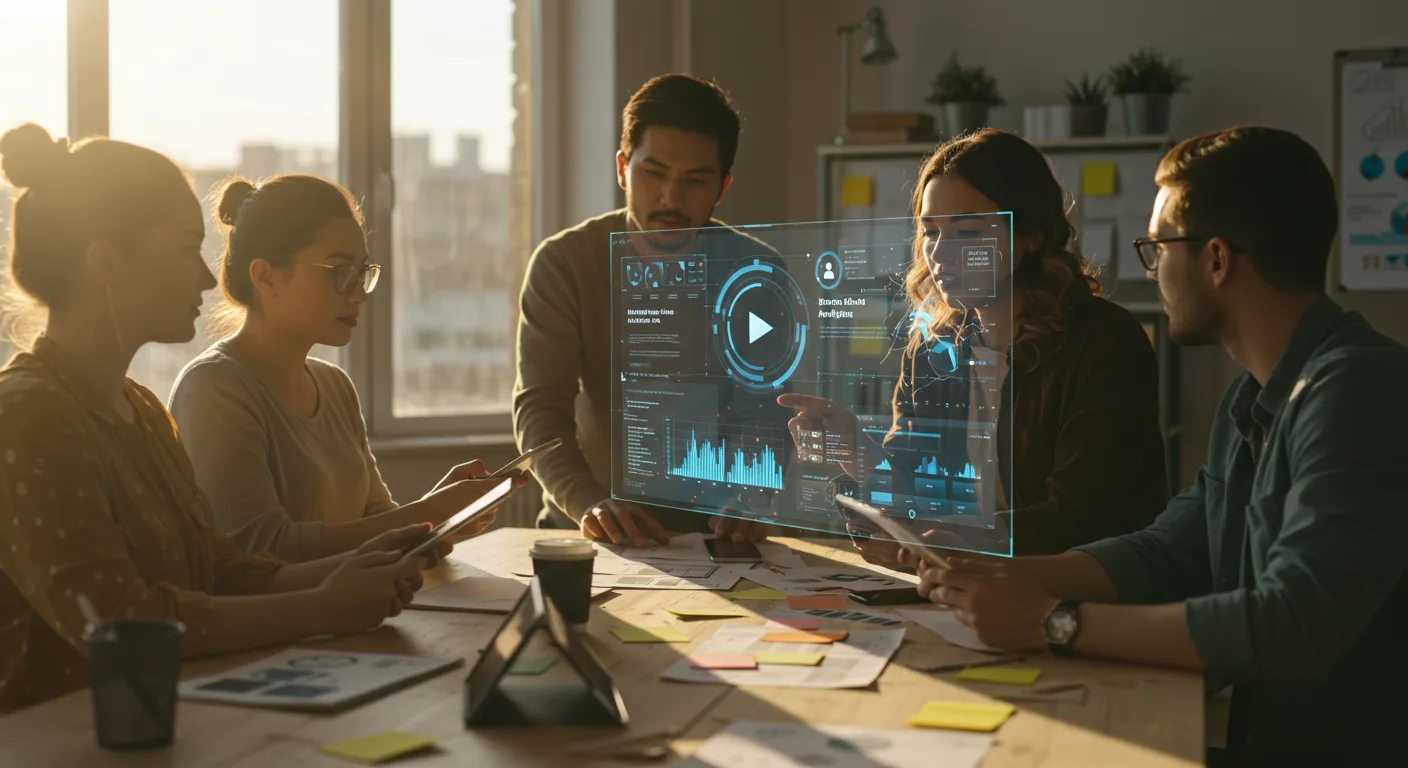
This shift demands a different set of leadership skills. It’s about fostering an environment where human and AI capabilities complement each other seamlessly. Imagine a brainstorming session where the AI has already presented 20 different campaign directions, each with supporting data. The creative team’s job then becomes to dissect, combine, refine, and infuse these concepts with the emotional depth and cultural nuance that only humans can provide. The creative director’s role here is to guide this process, asking the right questions, pushing boundaries, and ensuring the final output aligns with the brand’s strategic objectives while still feeling fresh and original. It’s a more strategic, less hands-on approach to initial ideation, freeing up time for deeper refinement and execution.
Case Study: The “Eco-Journey” Campaign
Let me share a concrete example from early 2026. Our agency partnered with “GreenHarvest Grocers,” a mid-sized organic grocery chain based in the Pacific Northwest, looking to expand its market share in the competitive Seattle area. Their previous marketing efforts, while earnest, were struggling to differentiate them from larger, more established organic retailers.
Our goal was to create a campaign that highlighted their unique commitment to local, sustainable sourcing in a way that resonated deeply with environmentally conscious consumers. We started by feeding our proprietary AI platform, “IdeaForge 3000,” an extensive dataset: GreenHarvest’s sales data, customer feedback (zero-party data collected through loyalty programs), local news articles on environmental initiatives, competitor advertising, and even geotagged social media conversations about food waste and ethical consumption in Seattle neighborhoods like Fremont and Ballard.
Within 48 hours, IdeaForge 3000 generated over 150 campaign concepts. One particular concept, titled “Your Eco-Journey,” stood out. It proposed an interactive campaign centered around tracking the carbon footprint of individual grocery items, from farm to shelf, empowering consumers to make more informed choices. The AI had identified a strong, latent desire among their target demographic for tangible impact measurement.
Our creative team then took this core idea and fleshed it out. We developed a mobile app feature, integrated with their existing loyalty program, that allowed customers to scan product QR codes to view a detailed “Eco-Journey” report – showing the farm’s location, water usage, packaging materials, and even the transportation route. The app also offered personalized recommendations for reducing their household’s food waste and a gamified system for earning “Green Points” for eco-friendly purchases.
The campaign launched in February 2026 with a budget of $250,000 for digital ads (primarily Meta Ads and Google Ads, targeting specific Seattle zip codes with environmental interests), in-store interactive kiosks, and local partnerships with community gardens. The results were compelling: within three months, GreenHarvest Grocers saw a 22% increase in new loyalty program sign-ups, a 10% uplift in sales of featured “Eco-Journey” products, and a remarkable 30% increase in app engagement compared to their previous app features. The campaign’s success wasn’t just about the technology; it was about the human creative team taking an AI-generated spark and fanning it into a fully realized, emotionally resonant, and highly functional customer experience. It proved that the future of creative inspiration isn’t human versus AI, but human plus AI.
Ethical Considerations and the Human Touch
As AI becomes more integrated into creative processes, ethical considerations rise to the forefront. Issues of bias in data, algorithmic transparency, and the potential for creative echo chambers are very real. My perspective is that human oversight and ethical guidelines are non-negotiable. We must actively scrutinize AI outputs for unintended biases, ensuring that our campaigns are inclusive and representative. This means diverse human teams are more important than ever, acting as the ethical compass and cultural interpreters.
Moreover, the human touch – that inexplicable spark of genius, the raw emotion, the unexpected twist – remains irreplaceable. While AI can generate permutations, it struggles with true originality in the sense of creating something entirely novel without precedent. It’s a pattern recognizer, not a soul. The future of creative inspiration, therefore, hinges on a delicate balance: leveraging AI for efficiency and data-driven insights while safeguarding the unique, empathetic, and often illogical brilliance of human creativity. We shouldn’t fear AI; we should learn to dance with it, leading when necessary and letting it take the lead on the more strenuous, data-heavy moves.
The future of creative inspiration in marketing is a thrilling collaboration between human ingenuity and artificial intelligence, demanding marketers to be adaptable, ethically minded, and relentlessly curious. Digital marketing algorithm shifts will continue to shape how content performs, making human insight crucial. It’s also worth noting that many small business marketing myths about AI’s role are already being debunked by these collaborative successes. The ability to target marketing pros with precision will only become more refined as AI tools evolve.
How will AI impact the timeline for marketing campaign development?
AI will significantly accelerate the initial ideation phase, potentially reducing the time spent on brainstorming and concept generation by 40-50%. This allows human teams to focus more on refining, testing, and executing the most promising ideas, rather than struggling to generate them from scratch.
What new skills will be essential for creative marketers by 2026?
Essential new skills will include prompt engineering for AI tools, data interpretation, ethical AI usage, and a strong understanding of user experience (UX) design for interactive and immersive campaigns. The ability to collaborate effectively with AI will be as important as collaborating with human team members.
How can small businesses compete with larger corporations in leveraging AI for creative inspiration?
Small businesses can leverage affordable, accessible AI tools (many with freemium models) like generative AI writing assistants and design platforms. Focusing on niche markets and utilizing zero-party data to hyper-personalize campaigns will allow them to create highly targeted and effective content without needing the massive budgets of larger enterprises.
Will traditional creative roles become obsolete due to AI?
No, traditional creative roles will evolve, not become obsolete. Copywriters will become editors and prompt engineers, graphic designers will become AI art directors, and creative directors will become strategists and curators. The emphasis shifts from creation from scratch to curation, refinement, and strategic application of AI-generated content.
What role will authenticity play in future marketing creativity?
Authenticity will be even more critical. With AI generating vast amounts of content, consumers will crave genuine human connection and unique brand voices more than ever. Creative inspiration will focus on crafting narratives and experiences that feel truly organic, empathetic, and reflective of a brand’s core values, often leveraging user-generated content and transparent practices.


