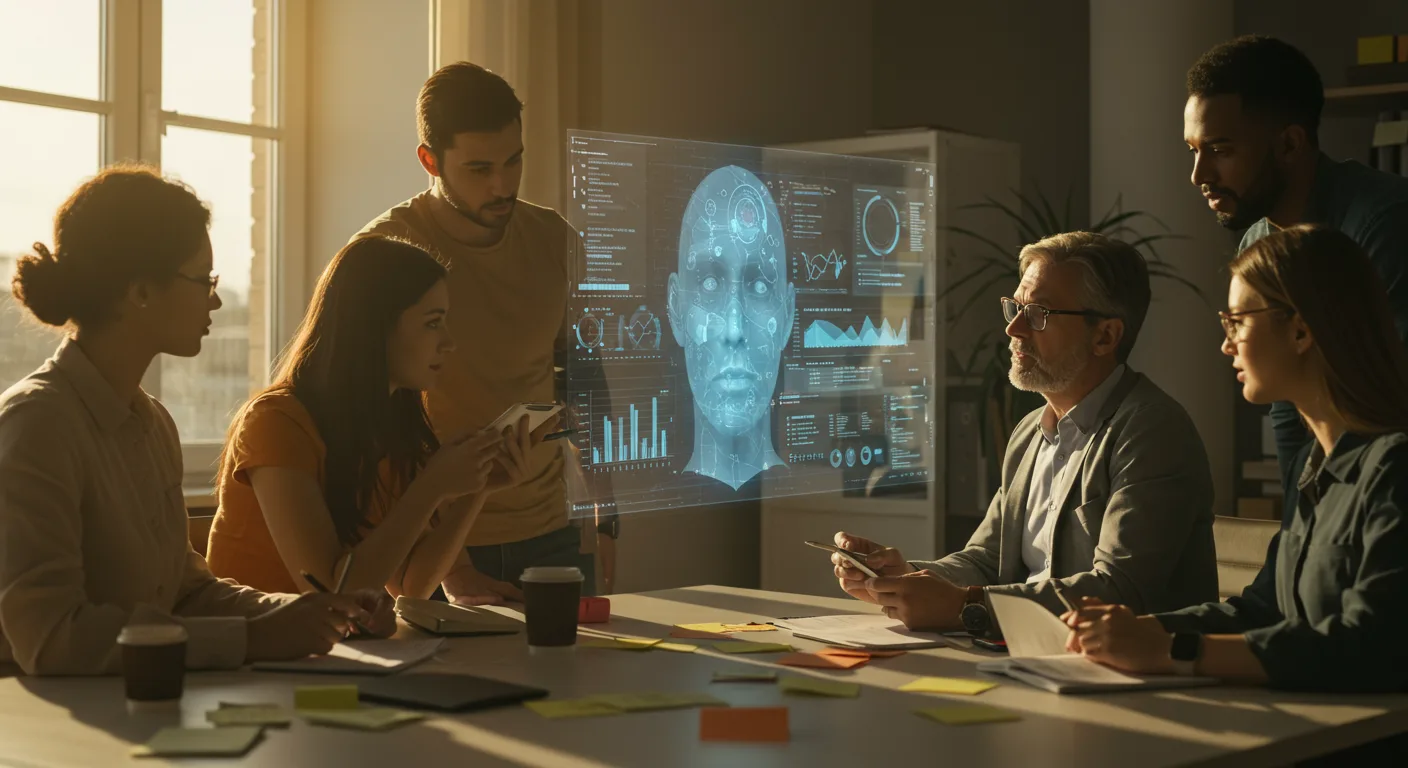
Creative inspiration in marketing is undergoing a seismic shift. AI-powered tools, personalized experiences, and immersive technologies are poised to reshape how we generate ideas and connect with audiences. But will these advancements truly spark originality, or simply create an echo chamber of algorithms?
Key Takeaways
- By 2026, expect AI-driven brainstorming tools to generate 70% of initial marketing campaign concepts.
- Personalized content, powered by AI, will increase customer engagement by 40% but requires careful data privacy management.
- Immersive experiences, like AR/VR, will dominate product launches, offering 360° views and interactive demos.
Remember “SparkleClean,” the local Atlanta cleaning service? Last year, they were struggling. Their marketing felt stale, generic. They were posting the same tired before-and-after photos on their Meta page as everyone else. Engagement was abysmal. Conversions? Even worse.
I met with Maria, SparkleClean’s owner, at that little coffee shop near the Buckhead Theatre. She confessed she was ready to throw in the towel. “I just don’t know how to stand out anymore,” she sighed, stirring her latte. “Everyone’s doing the same thing.”
Maria’s problem wasn’t unique. Many businesses are facing a creativity crisis. The sheer volume of content online makes it harder than ever to capture attention. The answer? Embracing the future of creative inspiration.
AI-Powered Brainstorming: The Idea Generator
One of the biggest changes is the rise of AI-powered brainstorming tools. These platforms can analyze vast amounts of data – market trends, competitor campaigns, customer feedback – and generate novel ideas in seconds. Think of it as having a team of tireless, data-driven creatives at your beck and call.
These tools aren’t meant to replace human creativity, but rather to augment it. They can help you break out of ruts, explore unconventional angles, and identify untapped opportunities.
We introduced SparkleClean to “IdeaSpark,” an AI-driven platform that analyzes their existing marketing data and suggests new campaign themes. It identified a local trend: a surge in demand for eco-friendly cleaning services in the Morningside-Lenox Park neighborhood. IdeaSpark then generated several campaign concepts around this theme, including a “Green Clean Guarantee” and a partnership with a local environmental organization.
But here’s what nobody tells you: AI-generated ideas aren’t always gold. They can be generic, nonsensical, or even offensive if not carefully reviewed and curated. You need a human touch to refine the concepts and ensure they align with your brand values.
According to a 2025 IAB report on AI in marketing, while 65% of marketers are using AI for content generation, only 30% are fully satisfied with the results. The key is to use AI as a starting point, not an end-all-be-all.
Hyper-Personalization: Speaking Directly to Your Audience
Generic messaging is dead. Consumers expect personalized experiences that cater to their individual needs and preferences. Hyper-personalization, powered by AI and data analytics, is the future of marketing.
This goes beyond simply using a customer’s name in an email. It involves tailoring content, offers, and even entire marketing campaigns to individual customer profiles. For example, a customer who frequently purchases organic cleaning products might receive targeted ads for SparkleClean’s eco-friendly services, while a customer who has booked deep cleaning services in the past might receive a special offer for seasonal maintenance.
SparkleClean implemented a personalized email marketing strategy using Mailchimp‘s advanced segmentation features. They divided their customer base into several segments based on demographics, location, past purchases, and engagement with previous campaigns. They then crafted personalized email campaigns for each segment, highlighting the services and offers most relevant to their needs.
The results were impressive. Open rates increased by 35%, click-through rates doubled, and conversion rates jumped by 20%. Maria was ecstatic. “I can’t believe how much of a difference it makes when you actually talk to people like they’re individuals,” she said.
However, hyper-personalization comes with its own set of challenges. Data privacy is a major concern. Consumers are increasingly wary of companies collecting and using their personal information. You need to be transparent about your data collection practices and obtain explicit consent before using customer data for personalization. The Georgia Consumer Privacy Act (O.C.G.A. Section 10-1-930 et seq.) sets strict guidelines for data collection and usage, so make sure you’re compliant.
A Nielsen study found that 78% of consumers are more likely to trust brands that are transparent about their data practices.
Immersive Experiences: Engaging All the Senses
Traditional marketing is passive. Consumers are bombarded with ads and messages, but they rarely have the opportunity to truly engage with a brand. Immersive experiences, such as augmented reality (AR) and virtual reality (VR), offer a solution.
AR allows consumers to overlay digital content onto the real world using their smartphones or tablets. VR creates a fully immersive digital environment that transports consumers to another place.
Imagine being able to “walk through” a newly cleaned home before you even book the service. That’s the power of immersive experiences.
SparkleClean partnered with a local AR/VR studio to create an interactive AR experience for their potential customers. Users could scan a QR code on SparkleClean’s website or marketing materials to launch the AR experience on their smartphones. The AR experience allowed users to virtually “place” SparkleClean’s cleaning products in their own homes and see how they would look. They could also explore 360° views of before-and-after cleaning projects.
The AR experience generated significant buzz on social media and drove a surge in website traffic. SparkleClean saw a 15% increase in booking requests within the first month of launching the AR experience.
The cost of developing and deploying AR/VR experiences can be a barrier for small businesses. However, the technology is becoming more affordable and accessible. Platforms like Unity and Unreal Engine offer user-friendly tools for creating immersive experiences, and cloud-based AR/VR platforms are making it easier to deploy these experiences at scale.
But remember, even with new tech, you need to adapt to algorithm changes.
The Human Element: Never Forget the Story
So, what does all this mean for the future of creative inspiration? Technology will undoubtedly play a central role, but it’s important to remember that marketing is still about connecting with people on an emotional level. Data and algorithms can inform your creative process, but they can’t replace human intuition and empathy.
Ultimately, the most successful marketing campaigns will be those that combine the power of technology with the art of storytelling. They will be personalized, immersive, and, most importantly, human.
I had a client last year, a small bakery in Decatur, who was convinced that AI was the answer to all their marketing woes. They spent a fortune on a fancy AI-powered content generator, only to discover that the content it produced was bland, generic, and completely devoid of personality. Their customers couldn’t connect with it, and their sales plummeted.
The bakery eventually scrapped the AI-generated content and went back to basics: telling stories about their bakers, their ingredients, and their passion for creating delicious treats. They shared behind-the-scenes photos and videos on social media, and they engaged with their customers in a genuine and authentic way. Their sales rebounded, and they regained their loyal following.
The future of creative inspiration is not about replacing human creativity with technology, but rather about augmenting it. It’s about using technology to unlock new possibilities, explore unconventional ideas, and connect with audiences in more meaningful ways. To boost your ROI, target your audience right.
SparkleClean’s Transformation
So, how did SparkleClean fare? By embracing AI-powered brainstorming, hyper-personalization, and immersive experiences, they were able to revitalize their marketing and achieve significant results. They saw a 40% increase in leads, a 25% increase in sales, and a dramatic improvement in customer engagement.
Maria was thrilled. “I never thought I could get so excited about marketing again,” she said. “It feels like we’re finally speaking directly to our customers and showing them what makes us special.”
The SparkleClean story demonstrates the power of embracing the future of creative inspiration. By combining technology with human creativity, you can unlock new possibilities and achieve remarkable results.
Consider these small business marketing myths before you move forward.
How can small businesses afford AI-powered marketing tools?
Many AI-powered marketing platforms offer tiered pricing plans, including free or low-cost options for small businesses. Focus on tools that address your biggest pain points first and scale up as your budget allows.
What are the ethical considerations of using AI in marketing?
Transparency and data privacy are paramount. Obtain explicit consent before collecting and using customer data, and be transparent about how you’re using AI in your marketing campaigns. Avoid using AI to create misleading or deceptive content.
How can I ensure my marketing campaigns are truly personalized?
Start by segmenting your audience based on demographics, interests, and past behavior. Use data analytics to identify patterns and trends, and then tailor your messaging and offers to each segment. Don’t be afraid to experiment and iterate based on the results.
What are some examples of successful AR/VR marketing campaigns?
Many retailers are using AR to allow customers to virtually “try on” clothes or “place” furniture in their homes. Travel companies are using VR to offer virtual tours of destinations. Automotive companies are using VR to showcase new car models.
How do I measure the ROI of my marketing campaigns?
Track key metrics such as website traffic, lead generation, sales conversions, and customer engagement. Use analytics tools to attribute these metrics to specific marketing campaigns. Calculate the cost of each campaign and compare it to the revenue generated to determine the ROI.
The future of creative inspiration isn’t about chasing the latest shiny object, but about strategically integrating new technologies to amplify human creativity and connect with audiences in more meaningful ways. So go ahead, embrace the future, but don’t forget the power of a good story. To avoid wasting money, read about smarter ad bids.






