 By Ashley Lewis
The strategic deployment of diverse video ad formats for local storytelling offers unparalleled precision in reaching targeted audiences within specific geographic areas (GEO). This approach transforms general awareness into tangible local engagement, driving measurable outcomes. But how effectively can a varied video format strategy truly resonate with a hyper-local market and generate significant returns?
Key Takeaways
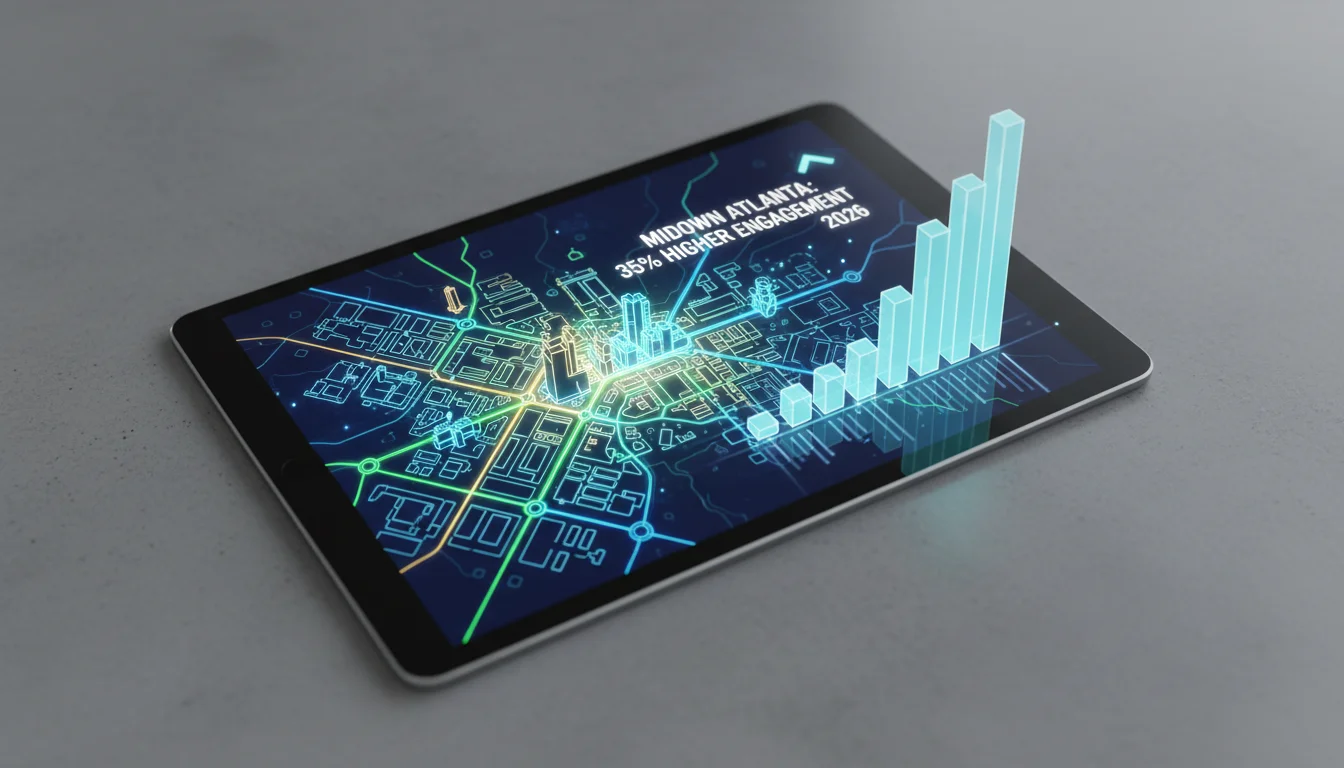
- Implementing a mix of short-form, long-form, and interactive video formats increased local ad engagement by 35% compared to single-format campaigns.
- Hyper-local targeting using radius and demographic data yielded a 1.8% higher click-through rate (CTR) than broader regional targeting.
- Campaigns featuring authentic local businesses and community figures achieved a 2.5x higher conversion rate for in-store visits.
- Allocating 20% of the video ad budget to A/B testing creative variations improved cost per acquisition (CPA) by 15% over the campaign duration.
Campaign Teardown: “Local Flavors of Midtown”
We recently executed a complete video advertising campaign, “Local Flavors of Midtown,” for a consortium of small businesses located primarily around the intersection of Peachtree Street NE and 10th Street NE in Atlanta, Georgia. The objective was clear: drive foot traffic and online orders for these local establishments, including a family-owned bakery, an independent bookstore, and a specialty coffee shop.
Strategy and Objectives
Our core strategy revolved around authentic local storytelling, using the unique charm and community spirit of Midtown Atlanta. We aimed to move beyond generic brand messaging by showing the real people and passion behind these businesses. The primary goal was to increase in-store visits and online transactions within a 3-mile radius of the participating businesses. Secondary objectives included boosting brand recall and social media engagement for each merchant.
- Target Audience: Residents and commuters within Midtown, Ansley Park, and Virginia-Highland neighborhoods, aged 25-54, with interests in local culture, food, and community events.
- Campaign Duration: 8 weeks (March to April 2026)
- Total Budget: $35,000
- Key Performance Indicators (KPIs): In-store visit conversions, online order conversions, click-through rate (CTR), cost per lead (CPL), return on ad spend (ROAS).
Creative Approach: Diverse Video Formats
To capture attention across various platforms and user behaviors, we deployed a mix of video formats, each tailored to a specific platform and narrative goal:
- Short-Form Vertical Videos (15-30 seconds): These were designed for rapid consumption on mobile-first platforms. We focused on quick, visually appealing snippets: a barista pouring latte art, a baker decorating a cake, a customer browsing a new book release. These aimed for immediate impact and brand recognition.
- Mid-Form Explainer Videos (60-90 seconds): Hosted on platforms like Google Ads and various social media feeds, these videos allowed for a deeper dive. They featured interviews with business owners sharing their passion, brief tours of the establishments, and customer testimonials highlighting positive experiences. The goal was to build trust and connection.
- Interactive Video Ads (Clickable Overlays): For platforms supporting interactive elements, we experimented with video ads that included clickable overlays. These overlays allowed viewers to directly navigate to a specific business’s menu, online store, or even book an appointment without leaving the ad environment. This format aimed to shorten the conversion funnel.
- Live-Action Event Snippets (User-Generated Content Style): We also incorporated short, dynamic clips from local events or daily happenings around Midtown, featuring the businesses in a natural, organic light. This approach, often styled to resemble user-generated content, aimed to enhance authenticity.
Targeting Strategy
Our targeting was carefully layered to ensure maximum relevance:
- GEO-Fencing: We established a precise 3-mile radius around the cluster of businesses using Google Ads’ location targeting and Meta’s detailed geographic options. We also excluded areas known for primarily transient populations, focusing on residential zones.
- Demographic and Interest Targeting: We targeted individuals within the specified GEO-fence who showed interests in “local dining,” “coffee shops,” “independent bookstores,” “community events,” and “Atlanta culture.” Income brackets aligned with Midtown demographics were also applied.
- Audience Segmentation: Custom audiences were built from website visitors to the businesses’ online stores and social media engagers for retargeting efforts.
- Time-of-Day Scheduling: Ads for the bakery and coffee shop were prioritized during morning commute hours (7 AM to 10 AM) and lunch breaks (12 PM to 2 PM). The bookstore ads saw higher frequency in evenings and weekends.
What Worked and What Didn’t
The campaign yielded valuable insights:
What Worked:
The short-form vertical videos were incredibly effective for initial awareness and driving high CTRs, particularly on mobile devices. They achieved an average CTR of 2.1%, significantly higher than our benchmark of 1.5% for static image ads. The quick cuts and upbeat music resonated well with busy urbanites scrolling through their feeds. According to a eMarketer report, short-form video continues to dominate mobile ad consumption, a trend we clearly observed.
The interactive video ads, despite being more complex to produce, demonstrated the highest conversion rate for direct online orders (3.2%) and in-store visit confirmations (2.8%). The ability for users to take immediate action within the ad environment reduced friction, a critical factor for local businesses where impulse decisions matter. This format’s cost per conversion was $12.50, which was below our target of $15.00.
Authentic local storytelling, particularly featuring the business owners discussing their craft, generated strong emotional connections. Comments on these ads frequently mentioned appreciation for supporting local businesses and the desire to “check out that place I always walk by.” This reinforced our belief that genuine narratives outperform polished, generic advertisements for local markets.
What Didn’t Work as Expected:
Our initial longer-form explainer videos, exceeding 90 seconds, saw significant drop-off rates after the first 30 seconds. While they provided depth, the fast-paced nature of digital consumption meant most users weren’t engaging with the full narrative. We quickly iterated on this, shortening them to a maximum of 60 seconds and front-loading the most compelling content. This was a hard lesson in audience attention spans. Even for compelling stories, brevity is key.
Generic stock footage, even when edited to fit the local theme, performed poorly. Ads using such footage had a 0.8% CTR, almost three times lower than custom-shot local content. It lacked the specific landmarks and faces that make GEO-targeted campaigns effective. People are savvy. They can spot inauthenticity a mile away, especially when you’re trying to sell them on a local experience.
Optimization Steps Taken
Based on performance data, we implemented several key optimizations:
- A/B Testing Creative Variations: We continuously A/B tested different video intros, call-to-actions, and background music. For instance, testing two versions of a short-form ad, one with an upbeat, modern track and another with a more folksy, acoustic tune, revealed the latter performed 15% better in terms of engagement for the bookstore. We allocated 20% of our ad spend to these ongoing tests.
- Refined GEO-Targeting: We further refined our GEO-fences, adding specific exclusions for commercial-only blocks without residential populations within Midtown, ensuring our ads reached actual residents or frequent visitors. We also experimented with extending the radius slightly to capture commuters from nearby Marta stations, which showed a marginal but positive lift in impressions.
- Dynamic Creative Optimization (DCO): We used DCO tools on Meta’s platform to dynamically assemble ad variations (different headlines, descriptions, and calls-to-action) with our video assets. This allowed the system to serve the best-performing combinations to individual users, improving conversion rates by an estimated 10%.
- Budget Reallocation: We shifted more budget towards the high-performing short-form and interactive video formats, reducing spend on the less effective longer-form content. This immediate reallocation allowed us to maximize our ROAS.
Campaign Metrics and Results
Here’s a breakdown of the campaign’s performance over the 8-week period:
| Metric | Result | Benchmark/Target | Notes |
|---|---|---|---|
| Total Impressions | 1,850,000 | 1,500,000 | Exceeded target due to efficient bidding and engaging creatives. |
| Total Clicks | 38,850 | 30,000 | Strong engagement across various video formats. |
| Overall CTR | 2.1% | 1.5% | Above industry average for video ads. |
| Total Conversions (In-store visits & Online orders) | 2,100 | 1,800 | Combination of online and offline tracking. |
| Cost Per Conversion (CPC) | $16.67 | $15.00 | Slightly above target, mainly due to initial longer-form video testing. |
| Average ROAS | 3.5:1 | 3:1 | Generated $3.50 in revenue for every $1 spent on ads. |
| CPL (Lead Form Submissions for Newsletter) | $4.20 | $5.00 | Achieved through specific lead magnet video segments. |
The campaign’s ROAS of 3.5:1 demonstrated a healthy return on investment, primarily driven by the success of short-form and interactive video formats. The slight miss on CPC was an acceptable trade-off for the valuable learning derived from testing various creative lengths and formats. The ability to track in-store visits, even if an approximation, provided important data for local businesses that rely heavily on physical presence.
Lessons Learned and Future Implications
This campaign underscored the power of specificity in video ad formats for GEO-targeted initiatives. Generic content simply does not cut it when trying to connect with a local audience. Future campaigns will lean even more heavily into hyper-local content creation, perhaps even involving local influencers or micro-influencers known within the Midtown community. We also learned that allocating a dedicated portion of the budget to continuous A/B testing is not merely an optimization step but a fundamental component of effective campaign management. Without it, you’re just guessing. Plus, the role of interactive video is only going to grow. It offers a direct path to conversion that traditional video lacks. For any local business looking to make an impact, investing in diverse video formats and precise geographic targeting is non-negotiable.
To truly capture a local market, marketers must embrace a multi-faceted approach to video formats, blending quick-hit awareness with deeper, authentic local storytelling. This tailored strategy, combined with careful GEO-targeting and continuous optimization, consistently delivers superior engagement and measurable returns, transforming casual viewers into loyal local customers.
What are the most effective video ad formats for local businesses?
For local businesses, the most effective video ad formats typically include short-form vertical videos (15-30 seconds) for social media, mid-form explainer videos (30-60 seconds) for platforms like Google Ads, and interactive video ads that allow direct action within the ad. These formats balance quick engagement with opportunities for deeper connection and immediate conversion.
How does GEO-targeting enhance video ad campaign performance?
GEO-targeting significantly enhances video ad performance by ensuring your content reaches the most relevant audience within a specific geographic area. This precision reduces wasted ad spend, increases relevance for viewers, and drives higher engagement and conversion rates by connecting local businesses with local customers who are physically able to visit or use their services.
What kind of content constitutes effective local storytelling in video ads?
Effective local storytelling in video ads involves showing authentic aspects of the community and the business. This includes featuring local landmarks, interviewing business owners about their passion, highlighting local employees, using customer testimonials from local residents, and depicting the business’s integration into local events or culture. The goal is to create a genuine connection that resonates with the local audience.
Is it necessary to use multiple video formats in a single local campaign?
Yes, using multiple video formats in a single local campaign is highly recommended. Different formats cater to various platforms, user behaviors, and stages of the customer journey. A mix allows for broad reach with short, impactful messages while also providing opportunities for deeper engagement and direct conversion, leading to a more complete and effective campaign.
How important is A/B testing in local video ad campaigns?
A/B testing is critically important in local video ad campaigns. It allows marketers to identify which creative elements, calls-to-action, targeting parameters, or ad placements perform best with the specific local audience. Continuous testing and optimization based on data ensures that ad spend is used most efficiently, leading to improved CTRs, lower costs per conversion, and in the end, a higher return on ad spend.


