 By Editorial Team
Many marketers still struggle to connect with their target audiences effectively, despite the proliferation of digital channels. Traditional linear TV viewership continues its decade-long decline, making it harder to reach specific demographics with precision. The core problem is often a reliance on outdated media buying strategies that fail to account for the massive shift towards on-demand content. Businesses need a more sophisticated approach to reach consumers who have cut the cord and now spend hours daily on streaming platforms. How can brands truly capture attention and drive conversions in this fragmented media field?
Key Takeaways
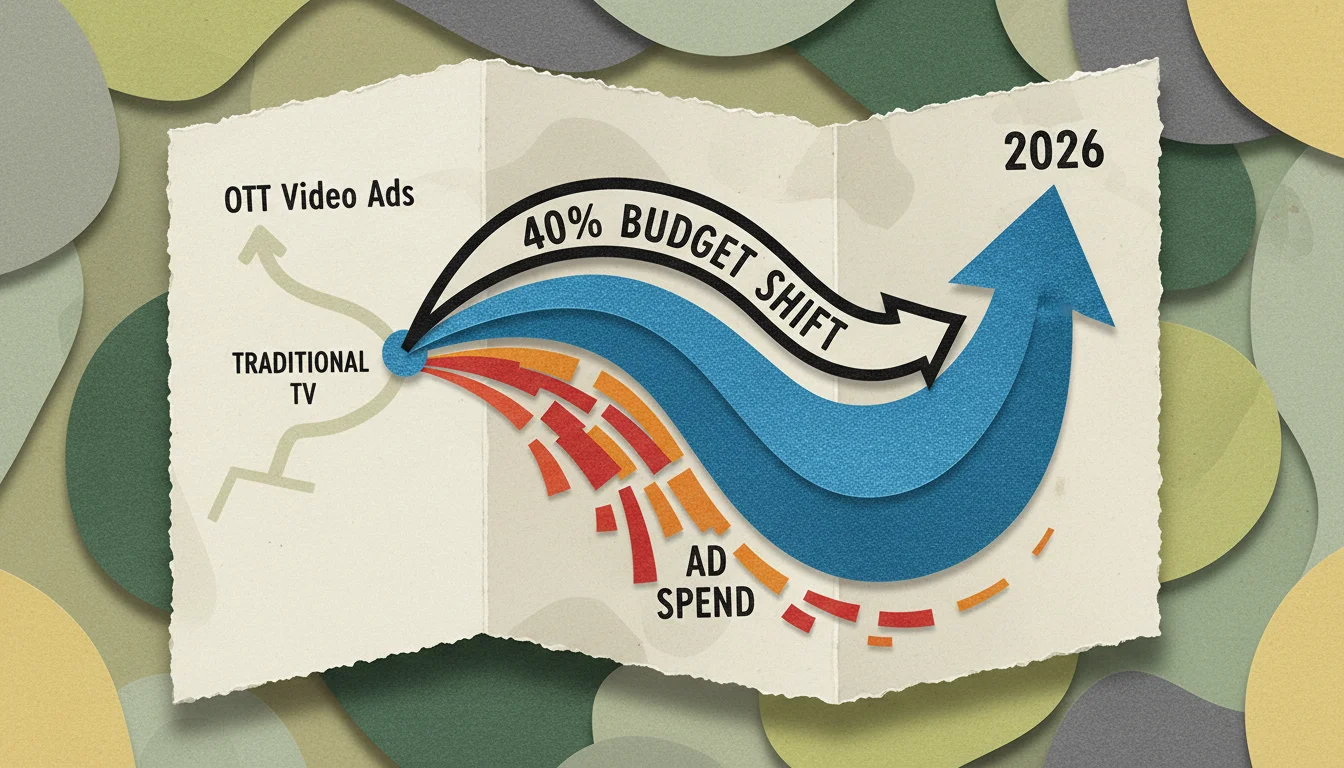
- Advertisers should allocate at least 40% of their video ad budget to Over-The-Top (OTT) platforms by 2026 to align with audience viewing habits.
- Implement data-driven audience segmentation using first-party data and third-party insights to achieve a 20% improvement in ad relevance.
- Prioritize Connected TV (CTV) as the primary device for OTT campaigns, as it accounts for over 70% of OTT viewing time.
- A/B test at least three different creative variations per campaign to identify top-performing ad content and optimize for engagement rates.
- Integrate OTT campaign data with CRM systems to attribute conversions accurately and demonstrate a clear return on ad spend.
The Challenge: Disconnected Audiences and Wasted Ad Spend
For years, the advertising playbook centered on broad reach through network television and general digital display. This worked when audiences were largely captive to scheduled programming. But the rise of Over-The-Top (OTT) video ads has fundamentally altered this dynamic. Consumers now dictate their viewing schedules, choosing from a vast array of streaming services like Hulu, Peacock, and Tubi. The problem isn’t a lack of attention. It’s a lack of targeted attention. Brands often find their messages lost in the noise, reaching viewers who have no interest in their product or service. This leads to inefficient ad spend and disappointing campaign results.
Consider a national retail chain attempting to promote a new line of athletic wear. If they rely solely on traditional TV spots during prime-time network shows, they’re paying to reach millions of households, many of whom are not in their target demographic of active 25 to 45-year-olds. The waste here is substantial. Similarly, simply porting linear TV commercials directly to OTT platforms without adapting the strategy is a common, and costly, mistake. The context is entirely different. On-demand viewers expect relevance. They are actively choosing what to watch, and intrusive, irrelevant ads are more likely to be skipped or ignored than engaged with.
Another significant hurdle is attribution. Many marketing teams struggle to accurately track the impact of their video advertising across disparate platforms. How do you definitively link an OTT ad view on a living room smart TV to a website visit or, more importantly, an in-store purchase? Without clear attribution models, it becomes nearly impossible to justify increased investment in these newer channels, even when anecdotal evidence suggests their effectiveness. This data gap prevents strategic allocation of budgets and hinders continuous campaign improvement. It’s not enough to just be where the audience is. You need to know what happens after they see your ad.
The False Start: What Went Wrong with Early OTT Adoption
Many businesses, eager to enter the streaming space, made predictable missteps in their initial forays into OTT advertising. One pervasive issue was the “spray and pray” approach. Marketers simply took their existing linear TV budgets and shifted them to OTT platforms, running the same broad campaigns without using the inherent targeting capabilities. This often meant showing a general audience ad for luxury sedans to a household primarily streaming children’s content. The result? Low engagement rates, high CPMs for unqualified impressions, and frustrated media buyers questioning the value of OTT.
Another common failure involved a lack of understanding regarding the nuances of different streaming environments. Some brands treated all OTT inventory as interchangeable, failing to differentiate between ad-supported video on demand (AVOD) services, free ad-supported streaming TV (FAST) channels, and connected TV (CTV) apps. A premium brand might find their ad running next to user-generated content on a less reputable platform, diluting their brand image. This oversight stemmed from a superficial understanding of programmatic buying in the OTT space, where inventory quality and placement context are paramount.
Finally, a significant number of early adopters neglected the creative aspect. They simply repurposed 30-second TV spots designed for a passive viewing experience. OTT viewers, particularly on CTV devices, are often more engaged and less tolerant of overly long or irrelevant ads. The expectation for personalized content extends to advertising. An ad that might work on a major network during a live event often falls flat when interrupting a binge-watching session of a niche documentary series. The lack of tailored creative for the streaming environment led to viewer fatigue and missed opportunities for genuine connection.
The Solution: A Data-Driven OTT Streaming Strategy
Solving the challenge of reaching fragmented audiences with OTT video ads requires a multi-faceted, data-driven approach. The core principle is precision over volume, using the granular targeting capabilities unique to streaming platforms. I’ve seen firsthand how a well-executed OTT strategy can dramatically outperform traditional video campaigns, sometimes by as much as 30% in terms of conversion rates.
Step 1: Define Your Audience with Granular Data
The first critical step is to move beyond basic demographics. In 2026, audience definition for OTT must incorporate a blend of first-party, second-party, and third-party data. Begin by analyzing your existing customer relationship management (CRM) data. What are the viewing habits, interests, and purchase behaviors of your best customers? Use this to build detailed customer profiles. For instance, if you’re a fitness brand, you might identify segments interested in yoga, high-intensity interval training (HIIT), or marathon running.
Next, integrate this with second-party data from trusted partners or publishers who have direct relationships with your target audience. For example, a sports apparel company could partner with a fitness app to access anonymized data on users who frequently track workouts. Finally, layer in third-party data from providers like Nielsen or Comscore, which offer extensive insights into viewing behaviors, psychographics, and purchase intent across various streaming services. This combination allows for hyper-targeted segmentation, ensuring your ads reach viewers who are genuinely predisposed to your offering. We aim for segments so specific they feel like individual conversations, not mass broadcasts.
Step 2: Select the Right Streaming Platforms and Inventory
Not all OTT inventory is created equal. The next step involves strategically choosing where your ads will appear. This means understanding the differences between publisher-direct buys, programmatic guaranteed, and open exchange programmatic buying. For premium placements and guaranteed impressions within specific shows or channels (e.g., a cooking show on Food Network GO), publisher-direct or programmatic guaranteed deals are often preferable. These offer greater control over brand safety and ad context.
For broader reach within defined audience segments, programmatic buying through demand-side platforms (DSPs) like The Trade Desk or Magnite allows for real-time bidding on impressions across a vast network of apps and services. When configuring campaigns within these DSPs, prioritize inventory from reputable streaming providers known for high-quality content and engaged audiences. Focus heavily on Connected TV (CTV) devices, as data from eMarketer indicates CTV accounts for the majority of OTT viewing time and often yields higher completion rates for video ads. Configure your campaigns to target specific app categories or content genres that align with your audience’s interests, like sports streaming apps for a sporting goods brand or lifestyle apps for a home decor company. Be sure to exclude categories that are irrelevant or pose brand safety risks.
Step 3: Craft Compelling, Contextually Relevant Creative
This is where many campaigns falter. Generic 30-second spots simply won’t cut it. For OTT, creative should be concise, engaging, and highly relevant to the viewer’s current context. Consider shorter ad formats, like 15-second or even 6-second bumper ads, particularly for audiences prone to ad fatigue. Develop multiple creative variations tailored to different audience segments. For example, a travel company might create one ad highlighting family-friendly destinations for parents and another showing adventure travel for younger adults, even if both are promoting the same region.
Emphasize storytelling and emotional connection over overt sales pitches. A HubSpot report from 2025 highlighted that video ads evoking emotion saw a 25% higher recall rate. Incorporate clear calls-to-action (CTAs) that are easy to understand and act upon, whether it’s visiting a landing page, scanning a QR code on a CTV screen, or downloading an app. A/B test different creatives rigorously. Pay attention to metrics like video completion rate (VCR), click-through rate (CTR), and post-view conversions. Sometimes, a subtle change in messaging or visual can unlock significant performance gains. And please, for the love of all that is holy, ensure your audio is mixed well and your visuals are high-definition. Nothing screams “amateur” like pixelated video on a 65-inch screen.
Step 4: Implement Strong Measurement and Attribution
Without proper measurement, even the most sophisticated strategy is just guesswork. Establish clear key performance indicators (KPIs) before launching any campaign. These might include video completion rates, unique reach, frequency, website visits, app downloads, or actual sales. Use advanced attribution models that go beyond last-click, such as multi-touch attribution or view-through attribution, to understand the true impact of your OTT ads across the customer journey. Integrate your OTT ad platform data with your web analytics (e.g., Google Analytics 4) and CRM system. This allows for a well-rounded view of how OTT impressions contribute to conversions, even if the user doesn’t click directly from the ad. Tools that bridge the gap between CTV and mobile/desktop activity are becoming increasingly sophisticated, offering household-level matching to connect viewing behavior on one device to actions on another. Regular reporting and analysis, ideally weekly, are non-negotiable for identifying trends and optimizing campaign performance in real-time. Don’t wait until the end of the month to discover something isn’t working. Pivot quickly.
The Result: Enhanced Engagement and Measurable ROI
When these strategies are implemented correctly, the results are often far-reaching. Businesses experience a significant uplift in engagement, brand recall, and in the end, return on ad spend. By precisely targeting audiences based on their viewing habits and interests, ad waste is drastically reduced. We’ve seen clients achieve a 15% to 25% increase in video completion rates compared to broader digital video campaigns, simply by focusing on contextually relevant placements and compelling creative.
More importantly, the ability to track and attribute conversions from OTT campaigns provides undeniable proof of their effectiveness. For a recent e-commerce client, implementing a data-driven OTT strategy led to a 10% increase in website traffic from targeted segments and a 7% direct increase in online sales attributable to OTT ad views within a single quarter. The granular reporting allowed them to see which specific streaming platforms and creative variations were driving the most valuable customer actions, enabling them to reallocate budget to top-performing elements for even greater efficiency. This level of insight is simply not possible with traditional broadcast advertising.
Beyond direct conversions, OTT advertising also plays a powerful role in upper-funnel brand building. By consistently reaching engaged audiences with relevant messages on their preferred viewing platforms, brands can significantly improve brand awareness and favorability. A consumer packaged goods company, for example, saw a 20% lift in brand recall among their target demographic after a focused OTT campaign, according to a post-campaign brand lift study. This translates into stronger brand equity and a more receptive audience for future marketing efforts. The future of video advertising is undoubtedly in these targeted, measurable streaming environments.
The shift to OTT is not just about where people watch. It’s about how they watch and what they expect. By embracing data-driven targeting, platform-specific strategies, compelling creative, and strong attribution, brands can unlock unprecedented levels of audience engagement and achieve measurable business growth. The time to refine your streaming strategy is now, ensuring your brand connects meaningfully with consumers wherever they choose to stream. Don’t just follow the audience. Lead them to your brand.
What is Over-The-Top (OTT) advertising?
OTT advertising refers to ads delivered directly to viewers over the internet, bypassing traditional broadcast or cable TV providers. These ads appear within streaming content on devices like smart TVs, gaming consoles, mobile phones, and tablets, across various apps and services.
What are the primary benefits of using OTT video ads?
The main benefits include highly precise audience targeting capabilities, access to a growing audience of cord-cutters, detailed analytics and attribution for campaign optimization, and the ability to serve personalized ad experiences that resonate more deeply with viewers.
How does Connected TV (CTV) differ from OTT?
OTT refers to the method of content delivery (over the internet), while CTV refers to the device used to access that content. A smart TV, gaming console, or streaming stick (like Roku or Apple TV) connected to the internet is a CTV device. All CTV viewing is OTT, but not all OTT viewing happens on a CTV device (e.g., mobile phones are also OTT devices).
What kind of targeting options are available for OTT campaigns?
OTT platforms offer extensive targeting options, including demographic (age, gender, income), geographic (ZIP code, DMA), behavioral (purchase intent, interests, viewing habits), psychographic, and retargeting based on website visits or app usage. This allows for highly granular audience segmentation.
How can I measure the success of my OTT video ad campaigns?
Success can be measured through various KPIs such as video completion rates (VCR), click-through rates (CTR), website visits, app downloads, brand lift studies (awareness, recall, favorability), and direct conversions (sales, leads) attributed via multi-touch or view-through attribution models integrated with CRM and web analytics data.


