 By David Carson
The Philippines digital advertising market is poised for explosive growth, defying traditional economic indicators and offering unparalleled opportunities for brands willing to adapt.
Key Takeaways
- Mobile internet usage in the Philippines will reach over 90 million users by 2026, making mobile-first advertising strategies essential for market penetration.
- Social media platforms are the primary battleground for digital ad spend, with platforms like Meta Business and TikTok Ads dominating consumer attention.
- AI-driven marketing solutions, including predictive analytics and automated content generation, are no longer optional but critical for competitive advantage in the Philippine market.
- Video advertising, especially short-form and interactive formats, is projected to be the fastest-growing segment within the digital ad landscape.
- Brands must focus on hyper-localization and community engagement to resonate with Filipino consumers who prioritize authentic connections online.
The Mobile Takeover: 90 Million Strong by 2026
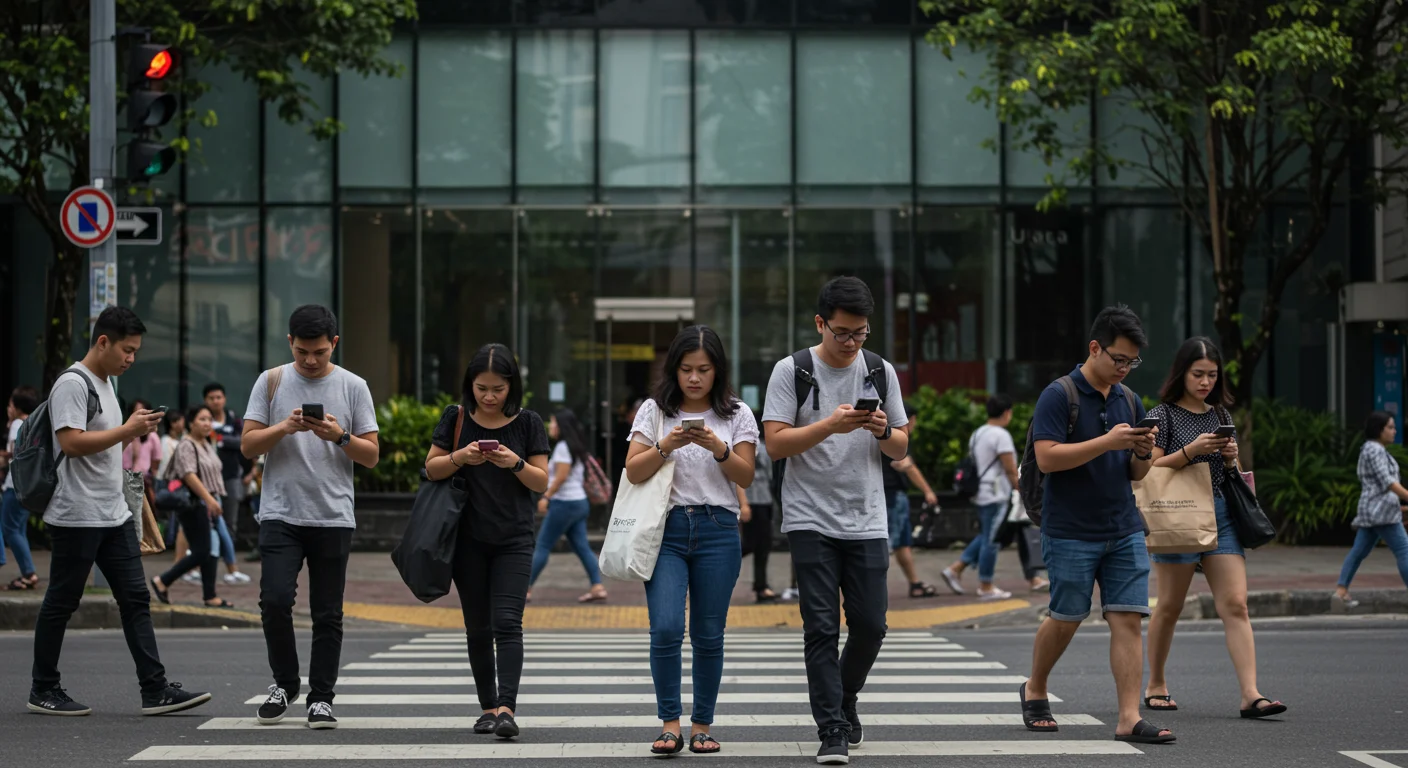
It’s astonishing, really, how quickly the Philippines has become a mobile-first nation. We’re not talking about a slow transition; it’s a full-blown revolution. By 2026, the Philippines is expected to boast over 90 million mobile internet users. Think about that for a moment: 90 million potential customers, all carrying a connected device in their pockets. This isn’t just a statistic; it’s the foundational shift driving the entire digital advertising market. For us at Videoadsstudio, this means every single campaign, every creative brief, every media buy, absolutely must be designed with mobile in mind first. If your ad isn’t optimized for a smartphone screen, if it doesn’t load instantly on a 4G connection, you’re not just losing an impression; you’re losing a customer to a competitor who understands this fundamental truth.
Social Media’s Unstoppable Reign in the Philippines
Forget the notion that social media is just a “nice-to-have” in your marketing mix. In the Philippines, it’s the main event. Social media platforms aren’t merely communication tools; they are the primary digital town squares, shopping malls, and entertainment hubs all rolled into one. The sheer volume of time Filipinos spend on platforms like Facebook, TikTok, and Instagram is staggering. This isn’t just about presence; it’s about engagement. I had a client last year, a local fashion brand, who initially focused heavily on Google Search Ads. Their conversion rates were decent, but their brand awareness was flat. We shifted 60% of their budget to Meta Business ads, focusing on short, authentic video content featuring local influencers. Within three months, their social engagement soared by 300%, and direct traffic to their site from social platforms nearly doubled. This illustrates a profound point: the Filipino consumer lives on social media, and that’s where brands need to invest their advertising dollars for genuine connection and growth.
AI-Driven Marketing: The New Competitive Edge
Here’s a prediction that might sound bold, but I assure you it’s already happening: if your digital advertising strategy isn’t heavily leveraging artificial intelligence by 2026, you’ll be left in the dust. The Philippines digital advertising market is becoming too complex, too data-rich, for manual optimization. AI is no longer a futuristic concept; it’s a practical necessity. From predictive analytics that identify optimal ad placements and times to AI-powered content generation tools that craft personalized ad copy and visuals, the capabilities are immense. We recently implemented an AI-driven Performance Max campaign for a client in Manila, targeting specific demographic clusters based on real-time behavioral data. The results were astounding: a 25% reduction in cost-per-acquisition compared to their previous manual campaigns, all while increasing reach. This isn’t just about efficiency; it’s about precision. AI allows us to understand consumer intent at a granular level, delivering the right message to the right person at the exact right moment.
Video Advertising: The Dominant Content Format
If a picture is worth a thousand words, a video in the Philippines is worth a thousand sales. The surge in mobile internet usage directly correlates with an insatiable demand for video content. Short-form video, in particular, has become the undisputed king. Platforms like TikTok have fundamentally reshaped consumer attention spans, demanding engaging, concise, and visually arresting content. For us at Videoadsstudio, this is our bread and butter. We’ve seen firsthand how a well-produced 15-second video ad can outperform a static image campaign by orders of magnitude. The key, however, isn’t just making video; it’s about strategic video. It needs to be culturally resonant, emotionally engaging, and designed for silent consumption (with captions, of course, because many users watch without sound). I’ve often seen brands struggle because they repurpose TV commercials for digital. Big mistake. Digital video, especially for the Philippine audience, requires a different creative approach – more authentic, more interactive, and often, more community-driven.
The Power of Community and Hyper-Localization
One area where I often disagree with broader global marketing trends when applied to the Philippines is the idea of a “one-size-fits-all” digital strategy. The Filipino digital consumer, while tech-savvy, is deeply rooted in community and local culture. Generic campaigns, no matter how well-targeted demographically, often fall flat. What truly resonates is hyper-localization. This means understanding specific regional dialects, local customs, and even neighborhood-level nuances. It means partnering with micro-influencers who genuinely connect with their local followers, rather than just chasing celebrity endorsements. We ran into this exact issue at my previous firm when a global beverage brand tried to launch a campaign with generic, Western-centric imagery. It performed poorly. We pivoted to a strategy that featured local Filipino artists, used common local phrases, and highlighted community events in specific cities like Cebu and Davao. The difference was night and day. Engagement metrics skyrocketed, proving that authenticity and local relevance trump broad appeal every time. Ignoring this is not just a missed opportunity; it’s a fundamental misunderstanding of the market.
The Philippines digital advertising market in 2026 is a dynamic, mobile-first, and AI-driven landscape where social media reigns supreme and video is the primary language. Brands that embrace these shifts, focusing on authentic, localized content and leveraging advanced analytics, will not just survive but thrive in this exciting environment.
What are the primary drivers of growth in the Philippines digital advertising market?
The main drivers include the exponential growth in mobile internet usage, the dominant role of social media platforms in daily life, and the increasing adoption of AI-driven marketing technologies for precision targeting and efficiency. Video advertising, particularly short-form content, also plays a significant role in consumer engagement.
Why is mobile internet usage so critical for advertisers in the Philippines?
With over 90 million projected mobile internet users by 2026, the smartphone is the primary device for content consumption and online interaction. Advertisers must prioritize mobile-first design, fast loading times, and intuitive user experiences to effectively reach and engage the vast majority of the Filipino digital audience.
How important is social media in the Philippines digital advertising landscape?
Social media is paramount. Platforms like Facebook, TikTok, and Instagram serve as central hubs for communication, entertainment, and commerce. Brands must allocate significant resources to social media advertising, focusing on engaging content and community building to connect with consumers where they spend most of their online time.
What role does AI play in marketing within the Philippines?
AI is becoming indispensable for competitive digital advertising. It enables advanced capabilities such as predictive analytics for optimal ad placement, hyper-personalization of ad content, and automated campaign optimization. Leveraging AI helps reduce costs, improve targeting accuracy, and enhance overall campaign performance.
What kind of content performs best for video advertising in the Philippines?
Short-form, authentic, and culturally resonant video content performs exceptionally well. Ads should be designed for mobile viewing, often with captions for silent consumption, and ideally feature local talent or themes. Interactive video formats also show strong engagement among Filipino audiences.


