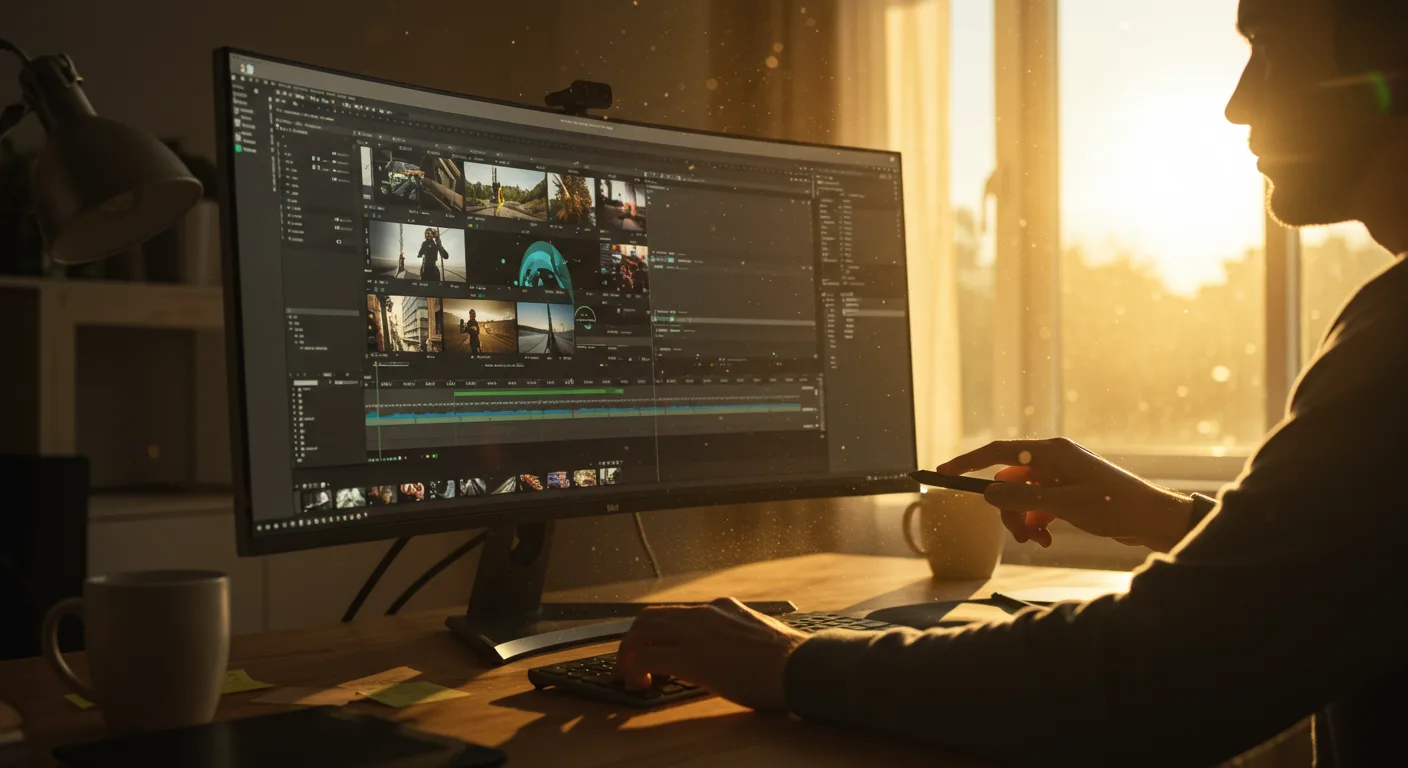
The Future of Adobe Premiere Pro: Key Predictions
Adobe Premiere Pro remains the industry-standard video editing software for many marketing professionals. But what does the future hold for this powerful tool? How will advancements in AI, cloud computing, and collaborative workflows transform the way we create and edit video content? Will Premiere Pro maintain its dominance in the face of emerging competitors and evolving user needs?
AI-Powered Editing and Marketing Automation
The integration of artificial intelligence (AI) is poised to revolutionize video editing within Premiere Pro, offering unprecedented levels of automation and efficiency. We’re already seeing glimpses of this with features like scene edit detection and auto reframe, but the future promises much more sophisticated capabilities. Imagine AI algorithms that can automatically:
- Identify and correct flaws: Automatically detect and fix imperfections like shaky footage, poor lighting, and audio issues.
- Generate captions and translations: Instantly transcribe dialogue and translate it into multiple languages, making video content accessible to a global audience.
- Suggest edits: Analyze footage and suggest optimal cuts, transitions, and pacing based on established filmmaking principles.
- Create marketing variations: Generate multiple versions of a video optimized for different platforms (e.g., TikTok, Instagram, YouTube) and marketing campaigns, automatically adjusting aspect ratios, durations, and call-to-actions.
These AI-powered features will not only save editors time and effort but also empower marketing teams to produce higher-quality video content more efficiently. AI-driven analysis of video performance will also become commonplace, providing marketers with actionable insights into audience engagement and campaign effectiveness.
A recent report by Forrester Research predicts that AI-powered marketing automation will increase by 40% in the next two years, with video playing a central role in this growth.
Cloud-Based Collaboration and Remote Workflows
The shift towards cloud-based collaboration is accelerating, and Premiere Pro is adapting to meet the needs of remote teams. We’ve already seen improvements in features like Productions, which enables multiple editors to work on the same project simultaneously. In the future, we can expect:
- Seamless cloud storage and sharing: Effortless access to project files and assets from anywhere in the world, eliminating the need for cumbersome file transfers.
- Real-time collaboration: The ability for multiple editors, motion graphic designers, and sound designers to work on the same timeline simultaneously, with live feedback and version control.
- Integrated review and approval workflows: Streamlined processes for sharing work with clients and stakeholders, gathering feedback, and managing revisions.
- Platform-agnostic access: The ability to access and edit Premiere Pro projects from any device, including tablets and mobile phones, enabling on-the-go editing and review.
This shift towards cloud-based workflows will transform Premiere Pro into a truly collaborative platform, fostering greater efficiency and creativity within marketing teams. Teams will be able to work on video projects from anywhere in the world, regardless of their location or device.
Enhanced Integration with Marketing Platforms
Premiere Pro’s integration with other marketing platforms will deepen, allowing for a more seamless and data-driven approach to video marketing. We can anticipate:
- Direct publishing to social media: One-click publishing of videos to various social media platforms, with automatic optimization for each platform’s specifications.
- Integration with analytics tools: Real-time tracking of video performance across different platforms, providing marketers with valuable insights into audience engagement and campaign effectiveness. Google Analytics integration, for example, will become even more sophisticated.
- Personalized video experiences: The ability to create personalized video experiences for individual users based on their demographics, interests, and behavior.
- Integration with CRM systems: Seamless integration with CRM systems, allowing marketers to track video engagement and attribute it to specific leads and customers.
- Dynamic content insertion: The ability to insert dynamic content, such as personalized messages and product recommendations, into videos based on user data.
These integrations will empower marketers to create more targeted and effective video campaigns, driving better results and ROI. Marketers will be able to track the entire customer journey, from initial video view to final conversion.
The Rise of Immersive and Interactive Video
As virtual reality (VR) and augmented reality (AR) technologies become more mainstream, Premiere Pro will need to adapt to support the creation of immersive and interactive video experiences. This includes:
- Native support for 360° video editing: Tools for seamlessly editing and enhancing 360° video footage.
- Integration with VR/AR platforms: The ability to create and export video content for VR/AR headsets and applications.
- Interactive video elements: Tools for adding interactive elements to videos, such as clickable hotspots, quizzes, and polls.
- Spatial audio support: The ability to create immersive audio experiences that complement the visual content.
These advancements will open up new possibilities for marketing teams to engage with their audiences in innovative and immersive ways. Imagine virtual product demos, interactive brand experiences, and personalized VR tours – all powered by Premiere Pro.
Accessibility and Inclusivity Enhancements
Premiere Pro will continue to evolve to become more accessible and inclusive to all users, including those with disabilities. This includes:
- Improved captioning and subtitling tools: More accurate and efficient tools for generating captions and subtitles, with support for multiple languages.
- Audio description support: The ability to add audio descriptions to videos for visually impaired viewers.
- Keyboard navigation improvements: Enhanced keyboard navigation for users who cannot use a mouse.
- Customizable interface: Options for customizing the interface to meet the needs of users with different visual impairments.
- AI-powered accessibility checks: Automated checks to identify and fix accessibility issues in video projects.
These enhancements will ensure that video content created with Premiere Pro is accessible to the widest possible audience, promoting inclusivity and expanding the reach of marketing messages. Accessibility will become a core principle of video production, not just an afterthought.
The Evolving Role of the Video Editor in Marketing
While AI and automation will undoubtedly streamline many aspects of video editing, the role of the video editor in marketing will remain crucial. Editors will evolve from being primarily technical operators to strategic storytellers, leveraging AI tools to enhance their creativity and efficiency.
- Focus on storytelling: Editors will spend more time crafting compelling narratives and less time on repetitive tasks.
- Collaboration with AI: Editors will work alongside AI algorithms, using their expertise to refine and optimize AI-generated edits.
- Data-driven decision-making: Editors will use data analytics to inform their editing decisions, ensuring that videos are optimized for audience engagement and campaign performance.
- Mastering new technologies: Editors will need to stay up-to-date on the latest advancements in AI, VR/AR, and other emerging technologies.
The future of Premiere Pro is bright, with AI, cloud collaboration, and platform integration poised to transform the way we create and edit video content. As these technologies evolve, the role of the video editor will also evolve, requiring a blend of technical skills, creative storytelling, and data-driven decision-making. How will you adapt to these changes and leverage Premiere Pro to create impactful video experiences for your audience?
FAQ
Will AI replace video editors?
No, AI will not replace video editors. Instead, it will augment their skills and allow them to focus on more creative and strategic tasks. Editors will need to learn how to collaborate with AI to create the best possible video content.
How will cloud-based workflows impact video editing teams?
Cloud-based workflows will enable video editing teams to collaborate more efficiently, regardless of their location. This will lead to faster turnaround times and improved communication.
What new skills will video editors need in the future?
Video editors will need to develop skills in AI-assisted editing, data analysis, and immersive storytelling. They will also need to be proficient in using cloud-based collaboration tools.
How will Premiere Pro integrate with other marketing tools?
Premiere Pro will integrate more deeply with marketing platforms like Salesforce and Mailchimp, allowing for seamless data sharing and personalized video experiences. This will enable marketers to track the effectiveness of their video campaigns and optimize their ROI.
Will Premiere Pro become more accessible to users with disabilities?
Yes, Premiere Pro will continue to improve its accessibility features, making it easier for users with disabilities to create and consume video content. This includes improved captioning, audio description support, and customizable interfaces.
In conclusion, the future of Adobe Premiere Pro is intertwined with advancements in AI, cloud technology, and immersive experiences. For marketing professionals, this means embracing these changes to unlock new levels of efficiency and creativity. By focusing on storytelling, mastering new technologies, and leveraging data-driven insights, you can harness the power of Premiere Pro to create impactful video campaigns that drive results. The key takeaway? Stay adaptable, embrace AI, and focus on delivering compelling narratives to thrive in the evolving landscape of video marketing.



