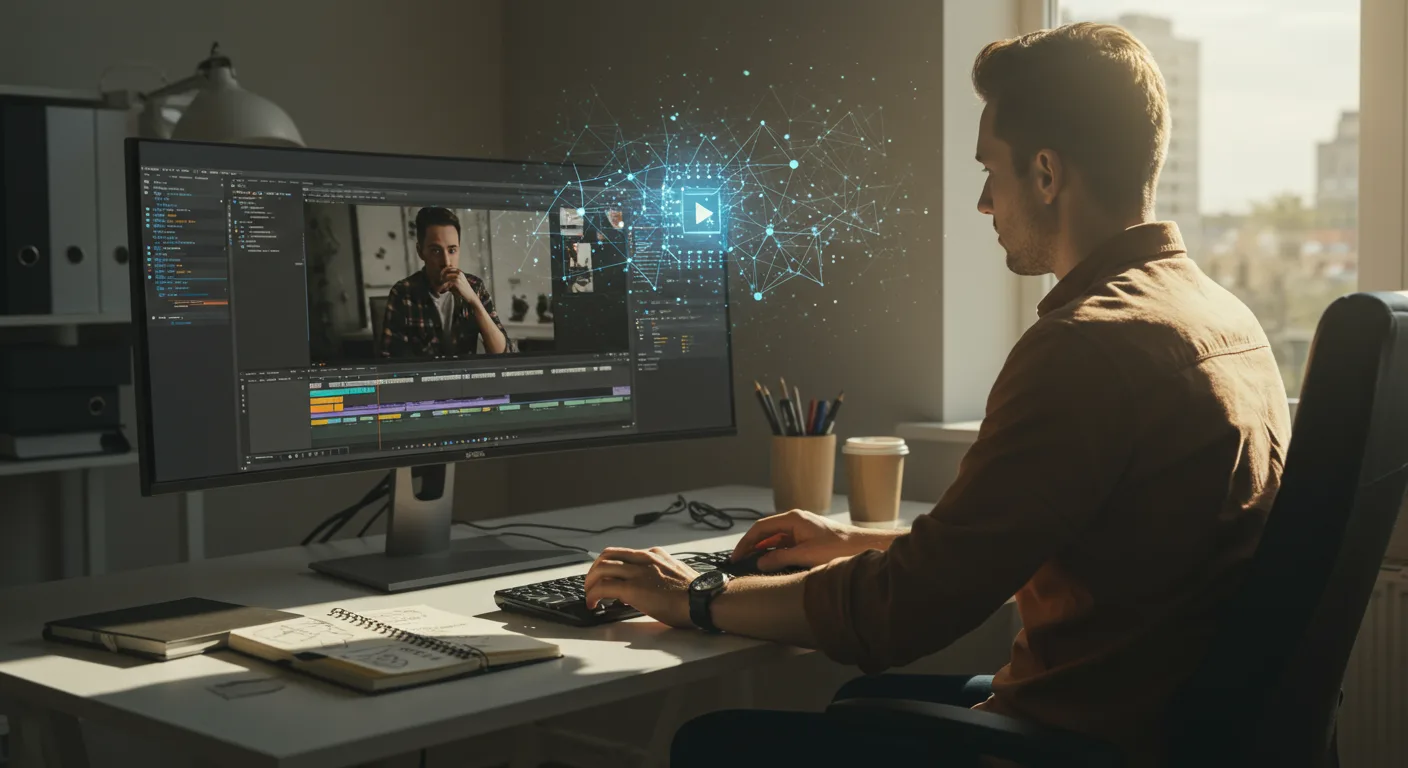
The Future of Adobe Premiere Pro: Key Predictions
The world of video editing is in constant flux, and Adobe Premiere Pro is leading the charge. As video continues its reign as the king of content, understanding the future trajectory of this powerful tool is crucial for marketers. What new features and integrations can we expect to see that will reshape video marketing strategies?
AI-Powered Video Editing and Premiere Pro
Artificial intelligence (AI) is no longer a futuristic concept; it’s rapidly transforming how we create and edit video. The future of Adobe Premiere Pro hinges significantly on its integration of AI-powered features. Expect to see even more sophisticated tools that automate tedious tasks, freeing up editors to focus on creative aspects.
- Intelligent Scene Detection: While scene detection already exists, AI will improve its accuracy and efficiency. Premiere Pro will automatically analyze footage, identify different scenes with greater precision, and even suggest optimal edits based on content and pacing. This will significantly reduce the time spent manually cutting and arranging clips.
- AI-Driven Audio Enhancement: Background noise, poor microphone quality, and inconsistent audio levels are common challenges in video production. AI algorithms in Premiere Pro will automatically identify and remove noise, balance audio levels, and even enhance speech clarity, ensuring professional-sounding audio without requiring extensive manual adjustments.
- Automated Color Correction: Achieving consistent and visually appealing color grading across an entire video can be time-consuming. AI-powered color correction will analyze footage and automatically adjust color balance, contrast, and saturation to create a uniform look. Editors will still have the option to fine-tune the results, but the AI will provide a solid starting point.
- Smart Object Removal: Imagine effortlessly removing unwanted objects from your footage. AI-powered object removal tools will allow you to select objects within a video and have Premiere Pro automatically fill in the gaps with realistic background textures. This will be invaluable for removing distractions and creating cleaner, more polished videos.
- AI-Assisted Motion Graphics: Creating compelling motion graphics often requires specialized skills and software. Premiere Pro will integrate AI-powered tools that simplify the process, allowing users to generate sophisticated animations and visual effects with minimal effort. Expect to see templates and presets that can be customized with AI assistance.
From my experience training video editors, the biggest time-saver they’re looking for is intelligent background noise reduction. If Premiere Pro can reliably remove the hum of an air conditioner or street noise, that alone would justify the cost of the subscription.
Enhanced Collaboration Tools for Marketing Teams
Video marketing is rarely a solo endeavor. It often involves teams of writers, designers, editors, and marketers working together. Adobe Premiere Pro will continue to evolve its collaboration features to streamline workflows and improve communication.
- Real-Time Co-Editing: Imagine multiple editors working simultaneously on the same project, making changes in real-time. Premiere Pro is moving towards enabling true real-time co-editing, allowing teams to collaborate more efficiently, regardless of their location. This will be particularly beneficial for remote teams and fast-paced marketing campaigns.
- Integrated Review and Approval Workflows: Streamlining the review and approval process is crucial for keeping video projects on track. Premiere Pro will integrate more tightly with collaboration platforms like Asana and Frame.io, enabling reviewers to provide feedback directly within the timeline, and automatically track revisions and approvals.
- Centralized Asset Management: Managing video assets – footage, audio files, graphics – can be a logistical nightmare. Premiere Pro will integrate with cloud-based asset management systems, providing a central repository for all project files. This will ensure that everyone on the team has access to the latest versions of assets, reducing confusion and errors.
- Version Control and History Tracking: Keeping track of different versions of a video project is essential for managing feedback and revisions. Premiere Pro will offer robust version control features, allowing editors to easily revert to previous versions, compare changes, and track the history of edits.
- Shared Libraries and Templates: Consistent branding is crucial for video marketing. Premiere Pro will enable teams to create and share libraries of branded assets, such as logos, color palettes, and motion graphic templates. This will ensure that all videos adhere to brand guidelines and maintain a consistent visual identity.
Optimized Workflows for Social Media Marketing
Social media platforms have become essential channels for video marketing. Adobe Premiere Pro will offer more streamlined workflows for creating and optimizing videos for different social media platforms.
- Automated Aspect Ratio Adjustments: Each social media platform has its own preferred aspect ratio for videos. Premiere Pro will automatically detect the aspect ratio of a video and suggest optimal cropping and resizing options for different platforms. This will save editors time and ensure that videos look their best on each platform.
- Integrated Social Media Publishing: Premiere Pro will integrate directly with social media platforms like YouTube, Facebook, Instagram and TikTok, allowing users to publish videos directly from within the application. This will streamline the publishing process and eliminate the need to export and upload videos separately.
- Social Media-Specific Templates and Presets: Premiere Pro will offer a library of templates and presets specifically designed for social media videos. These templates will include animations, transitions, and graphics optimized for different platforms and content formats.
- Real-Time Performance Analytics: Premiere Pro will integrate with analytics platforms, providing real-time data on video performance across different social media channels. This will allow marketers to track engagement, identify trends, and optimize their video content for maximum impact.
- AI-Powered Content Repurposing: Repurposing existing video content is a cost-effective way to reach a wider audience. Premiere Pro will use AI to analyze videos and automatically generate shorter clips, snippets, and GIFs optimized for different social media platforms.
According to a recent HubSpot survey, marketers who repurpose content are 3x more likely to see a positive ROI on their marketing efforts. Premiere Pro’s AI-powered repurposing tools will make this process even easier and more efficient.
Advanced Motion Graphics and Visual Effects Capabilities
Motion graphics and visual effects are essential for creating engaging and visually stunning videos. Adobe Premiere Pro will continue to enhance its capabilities in these areas, making it easier for marketers to create professional-quality videos.
- Node-Based Compositing: Node-based compositing offers a more flexible and powerful approach to creating visual effects compared to traditional layer-based systems. Premiere Pro will integrate a node-based compositing engine, allowing users to create complex visual effects with greater control and precision.
- Real-Time 3D Integration: Integrating 3D elements into videos can add depth and visual interest. Premiere Pro will offer improved integration with 3D software like Blender and Cinema 4D, allowing users to seamlessly import and manipulate 3D models and animations within Premiere Pro.
- Advanced Particle Systems: Particle systems are used to create realistic effects such as fire, smoke, and rain. Premiere Pro will feature more advanced particle systems, allowing users to generate complex and dynamic effects with greater realism.
- AI-Powered Motion Tracking: Motion tracking is used to attach graphics and effects to moving objects in a video. Premiere Pro will integrate AI-powered motion tracking, making it easier to track objects with greater accuracy and precision, even in challenging footage.
- Procedural Animation Tools: Procedural animation allows users to create animations based on mathematical algorithms rather than manual keyframing. Premiere Pro will offer procedural animation tools, allowing users to generate complex and dynamic animations with minimal effort.
Seamless Integration with Other Adobe Creative Cloud Applications
Adobe Premiere Pro is part of the Adobe Creative Cloud suite, and its integration with other applications like After Effects, Photoshop, and Audition is a key strength. Future versions of Premiere Pro will offer even tighter integration with these applications, streamlining workflows and improving collaboration.
- Dynamic Link Improvements: Dynamic Link allows users to seamlessly transfer assets between Premiere Pro and After Effects without rendering. Premiere Pro will offer improved Dynamic Link performance, making it faster and easier to work with complex After Effects compositions.
- Shared Libraries and Assets: Premiere Pro will offer seamless access to shared libraries and assets across all Adobe Creative Cloud applications. This will allow users to easily access logos, graphics, and other assets from within Premiere Pro, ensuring consistent branding across all video projects.
- Round-Trip Audio Editing with Audition: Audition is Adobe’s professional audio editing software. Premiere Pro will offer improved round-trip audio editing capabilities with Audition, allowing users to seamlessly send audio clips to Audition for editing and then bring them back to Premiere Pro without losing synchronization.
- Photoshop Integration for Image Editing: Photoshop is the industry-standard image editing software. Premiere Pro will offer tighter integration with Photoshop, allowing users to directly edit Photoshop files within Premiere Pro without having to export and import them.
- Adobe Stock Integration: Adobe Stock is Adobe’s library of stock photos, videos, and graphics. Premiere Pro will offer seamless integration with Adobe Stock, allowing users to easily search for and license stock assets from within the application.
Conclusion
The future of Adobe Premiere Pro is bright, with AI-powered features, enhanced collaboration tools, optimized social media workflows, advanced motion graphics capabilities, and seamless integration with other Adobe Creative Cloud applications all on the horizon. By embracing these advancements, marketers can create more engaging, impactful, and efficient video marketing campaigns. Start exploring AI tools and collaborative workflows now to stay ahead of the curve. How will you leverage these advancements to revolutionize your video marketing strategy?
Will AI completely replace video editors?
No, AI will augment, not replace, video editors. AI will automate tedious tasks, freeing up editors to focus on the creative aspects of video production. Human creativity and storytelling will still be essential.
How will Premiere Pro integrate with emerging technologies like VR and AR?
Premiere Pro will likely offer more robust support for VR and AR content creation, including tools for editing 360° videos, creating interactive AR experiences, and optimizing content for VR headsets and AR devices.
Will Premiere Pro become more accessible to non-professional users?
While Premiere Pro is a professional-grade tool, Adobe is likely to continue to make it more accessible to non-professional users by simplifying the interface, adding more tutorials and templates, and integrating AI-powered features that automate complex tasks.
What kind of hardware will be required to run future versions of Premiere Pro?
As Premiere Pro becomes more powerful and feature-rich, it will likely require more powerful hardware to run smoothly. Expect to need a faster processor, more RAM, and a dedicated graphics card to take full advantage of the latest features.
How will Premiere Pro address concerns about data privacy and security?
Adobe will likely implement stronger data privacy and security measures in Premiere Pro, including encryption, access controls, and compliance with data privacy regulations. Users will have more control over their data and how it is used.




