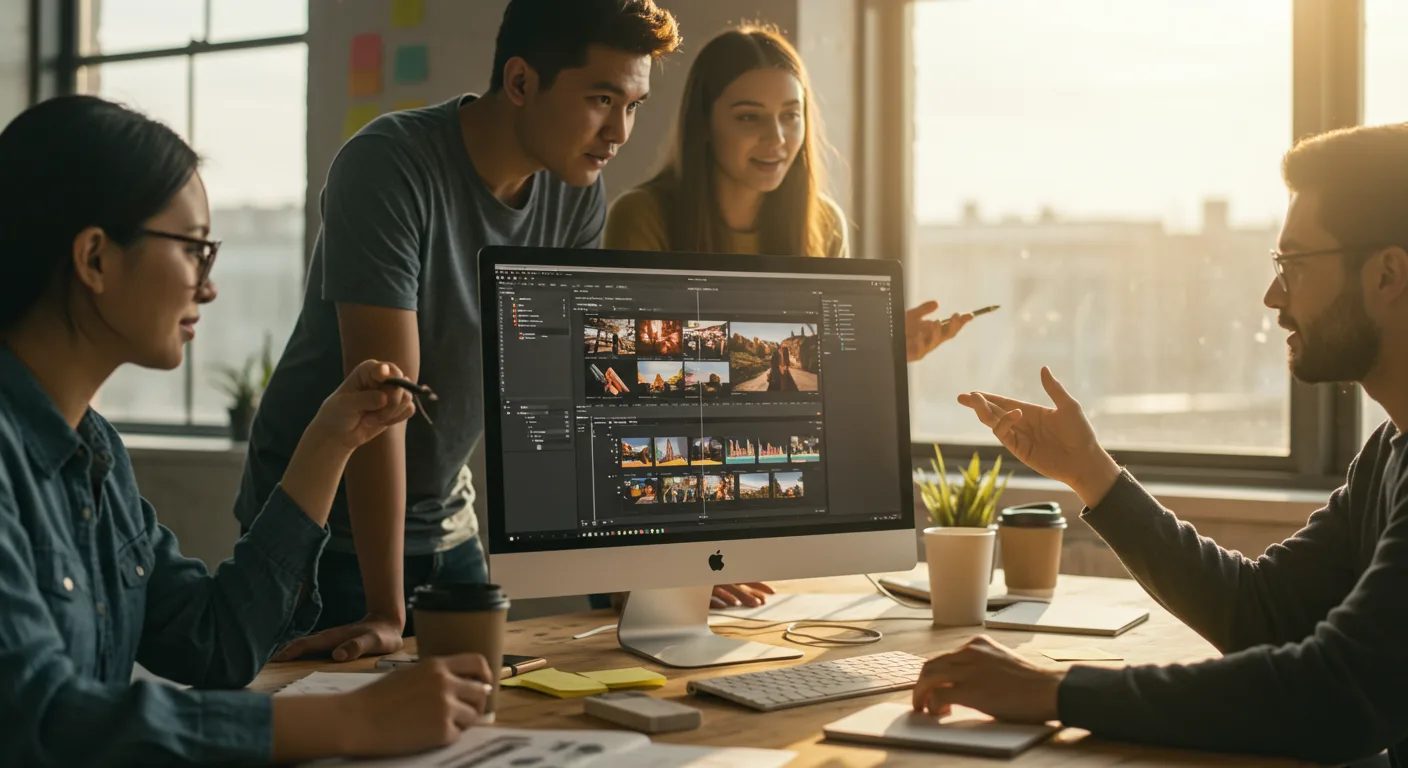
The Future of Adobe Premiere Pro: Key Predictions
Adobe Premiere Pro remains the industry-standard video editing software for many marketing professionals, but how will it evolve in the coming years? With rapid advancements in AI, cloud computing, and collaborative workflows, the future of video editing is poised for significant change. Are you ready to adapt your video marketing strategy to the next generation of Premiere Pro?
AI-Powered Editing: Intelligent Automation
Artificial intelligence (AI) is already making waves in video editing, and its influence will only grow stronger in the coming years. Expect to see more sophisticated AI-powered features within Adobe Premiere Pro that automate tedious tasks and streamline workflows.
- Intelligent Scene Detection: Premiere Pro currently offers scene detection, but future versions will use AI to analyze scenes with greater accuracy. This includes identifying objects, emotions, and even the overall tone of a scene. Imagine being able to automatically tag scenes based on their emotional content, making it easier to find the perfect clip for your marketing campaign.
- Automated Audio Mixing and Mastering: Achieving professional-sounding audio can be a challenge, especially for marketing teams with limited audio expertise. AI-powered audio tools will automatically balance levels, remove noise, and even apply mastering effects, ensuring that your videos sound polished and professional.
- Smart Reframing and Aspect Ratio Adaptation: As video consumption continues to diversify across platforms like TikTok, Instagram, and YouTube, the need to optimize videos for different aspect ratios is crucial. Premiere Pro will leverage AI to intelligently reframe videos, ensuring that the most important content remains visible, regardless of the platform. This will save marketing teams countless hours of manual resizing and repositioning.
- AI-Driven Transcription and Captioning: Accessibility is becoming increasingly important, and accurate captions are essential for reaching a wider audience. Premiere Pro will offer AI-powered transcription and captioning tools that are faster and more accurate than ever before. These tools will also be able to automatically translate captions into multiple languages, making your videos accessible to a global audience.
According to a recent report by Forrester, AI-powered automation will increase the productivity of video editors by up to 40% by 2028.
Cloud-Based Collaboration: Seamless Teamwork
The rise of remote work has highlighted the importance of collaborative workflows. Premiere Pro is already integrated with Adobe’s Creative Cloud, but future versions will offer even more robust cloud-based collaboration features.
- Real-Time Co-Editing: Imagine multiple editors working on the same project simultaneously, with changes being reflected in real-time. This would dramatically speed up the editing process and allow teams to collaborate more effectively, regardless of their location. This is especially valuable for marketing teams working on fast-paced campaigns.
- Shared Libraries and Assets: Premiere Pro will offer more advanced shared libraries and asset management features. This will allow teams to easily access and share footage, graphics, and other assets, ensuring that everyone is working with the latest versions.
- Cloud-Based Rendering and Storage: Rendering large video files can be time-consuming and resource-intensive. Premiere Pro will leverage the power of the cloud to offer faster rendering times and virtually unlimited storage. This will free up local resources and allow editors to focus on the creative aspects of their work.
- Integrated Review and Approval Workflows: Streamlining the review and approval process is essential for efficient video production. Premiere Pro will offer integrated review and approval workflows that allow stakeholders to provide feedback directly within the application. This will eliminate the need for lengthy email chains and ensure that everyone is on the same page.
Immersive Experiences: VR and 360° Video
Virtual reality (VR) and 360° video are becoming increasingly popular, and Premiere Pro will need to adapt to support these immersive formats.
- Advanced VR Editing Tools: Premiere Pro will offer more advanced tools for editing VR footage, including the ability to create interactive experiences and add spatial audio. This will allow marketing teams to create engaging VR content that captivates audiences.
- Seamless 360° Video Workflows: Editing 360° video can be challenging due to the unique nature of the format. Premiere Pro will offer streamlined workflows for editing 360° video, including tools for stitching footage, adding graphics, and stabilizing shaky shots.
- Integration with VR Headsets: Premiere Pro will offer seamless integration with VR headsets, allowing editors to preview their work in a virtual environment. This will provide a more immersive editing experience and allow editors to accurately assess the impact of their creative decisions.
A study by Statista projects that the global VR market will reach $50 billion by 2028, highlighting the growing importance of VR content.
Motion Graphics and Visual Effects: Enhanced Creativity
Motion graphics and visual effects play a crucial role in modern video production, and Premiere Pro will continue to enhance its capabilities in these areas.
- AI-Powered Motion Tracking: Motion tracking is a fundamental technique in visual effects, but it can be time-consuming to perform manually. Premiere Pro will leverage AI to automate motion tracking, allowing editors to quickly and easily track objects and add effects.
- Advanced Compositing Tools: Compositing involves combining multiple video layers to create complex visual effects. Premiere Pro will offer more advanced compositing tools, including features like keying, rotoscoping, and color grading.
- Seamless Integration with After Effects: Premiere Pro already integrates with Adobe After Effects, but future versions will offer even tighter integration. This will allow editors to seamlessly move between the two applications, making it easier to create complex motion graphics and visual effects.
- Real-Time 3D Integration: Premiere Pro will offer real-time integration with 3D software, allowing editors to incorporate 3D elements into their videos without having to render them separately. This will significantly speed up the workflow for creating visually stunning videos.
Customization and Integration: Personalized Workflows
Every video editor has their own preferred workflow, and Premiere Pro will offer more customization options to cater to individual needs.
- Customizable Workspaces: Premiere Pro already allows users to customize their workspaces, but future versions will offer even more granular control. Editors will be able to create custom panels, shortcuts, and even scripts to automate repetitive tasks.
- Open API for Third-Party Integration: Premiere Pro will offer a more open API, allowing third-party developers to create plugins and extensions that integrate seamlessly with the application. This will allow editors to extend the functionality of Premiere Pro and tailor it to their specific needs.
- Integration with Project Management Tools: Premiere Pro will offer tighter integration with project management tools like Asana and Trello, allowing teams to track progress, manage tasks, and collaborate more effectively. This will be particularly useful for marketing teams managing large video projects.
- Voice Control and Automation: Premiere Pro will incorporate more advanced voice control features, allowing editors to control the application with their voice. This will be particularly useful for editors with disabilities or those who prefer to work hands-free.
Accessibility and Inclusivity: Reaching a Wider Audience
Accessibility is becoming increasingly important, and Premiere Pro will offer features that make video content more accessible to everyone.
- Automated Audio Descriptions: Premiere Pro will offer AI-powered tools for creating audio descriptions, which provide a narrative description of the visual elements of a video for people with visual impairments.
- Sign Language Integration: Premiere Pro will offer the ability to seamlessly integrate sign language interpreters into videos, making them accessible to people who are deaf or hard of hearing.
- Simplified Captioning Workflows: Premiere Pro will continue to improve its captioning workflows, making it easier to create and edit captions. This will include features like automatic caption synchronization and the ability to customize the appearance of captions.
Based on a recent study by the World Health Organization, over 1 billion people worldwide have some form of disability, highlighting the importance of accessible video content.
Will Adobe Premiere Pro become subscription-only?
Adobe has already moved to a subscription-based model with Creative Cloud. It’s highly unlikely they will offer a perpetual license for Premiere Pro in the future. The subscription model allows them to continuously update and improve the software.
How will AI impact the job of a video editor?
AI will automate many of the more tedious and repetitive tasks, freeing up video editors to focus on the creative aspects of their work. It will also enable editors to work faster and more efficiently, but creative oversight will still be needed.
Will Premiere Pro work on mobile devices?
Adobe already offers Premiere Rush for mobile editing. While a full version of Premiere Pro on mobile is unlikely due to hardware limitations, we can expect closer integration between Premiere Rush and Premiere Pro, allowing for seamless editing across devices.
How important is learning motion graphics for video editors?
Motion graphics are becoming increasingly important in video production. While Premiere Pro offers some basic motion graphics capabilities, learning After Effects is essential for creating more complex and visually stunning animations. Premiere Pro and After Effects work hand-in-hand.
Will Premiere Pro be able to edit 8K and 12K video?
Premiere Pro already supports 8K video editing, and future versions will undoubtedly support 12K and even higher resolutions as technology advances. The key will be optimizing performance to handle the massive data requirements of these high-resolution formats.
In conclusion, the future of Adobe Premiere Pro is bright, with AI-powered automation, cloud-based collaboration, and immersive experiences leading the way. These advancements will empower marketing teams to create more engaging and impactful video content. To stay ahead of the curve, embrace these emerging technologies and adapt your workflows accordingly. Start experimenting with AI-powered tools and exploring collaborative workflows today.




