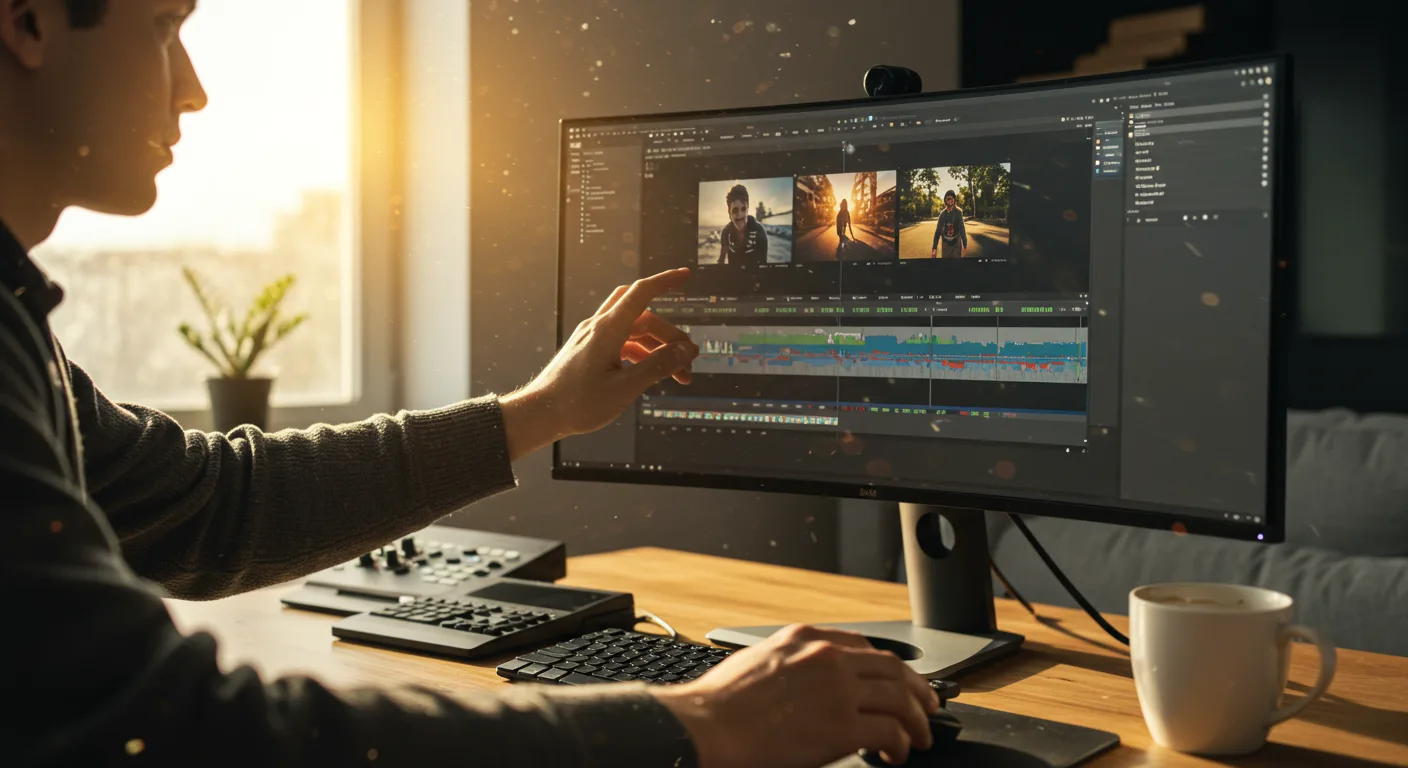
The Future of Adobe Premiere Pro: Key Predictions
Adobe Premiere Pro remains the industry-standard video editing software for professionals and aspiring filmmakers. But with the rapid advancements in AI, cloud computing, and collaborative workflows, what does the future hold for this powerful tool, particularly for marketing professionals who rely on it daily? Will it become even more intuitive, efficient, and integrated with other platforms?
AI-Powered Editing and Marketing Automation
The integration of artificial intelligence is arguably the biggest force shaping the future of Adobe Premiere Pro. We’re already seeing AI-powered features like scene detection and auto reframe, but these are just the tip of the iceberg.
Here’s what we can expect:
- Intelligent Content Analysis: Premiere Pro will be able to analyze video content to identify key scenes, objects, and even emotions. This will allow marketers to quickly find and extract relevant clips for social media campaigns or ad creatives. Imagine automatically identifying scenes with high audience engagement potential based on visual cues and audio analysis.
- Automated Editing Tasks: Repetitive tasks like color correction, audio mixing, and adding transitions will be largely automated. AI algorithms will learn from user preferences and apply consistent styles across projects, saving valuable time and ensuring brand consistency.
- AI-Driven Scripting and Storyboarding: AI will assist in the scriptwriting process by suggesting alternative dialogue, identifying plot holes, and even generating storyboards based on text prompts. This will be a game-changer for creating engaging video content quickly and efficiently.
- Seamless Integration with Marketing Platforms: Expect tighter integration with marketing automation platforms like HubSpot and Salesforce. Premiere Pro will be able to directly upload videos to these platforms, track performance metrics, and even A/B test different versions to optimize for engagement and conversions.
- Personalized Video Creation: AI will enable the creation of personalized video experiences based on user data. Marketers will be able to tailor video content to specific audience segments, increasing relevance and driving higher conversion rates. This could involve dynamically changing text overlays, product placements, or even entire scenes based on individual user preferences.
According to a recent survey by Adobe, 78% of video professionals believe that AI will significantly impact their workflows in the next five years.
Cloud-Based Collaboration and Remote Workflows
The shift towards cloud-based collaboration is another major trend that will shape the future of Adobe Premiere Pro. With remote work becoming increasingly common, the ability to seamlessly collaborate with team members from anywhere in the world is essential.
Here’s how cloud technology will transform Premiere Pro:
- Real-Time Collaborative Editing: Multiple editors will be able to work on the same project simultaneously, with changes synced in real-time. This will eliminate the need for cumbersome file transfers and version control issues.
- Centralized Asset Management: Cloud-based asset management systems will allow teams to easily access and share video footage, audio files, and graphics. This will ensure that everyone is working with the latest versions of assets and that brand guidelines are consistently followed.
- Remote Review and Approval: Stakeholders will be able to review and approve video projects remotely, providing feedback directly within Premiere Pro. This will streamline the approval process and reduce the time it takes to get videos to market.
- Cloud-Based Rendering: Rendering complex video projects can be time-consuming and resource-intensive. Cloud-based rendering services will allow users to offload rendering tasks to powerful servers, freeing up their local machines and accelerating the production process.
- Integration with Cloud Storage: Seamless integration with cloud storage services like Dropbox and Google Drive will make it easy to store and access video projects from anywhere.
The Rise of Motion Graphics Templates and Visual Effects
Motion graphics are becoming increasingly important for marketing videos, and Adobe Premiere Pro is evolving to meet this demand. We’ll see a greater emphasis on pre-designed templates and visual effects that can be easily customized.
Here’s what to expect:
- Expanded Library of Motion Graphics Templates: Adobe Stock will offer a wider selection of high-quality motion graphics templates that can be easily customized within Premiere Pro. These templates will cover a variety of styles and use cases, from lower thirds and transitions to animated logos and explainer videos.
- Simplified Visual Effects Workflows: Creating visual effects will become more accessible to non-experts. Premiere Pro will offer intuitive tools and presets for adding effects like glows, blurs, and color grading.
- Integration with After Effects: The integration between Premiere Pro and After Effects will become even tighter, allowing users to seamlessly move projects between the two applications. Dynamic Link will be enhanced to support more complex compositions and real-time previews.
- Real-Time 3D Integration: Premiere Pro will be able to import and manipulate 3D models and animations in real-time, allowing marketers to create immersive and engaging video experiences.
- AI-Powered Visual Effects: AI will be used to automate certain visual effects tasks, such as removing unwanted objects from footage or adding realistic special effects.
Enhanced Audio Capabilities and Sound Design
Audio quality is just as important as visual quality in marketing videos. Adobe Premiere Pro will continue to enhance its audio capabilities to provide users with more control over their sound design.
Here’s what to expect:
- Advanced Audio Mixing Tools: Premiere Pro will offer more advanced audio mixing tools, including parametric EQ, dynamic compression, and multi-band processing. These tools will allow users to fine-tune their audio and create a professional-sounding mix.
- AI-Powered Audio Cleanup: AI will be used to automatically remove noise, hum, and other unwanted sounds from audio recordings. This will save time and effort in the audio cleanup process.
- Integration with Audio Libraries: Premiere Pro will be integrated with audio libraries like Adobe Audition, providing users with access to a vast collection of sound effects and music tracks.
- Spatial Audio Support: Premiere Pro will support spatial audio formats like Dolby Atmos, allowing marketers to create immersive audio experiences for VR and AR applications.
- Automated Dialogue Enhancement: AI will be used to automatically enhance dialogue recordings, improving clarity and intelligibility. This will be especially useful for interviews and voiceovers.
Optimized Workflows for Social Media Marketing
Social media is a critical channel for marketing, and Adobe Premiere Pro will continue to optimize its workflows for creating engaging content for these platforms.
Here’s what to expect:
- Automatic Video Resizing and Formatting: Premiere Pro will automatically resize and format videos for different social media platforms, ensuring that they are optimized for each platform’s specifications. This will save time and effort in the video production process.
- Integration with Social Media Management Tools: Premiere Pro will be integrated with social media management tools like Buffer and Hootsuite, allowing users to schedule and publish videos directly from within Premiere Pro.
- Real-Time Social Media Analytics: Premiere Pro will provide real-time social media analytics, allowing marketers to track the performance of their videos and optimize their content for engagement and conversions.
- AI-Powered Captioning and Subtitling: AI will be used to automatically generate captions and subtitles for videos, making them accessible to a wider audience.
- Templates for Social Media Ads: Premiere Pro will offer a library of templates specifically designed for creating social media ads. These templates will be optimized for different ad formats and objectives.
Accessibility and Inclusivity Features
Adobe Premiere Pro will continue to prioritize accessibility and inclusivity, ensuring that its tools are usable by everyone, regardless of their abilities.
Here’s what to expect:
- Improved Captioning and Subtitling Tools: Premiere Pro will offer more advanced captioning and subtitling tools, including support for multiple languages and customizable styling options.
- Voice Control and Navigation: Premiere Pro will be controllable through voice commands, making it easier for users with disabilities to navigate and edit videos.
- Screen Reader Compatibility: Premiere Pro will be fully compatible with screen readers, allowing visually impaired users to access and use the software.
- Customizable Interface: Premiere Pro will offer a customizable interface, allowing users to adjust the size and color of text and icons to improve readability.
- AI-Powered Audio Descriptions: AI will be used to automatically generate audio descriptions for videos, making them accessible to visually impaired audiences.
The future of Adobe Premiere Pro is bright, filled with AI-powered automation, cloud-based collaboration, and optimized workflows for marketing. By embracing these advancements, marketers can create more engaging and effective video content than ever before. The key takeaway? Start exploring AI-driven features within Premiere Pro now to gain a competitive edge and prepare for the future of video marketing. Are you ready to leverage these changes?
Will Premiere Pro become easier to use for beginners?
Yes, Adobe is actively working to simplify the user interface and provide more intuitive tools for beginners. AI-powered assistance and pre-designed templates will also make it easier for novice users to create professional-looking videos.
How will the subscription model change for Premiere Pro?
The subscription model is likely to become more flexible, with options for pay-as-you-go access to specific features or cloud-based resources. Adobe may also introduce tiered subscription plans based on usage and storage needs.
Will Premiere Pro integrate with other Adobe Creative Cloud applications?
Yes, the integration between Premiere Pro and other Adobe Creative Cloud applications like After Effects, Photoshop, and Audition will become even tighter, allowing users to seamlessly move projects between applications and leverage the full power of the Adobe ecosystem.
What are the hardware requirements for the future of Premiere Pro?
As Premiere Pro becomes more advanced and leverages AI and cloud computing, the hardware requirements will likely increase. Users will need powerful processors, ample RAM, and fast storage to take full advantage of the software’s capabilities. However, cloud-based rendering will help to offset some of the hardware demands.
How will Premiere Pro address concerns about data privacy and security?
Adobe is committed to protecting user data and will continue to invest in security measures to prevent unauthorized access and data breaches. Users will have more control over their data and will be able to choose where their data is stored and processed.




