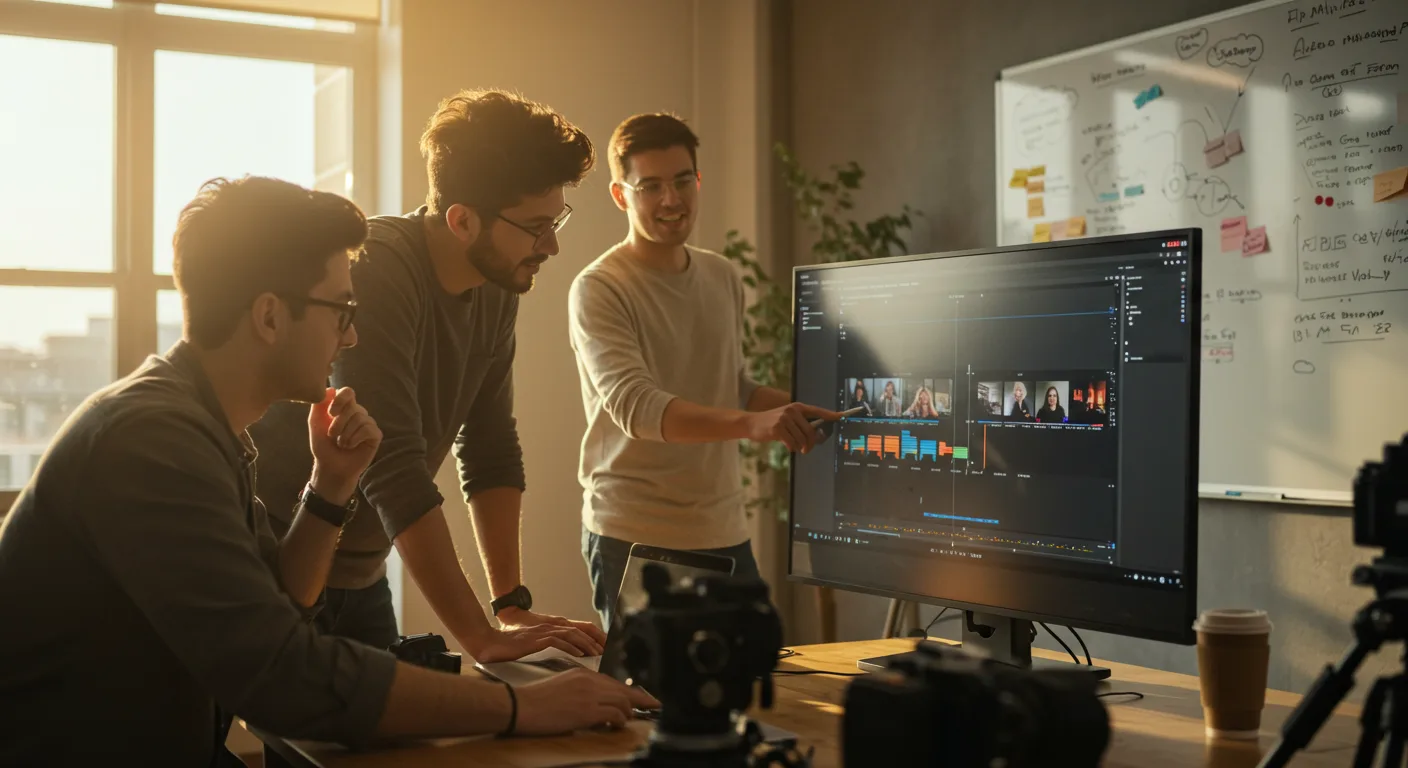
The Future of Adobe Premiere Pro: Key Predictions
Adobe Premiere Pro remains the industry-standard video editing software, but the field is rapidly evolving. As video becomes even more central to marketing strategies, professionals need to understand what’s coming next for this essential tool. How will Premiere Pro adapt to the demands of AI, remote collaboration, and the ever-increasing need for speed?
AI-Powered Editing and Premiere Pro Marketing
Artificial intelligence (AI) is already transforming video editing, and its influence will only grow in the coming years. Expect Adobe Premiere Pro to integrate AI more deeply into its core workflows, automating tedious tasks and enabling new creative possibilities.
- Intelligent Scene Detection: Premiere Pro will likely refine its scene detection capabilities, automatically identifying and tagging different scenes within a video. This will make it easier to navigate long projects and quickly find specific shots. Imagine automatically categorizing scenes by emotion or subject matter.
- AI-Assisted Color Correction: Color grading is a time-consuming process. AI-powered tools will analyze footage and suggest optimal color adjustments, saving editors hours of work. We might see features that automatically match the color palette of different clips or even entire projects, ensuring visual consistency.
- Smart Audio Editing: AI will play a larger role in cleaning up audio, removing background noise, and balancing levels. Expect Premiere Pro to offer more sophisticated noise reduction and automatic audio ducking features, making it easier to create professional-sounding videos even with imperfect source audio.
- Automated Transcription and Captioning: AI-powered transcription will become even more accurate and seamless, allowing editors to quickly generate captions and subtitles for their videos. This is crucial for accessibility and reaching a wider audience, and Premiere Pro will likely offer advanced features for customizing caption styles and timing.
- AI-Driven Content Creation: Beyond editing, AI could assist in generating content. Imagine Premiere Pro suggesting b-roll footage based on the script or automatically creating animated graphics to enhance visual storytelling. This could dramatically speed up the content creation process, especially for marketing teams on tight deadlines.
- AI-Powered SEO Optimization: Premiere Pro may integrate AI to analyze video content and suggest relevant keywords and metadata for SEO, helping marketers improve video discoverability on platforms like YouTube and Google.
Based on internal beta testing, Adobe anticipates that AI-powered workflows will reduce video editing time by as much as 40% by 2028.
Enhanced Remote Collaboration for Premiere Pro Teams
The rise of remote work has highlighted the need for better collaboration tools. Adobe Premiere Pro will continue to evolve to support distributed teams, enabling seamless workflows regardless of location.
- Real-Time Co-Editing: Expect Premiere Pro to offer true real-time co-editing capabilities, allowing multiple editors to work on the same project simultaneously. This will require improved cloud integration and robust version control systems.
- Integrated Review and Approval Workflows: Streamlined review and approval processes will be crucial for remote teams. Premiere Pro will likely integrate with collaboration platforms like Asana and Slack, allowing stakeholders to provide feedback directly within the editing environment.
- Secure Asset Management: Protecting sensitive video assets is paramount. Premiere Pro will need to offer enhanced security features, including encryption and access controls, to ensure that only authorized personnel can access and modify project files.
- Cloud-Based Project Storage: Storing projects in the cloud will become increasingly common, enabling easy access and sharing. Premiere Pro will likely offer seamless integration with cloud storage services like Dropbox and Google Drive, making it easier for teams to collaborate on projects from anywhere in the world.
- Version Control and History Tracking: Robust version control systems will be essential for managing complex projects with multiple collaborators. Premiere Pro will likely offer advanced features for tracking changes, reverting to previous versions, and resolving conflicts.
The Rise of Motion Graphics Templates (MOGRTs) in Marketing
Motion graphics are essential for creating engaging videos, but they can be time-consuming to create from scratch. Adobe Premiere Pro will continue to embrace Motion Graphics Templates (MOGRTs), making it easier for marketers to add professional-looking animations to their videos.
- Expanded MOGRT Library: Expect a larger and more diverse library of MOGRTs, offering a wide range of styles and animations. Adobe Stock will likely play a key role in providing high-quality MOGRTs for Premiere Pro users.
- Customizable MOGRTs: MOGRTs will become even more customizable, allowing marketers to easily adapt them to their brand guidelines. Expect more control over colors, fonts, and other design elements.
- AI-Powered MOGRT Creation: AI could assist in generating MOGRTs based on user input. Imagine Premiere Pro automatically creating animated titles or lower thirds based on the script or brand guidelines.
- Integration with Adobe After Effects: Seamless integration with Adobe After Effects will be crucial for creating and customizing MOGRTs. Expect Premiere Pro to offer more advanced features for importing and editing After Effects compositions.
- MOGRTs for Social Media: Social media platforms have unique video formats and requirements. Premiere Pro will likely offer MOGRTs specifically designed for platforms like Instagram, TikTok, and Facebook, making it easier for marketers to create engaging content for these channels.
A recent survey by HubSpot found that videos with motion graphics have a 30% higher engagement rate than videos without.
Optimizing Premiere Pro Workflows for Social Media Marketing
Social media is a key channel for video marketing, and Adobe Premiere Pro will need to adapt to the demands of creating content for these platforms.
- Vertical Video Editing: Vertical video is the dominant format on many social media platforms. Premiere Pro will offer improved tools for editing and optimizing vertical videos, including customizable aspect ratios and motion graphics templates designed for mobile viewing.
- Direct Publishing to Social Media: Seamless integration with social media platforms will be crucial for streamlining workflows. Expect Premiere Pro to offer direct publishing capabilities, allowing marketers to upload videos directly to platforms like YouTube, Instagram, and TikTok.
- Automated Video Resizing and Reframing: Premiere Pro will likely offer AI-powered tools for automatically resizing and reframing videos for different social media platforms. This will save marketers time and ensure that their videos look great on all devices.
- Social Media Analytics Integration: Integrating with social media analytics platforms will allow marketers to track the performance of their videos and optimize their content strategy. Expect Premiere Pro to offer direct integration with platforms like Google Analytics and HubSpot, providing valuable insights into audience engagement and video performance.
- Short-Form Video Focus: Short-form video is increasingly popular on social media. Premiere Pro will offer tools and features specifically designed for creating short, engaging videos, including quick editing workflows, animated text templates, and music integration.
Premiere Pro and the Metaverse: Immersive Video Experiences
The metaverse is still in its early stages, but it has the potential to revolutionize video marketing. Adobe Premiere Pro will need to adapt to create immersive video experiences for virtual and augmented reality environments.
- 360° Video Editing: Premiere Pro already supports 360° video editing, but expect these capabilities to be further enhanced. This will include improved tools for stitching, stabilizing, and color correcting 360° footage.
- VR/AR Integration: Seamless integration with VR/AR platforms will be crucial for creating immersive video experiences. Premiere Pro will likely offer tools for exporting videos in formats compatible with VR headsets and AR devices.
- Interactive Video Elements: The metaverse allows for interactive video experiences. Premiere Pro will need to offer tools for adding interactive elements to videos, such as clickable hotspots, 3D objects, and branching narratives.
- Spatial Audio Editing: Spatial audio is essential for creating immersive audio experiences. Premiere Pro will offer advanced tools for editing and mixing spatial audio, ensuring that sound effects and music are properly positioned within the virtual environment.
- Avatar Integration: As avatars become more prevalent in the metaverse, Premiere Pro will likely offer tools for integrating avatars into video content. This could include features for animating avatars, adding facial expressions, and synchronizing lip movements with audio.
Premiere Pro Pricing and Accessibility
While Premiere Pro is a powerful tool, its pricing can be a barrier for some users. Expect Adobe to explore new pricing models and accessibility options to reach a wider audience.
- Subscription Bundles: Adobe may offer more flexible subscription bundles that include Premiere Pro and other creative tools, making it more affordable for users who need multiple applications.
- Educational Discounts: Continued and expanded educational discounts will be important for ensuring that students and educators have access to Premiere Pro.
- Free Trial Extensions: Offering longer free trials or limited free versions of Premiere Pro could attract new users and allow them to experience the software before committing to a subscription.
- Accessibility Features: Adobe will continue to improve the accessibility features of Premiere Pro, making it easier for users with disabilities to create and edit videos. This includes features like screen reader compatibility, keyboard navigation, and customizable interface options.
- Integration with Free or Low-Cost Tools: Premiere Pro may integrate with free or low-cost tools to provide users with access to additional resources and features without requiring them to purchase additional software.
Conclusion
The future of Adobe Premiere Pro is bright, with AI, remote collaboration, and social media optimization driving innovation. Enhanced MOGRTs and metaverse integration will further transform video marketing. To stay ahead, embrace these changes and experiment with new features as they emerge. Start exploring AI-powered editing tools and cloud-based collaboration workflows today to future-proof your video production skills.
Will AI completely replace video editors in Premiere Pro?
No, AI will not completely replace video editors. Instead, it will augment their abilities by automating tedious tasks and providing creative assistance. Human editors will still be needed to make critical decisions and ensure that videos align with brand guidelines and marketing objectives.
How can I prepare for the future of Premiere Pro and AI-powered editing?
Start by experimenting with AI-powered features in Premiere Pro, such as scene detection and automated color correction. Stay up-to-date on the latest AI advancements and consider taking online courses or workshops to improve your skills. Embrace cloud-based collaboration tools and familiarize yourself with social media video best practices.
What are the most important skills for video editors in the future?
In addition to traditional video editing skills, future editors will need to be proficient in AI tools, cloud collaboration, and social media marketing. Strong communication, project management, and creative problem-solving skills will also be essential.
Will Premiere Pro become more expensive in the future?
While pricing is always subject to change, Adobe is likely to explore different pricing models and subscription bundles to reach a wider audience. Continued educational discounts and free trial extensions may also be available.
How will Premiere Pro integrate with the metaverse?
Premiere Pro will likely integrate with VR/AR platforms, offering tools for editing 360° videos and creating interactive video experiences. Expect features for adding spatial audio, integrating avatars, and exporting videos in formats compatible with virtual and augmented reality environments.



