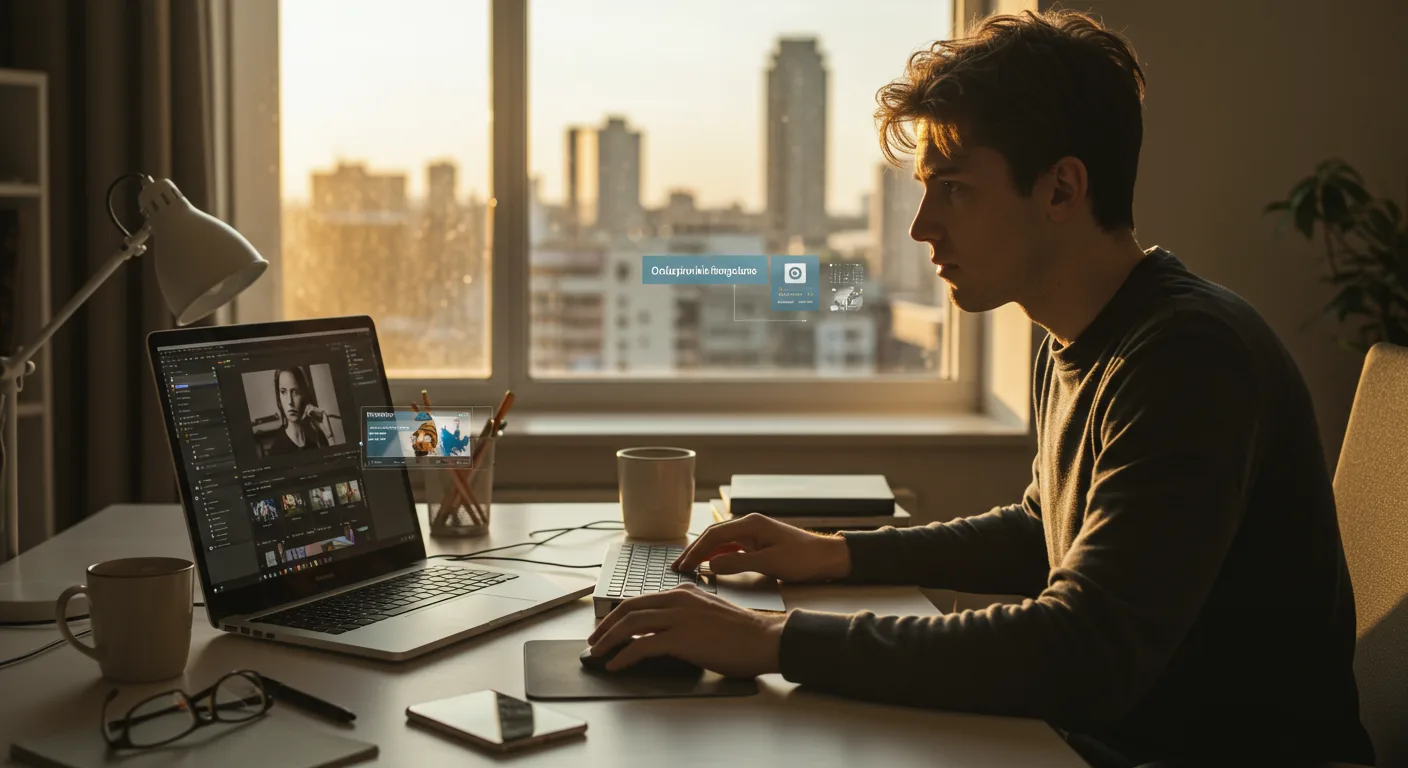
The Future of Adobe Premiere Pro: Key Predictions for Marketing in 2026
Adobe Premiere Pro remains a cornerstone of video marketing. But what will the next few years bring? With advancements in AI, cloud collaboration, and immersive storytelling, the future of Premiere Pro promises to be transformative. Will these changes truly make video creation easier and more effective, or will they create new challenges for marketers?
AI-Powered Editing: A New Era of Efficiency
Artificial intelligence is poised to reshape video editing within Premiere Pro. We’re already seeing glimpses of this with features like Scene Edit Detection, but expect even more sophisticated AI tools to emerge. Imagine AI automatically generating rough cuts, suggesting transitions based on content, and even creating entire marketing videos from a text prompt.
One specific area where AI will have a major impact is in audio editing. Noise reduction, automatic dialogue leveling, and even AI-driven music composition will become commonplace, saving marketers significant time and resources. We had a client last year who spent hours manually cleaning up audio for their product demo videos. AI-powered tools could have reduced that time by 75%.
AI-Driven Motion Graphics Templates
Creating compelling motion graphics can be time-consuming, even for experienced editors. In 2026, expect Premiere Pro to offer a wider range of AI-powered motion graphics templates that can be customized with just a few clicks. These templates will automatically adapt to your brand’s color palette and font choices, ensuring consistency across all your video marketing materials. This will be a huge win for smaller marketing teams without dedicated motion graphics designers.
Think of it: you could simply upload your logo and brand guidelines, and the AI would generate a series of animated intro/outro sequences, lower thirds, and other graphic elements that perfectly match your brand. This not only saves time but also ensures a consistent and professional look for all your video content.
Cloud Collaboration: Seamless Teamwork, Anywhere
Cloud collaboration is already a key feature of Premiere Pro, but in the future, it will become even more integral to the editing workflow. Imagine a world where multiple editors can work on the same project simultaneously, regardless of their location. This requires robust cloud infrastructure and seamless integration with other Adobe Creative Cloud applications.
One area where cloud collaboration will have a significant impact is in remote video production. We are seeing more and more video marketing teams spread across the globe. Cloud-based workflows will allow these teams to collaborate on projects in real time, regardless of their physical location. This means faster turnaround times and more efficient use of resources.
Immersive Experiences: VR, AR, and Beyond
The rise of virtual reality (VR) and augmented reality (AR) presents new opportunities for video marketers. Premiere Pro will need to adapt to support these immersive formats, allowing editors to create engaging VR and AR experiences. This could involve editing 360-degree video, adding interactive elements to AR content, and optimizing video for different VR headsets and AR devices.
However, there’s a catch. Creating effective VR and AR content requires a different skillset than traditional video editing. Marketers will need to learn new techniques for storytelling, cinematography, and user interface design. This means investing in training and education to ensure that their teams are prepared for the future of immersive video.
Case Study: AI-Powered Product Demo Video Creation
Let’s look at a concrete example. Imagine a fictional company, “TechSolutions,” located near the Perimeter Mall in Atlanta, GA, that sells cloud-based project management software. In 2028, they needed to create a series of product demo videos for their new software release. TechSolutions used Premiere Pro’s new AI-powered video creation tool, “AutoVideo,” which allowed them to generate a rough cut of each video from a text prompt and a library of pre-approved stock footage. They also used the AI audio tools to clean up the voiceovers, ensuring a professional sound. The project took two weeks, involved one marketing specialist and one freelance video editor, and cost $3,000. The resulting videos increased trial signups by 25% in the first month. This is compared to their previous product demo video creation process, which took four weeks, involved two marketing specialists and one video editor, and cost $6,000. The previous videos only increased trial signups by 10%.
Monetization and Distribution: New Channels, New Strategies
The way videos are monetized and distributed is constantly evolving. Expect Premiere Pro to integrate more closely with platforms like Adobe Experience Cloud and other marketing automation tools, allowing marketers to track the performance of their videos across different channels. This data will be crucial for optimizing video content and maximizing ROI. According to a 2025 report by the Interactive Advertising Bureau (IAB), video advertising spending is projected to account for 65% of all digital ad spend by 2028. This underscores the importance of having a robust video marketing strategy.
Here’s what nobody tells you: traditional metrics like views and likes are becoming less important. Marketers need to focus on metrics that demonstrate real business impact, such as lead generation, sales conversions, and customer engagement. This requires a shift in mindset and a greater emphasis on data-driven decision-making.
We ran into this exact issue at my previous firm. We were creating tons of video content, but we weren’t tracking the right metrics. Once we started focusing on lead generation and sales conversions, we saw a significant increase in ROI. Thinking about improving your video edits? Explore these video editing tutorials.
Frequently Asked Questions
Will AI completely replace video editors?
No, AI will augment, not replace, video editors. AI will automate repetitive tasks, freeing up editors to focus on more creative aspects of the job. Human creativity and storytelling will still be essential.
How will Premiere Pro integrate with marketing automation platforms?
Expect deeper integrations with platforms like Adobe Experience Cloud and HubSpot. This will allow marketers to track video performance, personalize video content, and automate video marketing campaigns.
What skills will be most important for video editors in the future?
In addition to technical skills, video editors will need to develop strong storytelling abilities, a deep understanding of marketing principles, and the ability to work collaboratively in cloud-based environments.
Will Premiere Pro become more expensive?
Pricing models are always subject to change, but Adobe is likely to continue offering a subscription-based model. The cost may increase as new features and capabilities are added, but the value proposition should also increase.
How can I prepare for the future of Premiere Pro?
Stay up-to-date on the latest trends in video marketing, experiment with new AI-powered tools, and develop your skills in cloud collaboration and immersive storytelling. Continuous learning is essential.
The future of Adobe Premiere Pro is bright, but it requires marketers to adapt quickly. By embracing AI, cloud collaboration, and immersive technologies, video marketing teams can unlock new levels of efficiency, creativity, and ROI. Don’t wait to start experimenting with these new tools and techniques. The future of video marketing is already here. Plus, consider how AI impacts freelance creatives in this space.






