 By Editorial Team
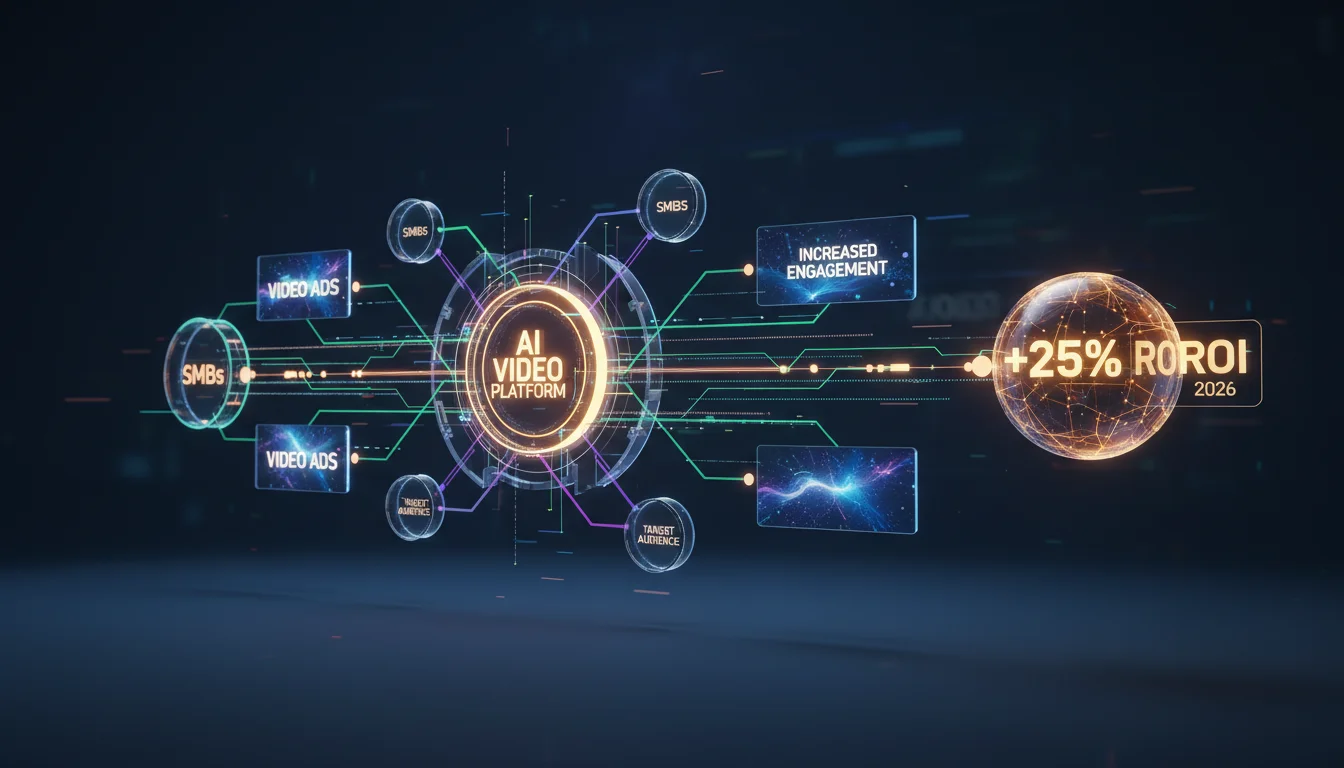
The integration of artificial intelligence (AI) into video ad creation offers small and medium-sized businesses (SMBs) a powerful avenue to enhance their marketing efforts. These AI video ads can significantly impact an SMB’s marketing return on investment (ROI), often by automating labor-intensive processes and personalizing content at scale. The question for many SMBs remains: how exactly does this technology translate into measurable cost savings and increased revenue?
Key Takeaways
- SMBs can reduce video production costs by up to 70% using AI tools for scriptwriting, voiceovers, and basic animation, directly impacting their marketing budget efficiency.
- Personalized AI-generated video ads can increase click-through rates (CTRs) by an average of 25% compared to generic video content, leading to higher conversion rates and improved ROI.
- Implementing A/B testing with AI-powered video variants allows for rapid iteration and optimization, often identifying winning ad creatives within 48 hours for campaigns on platforms like Google Ads and Meta.
- Focusing on specific campaign objectives and clearly defining success metrics before AI video ad deployment prevents wasted resources and ensures that AI’s capabilities align with tangible business goals.
- Regularly analyzing AI video ad performance data and adjusting parameters in tools like Synthesys AI Studio or InVideo is essential for continuous improvement and maximizing long-term ROI.
1. Define Your Campaign Objectives and Target Audience
Before any AI tool touches your creative, you must have a crystal-clear understanding of your campaign’s purpose. Are you aiming for brand awareness, lead generation, or direct sales? Each objective dictates a different approach to your AI video ads and, importantly, how you measure success. For instance, a brand awareness campaign might prioritize reach and view-through rates, while a direct sales campaign will focus on conversions and cost per acquisition (CPA).
Equally important is defining your target audience. AI tools excel at personalization, but they need accurate input. Consider demographics, psychographics, and specific pain points. If your target is small business owners in the Atlanta metropolitan area, your AI-generated script should address challenges unique to that group, perhaps referencing local economic trends or common regulatory hurdles. The more detailed your audience profile, the more effectively AI can tailor content that resonates.
Pro Tip: Create Detailed Audience Personas
Go beyond basic demographics. Develop 2-3 detailed buyer personas that include their daily routines, motivations, online behavior, and even their preferred communication styles. This level of detail provides AI algorithms with rich data points to generate highly relevant video ad content.
2. Choose the Right AI Video Creation Tools
The market for AI video creation platforms is expanding rapidly, offering various features suitable for different SMB needs and budgets. For basic animated explainers or social media snippets, tools like Pictory AI or Synthesys AI Studio can turn text into video with stock footage, AI voiceovers, and background music in minutes. If you need more sophisticated human-like avatars or detailed scene customization, platforms like HeyGen or Synthesia offer advanced capabilities, albeit with a steeper learning curve and potentially higher subscription costs.
When evaluating tools, consider the following: ease of use, customization options (e.g., brand colors, font integration, avatar diversity), output quality (resolution, naturalness of voiceovers), and pricing structure. Many platforms offer free trials, allowing you to test their features before committing to a subscription. For a small business managing its own marketing, a tool that balances strong features with an intuitive interface is paramount.
Common Mistake: Over-reliance on Default Settings
Many SMBs simply input text and accept the first AI-generated video. This often results in generic, unengaging content. Always customize stock footage, select voice talents that match your brand’s tone, and adjust pacing. Even minor tweaks can significantly improve audience reception and ad performance.
3. Generate Scripts and Storyboards with AI Assistance
The core of any effective video ad is a compelling script and a clear storyboard. AI content generation tools can significantly accelerate this process. Platforms like Jasper AI or Copy.ai can generate multiple script variations based on your product, target audience, and desired call to action (CTA). Provide specific prompts, such as “Generate a 30-second video ad script for a new organic coffee delivery service targeting busy professionals, focusing on convenience and ethical sourcing.”
Once you have a script, some AI video platforms can automatically suggest visual scenes or even create a basic storyboard. For example, in InVideo, you can paste your script, and the AI will match text segments with relevant stock video clips and images from its library. This automation drastically cuts down on the time traditionally spent brainstorming visuals and coordinating with designers. Remember, AI is a co-pilot here, not a replacement for human creativity. Review and refine AI-generated content to ensure it aligns with your brand voice and message.
Pro Tip: A/B Test Script Variations
Use AI to generate 2-3 distinct script versions for the same ad concept. For example, one script might emphasize problem/solution, another might focus on emotional benefits, and a third on a direct value proposition. Test these variations on a small segment of your audience to see which performs best before scaling your campaign. This iterative approach is a foundation of effective SMB marketing.
4. Produce AI-Powered Video Ad Creatives
This is where the magic of AI truly comes to life. Using your chosen AI video tool, input your refined script and select your visual elements. Most platforms allow you to choose from a vast library of stock footage, images, and music. Many also offer AI-driven voiceovers with various accents, tones, and languages. For example, within Synthesys AI Studio, you can select a male or female voice, adjust the speaking rate, and even add pauses for emphasis. This eliminates the need for expensive voice talent or complex audio recording equipment, directly impacting your cost vs. ROI equation.
If your chosen tool supports avatars, you can select a digital presenter that embodies your brand’s aesthetic. These avatars can lip-sync to your script, adding a human touch without the logistical challenges of live-action filming. Ensure that the visual style, music, and voiceover are consistent with your brand identity. A polished, professional-looking AI video ad will always outperform a hastily assembled one, even if both are AI-generated.
Common Mistake: Neglecting Brand Consistency
It’s easy to get carried away with the vast options AI tools offer. However, ensure that all AI-generated elements, from fonts and colors to voiceover tone, align with your existing brand guidelines. Inconsistent branding can confuse your audience and dilute your message, undermining the potential ROI of your campaigns.
5. Implement and Optimize AI Video Ad Campaigns
Once your AI video ads are ready, deploy them on your chosen advertising platforms, such as Google Ads, Meta Business Suite (for Facebook and Instagram), or LinkedIn Ads. The power of AI extends beyond creation to campaign management. Many advertising platforms now incorporate AI algorithms for bidding strategies, audience targeting, and ad placement optimization. For instance, Google Ads’ Performance Max campaigns use AI to find converting customers across all Google channels, often requiring minimal manual intervention once set up.
Importantly, monitor your ad performance data diligently. Pay close attention to metrics like click-through rate (CTR), conversion rate, cost per click (CPC), and cost per acquisition (CPA). AI tools can also help analyze this data. Some platforms offer insights into which elements of your video (e.g., specific scenes, voiceover styles) are performing best. Use these insights to iterate and refine your ads. For example, if an AI-generated video featuring a problem-solution narrative has a significantly higher CTR, consider producing more ads with that narrative structure.
Pro Tip: Use AI for A/B Testing at Scale
AI’s ability to generate multiple ad variants quickly makes it ideal for extensive A/B testing. Create slight variations of your AI video ads (e.g., different CTAs, alternative opening hooks, varied music tracks) and run them simultaneously. AI-powered ad platforms can then identify the best-performing variants and automatically allocate more budget to them, maximizing your ROI without constant manual adjustments. I’ve seen campaigns where a simple change in the AI-generated voiceover tone, identified through A/B testing, boosted conversion rates by 15%.
6. Measure and Analyze ROI for Continuous Improvement
Measuring the return on investment for your AI video ads is paramount. This involves tracking not only direct conversions but also the cost savings achieved through AI automation. Calculate your ROI by comparing the revenue generated from your AI video ad campaigns against the total cost of creating and running those ads (including subscription fees for AI tools). For example, if an SMB previously spent $1,500 on a single professionally produced 30-second video and now produces 10 AI-generated videos for $150 total, the cost saving is substantial, allowing more budget for ad spend or other initiatives.
Beyond direct financial metrics, consider qualitative improvements. Is your brand perception improving? Are you reaching new customer segments more effectively? Use analytics from your ad platforms to identify trends. Tools like Google Analytics 4 can provide detailed insights into user behavior after clicking your video ads. Regularly review these insights and feed them back into your AI video creation process. This continuous loop of creation, deployment, analysis, and refinement is how SMBs truly unlock the long-term value of AI in their marketing.
Common Mistake: Ignoring Long-Term Metrics
Focusing solely on immediate sales or clicks can obscure the broader impact of AI video ads. Track metrics like customer lifetime value (CLV) and brand recall over time. While harder to quantify directly, these long-term indicators often reveal the true power of consistent, personalized video content in building customer loyalty and expanding market share.
The strategic application of AI in video advertising represents a significant opportunity for SMBs to compete more effectively with larger enterprises. By automating creative processes, enabling hyper-personalization, and facilitating rapid testing, AI tools can dramatically improve marketing efficiency and deliver a strong return on investment. For more insights on optimizing your campaigns, explore how to optimize Google Ads video campaigns.
What is the typical cost saving for SMBs using AI for video ad creation?
SMBs can expect to save between 50% to 80% on video production costs by using AI tools for scriptwriting, voiceovers, and animation, compared to traditional video production methods involving professional videographers and editors.
How quickly can AI generate a video ad?
Depending on the complexity and the AI tool used, a basic 15 to 30-second video ad can be generated from a text script in as little as 5 to 15 minutes, with additional time needed for customization and refinement.
Can AI-generated video ads truly be personalized for different audience segments?
Yes, AI tools excel at creating personalized video ads. By inputting different audience demographics or psychographics, the AI can generate unique scripts, select relevant visuals, and even adjust voiceover tones to resonate specifically with various target segments.
What are the main risks associated with using AI for video ads?
The primary risks include producing generic or inauthentic content if not properly guided, potential issues with intellectual property if using AI-generated stock elements without proper licensing, and the risk of over-automating without human oversight, leading to messages that lack nuance or brand voice.
How do I measure the ROI of my AI video ad campaigns effectively?
Measure ROI by tracking key performance indicators (KPIs) such as click-through rates (CTR), conversion rates, cost per acquisition (CPA), and overall revenue generated from the campaigns. Compare these metrics against the total cost of AI tools and ad spend. Use analytics platforms like Google Analytics 4 for complete data analysis.


