 By Editorial Team
Snapchat AR lenses are turning passive ads into things people actually want to play with. Instead of just watching a video, users get a dynamic, interactive experience that traditional ads can’t touch. These augmented reality ads pull people off the sidelines and invite them to interact directly with a brand, blending digital stuff with their real-world surroundings. That change, from just broadcasting a message to creating an interaction, is fundamentally changing how people see and remember marketing, giving us a serious way to build a real brand connection and see results we can actually measure.
Key Takeaways
- Snapchat AR lenses get much higher engagement. A 2025 IAB report on immersive advertising found users interact for 15 seconds or more on average.
- You can build totally custom AR experiences with Snapchat’s Lens Studio to hit specific goals, like letting users virtually try on products or playing a branded game.
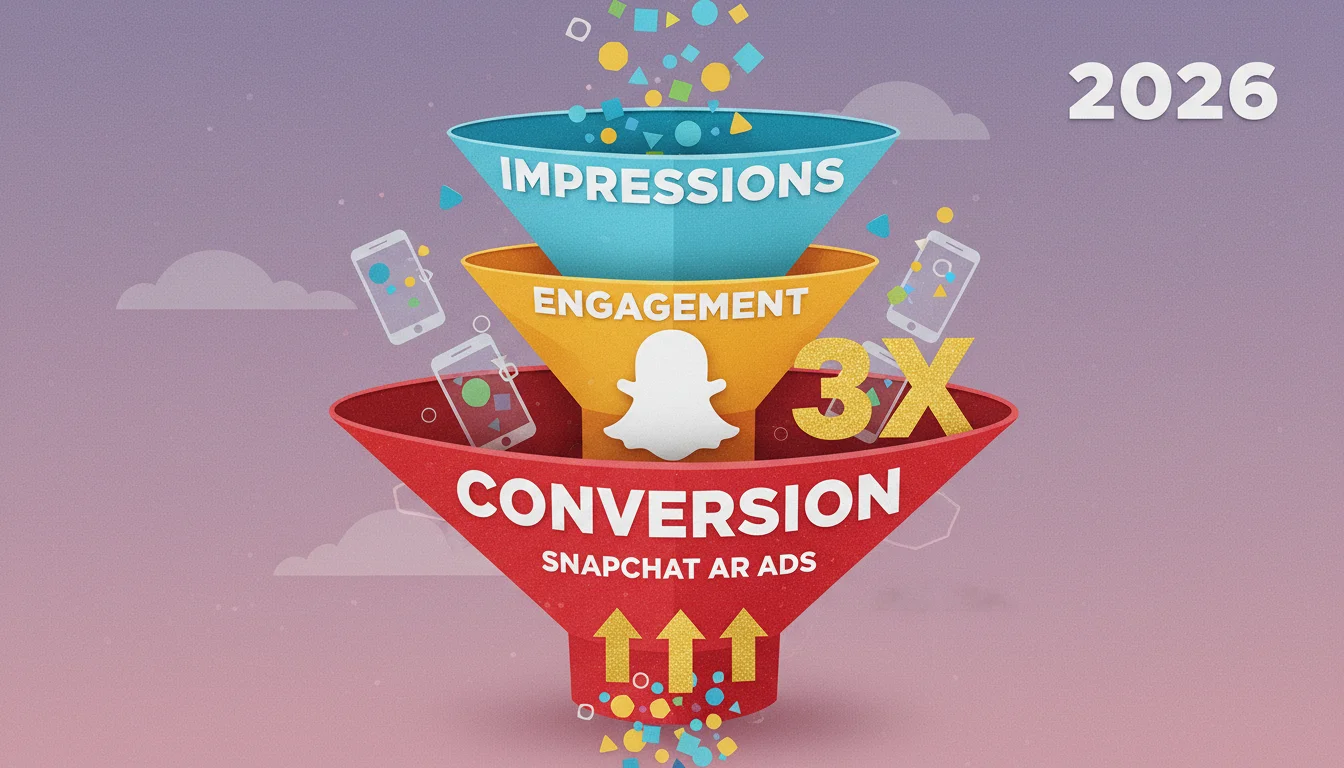
- Putting a direct call-to-action like a “Shop Now” button inside the AR lens has shown a 3x higher conversion rate than standard video ads, based on recent Q3 2025 campaign data.
- To know if an AR campaign is working, you have to track AR-specific metrics like lens shares, play duration, and unique users, not just the usual ad performance numbers.
- Getting good at AR ad formats now gives you a big leg up on the competition, especially since Snapchat keeps pushing this immersive content to its 800 million+ monthly active users.
The Evolution of Advertising: Beyond the Screen
For a long time, digital ads were all about pretty visuals and short copy meant to grab attention for a second or two. Video ads worked, sure, but they were mostly a one-way street. The arrival of augmented reality ads on platforms like Snapchat has completely upended that model by stretching what an ad can do. We’re not just showing a product anymore. We’re letting the consumer feel it, play with it, and put it right into their own world (virtually, of course).
Think about it. A standard video ad for new sneakers shows someone else running in them. An AR lens, on the other hand, lets you “try on” the sneakers yourself, seeing them on your own feet or dropping a 3D model of them onto your coffee table. This kind of personal immersion makes the interaction stick in a way that just seeing an ad never could. It turns the ad from an annoying interruption into a fun activity. This interactivity is why AR advertising fundamentally shifts how brands can build relationships with their customers.
Designing Impactful Snapchat AR Experiences
Making a good Snapchat AR lens isn’t just about being creative. It demands a real grasp of the tech and a clear strategy. You have to start by understanding what the platform can do and, more importantly, what the users are there for. People on Snapchat are looking for fun, shareable content. A lens that feels like a heavy-handed sales pitch is dead on arrival. The best ones give users something of actual value, whether it’s simple entertainment or real utility.
The whole operation is powered by Lens Studio which is Snapchat’s free desktop app for building this stuff. It’s a surprisingly deep tool that lets designers and developers create some really complex lenses with 3D models, custom textures, and interactive scripts. Brands can build out a whole range of AR ad types, from face filters for trying on makeup and accessories to world lenses that place digital objects in the user’s environment, like plopping a virtual car in their driveway. The complexity can be anything from a simple branded frame to a full-blown game where users collect digital items for points. A major beverage company, for example, recently launched a world lens that turned a user’s room into an obstacle course for collecting digital bottles which resulted in a ton of shares and user-generated content. An integration like that requires serious planning and testing.
The goal is always to make the interaction feel intuitive. A great AR lens slides right into the user’s flow and gives them a moment of fun, not a commercial break. This usually means focusing on telling a good story or providing a practical tool. For instance, a furniture brand could make an AR lens that lets people place virtual sofas and chairs in their own living room to check the size and style, a direct, practical use of the technology that provides a real service.
Interactive Video Ads: Beyond Impressions to Engagement
The real strength of augmented reality ads is how they generate deep engagement that goes way beyond a simple impression. Unlike a passive video, AR ads require you to do something. That participation leads to some serious dwell times. A 2025 report from the Interactive Advertising Bureau (IAB) showed that users spend an average of 15 seconds playing with an AR lens, which blows the engagement rates for most standard video ads out of the water. That extended time gives brands a much better chance to get their message across and build some real affinity.
Engagement with AR is also naturally social. Users are constantly sharing their AR creations with friends, either in direct messages or by posting them to their public Story. This organic sharing is a huge source of free user-generated content marketing, pushing the campaign’s reach far past what you paid for. When someone sends a clip of themselves wearing a virtual branded hat to a friend, it’s a personal endorsement. That’s gold.
On top of all that, the interactivity gives you immediate behavioral data. You can see exactly which parts of a lens people are using, how long they’re playing, and what they do inside the experience. This kind of granular data tells you so much about what your audience actually likes, letting you tweak and optimize on the fly. We’ve seen campaigns where a few small changes to the interactive elements, based on that early user data, boosted the average play time by 20% in just one week. Being able to iterate that quickly is a massive advantage.
Measuring Success in the World of Augmented Reality
Figuring out if your Snapchat AR campaign worked means looking past the usual ad metrics. Impressions and reach still matter, but the focus has to be on numbers that show actual user interaction. The key performance indicators (KPIs) you need to be watching are:
- Lens Plays: The total number of times the lens was opened and used.
- Unique Users: How many different people played with the lens.
- Average Play Time: How long users spent interacting with the lens on average, a key sign of deep engagement.
- Shares: The number of times people sent the lens to friends or posted it, which is your virality metric.
* Call-to-Action (CTA) Clicks: If your lens has a “Shop Now” button or another link, tracking clicks is how you measure direct conversion intent.
* Brand Lift: This is usually measured with surveys after the campaign to see if you moved the needle on brand awareness, recall, or favorability.
Attribution for AR campaigns also has to be smarter. Someone might play with your lens, share it, and then go to your website to buy something a day later. Connecting those dots requires a solid analytics setup. Snapchat’s own tools give you a lot of detail on lens performance, including demographics and usage patterns. For example, a beauty brand’s Q4 2025 campaign saw only moderate direct CTA clicks, but the lens was shared over 50,000 times, which led to a huge spike in organic website traffic that we could attribute back to the campaign’s viral spread. It just shows you have to look beyond the obvious numbers.
Also consider plugging your AR campaign data into your main marketing analytics platform. This gives you the full picture, letting you see how AR engagement correlates with other touchpoints like email or paid search and how it fits into a larger multi-channel strategy. The goal isn’t just to see if the lens worked on its own, but to understand how it helped hit your overall marketing goals and affected the bottom line. That level of data integration is basically table stakes for any serious ad effort in 2026.
The Future is Interactive: Why Brands Must Adopt AR Now
Digital advertising is obviously moving toward more immersive formats. While old-school video ads aren’t going away, Snapchat AR lenses are a huge leap forward in how we can engage people. Early adopters are getting a real competitive edge, cutting through the noise in a very crowded space and building much stronger connections with their audiences, especially as younger users increasingly demand these kinds of interactive experiences.
And honestly, the technical hurdles for creating AR are getting lower all the time. Platforms like Lens Studio are becoming more user-friendly, so even smaller marketing teams can now create solid AR experiences, whether they do it themselves or hire an agency. When you do it right, the ROI on these campaigns often blows past the initial development cost, especially given the high engagement and potential for something to go viral. The question for marketers in 2026 isn’t *if* they should get into augmented reality, but how fast they can make it a core part of their strategy.
By using these interactive video ad experiences, brands can get higher engagement, spark a ton of user-generated content, and build stronger, more memorable relationships with the people they’re trying to reach.
What is a Snapchat AR lens?
It’s an augmented reality experience in the Snapchat app that adds digital effects onto a user’s face, body, or the world around them. This allows people to interact with digital content in real-time using their phone’s camera, creating an immersive ad or just a fun piece of entertainment.
How do Snapchat AR lenses differ from traditional video ads?
Unlike passive video ads, Snapchat AR lenses are interactive. They ask the user to participate, whether it’s “trying on” a product, playing a game, or changing their environment, which results in way more engagement and a stronger personal connection to the brand.
What specific metrics should I track for an AR lens campaign?
The key metrics are lens plays, unique users, average play time, shares, and clicks on any calls-to-action. These numbers give you a much clearer picture of engagement, virality, and conversion intent than you’d get from traditional ad stats alone.
Can small businesses create Snapchat AR lenses?
Yes. Snapchat’s Lens Studio is a free tool for building AR experiences, making the technology accessible. There are also many agencies that specialize in creating custom lenses for brands of any size, so it’s not just for huge corporations.
What are the benefits of using AR lenses for advertising?
The main benefits are better user engagement and brand recall. They also drive a ton of user-generated content through sharing and let you offer interactive product trials. All of this helps build real brand affinity and leads to marketing results you can actually measure.


