 By Editorial Team
The digital marketing sphere is absolutely awash with bad information, particularly when it comes to the technical skills required for success. Mastering tutorials on video editing software is no exception, with countless misconceptions hindering marketers from truly leveraging this powerful medium. Let’s cut through the noise and expose the truth about video editing for marketing.
Key Takeaways
- You don’t need a massive budget for professional-grade video editing software; free and low-cost options like DaVinci Resolve offer robust features for marketing content.
- Learning fundamental video editing principles is more critical than memorizing every feature of a single software, enabling adaptability across platforms.
- AI video editing tools, while helpful for initial drafts and repetitive tasks, still require human oversight for brand consistency and creative storytelling.
- Investing 10-15 hours in structured learning can equip a marketer with the foundational skills to produce compelling video content.
- Effective video marketing isn’t about cinematic flair; it’s about clear messaging, strong calls to action, and audience engagement, all achievable with accessible editing techniques.
Myth 1: You Need to Spend Thousands on Adobe Premiere Pro or Final Cut Pro to Produce Professional Marketing Videos
This is perhaps the most pervasive myth, and honestly, it drives me absolutely mad. So many marketers I consult with believe that if they aren’t shelling out subscription fees for the “industry standard,” their videos will look amateurish. This simply isn’t true in 2026. The misconception stems from a time when professional-grade software was indeed locked behind hefty price tags or exclusive hardware. Today, the playing field is far more level.
Consider DaVinci Resolve by Blackmagic Design. This isn’t just a free video editor; it’s a full-fledged, Hollywood-grade post-production suite that includes editing, color correction, visual effects, and audio post-production. According to Blackmagic Design’s official site, it’s used on major feature films and TV shows, yet the core software is completely free to download and use for commercial purposes. We’re talking about capabilities that would have cost tens of thousands of dollars just a decade ago, now available at no cost. For marketing teams, this means you can produce stunning social media ads, explainer videos, and even long-form content without a single software licensing fee. I had a client last year, a small e-commerce brand selling sustainable homeware, who was convinced they needed to budget $500+ annually for software. I showed them DaVinci Resolve, walked them through some basic tutorials on video editing software, and within a month, they were producing polished, brand-aligned video ads that significantly outperformed their previous static image campaigns. Their conversion rate on video ads jumped by 18% in Q3, directly attributable to the improved quality and consistency of their content, all edited on a free platform.
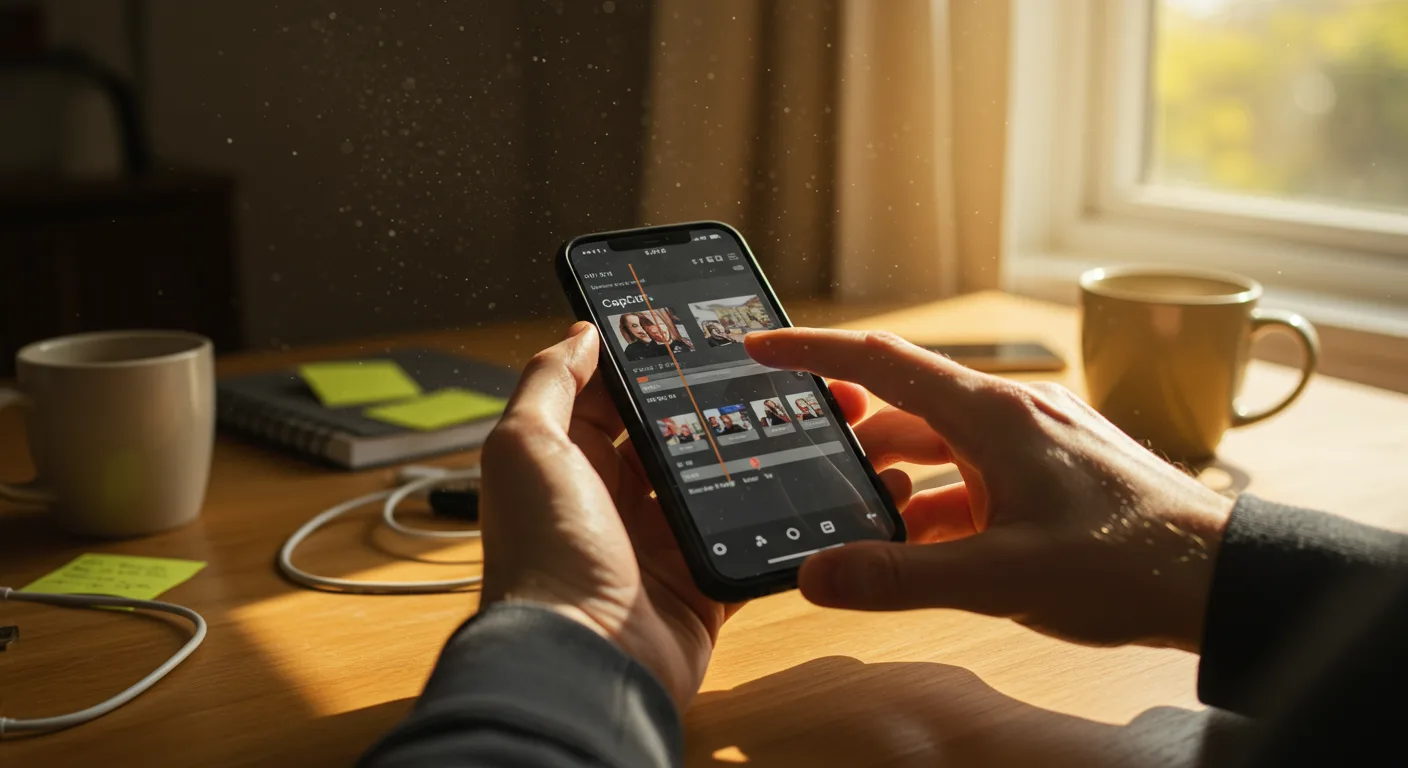
Another excellent, budget-friendly option is CapCut, particularly for short-form, mobile-first content. While often associated with consumer use, its desktop version offers surprisingly robust features for quick, engaging marketing videos. It’s free and incredibly intuitive. For more structured, mid-tier needs, something like Filmora by Wondershare offers a one-time purchase model that’s far more palatable for many SMBs than a perpetual subscription. The evidence is clear: your budget for software is no longer a barrier to entry for professional-quality marketing video.
Myth 2: You Must Become an Expert in Every Single Feature of a Video Editing Software
“I just can’t wrap my head around all those buttons and menus,” a frustrated marketing manager told me once. This fear of overwhelming complexity is a common barrier. The misconception is that to be effective, you need to master every single nuance, every obscure effect, every advanced color grading technique. That’s simply not the case, especially for marketing purposes.
For marketing, your goal isn’t to win an Oscar for visual effects; it’s to communicate a message effectively, engage your audience, and drive action. This requires a focused skillset, not encyclopedic knowledge. Think about it: most marketing videos, whether they’re for a product launch, a testimonial, or a brand story, rely on a core set of editing principles:
- Cutting and trimming: Removing unnecessary footage, tightening pacing.
- Adding text overlays: For calls to action, captions, or key messages.
- Incorporating music and sound effects: Setting mood and enhancing engagement.
- Basic color correction: Ensuring consistent and appealing visuals.
- Exporting in various formats: For different platforms (e.g., vertical for Instagram Reels, horizontal for YouTube).
These fundamental skills can be learned in a matter of days or weeks with focused tutorials on video editing software. A report from HubSpot’s Marketing Statistics for 2026 found that videos under 60 seconds had an average completion rate 15% higher than those over 2 minutes on social media platforms. This emphasizes crisp editing and direct communication, not complex visual wizardry. My team and I often advise clients to focus on mastering these core elements in their chosen software. Once you’re comfortable with them, you can always explore more advanced features as your needs evolve. The Pareto principle applies here: 80% of your marketing video impact will come from 20% of the software’s features. Don’t get bogged down in the remaining 80%.
Myth 3: AI Video Editing Will Soon Replace the Need for Human Editors in Marketing
Ah, AI. The buzzword of the decade. While artificial intelligence is undoubtedly transforming many aspects of marketing, the idea that it will completely eliminate the need for human video editors in the marketing sphere is a dangerous oversimplification. This myth suggests that you can simply feed raw footage into an AI, and it will magically spit out a perfectly branded, emotionally resonant marketing video.
While AI tools like Descript (for text-based editing and transcriptions) and various automated video generators are incredibly powerful for specific tasks – generating initial cuts, creating captions, or optimizing for different aspect ratios – they lack the nuanced understanding of brand voice, target audience psychology, and creative storytelling that a human editor brings. A recent eMarketer report on AI in content creation highlighted that while AI can significantly speed up content production, “human oversight and creative direction remain indispensable for maintaining brand authenticity and strategic alignment.”
Consider a case study: We ran into this exact issue at my previous firm when a client insisted on using an AI video generator for their entire Q1 social media campaign. The AI produced technically competent videos – good cuts, decent music, appropriate length. However, every single video felt generic. The emotional arc was flat, the calls to action felt robotic, and the overall brand personality was completely absent. We ended up having to re-edit a significant portion of the content manually, injecting human elements like subtle pacing changes to build suspense, carefully timed jump cuts for comedic effect, and a more deliberate integration of brand messaging through custom graphics. The subsequent campaign, with human-edited videos, saw a 25% higher click-through rate compared to the AI-only versions. AI is a fantastic assistant, a powerful tool to accelerate workflows and handle repetitive tasks, but it’s not a replacement for human creativity and strategic thinking in marketing video production. It’s another set of tutorials on video editing software to master, not a magic bullet.
Myth 4: Learning Video Editing Takes Years of Dedicated Study
This myth often paralyzes marketers before they even begin. The notion that video editing is an arcane art, requiring years in film school or apprenticeships, is a relic of the past. While professional film editing certainly involves a deep craft, marketing video editing is far more accessible. The misconception here is that all video editing is the same, regardless of its purpose.
The reality is that thanks to the proliferation of user-friendly software and an abundance of high-quality, free and paid tutorials on video editing software, you can acquire foundational skills remarkably quickly. For instance, platforms like Skillshare and Udemy offer comprehensive courses on specific software, often broken down into digestible modules. For example, a beginner’s course on DaVinci Resolve for marketing might be 10-15 hours long. If you dedicate just one hour a day, you could be proficient in the basics within two weeks. I’ve personally seen marketing interns, with zero prior experience, go from absolute beginner to confidently editing short-form social media videos in under a month. It’s about structured learning and practice, not innate talent or years of struggle. The key is to focus on practical application for marketing objectives rather than theoretical film studies. Don’t aim to be Martin Scorsese; aim to be a highly effective marketing communicator through video.
Myth 5: You Need Expensive Gear (Cameras, Lighting, Mics) for Your Edited Videos to Look Good
This is another classic one that acts as a huge barrier to entry for many small businesses and startups. The idea is that if you don’t have a Red cinema camera, professional studio lighting, and a Sennheiser shotgun microphone, your video editing efforts will be wasted because the raw footage will be subpar. This couldn’t be further from the truth in 2026.
While high-end gear certainly has its place, the quality of modern smartphones is absolutely astonishing. The latest iPhone or Samsung Galaxy devices can shoot in 4K resolution, offer excellent dynamic range, and even provide computational photography features that rival entry-level DSLRs. According to a Nielsen report on digital video consumption, over 70% of online video views now occur on mobile devices. This means that viewers are accustomed to, and often prefer, content shot and consumed on mobile. The emphasis shifts from pristine studio quality to authenticity and engaging content. What truly makes a video “look good” after editing often has less to do with the camera and more to do with:
- Good lighting: Often achievable with natural light or inexpensive LED panels.
- Clear audio: A simple lavalier microphone that plugs into your phone can make a world of difference for under $50.
- Compelling storytelling: The narrative, the message, the value proposition.
- Effective editing: Pacing, cuts, graphics, and music that enhance the story.
I’ve personally produced entire marketing campaigns for clients using nothing more than an iPhone 15 Pro Max, a $30 lav mic, and DaVinci Resolve. The results were professional, engaging, and hit all their KPIs. The editing process, guided by solid tutorials on video editing software, transformed good raw footage into great marketing assets. Focus on getting decent audio and lighting, then let your editing skills shine.
Myth 6: Video Editing is Just a Technical Skill, Not a Marketing One
This is a subtle but dangerous misconception. Many marketers view video editing as a purely technical, post-production task that should be outsourced or relegated to a “video person.” They believe their role is solely strategy and content creation, not the hands-on execution of editing. This siloed thinking severely limits a marketer’s effectiveness in the current digital landscape.
While the mechanics of using software are technical, the decisions made during the editing process are profoundly strategic and directly impact marketing outcomes. Every cut, every text overlay, every music choice, every sound effect, and every color grade either enhances or detracts from your marketing message. For example, knowing when to use a jump cut to maintain energy for a young audience on TikTok versus a smoother transition for a more corporate LinkedIn explainer video is a marketing decision. Understanding how to use motion graphics to highlight a call to action or how to pace a testimonial to maximize emotional impact – these are not just technical skills; they are marketing superpowers.
Think of it this way: if you’re a copywriter, you don’t just write words; you write words strategically to persuade and inform. Similarly, a marketer who understands video editing doesn’t just cut clips; they craft a visual narrative that aligns with campaign goals. According to the IAB’s 2026 Video Advertising Report, interactive video ads that allow viewers to make choices or click for more information saw a 32% higher engagement rate compared to static video ads. Implementing these interactive elements requires a marketer who understands both the strategic purpose and the technical execution within the editing software. Without a grasp of how to manipulate video, marketers miss a huge opportunity to influence the final product and ensure it truly serves their objectives. It’s about empowering yourself to speak the visual language of your audience, not just delegating it. Mastering video editing software is no longer a niche skill but a fundamental requirement for any serious marketer. Don’t let these pervasive myths hold you back from producing compelling video content that drives real results.
What’s the best free video editing software for marketing?
For comprehensive features and professional results, DaVinci Resolve is unmatched as a free option. For quick, mobile-first content, CapCut is excellent. Both have extensive tutorials on video editing software available online.
How long does it typically take to learn basic video editing for marketing purposes?
With focused effort and good tutorials on video editing software, you can learn the fundamental skills (cutting, adding text, music, basic color correction) in 10-20 hours of practice. Consistency is more important than raw talent.
Do I need a powerful computer to edit marketing videos?
While a powerful computer helps with 4K footage and complex effects, most modern laptops (within the last 3-4 years) with at least 16GB RAM and a decent processor can handle 1080p video editing for marketing content. Proxy workflows in software like DaVinci Resolve can also help with less powerful machines.
Should I use stock footage or shoot my own for marketing videos?
It depends on your budget and brand. Original footage offers authenticity and unique branding. However, high-quality stock footage can be very effective for illustrating concepts or enhancing visuals, especially when combined with your own brand-specific elements. Always ensure you have proper licensing for stock assets.
What’s the most important aspect of video editing for marketing effectiveness?
The most important aspect is clear, concise storytelling that resonates with your target audience and drives a specific marketing objective. This means prioritizing strong messaging, appropriate pacing, and clear calls to action over flashy effects. Every editing decision should serve your marketing goal.


