 By Editorial Team
The convergence of artificial intelligence and video production has fundamentally reshaped advertising, especially within the technology, media, and telecommunications (TMT) sector. AI video creation offers unprecedented speed and personalization, directly impacting how TMT companies approach campaigns. This shift isn’t merely about automation. It’s about fundamentally rethinking creative workflows to maximize ad return on investment.
Key Takeaways
- AI-driven video platforms enable TMT marketers to generate thousands of personalized ad variations in minutes, significantly improving campaign relevance and engagement.
- Implementing AI for video content reduces production costs by up to 70% and accelerates time-to-market from weeks to days for TMT promotional materials.
- Data-driven AI tools predict optimal creative elements and audience segments, allowing TMT companies to allocate ad spend more effectively and achieve higher conversion rates.
- Integrating AI video creation with existing marketing stacks facilitates smooth A/B testing and iterative optimization, which is essential for TMT product launches and service updates.
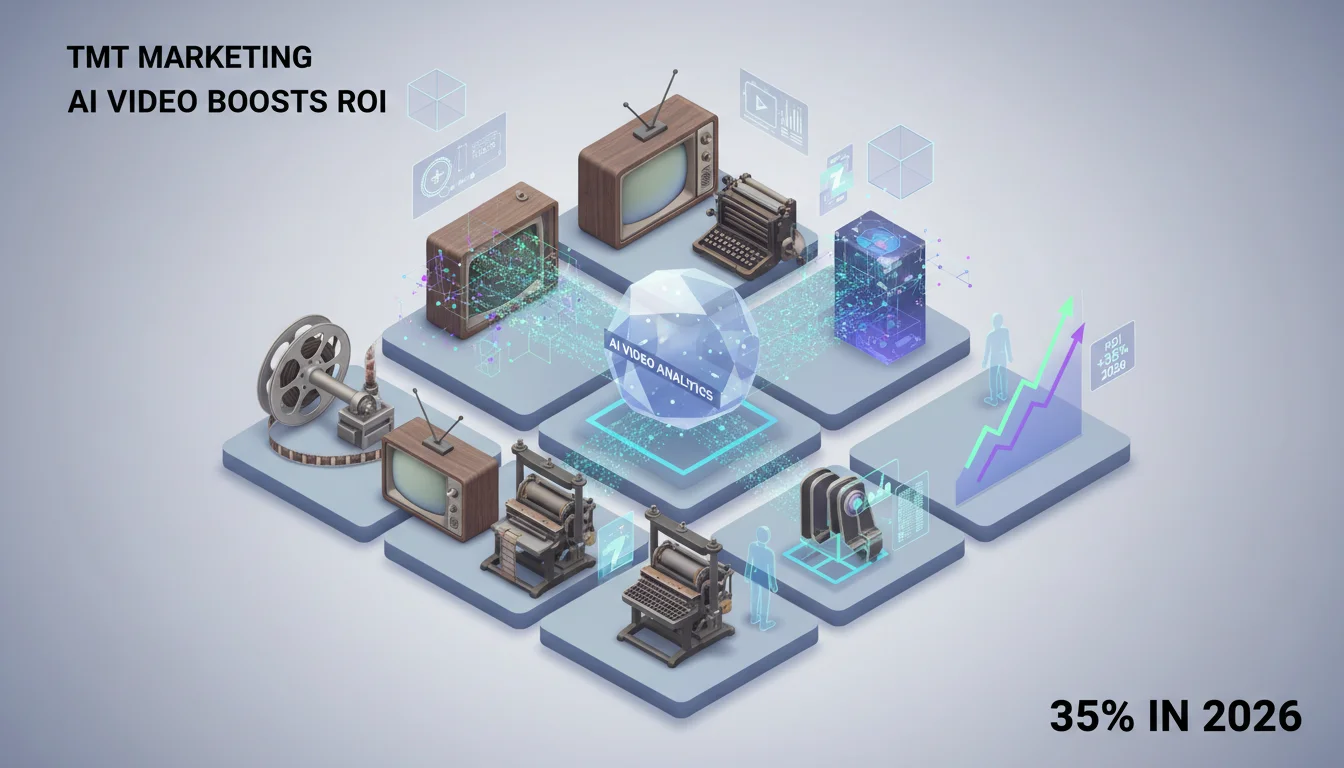
- TMT brands adopting AI video creation early are reporting a 20% to 35% increase in ad campaign ROI compared to traditional methods, setting a new industry benchmark.
The Imperative of Speed and Personalization in TMT Marketing
In 2026, the TMT field moves at an unforgiving pace. Product cycles shorten, consumer attention fragments, and the demand for instant gratification intensifies. Traditional video production, with its lengthy timelines and high costs, simply cannot keep up. Consider a new streaming service launching a novel feature. By the time a conventional ad campaign is conceptualized, shot, edited, and approved, the market might have already shifted. This is where AI video creation steps in, not as a luxury, but as a core operational necessity.
The ability to generate hundreds, even thousands, of unique ad variations tailored to specific audience segments, geographic locations, or even individual user behaviors is no longer a futuristic concept. AI platforms now integrate with customer relationship management (CRM) systems and advertising platforms to dynamically create video content. For a telecommunications provider, this means an ad showing a 5G plan in Atlanta might feature local landmarks and specific pricing relevant only to that metro area, while a similar ad in San Francisco highlights different features and local incentives. This level of granular personalization was once prohibitively expensive and time-consuming.
A recent report by eMarketer projected that global digital ad spending will continue its upward trajectory, with video accounting for an increasing share. TMT companies, particularly those in competitive markets like streaming, gaming, and enterprise software, find themselves in an arms race for consumer attention. The brands that can produce highly relevant, visually engaging video content at scale and speed will inevitably capture a larger slice of that attention, directly translating to superior ROI. This isn’t just about making videos faster. It’s about making smarter videos that resonate.
How AI Transforms the Video Production Workflow
The impact of AI on video production extends across the entire workflow, from script generation to final rendering and distribution. It starts with data. AI systems analyze vast datasets of past campaign performance, audience demographics, engagement metrics, and even competitor strategies to identify patterns and predict optimal creative elements. For instance, an AI might determine that short-form vertical video ads featuring bright, contrasting colors and a human voiceover consistently outperform other formats for a specific demographic interested in a new mobile app.
Once the core message is defined, AI assists with scriptwriting, suggesting compelling calls to action and refining language for maximum impact. Tools like Synthesia or RunwayML then take over, allowing marketers to select virtual avatars, choose voiceovers from an array of AI-generated voices (or clone a brand voice), and animate scenes using text-to-video or image-to-video capabilities. This drastically reduces the need for expensive actors, film crews, and studio time. A single marketing professional, with the right AI tools, can produce a polished video ad in hours that previously would have taken a team of specialists days or weeks.
Post-production also sees significant AI intervention. AI-powered editing suites can automatically cut footage, synchronize audio, add background music, and even apply color grading based on predefined brand guidelines or performance data. This automation not only speeds up the process but also ensures consistency across all creative assets. The result is a highly efficient, scalable, and cost-effective video production pipeline that directly addresses the TMT sector’s need for rapid content iteration and deployment.
Strategic Advantages for TMT in Ad Campaign Performance
For TMT companies, the strategic advantages of using AI in video creation are substantial and directly measurable in terms of ad ROI. One of the most significant benefits is the ability to conduct rapid and extensive A/B testing. Traditional video ad testing often involves producing a handful of variations, which limits the scope of learning. With AI, a TMT marketer can generate dozens or even hundreds of subtle variations in messaging, visuals, and calls to action. These can be deployed simultaneously to different audience segments, providing real-time data on what resonates most effectively. This iterative optimization cycle is important for products with short shelf lives or rapidly evolving feature sets.
Consider a gaming company launching a new title. They can use AI to create trailers highlighting different gameplay elements, character backstories, or competitive features. Each trailer can be targeted to specific gamer demographics identified through past purchase behavior or platform engagement. An ad targeting strategy gamers might focus on complex mechanics, while one for casual players emphasizes accessibility and fun. The AI constantly learns from the performance data of these diverse campaigns, automatically adjusting future video generations to favor elements that drive higher click-through rates, downloads, or in-app purchases. This level of dynamic optimization dramatically improves the efficiency of ad spend.
Plus, AI-powered video creation helps TMT brands maintain a consistent brand voice and visual identity across all their disparate campaigns. With numerous product lines, regional offices, and marketing teams, brand dilution can be a real concern. AI tools can be trained on a company’s brand guidelines, ensuring that every video produced adheres to specific color palettes, font styles, and messaging tones. This consistency builds stronger brand recognition and trust, which, while harder to quantify directly, contributes significantly to long-term customer loyalty and repeat business. In a crowded market, a unified brand presence across all touchpoints is a distinct competitive differentiator.
Measuring and Optimizing ROI with AI-Generated Video
The true power of AI video creation lies not just in its ability to produce content, but in its inherent capacity for data-driven measurement and continuous optimization. TMT marketers are no strangers to analytics, but AI takes this to a new level. Every AI-generated video ad comes with a wealth of metadata that can be tracked and analyzed. This includes not only standard metrics like impressions, clicks, and conversions, but also more granular insights into which specific visual elements, voiceovers, or textual overlays contributed most to engagement.
For example, an AI platform integrated with Google Ads or Meta Business Manager can track the performance of thousands of ad variations. If an ad featuring a specific AI avatar with a certain tone of voice consistently generates higher conversion rates for a software subscription, the AI can then prioritize the creation of similar ads. It’s a feedback loop: data informs creative choices, creative choices generate new data, and that new data refines subsequent creative efforts. This iterative process allows TMT companies to achieve a level of ad spend efficiency that was previously unattainable.
One of the most compelling aspects is the predictive analytics capability. AI models can forecast the likely performance of a video ad before it even goes live, based on its creative elements and target audience. This allows TMT marketers to make proactive adjustments, saving significant amounts of money that might otherwise be spent on underperforming campaigns. Instead of reacting to poor performance, they can anticipate and prevent it. This shift from reactive to proactive campaign management is a deep change for ROI optimization, especially in the volatile TMT sector where every dollar of ad spend needs to work as hard as possible. It’s not enough to simply track. You must predict and adapt.
The Future of TMT Marketing: Beyond Basic Automation
While current AI video creation tools are impressive, the horizon for TMT marketing is even more expansive. We are moving beyond basic automation towards truly intelligent, adaptive content generation. Imagine AI systems that can not only create personalized video ads but also adapt them in real-time based on a user’s current context, mood, or even recent online activity. For a media company, this could mean an ad for a new series dynamically adjusting its tone and featured clips based on whether the viewer has recently watched a comedy or a drama. This level of dynamic, contextual personalization will redefine audience engagement.
Plus, the integration of AI with augmented reality (AR) and virtual reality (VR) platforms holds immense potential for TMT. Picture an ad for a new mobile game that allows users to “try out” a mini-game within the ad unit itself, powered by AI-generated assets. Or a telecommunications ad that shows the benefits of a new network through an interactive AR experience. These immersive formats, fueled by AI-driven content generation, will blur the lines between advertising and entertainment, creating highly engaging and memorable brand experiences. The challenge, of course, will be ensuring these experiences are not just novel, but genuinely valuable to the consumer.
The ethical considerations surrounding AI-generated content, particularly deepfakes and synthetic media, will also become more prominent. TMT companies, as leaders in technology, have a responsibility to use these tools transparently and ethically. Establishing clear guidelines for AI-generated content, ensuring proper disclosure, and prioritizing authenticity will be critical for maintaining consumer trust. The future of AI video creation in TMT marketing is bright, but it requires a careful balance of innovation, strategic implementation, and ethical stewardship. The companies that navigate this balance effectively will cement their position at the forefront of the industry.
AI-powered video creation is not just a trend for TMT marketers. It is a fundamental shift that demands immediate adoption to remain competitive and achieve superior ad ROI. The ability to produce hyper-personalized, data-driven video content at scale and speed is now the standard.
What is AI video creation?
AI video creation refers to the process of generating video content, from scripts to final edits, using artificial intelligence algorithms and tools, often using text-to-video, image-to-video, and AI voiceover technologies.
How does AI video creation benefit TMT companies specifically?
TMT companies benefit from AI video creation by rapidly producing personalized ad campaigns for diverse products (e.g., software, streaming services, network plans), significantly reducing production costs and accelerating time-to-market for new offerings.
Can AI video tools personalize ads for individual users?
Yes, AI video tools can integrate with marketing data to create highly personalized ad variations that feature specific product benefits, localized content, or even dynamically adjust based on individual user behavior and preferences, maximizing relevance.
What kind of ROI improvements can TMT marketers expect from AI video creation?
TMT marketers can expect improved ad ROI through more efficient ad spend, higher conversion rates due to personalization, and reduced production costs. Some early adopters are reporting 20% to 35% increases in campaign ROI.
Are there ethical considerations for using AI in video advertising?
Yes, ethical considerations include transparency regarding AI-generated content, avoiding deepfakes, and ensuring responsible use of synthetic media to maintain consumer trust. Brands must prioritize authenticity and clear disclosure.


