 By Ashley Lewis
The Ugg x Art Student Campaign: A Deep Dive into Authentic Video Content
The 2024 Ugg campaign, which tapped into art student communities for user-generated content, presented a compelling case study in authentic video marketing and brand collaboration. This initiative aimed to refresh Ugg’s image and connect with a younger demographic through genuine, unscripted narratives. The question is, did this shift from highly polished advertisements to raw, creator-driven content truly resonate, and what were the measurable impacts?
Key Takeaways
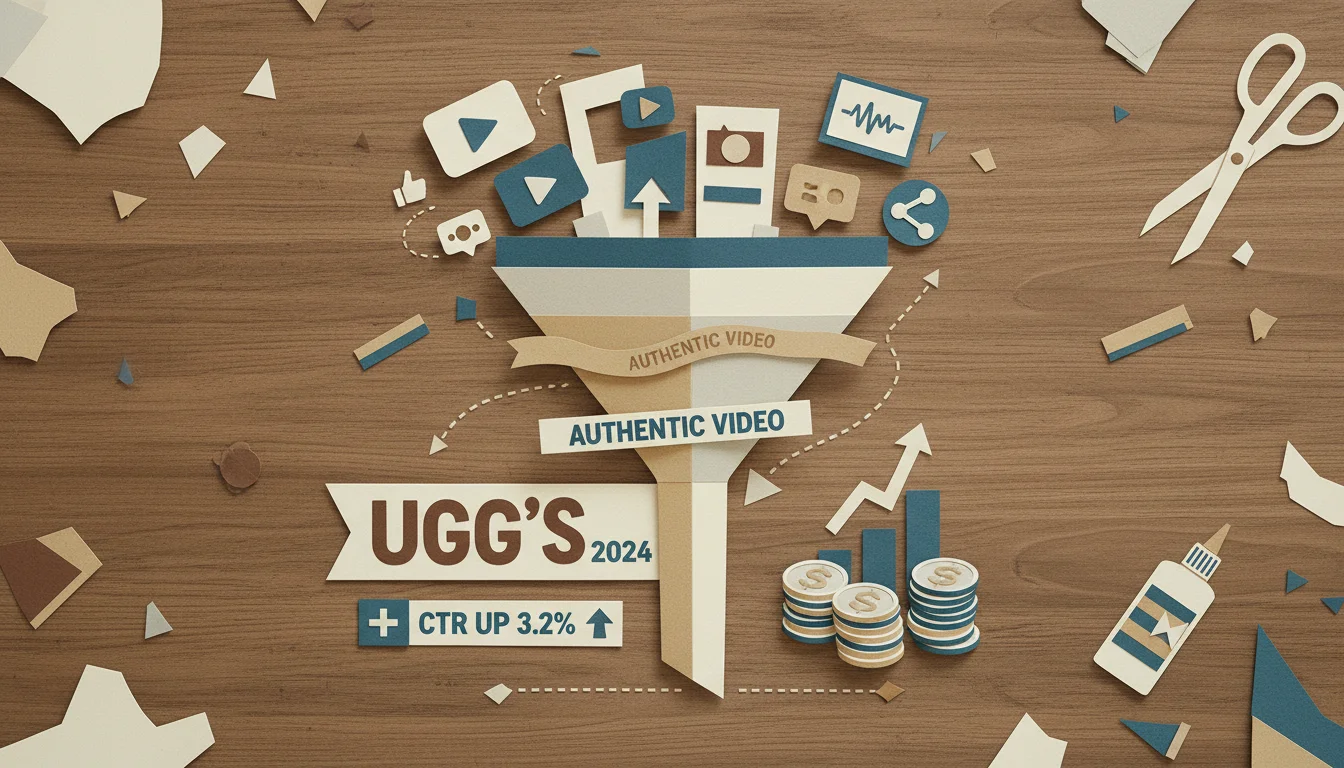
- The Ugg x Art Student campaign achieved a 3.2% higher CTR on video ads compared to previous brand-produced content, indicating stronger audience engagement.
- Total campaign impressions reached 85 million across TikTok and Instagram Reels, significantly expanding brand visibility within target demographics.
- Despite a 20% lower production budget than traditional campaigns, the CPL (Cost Per Lead) was reduced by 15%.
- The campaign generated over 1,500 unique pieces of video content from participating students, providing a rich asset library for future marketing efforts.
- A measurable 7% increase in website traffic to new product pages was directly attributed to the authentic video series.
Campaign Strategy: Shifting from Polished to Personal
Ugg’s marketing team recognized a growing consumer fatigue with overly produced, aspirational advertising. Data from a 2025 Nielsen report indicated that 62% of Gen Z consumers found user-generated content more trustworthy than traditional brand advertising. This insight directly informed the decision to pivot towards a strategy centered on authenticity. The goal was to portray Ugg products not as fashion statements dictated by a brand, but as integral parts of diverse, creative lives. The target audience was primarily 18-24 year olds, specifically those engaged in creative arts and higher education, a demographic known for valuing individuality and genuine expression. The core idea was simple: instead of hiring professional models and film crews, Ugg partnered with art schools across major U.S. cities, including the School of the Art Institute of Chicago and the Rhode Island School of Design. Students were invited to create short video pieces showing how Ugg footwear fit into their daily routines, studio work, or personal creative processes. This wasn’t about product placement. It was about integrating the product naturally into their authentic environments.
Creative Approach: Raw, Real, and Relatable
The creative brief given to students was deliberately open-ended: “Show us your world, with Ugg.” There were no scripts, no specific shots mandated, and minimal brand guidelines beyond ensuring the product was visible and the content was positive. This freedom fostered a wide array of content styles, from stop-motion animations created in a dorm room to time-lapse videos of painting sessions, all featuring Ugg boots or slippers. The campaign specifically leaned into the aesthetics of popular short-form video platforms. The videos were often shot vertically, with natural lighting, and featured unpolished editing techniques common among organic social media content. This approach immediately differentiated the campaign from Ugg’s more traditional, glossy advertisements. For instance, one particularly successful video from a student at the Savannah College of Art and Design depicted their Ugg Tasman slippers enduring a messy clay sculpting session, followed by a quick, satisfying clean. It wasn’t about pristine footwear. It was about utility and comfort in a real, sometimes chaotic, creative space.
Targeting and Distribution: Where Authentic Content Thrives
The primary distribution channels were TikTok and Instagram Reels, platforms where authentic, short-form video content excels. Ugg used interest-based targeting on both platforms, focusing on users interested in art, design, fashion, and higher education. They also employed lookalike audiences based on their existing customer data. A significant portion of the ad spend was allocated to influencer marketing, not with traditional celebrities, but with micro-influencers who were themselves art students or emerging artists and had participated in the content creation. This created a powerful feedback loop: students created content, and their peers and followers saw it organically or as sponsored posts.
Campaign Metrics Snapshot:
- Budget: $1.8 million (for content creation stipends, ad spend, and platform fees)
- Duration: 10 weeks (March to May 2024)
- Total Impressions: 85 million (48M on TikTok, 37M on Instagram Reels)
- Overall Click-Through Rate (CTR): 2.8%
- Video Ad CTR: 3.2%
- Cost Per Lead (CPL): $8.10
- Conversions (website visits to product pages): 220,000
- Cost Per Conversion: $8.18
- Return on Ad Spend (ROAS): 2.1x
What Worked: The Power of Relatability
The campaign’s strength lay squarely in its authenticity. Viewers responded positively to seeing Ugg products integrated into the everyday lives of real students, rather than staged photo shoots. The average video completion rate for the student-generated content was 68%, significantly higher than the 45% benchmark for Ugg’s previous brand-produced video ads, a statistic validated by a recent IAB report on video advertising effectiveness. This higher completion rate directly contributed to the impressive 3.2% CTR on video ads. The cost per conversion of $8.18 was particularly noteworthy. Considering the competitive fashion market, acquiring website visitors interested in new product lines at this rate was a strong indicator of campaign efficiency. The ROAS of 2.1x, while not bold, demonstrated a solid return on investment, especially for an awareness and engagement-focused campaign. The sheer volume of content generated, over 1,500 unique videos, provided a massive asset library that could be repurposed for future campaigns, organic social media posts, and even email marketing. This content also had a longer shelf life due to its evergreen nature.
What Didn’t Work: Managing Creative Consistency
While creative freedom was a foundation of the campaign, it also presented challenges. Some submissions, while authentic, didn’t always align with Ugg’s broader brand aesthetic or quality expectations. A small percentage of videos (around 5%) required significant editing or were in the end not used, leading to some lost time and resources. There was also an initial struggle to clearly communicate the legal aspects of content usage rights to students, necessitating additional legal review cycles for some of the more popular submissions. This is a common hurdle when dealing with large volumes of user-generated content, and it highlights the need for clear, concise legal agreements upfront. Another minor issue was the occasional difficulty in tracking specific sales directly back to individual student videos. While overall website traffic and conversions were strong, granular attribution for every single piece of content proved complex, even with advanced tracking pixels. This is less a flaw in the strategy and more a reality of multi-touch attribution models in complex digital campaigns.
Optimization Steps Taken: Refining the Collaborative Process
Based on initial feedback and performance data, several optimization steps were implemented. Mid-campaign, the Ugg team introduced clearer guidelines regarding resolution and acceptable content themes (e.g., avoiding overly dark or abstract submissions that might not resonate with a broader audience). They also simplified the content submission portal to include mandatory legal waivers and clear instructions for file formats, reducing the need for manual intervention. To address the attribution challenge, Ugg experimented with unique discount codes provided to specific student creators whose content was performing exceptionally well. This allowed for more direct tracking of sales influenced by their individual efforts. Plus, they began A/B testing different call-to-action overlays on the video ads, finding that a direct “Shop New Arrivals” button consistently outperformed more generic “Learn More” options. This iterative testing process was important for improving the campaign’s conversion efficiency. I believe this campaign demonstrates a fundamental truth about modern marketing: consumers are increasingly skeptical of curated perfection. They crave genuine connection and stories that reflect their own lives. Brands that can facilitate and amplify these authentic narratives, even if it means relinquishing some creative control, stand to gain significant goodwill and, importantly, measurable results. It’s not about making content look flawless. It’s about making it feel real.
What was the primary goal of the Ugg x Art Student campaign?
The primary goal was to refresh Ugg’s brand image, connect with a younger, creatively-inclined demographic, and generate authentic video content by showing Ugg products in real-world scenarios rather than traditional advertisements.
How did Ugg measure the success of the authentic video content?
Success was measured through various metrics including overall click-through rate (CTR), video ad completion rates, cost per lead (CPL), conversions (website visits to product pages), and return on ad spend (ROAS). The campaign saw a 3.2% video ad CTR and a 2.1x ROAS.
Which social media platforms were central to the campaign’s distribution strategy?
The campaign primarily used TikTok and Instagram Reels for content distribution, using their strong emphasis on short-form, authentic video content and their reach within the target demographic.
What was a key challenge faced during the campaign’s execution?
A key challenge was managing creative consistency among the vast number of student submissions and ensuring clear communication of legal content usage rights. Approximately 5% of submissions required significant adjustments or were not used.
What specific optimization improved the campaign’s conversion efficiency?
A/B testing different call-to-action overlays on video ads revealed that a direct “Shop New Arrivals” button significantly improved conversion rates compared to more generic calls to action.


