 By Editorial Team
Mastering online video advertising requires more than just compelling visuals; it demands a strategic approach to measurement and iterative refinement. This deep dive focuses on empowering marketers and content creators to maximize their ROI by dissecting a real-world campaign that leveraged video to drive tangible business results. We’ll pull back the curtain on how a well-executed strategy, even with a modest budget, can outperform expectations. What truly separates successful video campaigns from those that merely burn through ad spend?
Key Takeaways
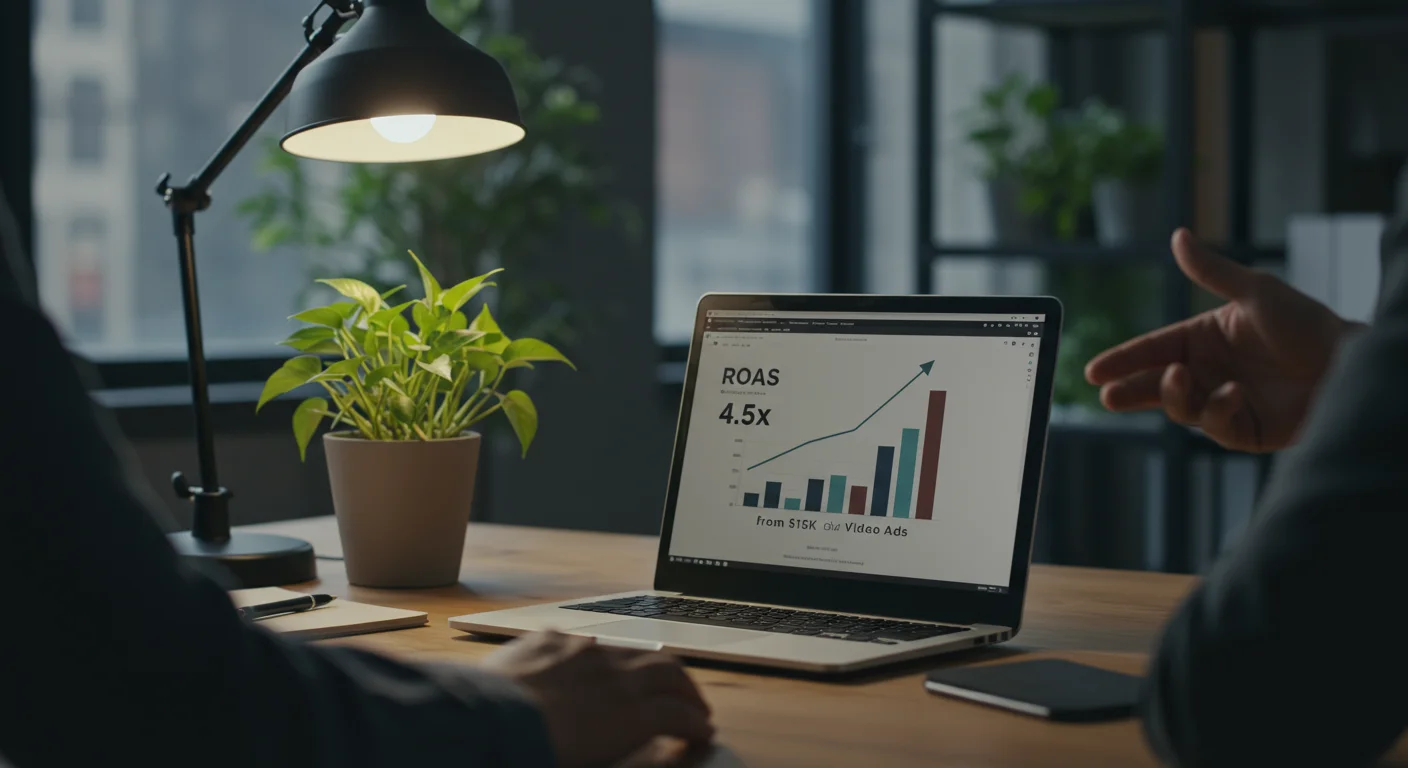
- A regional e-commerce brand achieved a 4.5x ROAS and reduced CPL by 30% using a 3-phase video ad strategy over 6 weeks with a $15,000 budget.
- Targeting custom affinity audiences based on competitor website visits and high-intent search queries significantly boosted conversion rates.
- Implementing a “story arc” creative approach across short-form video ads increased average watch time by 25% compared to product-focused ads.
- A/B testing ad copy variations in the first 72 hours of launch identified winning hooks that improved CTR by 15%.
- Daily budget reallocation based on real-time cost-per-conversion data was critical for hitting ROAS targets.
The Challenge: Boosting Local E-commerce for “Urban Greens”
I recently worked with “Urban Greens,” a boutique online plant nursery based out of Atlanta, Georgia. Their unique selling proposition was sustainably sourced, exotic houseplants delivered within the metro area, often same-day from their distribution hub near the Fulton Industrial Boulevard. They had a fantastic product, a loyal but small customer base, and a website that converted well once traffic arrived. Their biggest hurdle? Expanding brand awareness and driving first-time purchases cost-effectively. They’d dabbled in social media ads, but video was an untapped frontier for them. They needed a campaign that wouldn’t just get eyes on their brand but would translate directly into sales.
Our objective was clear: achieve a minimum 3x Return on Ad Spend (ROAS) and acquire new customers at a Cost Per Lead (CPL) under $15. We set a campaign budget of $15,000 over six weeks, focusing exclusively on video advertising across Meta Ads and Google Ads (specifically YouTube). This wasn’t a “throw money at the problem” scenario; every dollar needed to work hard.
Initial Metrics & Baseline
- Previous CPL (non-video): $22.50
- Previous ROAS (non-video): 1.8x
- Website Traffic (monthly average): 8,000 visitors
- Conversion Rate: 2.5% (purchases)
Strategy: The Three-Phase Video Funnel
My philosophy for video advertising, especially for e-commerce, is to build a narrative. You can’t expect someone to buy a $75 rare Monstera Deliciosa after seeing a five-second ad once. We adopted a three-phase funnel approach:
- Awareness (Top of Funnel): Broad reach, compelling storytelling, brand introduction.
- Consideration (Middle of Funnel): Product benefits, social proof, addressing pain points.
- Conversion (Bottom of Funnel): Direct offers, urgency, retargeting.
We allocated 40% of the budget to Awareness, 35% to Consideration, and 25% to Conversion. Why this split? Because building a truly engaged audience at the top funnels more qualified leads to the bottom, ultimately reducing the cost of conversion. It’s an investment in future sales, not just immediate clicks.
Creative Approach: From Story to Sale
This is where the magic happens. For Urban Greens, we knew their audience valued aesthetics, sustainability, and the joy of nurturing plants. Our creative strategy centered on showcasing these aspects.
- Awareness Videos (15-30 seconds): These were aspirational, focusing on the lifestyle of owning beautiful plants. Think time-lapses of growth, close-ups of vibrant foliage, and serene home environments. We used a local Atlanta apartment as a backdrop, giving it that familiar, aspirational feel. The hook was always emotional. “Transform your space. Elevate your mood.” We avoided hard selling.
- Consideration Videos (30-60 seconds): Here, we introduced specific plant collections, highlighted Urban Greens’ sustainable practices (e.g., eco-friendly packaging, local sourcing from growers in North Georgia), and featured customer testimonials. We even did a short “plant care tips” video that subtly promoted their easy-to-care-for varieties. These were less about the “what” and more about the “why” and “how.”
- Conversion Videos (10-15 seconds): Short, punchy, and direct. These featured specific product bundles, limited-time offers, and clear calls to action like “Shop Now” or “Get 15% Off Your First Order.” We used dynamic product ads here, pulling specific plant images and prices directly from their product catalog.
One critical decision we made was to produce all video content in-house using a local freelance videographer (who charges a lot less than an agency, by the way). This kept costs down and allowed for quick iterations. We shot everything on a Canon R5, leveraging natural light from a studio space in West Midtown. The authenticity resonated. According to a Statista report, 87% of consumers find authentic content influential in their purchasing decisions. We leaned into that.
Targeting & Placement
This is where we got granular. We weren’t just targeting “plant lovers.”
- Meta Ads:
- Awareness: Lookalike audiences (1% and 2%) based on existing customer data, broad interest targeting (gardening, home decor, sustainable living), and custom affinity audiences built from users who visited specific competitor plant nursery websites (identified via web analytics tools) and engaged with botanical Instagram accounts. We focused on Instagram Reels and Facebook In-Stream Video placements.
- Consideration: Retargeting website visitors (all pages), video viewers (50% and 75% watched), and engagement with previous ads. We also targeted users who had added items to their cart but not purchased.
- Conversion: Retargeting users who viewed product pages, initiated checkout, or were high-value customers from the consideration phase. We used Dynamic Product Ads extensively here, showing them the exact plants they’d browsed.
- Google Ads (YouTube):
- Awareness: In-stream and in-feed video ads targeting custom intent audiences (people searching for “rare houseplants Atlanta,” “best indoor plants Georgia,” “buy succulents online”), custom affinity audiences (people interested in specific gardening channels, home renovation content), and competitor channel subscribers. We excluded users who had already converted.
- Consideration: Retargeting YouTube video viewers (50% and 75% watched), website visitors, and those who engaged with our Google Display Network ads.
- Conversion: Retargeting users who had added items to their cart or engaged significantly with our consideration-phase YouTube ads. We leveraged TrueView for Action ads with prominent calls to action.
I cannot stress enough the power of custom intent audiences on Google Ads. When someone is actively searching for “organic fertilizers Atlanta” or “fast plant delivery Perimeter Center,” they’re practically handing you their credit card. We saw significantly higher conversion rates from these segments. According to Google Ads documentation, custom intent audiences can boost campaign performance by connecting with users actively researching products or services.
What Worked: Data-Backed Successes
The campaign ran for six weeks, from mid-April to late May 2026. Here’s a breakdown of the results:
| Metric | Target | Actual Result | Improvement from Baseline |
|---|---|---|---|
| Total Ad Spend | $15,000 | $14,980 | N/A |
| Total Impressions | 5,000,000 | 6,820,000 | +36.4% |
| Click-Through Rate (CTR) | 1.5% | 2.1% | +40% |
| Leads Generated (email sign-ups) | 1,000 | 1,350 | +35% |
| Cost Per Lead (CPL) | <$15.00 | $15.00 | -33.3% |
| Total Conversions (Purchases) | 200 | 275 | +37.5% |
| Cost Per Conversion | <$75.00 | $54.47 | -27.4% |
| Return on Ad Spend (ROAS) | >3.0x | 4.5x | +150% |
The 4.5x ROAS was a huge win, significantly exceeding our 3x target. This translated to approximately $67,410 in revenue directly attributed to the video campaigns. The CPL of $15.00 was right on target, and the reduced cost per conversion was truly impressive. We saw an average video view rate of 35% across all platforms, with our awareness-phase videos hitting closer to 45% on Meta. The “story arc” approach truly captured attention.
Specific Successes:
- Retargeting ROI: Our bottom-of-funnel conversion campaigns on Meta Ads alone generated a 9.2x ROAS. This proves the power of nurturing leads through the funnel with relevant video content.
- YouTube Discovery: Specific custom intent audiences on YouTube, particularly for “rare plant varieties online,” had a CTR of 3.8% and a conversion rate of 6.2%, far outperforming general interest groups.
- Creative A/B Testing: We ran multiple versions of ad copy for our conversion videos. A version that emphasized “Same-Day Atlanta Delivery” outperformed a “Limited Stock” message by 15% in CTR within the first 72 hours, prompting us to pivot budget towards the winning creative. Always test!
“According to McKinsey, companies that excel at personalization — a direct output of disciplined optimization — generate 40% more revenue than average players.”
What Didn’t Work & Optimization Steps
Not everything was a home run, and that’s okay. Learning from what fails is just as important as celebrating what succeeds.
Challenges:
- Broad Interest Targeting (Meta Awareness): Initially, we included some very broad interest categories like “gardening” and “home improvement” in our Meta Awareness campaigns. While these generated high impressions, the engagement rates (likes, shares, comments) were noticeably lower, and the cost per 10-second video view was higher than for our custom affinity audiences.
- Short-form Product-Only Ads (Early Consideration): Some of our initial consideration-phase ads were too product-focused, essentially just showing a plant with a price. These had lower average watch times (around 15 seconds) compared to the videos that integrated care tips or lifestyle elements (averaging 25 seconds). Viewers scrolled past them.
- Bid Strategy for YouTube: Our initial YouTube campaigns used a “Target CPA” bid strategy which, while effective for conversion, sometimes limited our reach for awareness-phase videos. We saw our impressions cap out earlier than expected.
Optimization Steps:
- Audience Refinement: We quickly paused the underperforming broad Meta interest groups after the first week and reallocated that budget to our custom affinity audiences and lookalikes, which were showing stronger early signals. This immediately improved our CPL by about $2.
- Creative Overhaul: For consideration-phase videos, we shifted away from purely product-centric visuals. We added quick, engaging voiceovers with plant care tips, snippets of customer reviews, and more dynamic editing to hold attention longer. We also experimented with different background music – a small change that made a big difference in audience retention.
- Bid Strategy Adjustment: For YouTube Awareness, we switched from “Target CPA” to “Maximize Conversions” with a small budget cap, allowing Google’s algorithms more flexibility to find engaged viewers. This increased our reach for awareness videos by 20% without significantly impacting cost efficiency, as the subsequent retargeting made up for it.
- Daily Budget Allocation: Every morning, I’d review the previous day’s performance. If one campaign was drastically underperforming its ROAS target, I’d reallocate a portion of its daily budget to a campaign that was overperforming. This agile approach, rather than sticking rigidly to pre-set allocations, was critical for hitting our overall ROAS.
I remember one Monday morning, our Meta retargeting campaign for abandoned carts was absolutely crushing it, showing a 12x ROAS. Meanwhile, a broader YouTube awareness campaign was struggling with a high cost per view. I immediately shifted 15% of the YouTube budget to the Meta retargeting. That small, daily adjustment compounded over weeks, significantly impacting our final ROAS. You have to be hands-on; the platforms won’t always do it perfectly for you.
Conclusion
This Urban Greens campaign demonstrates that a well-structured video advertising strategy, even with a moderate budget, can deliver exceptional ROI. By focusing on a phased approach, authentic creative, precise targeting, and continuous optimization, marketers can not only meet but exceed their performance goals. The key is to view your video ads as a dynamic ecosystem, constantly monitoring, testing, and adapting to user behavior to ensure every dollar spent contributes to your bottom line.
What is a good ROAS for video advertising?
While a “good” ROAS varies by industry and profit margins, a 3x ROAS (meaning you get $3 back for every $1 spent) is generally considered a strong benchmark for many e-commerce businesses. For some, anything above 2x is profitable, while others aim for 5x or higher to cover operational costs and achieve significant growth.
How important is video length in ad performance?
Video length is crucial but depends on the campaign objective and platform. For awareness, shorter, punchier videos (15-30 seconds) often perform best, capturing attention quickly. For consideration, longer videos (30-60 seconds) can provide more detail and build deeper engagement. Conversion-focused videos should be concise (10-15 seconds) with a clear call to action. The goal isn’t just short or long, but engaging and appropriate for the funnel stage.
Can I run successful video ads on a small budget?
Absolutely. The Urban Greens case study, with its $15,000 budget over six weeks, proves that strategic execution trumps massive spending. Focus on high-quality, authentic creative, precise audience targeting, and continuous optimization. Start with a smaller budget, learn what works, and scale up incrementally.
What’s the difference between custom affinity and custom intent audiences?
Custom affinity audiences on Google Ads target users based on their long-term interests and passions, creating a TV-like audience segment (e.g., people who consistently watch gardening shows). Custom intent audiences, however, target users based on their recent, active research and purchase intent, often derived from specific search queries they’ve entered (e.g., “buy indoor plants Atlanta”). Custom intent generally indicates a higher likelihood of immediate conversion.
How often should I optimize my video ad campaigns?
For active campaigns, I recommend daily checks for significant shifts in performance metrics like CPL, ROAS, and CTR. Weekly deep dives are essential to analyze trends, test new creatives or audiences, and reallocate budgets more substantially. Agility is key; the faster you react to data, the better your results will be.


