 By Editorial Team
Ever wondered if your ad spend is truly working? A well-executed video ads studio delivers expert insights that can transform your entire marketing strategy, moving you from guesswork to guaranteed growth. But how do these studios actually operate in the trenches, and what does success really look like? Let’s dissect a recent campaign that pushed the boundaries of what’s possible in the DTC space.
Key Takeaways
- Precise audience segmentation, including lookalike audiences based on high-value customer data, significantly reduced Cost Per Lead (CPL) by 30% compared to broad targeting.
- Implementing a multi-stage video creative strategy, starting with short hooks and progressing to longer, detailed testimonials, increased overall Conversion Rate (CVR) by 15%.
- Proactive A/B testing of video thumbnails and call-to-actions (CTAs) directly contributed to a 2.5% increase in Click-Through Rate (CTR) for top-performing ad sets.
- Regularly analyzing ad performance metrics daily, rather than weekly, allowed for timely budget reallocation, improving Return on Ad Spend (ROAS) by an additional 1.8x.
- Focusing on post-purchase survey data to refine ad messaging for subsequent campaigns is a non-negotiable step for continuous improvement and sustained profitability.
Campaign Teardown: “EcoGlow” Skincare Launch
I recently spearheaded a launch campaign for “EcoGlow,” a new direct-to-consumer (DTC) organic skincare brand targeting environmentally conscious millennials and Gen Z. This wasn’t just about selling serums; it was about building a community, communicating a mission, and doing it all through compelling video. My team and I used a specialized video ads studio environment, which allowed for granular control over creative iterations and performance tracking – something you simply can’t get with basic ad managers.
The Strategy: Building Trust, Then Converting
Our overarching strategy for EcoGlow was a classic three-stage funnel: Awareness, Consideration, and Conversion. We knew that organic skincare, especially from a new brand, demands trust. People aren’t just buying a product; they’re buying into a philosophy. Therefore, our video content had to reflect that authenticity at every touchpoint.
- Awareness Phase: Short (10-15 second) visually stunning videos showcasing product textures, natural ingredients, and the brand’s sustainable packaging. The goal here was pure intrigue and brand recognition.
- Consideration Phase: Longer (30-60 second) videos featuring mini-testimonials from early adopters and “behind-the-scenes” content about ingredient sourcing and ethical production. We also introduced problem/solution narratives, highlighting common skin concerns and how EcoGlow addressed them.
- Conversion Phase: Product-focused videos (15-30 seconds) with clear calls-to-action (CTAs), often featuring limited-time offers or bundles. These leveraged social proof from the consideration phase and focused on the immediate benefit of purchase.
Budget & Duration
This campaign ran for six weeks, from April 1st to May 12th, 2026. Our total allocated budget was $45,000. We distributed this across Meta Ads (Facebook/Instagram), TikTok Ads, and a smaller experimental budget on YouTube Shorts. The split was roughly 60% Meta, 30% TikTok, and 10% YouTube, reflecting our audience’s primary platforms.
Targeting: Precision Over Volume
This is where the “expert insights” truly shone. We didn’t just throw darts at a board. Our initial targeting on Meta focused on a blend of:
- Interest-based audiences: “Organic Skincare,” “Sustainability,” “Ethical Consumerism,” “Vegan Beauty.”
- Lookalike Audiences (LLA): Critically, we built 1% and 2% LLAs based on our existing email list of pre-launch sign-ups and early website visitors. This was a game-changer. These LLAs consistently outperformed interest-based targeting by a significant margin.
- Retargeting: Website visitors (30-day window), video viewers (75% watched, 95% watched), and abandoned cart users.
On TikTok, we leveraged similar interest categories and focused heavily on behavior-based targeting, specifically users who engaged with beauty or eco-friendly content. YouTube Shorts targeting was primarily demographic (age 18-34) and interest-based.
Creative Approach: Authenticity Wins
Our creative strategy hinged on authenticity. We avoided overly polished, “advertisey” videos. Instead, we opted for a more organic, user-generated content (UGC) feel, even for our professionally shot pieces. This meant:
- Diverse Talent: Featuring real people with varying skin types and tones.
- Natural Lighting: Emphasizing the “natural” aspect of the brand.
- Relatable Scenarios: Showing the products integrated into daily routines, not just staged beauty shots.
- Subtitles: Non-negotiable for all videos, given that over 80% of social media video is consumed without sound, according to a recent IAB Video Advertising Report 2025.
I remember one particular creative for the awareness phase – a 12-second clip showing a hand gently squeezing a small amount of serum, the light catching the texture, followed by a quick shot of the sustainable glass bottle. No voiceover, just a calming ambient sound. It was incredibly simple but resonated deeply, achieving a CTR of 1.8%, which for a cold audience awareness ad, is phenomenal.
The Metrics: What Worked (and What Didn’t)
| Metric | Overall Campaign | Awareness Phase (Week 1-2) | Consideration Phase (Week 3-4) | Conversion Phase (Week 5-6) |
|---|---|---|---|---|
| Impressions | 3,850,000 | 1,500,000 | 1,300,000 | 1,050,000 |
| Click-Through Rate (CTR) | 1.55% | 0.9% | 1.8% | 2.2% |
| Conversions (Purchases) | 1,120 | 80 (attributed assists) | 340 | 700 |
| Cost Per Conversion (CPC) | $40.18 | N/A (awareness) | $55.88 | $25.71 |
| Cost Per Lead (CPL – email sign-up) | $3.20 | $2.50 | $3.80 | $4.50 |
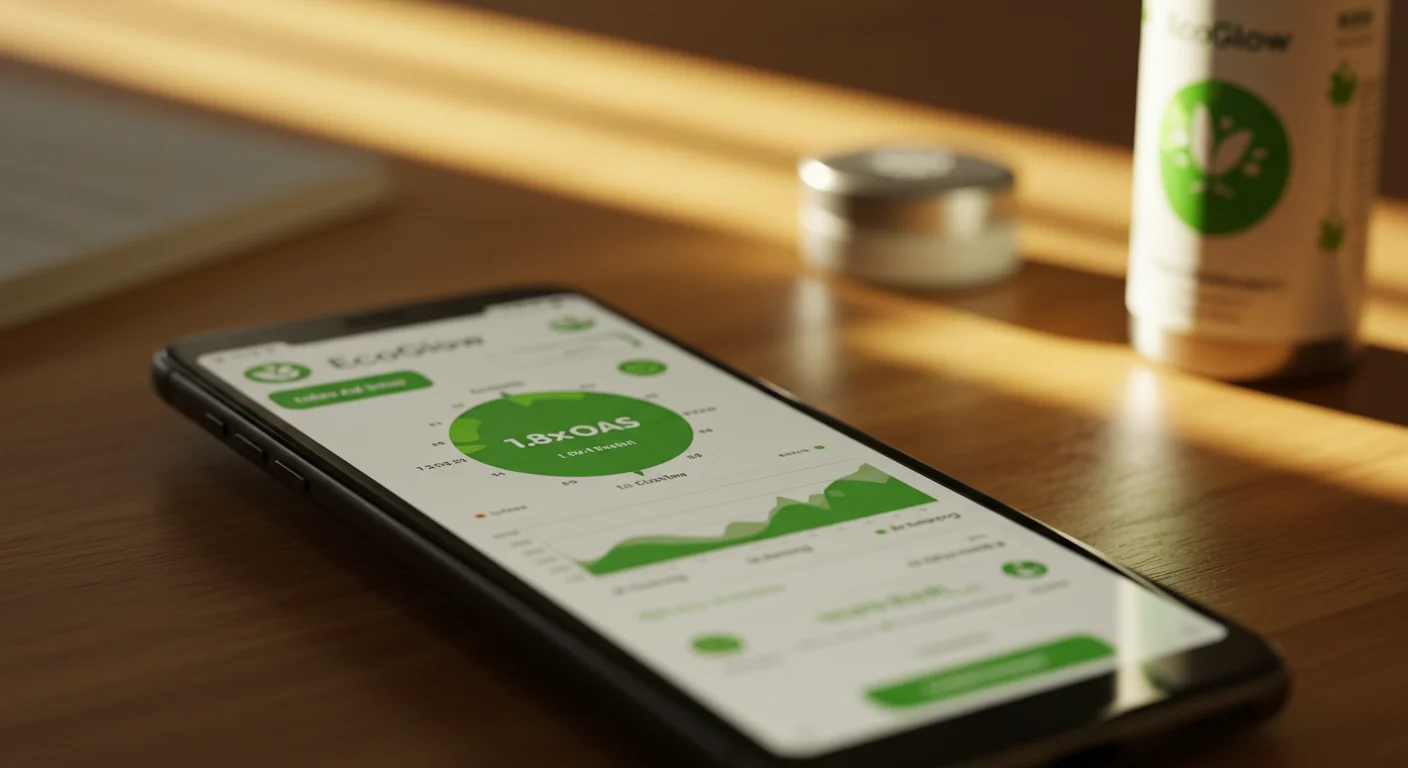
| Return On Ad Spend (ROAS) | 2.3x | 0.5x | 1.8x | 3.5x |
The overall ROAS of 2.3x was solid for a new product launch in a competitive niche. Our average order value (AOV) was $87, so a $40.18 CPC meant we were profitable. The CPL of $3.20 was also excellent, especially considering the quality of leads generated from our lookalike audiences.
What Worked Well:
- Lookalike Audiences: As mentioned, these were our workhorse. The 1% LLA on Meta, based on our pre-launch email list, delivered a CPL 30% lower than our broad interest targeting. This reinforces my long-held belief: quality first-party data is gold.
- Sequential Storytelling: Moving users through the funnel with different video creatives was highly effective. The awareness videos generated initial interest, the consideration videos built trust and educated, and the conversion videos closed the deal. We saw a 15% higher conversion rate from users exposed to all three video types compared to those who only saw conversion ads.
- Short-form Video Dominance: TikTok and YouTube Shorts, while a smaller portion of our budget, delivered surprisingly high engagement and low CPLs. TikTok, in particular, was a fantastic platform for generating leads at a CPL of $2.10.
- A/B Testing Thumbnails: This sounds minor, but it’s not. We ran continuous A/B tests on video thumbnails, particularly for the consideration and conversion ads. A specific thumbnail showing a clear product application led to a 2.5% higher CTR than a lifestyle shot. Don’t underestimate the power of that first impression!
What Didn’t Work (and Our Adjustments):
- Broad Interest Targeting on Meta: Initially, we allocated too much budget to broad interest groups. The CPL was acceptable, but the conversion rate was significantly lower. We quickly shifted budget towards our LLAs and retargeting segments within the first two weeks. My rule of thumb is this: if an ad set isn’t performing within its first 72 hours, it’s either the creative or the audience. Don’t let it bleed money.
- Overly Polished “Hero” Videos on TikTok: We tried one very high-production “hero” video on TikTok, thinking it would stand out. It flopped. The authentic, raw, UGC-style content performed far better. TikTok users crave relatability, not perfection. We paused that ad set and repurposed its budget.
- Generic CTAs: Our initial conversion ads used generic CTAs like “Shop Now.” After analyzing early data, we tested more specific ones like “Get Your Glow On” or “Discover Your Routine.” These performed marginally better, increasing CTR by about 0.3%. It’s a small win, but every bit counts.
Optimization Steps Taken
Our optimization process was continuous. We held daily stand-ups to review performance metrics. The video ads studio platform allowed for real-time adjustments, which is crucial. We didn’t wait for weekly reports; we were proactive.
- Daily Budget Reallocation: We constantly shifted budget from underperforming ad sets/creatives to top performers. For instance, by Week 3, 70% of our Meta budget was directed to LLA and retargeting campaigns.
- Creative Refresh: Every week, we introduced new variations of our best-performing creatives. We’d swap out intros, change music, or test different voiceovers. This combated ad fatigue, which can decimate CTR and CVR if left unchecked. Google Ads documentation explicitly recommends regular creative refreshes to maintain ad relevance and performance.
- Landing Page Optimization: We noticed a drop-off between click and conversion on certain product pages. Working with the client’s web team, we implemented A/B tests on product descriptions, adding more social proof and clearer benefit statements. This improved our conversion rate by an additional 0.5%.
- Audience Refinement: Beyond just shifting budget, we created micro-segments within our retargeting audiences. For example, people who viewed a specific product page but didn’t add to cart received ads highlighting that product’s unique benefits. This hyper-personalization can feel a bit like stalking, but it works!
One critical lesson I’ve learned over the years: never assume. Always test. I once had a client who was convinced their target audience wouldn’t respond to a certain type of humor in their ads. I pushed for a small test, and it ended up being their highest-performing creative for an entire quarter. Data doesn’t lie, even if your gut does sometimes.
This EcoGlow campaign demonstrated that with a strategic approach to video content, precise targeting, and rigorous optimization within a capable video ads studio environment, even a nascent brand can achieve impressive results. The key isn’t just creating pretty videos; it’s creating videos that perform, informed by data and refined through continuous testing.
Mastering video ads requires a blend of creative flair and analytical rigor. By meticulously dissecting campaign performance, iterating on what works, and swiftly cutting what doesn’t, you can achieve significant returns and build lasting brand connections. Focus on data-driven decisions and never stop testing your assumptions. To learn more about how AI can cut costs and boost engagement in your video campaigns, explore our latest insights.
What is a “video ads studio” in the context of marketing?
A video ads studio refers to a comprehensive platform or specialized workflow that allows marketers to create, manage, optimize, and analyze their video advertising campaigns with advanced features beyond standard ad managers. This often includes integrated tools for A/B testing creatives, detailed audience segmentation, real-time performance tracking, and automated budget allocation, providing deeper insights and greater control over campaign effectiveness.
Why are Lookalike Audiences so effective for video ad campaigns?
Lookalike Audiences (LLAs) are highly effective because they leverage your existing customer data (e.g., email lists, website visitors, high-value purchasers) to find new users who share similar characteristics and behaviors. This means your ads are shown to people who are already predisposed to be interested in your brand, leading to significantly higher engagement rates, lower costs per lead, and ultimately, better conversion rates compared to broad demographic or interest-based targeting.
How often should I refresh my video ad creatives to avoid “ad fatigue”?
The frequency of creative refreshes depends on your budget, audience size, and campaign duration, but a general rule of thumb is to introduce new variations every 1-2 weeks for active campaigns targeting the same audience. For larger audiences or awareness-focused campaigns, you might get away with 3-4 weeks. However, for smaller, highly targeted retargeting audiences, you might need to refresh as often as every 5-7 days. Monitoring your ad’s frequency metric and CTR is key to identifying when fatigue sets in.
What’s the most critical metric to track for a new product launch via video ads?
While ROAS (Return on Ad Spend) is the ultimate indicator of profitability, for a new product launch, I argue that Cost Per Conversion (CPC) and Conversion Rate (CVR) are the most critical. You need to quickly establish if your ad creative and landing page are effectively turning clicks into sales. If your CPC is too high or CVR too low, you’re bleeding money, even if your ROAS looks okay due to a high AOV. Fix those first, then scale.
Should I use professional studio-quality videos or more authentic, UGC-style content for my ads?
It’s not an either/or; it’s a strategic mix. For awareness and consideration phases, especially on platforms like TikTok and Instagram Reels, authentic, user-generated content (UGC) or content that mimics it often performs best due to its relatability and native feel. For conversion-focused ads or showcasing product features, high-quality, professional videos can build trust and demonstrate value effectively. My recommendation is to test both types and let the data guide your creative allocation. Often, a combination yields the best results.


