 By Ashley Price
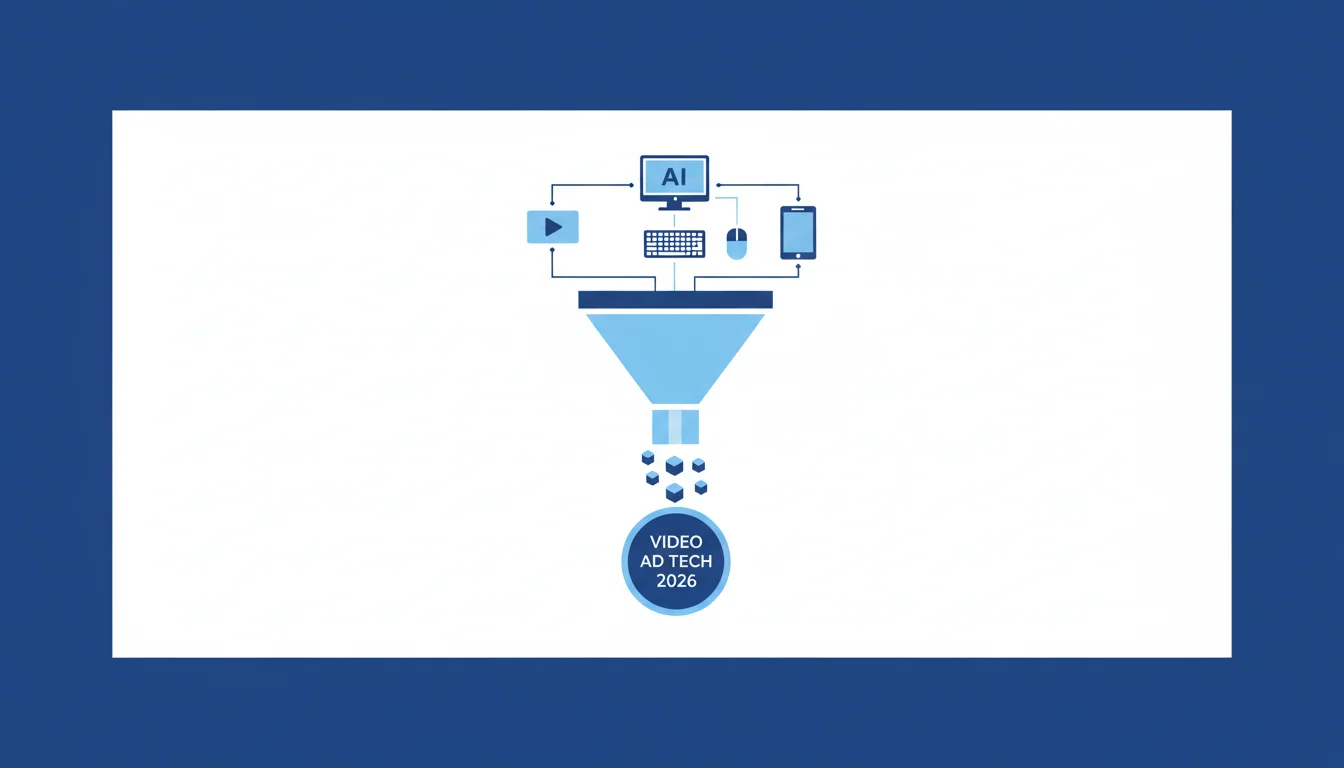
The year 2026 marks a significant inflection point for video advertising, where the integration of artificial intelligence is no longer an optional enhancement but a foundational element of platform design. AI-native platforms are redefining how advertisers conceive, create, and deploy video campaigns, moving beyond mere automation to truly intelligent systems that predict, adapt, and personalize at scale. This shift fundamentally alters the strategic calculus for brands seeking genuine engagement and measurable returns in a fragmented media field.
Key Takeaways
- Advertisers should prioritize video ad platforms that offer generative AI for creative asset production, reducing time-to-market by up to 70% for variant creation.
- Implement AI-driven predictive analytics within your video ad tech stack to forecast campaign performance with an average accuracy of 85% before significant budget allocation.
- Focus on platforms that provide real-time, AI-powered audience segmentation and dynamic content optimization, enabling hyper-personalization for individual viewer profiles.
- Ensure your chosen video ad platform integrates with first-party data sources to fuel AI models, enhancing targeting precision and compliance with evolving privacy regulations.
The Genesis of AI-Native Video Ad Platforms
For years, AI in advertising meant sophisticated bidding algorithms or basic audience segmentation. Today, the concept of AI-native platforms signifies a complete architectural overhaul, where AI is embedded at every layer, from initial ideation to post-campaign analysis. This isn’t just about adding AI features. It’s about building systems where the core logic and operational flow are inherently AI-driven. The shift began subtly around 2023, with early adopters experimenting with AI-assisted creative tools. By 2026, these capabilities are standard, and the platforms that don’t offer them are quickly becoming obsolete.
Consider the evolution of creative production. Historically, producing multiple video ad variants for A/B testing was a resource-intensive endeavor, requiring significant budget and time for filming, editing, and localization. Now, AI-native platforms like Synthesys AI Studio or RunwayML allow marketers to generate dozens, if not hundreds, of unique video ad creatives from a single prompt or base asset. This includes variations in voiceovers, background music, on-screen text, and even actor appearances. According to a 2025 IAB report on AI in Marketing, companies using generative AI for video ad creation reported an average 60% reduction in production cycles for campaign iterations.
Beyond Automation: Predictive Analytics and Dynamic Optimization
The true power of AI-native platforms lies in their predictive capabilities. We’re talking about algorithms that can forecast campaign success metrics with startling accuracy before a single dollar is spent. These models ingest historical campaign data, market trends, audience behavior patterns, and even external factors like economic indicators or seasonal events. For instance, a platform might predict that a specific video creative targeting Gen Z in urban centers of the Southeast United States will achieve a 1.8% click-through rate and a 0.07% conversion rate, with a 90% confidence interval, based on millions of comparable past impressions.
This level of foresight allows advertisers to refine their strategies proactively, rather than reactively. Platforms such as Google Ads (which has significantly enhanced its AI capabilities for video in 2026) now offer “pre-flight simulations” for video campaigns. These simulations analyze proposed budget allocations, targeting parameters, and creative assets against predicted market responses, providing a risk assessment and projected ROI. This isn’t just a nice-to-have. It’s becoming a mandatory step for major brand advertisers who cannot afford to waste ad spend on unproven strategies. The ability to dynamically optimize content in real-time is equally far-reaching. Imagine a video ad that subtly alters its opening hook, call-to-action, or even the product shown, based on the viewer’s immediate demographic, browsing history, or even their current mood as inferred by AI. This isn’t science fiction anymore. It’s happening. Platforms achieve this through modular creative assets and sophisticated decisioning engines that serve the most relevant component in milliseconds.
Hyper-Personalization and Audience Segmentation
The promise of hyper-personalization has been a long-standing goal in advertising, but AI-native video platforms are finally delivering it at scale. Traditional audience segmentation, often based on broad demographics or interests, feels primitive compared to the granular insights AI now provides. These platforms create highly dynamic, micro-segments based on a vast array of data points: online behavior, purchase history, geographic location, device usage, time of day, and even inferred psychological states. A 2025 eMarketer report highlighted that advertisers using AI for advanced audience segmentation saw a 25% improvement in ad relevance scores and a 15% increase in conversion rates for video campaigns.
Consider a retail brand advertising a new line of athletic wear. An AI-native platform might identify a segment of users who frequently watch fitness content, live within five miles of a specific boutique in downtown Atlanta’s West Midtown district, have previously purchased similar items online, and are currently browsing during their lunch break. For this segment, the platform could serve a video ad featuring a local Atlanta influencer wearing the new gear, highlighting its suitability for urban workouts, and offering a geo-fenced discount code redeemable at the West Midtown location. This level of specificity is impossible without sophisticated AI processing massive datasets in real-time. The ethical implications, of course, are a constant consideration. Platforms must balance personalization with privacy, often relying on aggregated, anonymized data and adhering strictly to regulations like GDPR and CCPA. The industry’s best platforms are building privacy-by-design into their AI models, ensuring compliance is baked in, not bolted on.
The Evolution of Ad Tech Stacks and Integrations
The emergence of AI-native video ad platforms necessitates a re-evaluation of existing ad tech stacks. Advertisers are no longer looking for point solutions. They demand integrated ecosystems where AI is the connective tissue. This means smooth data flow between customer relationship management (CRM) systems, demand-side platforms (DSPs), supply-side platforms (SSPs), and measurement tools. The proprietary walled gardens are still formidable, but the industry is seeing a push towards more open APIs and data interoperability.
For example, a brand might use an AI-powered creative generation tool that integrates directly with their chosen DSP. The DSP’s AI then optimizes placement and bidding, while real-time analytics from a third-party measurement partner (also AI-enhanced) feed back into the system to refine future campaign parameters. This continuous feedback loop is critical. The integration of first-party data is paramount here. With the continued deprecation of third-party cookies, platforms that can effectively ingest and activate a brand’s own customer data through AI models will win. This allows for even more precise video ad targeting and personalization, reducing reliance on less accurate, broader data segments. My professional experience suggests that advertisers who invested early in strong first-party data strategies are now reaping significant benefits, seeing higher ROAS (Return on Ad Spend) and more resilient campaign performance in a privacy-centric world.
One challenge, though, is the sheer complexity. Managing these interconnected AI systems requires specialized talent. Data scientists, AI ethicists, and prompt engineers are becoming indispensable roles within marketing teams. It’s not enough to simply license an AI-native platform. You need the internal expertise to configure, train, and interpret its output effectively. Without that, you’re just buying sophisticated black boxes.
Measuring Success in an AI-Driven Field
Measuring the success of video ad campaigns has also undergone a transformation. While traditional metrics like impressions, clicks, and conversions remain relevant, AI-native platforms introduce more nuanced and predictive indicators. We’re seeing a greater emphasis on metrics like attention span, emotional response (inferred from viewing patterns and sentiment analysis of related social media discussions), and even the long-term brand lift attributable to specific creative elements. Platforms are using AI to analyze video heatmaps, track gaze patterns, and correlate these with brand recall and purchase intent. This goes far beyond simple viewability.
Plus, attribution models are becoming significantly more sophisticated. Multi-touch attribution, once a complex and often imprecise endeavor, is now enhanced by AI that can weigh the influence of various touchpoints across the customer journey with greater accuracy. This helps advertisers understand the true incremental value of their video ad spend, rather than relying on last-click models. According to Nielsen’s 2025 Future of Media Measurement report, AI-powered attribution models are projected to reduce marketing waste by an additional 10-15% for enterprise-level advertisers over the next two years. The future of video ad measurement is not just about counting. It’s about understanding the qualitative impact and predicting future outcomes with data-driven precision.
The evolution towards AI-native video ad platforms represents a fundamental shift, demanding both technological adoption and a strategic rethinking of marketing operations. Brands that embrace these capabilities will gain a significant competitive edge, delivering highly personalized, impactful campaigns that resonate deeply with their target audiences.
What defines an “AI-native” video ad platform in 2026?
An AI-native video ad platform is designed from the ground up with artificial intelligence embedded at its core, driving every function from creative generation and audience segmentation to real-time optimization and predictive analytics, rather than simply adding AI as an optional feature.
How does generative AI impact video ad creative production?
Generative AI significantly accelerates video ad creative production by allowing marketers to quickly generate numerous variations of video ads, including different voiceovers, music, text overlays, and visual elements, from minimal input, drastically reducing time and cost compared to traditional methods.
What are “pre-flight simulations” in the context of video ad campaigns?
Pre-flight simulations are AI-powered tools within video ad platforms that analyze proposed campaign parameters (budget, targeting, creative) against historical data and market trends to predict potential performance, identify risks, and project ROI before the campaign launches.
How do AI-native platforms enhance audience targeting?
AI-native platforms enhance audience targeting by creating dynamic, granular micro-segments based on extensive real-time data, including online behavior, purchase history, and inferred psychological states, enabling hyper-personalized ad delivery beyond broad demographic categories.
Why is first-party data important for AI-driven video advertising?
First-party data is important because it provides proprietary, high-quality customer insights that fuel AI models for more precise targeting, personalization, and compliance with privacy regulations, especially as third-party cookies become obsolete.


