 By Editorial Team
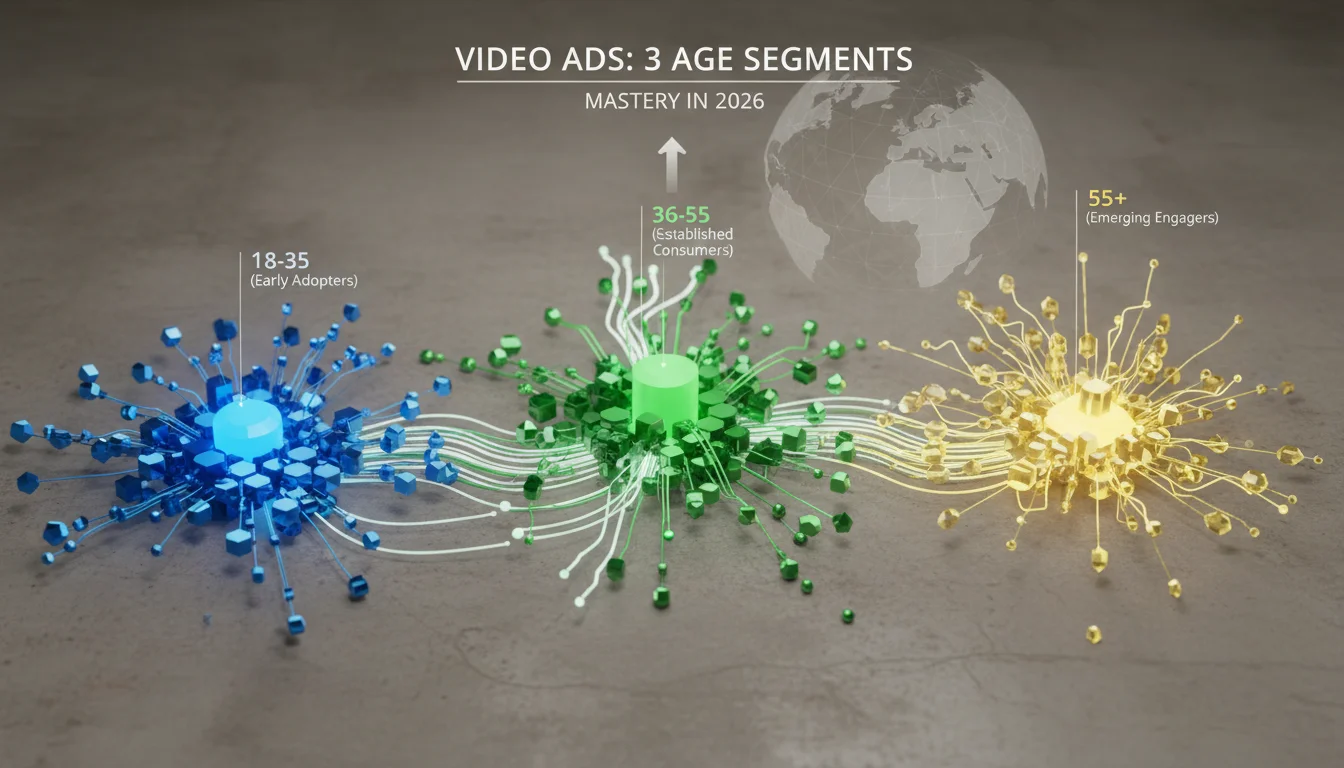
Mastering demographic targeting for video ads is no longer optional; it’s the bedrock of effective digital marketing. In an era saturated with content, simply producing a great video isn’t enough; you must ensure it lands squarely in front of the right eyes. But how do you precisely segment your audience to connect with the right age group?
Key Takeaways
- Implement a minimum of three distinct age-based audience segments for every video ad campaign to avoid generic targeting.
- Allocate at least 20% of your video ad budget to testing creative variations specifically designed for each age demographic.
- Utilize detailed platform analytics (e.g., Google Ads Audience Insights, Meta Audience Insights) to uncover hidden demographic overlaps and exclusions.
- Prioritize mobile-first video ad creative for audiences under 35, as over 70% of their video consumption occurs on smartphones, according to a 2025 Nielsen report.
- Set up conversion tracking specific to each age segment to measure not just views, but actual business outcomes like purchases or sign-ups.
The Imperative of Age-Based Segmentation in Video Advertising
I’ve seen countless campaigns flounder because marketers treated all “adults” as a monolithic block. That’s a rookie mistake, frankly. The truth is, a 20-year-old’s media consumption habits, purchasing power, and even attention span are vastly different from a 50-year-old’s. Ignoring these distinctions in your video ads strategy is like throwing darts blindfolded and hoping for a bullseye. You might get lucky, but it’s not a sustainable approach.
Our goal with audience segmentation is precision. We want to show a Gen Z’s TikTok-style ad to Gen Z, a more polished, narrative-driven piece to Millennials, and perhaps a value-focused testimonial to Gen X or Boomers. Each generation has its own digital native language, and if you’re not speaking it, you’re just noise. According to a 2025 eMarketer report, personalized ad experiences are 80% more likely to drive conversions than generic ones, with age being a primary personalization factor. This isn’t just about making people feel seen; it’s about driving tangible results.
Consider a client I worked with last year, a regional sporting goods retailer. They were running a single video ad across all demographics promoting a new line of athletic wear. Their initial results were abysmal. When I dug into their Google Ads data, it was clear: their ad, featuring a group of young, extreme sports enthusiasts, resonated with 18-24 year olds but actively alienated their 45-60 year old segment, who were more interested in comfortable walking shoes. We split their budget, created two distinct video creatives, and within three weeks, their conversion rate for the younger demographic jumped by 40%, and the older segment, now seeing an ad tailored to them, saw a 25% increase in store visits. This isn’t rocket science; it’s just paying attention to who you’re talking to.
Understanding Generational Media Consumption Patterns
To effectively target by age, you must first grasp how different generations consume video content. This isn’t static; it evolves year by year. For instance, the rise of short-form video platforms has fundamentally reshaped how younger audiences interact with ads. They expect immediate value, authenticity, and often, a touch of humor or relatable content. Anything that feels too “produced” or overly salesy gets scrolled past in milliseconds. My team has found that for younger demographics, unpolished, user-generated style content often outperforms slick, high-budget productions. It’s counterintuitive to some older marketers, but it’s the reality of 2026.
On the other hand, older demographics, while increasingly digital, still appreciate a clear message, strong value proposition, and often, a slightly longer format that allows for more detailed information. They are less likely to be swayed by fleeting trends and more by established trust and genuine utility. A recent IAB report on digital video consumption from 2025 highlights a significant divergence: 18-34 year olds spend nearly 70% of their video time on social platforms, while 55+ audiences split their time more evenly between traditional streaming services and social media. This data should inform not just your creative, but your platform selection too.
We absolutely need to consider the device. Mobile-first strategies are no longer just for young people. Everyone uses their phone, but the way they use it differs. Gen Z and Millennials are almost exclusively on mobile for video consumption, meaning vertical video, fast cuts, and clear calls to action are paramount. For Gen X and Boomers, while mobile is significant, desktop and smart TVs still play a larger role. This means your ad creative must be adaptable, or better yet, purpose-built for the primary viewing device of your target age group. Trying to shoehorn a horizontal desktop ad onto a vertical mobile feed for a Gen Z audience is a recipe for wasted ad spend. Trust me, I’ve seen it happen. It looks terrible and performs even worse.
Practical Strategies for Age-Specific Video Ad Targeting
Now, let’s get down to the brass tacks: how do you actually implement this? It starts with your ad platform. Whether you’re using Google Ads, Meta Business Suite, or programmatic platforms, the capabilities for demographic targeting are robust. You can specify age ranges, often in 5 or 10-year increments (e.g., 18-24, 25-34, 35-44, etc.). My advice? Don’t lump too many age groups together. Be granular. I typically recommend creating separate ad sets for each major generational cohort you’re trying to reach.
Within each age-specific ad set, you then layer on other targeting parameters: interests, behaviors, custom audiences, and even geographic location. For example, if you’re targeting 18-24 year olds for a concert series in Atlanta, you might target “18-24,” “music festivals,” “live events,” and “within 50 miles of downtown Atlanta.” For a 45-54 year old audience for a financial planning service, you’d target “45-54,” “investment,” “retirement planning,” and potentially “high-net-worth individuals.” The key is to build a detailed persona for each age group and then translate that into platform settings.
A Concrete Case Study: The “Home Comfort” Campaign
A few months ago, my team developed a campaign for a smart home technology company. Their product, a voice-activated thermostat, appealed to a wide range. Instead of one ad, we crafted three distinct video creatives and corresponding targeting strategies:
- Audience: 25-34 (Millennials)
- Video Creative: A fast-paced, visually appealing 15-second ad showcasing convenience, integration with other smart devices, and energy savings for a young, busy family. It featured a diverse couple effortlessly managing their home.
- Targeting: Age 25-34, parents, homeowners, interests in “smart home technology,” “eco-friendly living,” “productivity apps.” Placed primarily on Instagram Reels and YouTube Shorts.
- Outcome: This segment saw a 2.8% click-through rate (CTR) and a cost-per-acquisition (CPA) of $45 for product sign-ups.
- Audience: 45-54 (Gen X)
- Video Creative: A 30-second ad focusing on comfort, ease of use (voice commands), and long-term cost savings. It featured a slightly older couple enjoying a cozy, perfectly climate-controlled home without fuss.
- Targeting: Age 45-54, homeowners, interests in “home improvement,” “energy efficiency,” “retirement planning.” Primarily on YouTube pre-roll and Facebook video feeds.
- Outcome: This segment achieved a 1.9% CTR and a CPA of $58, indicating a slightly longer sales cycle but strong intent.
- Audience: 60+ (Boomers)
- Video Creative: A calmer, 45-second ad emphasizing simplicity, reliability, and peace of mind. It showed a single older individual easily interacting with the device, highlighting clear text and simple instructions.
- Targeting: Age 60+, homeowners, interests in “senior living,” “home safety,” “comfort.” Placed on Facebook and specific news/lifestyle websites via programmatic buys.
- Outcome: While CTR was lower at 1.2%, the CPA was competitive at $62, and post-purchase surveys indicated higher satisfaction with the product’s ease of use, validating the targeted message.
This multi-pronged approach, specifically tailoring creative and targeting to age demographics, led to an overall campaign CPA that was 20% lower than their previous, untargeted efforts. It proves that a little extra effort in segmentation pays dividends.
“The result was a 28% higher form submission rate and an 11% lower cost per acquisition than previous campaigns. The quiz also had a 133% higher landing page load-and-finish rate, meaning far fewer people abandoned the quiz partway through.”
The Pitfalls of Over-Generalization and How to Avoid Them
The biggest trap in demographic targeting is thinking “close enough” is good enough. It’s not. I’ve seen marketers target “18-65+” because they believe their product appeals to everyone. That’s a surefire way to dilute your message and waste your budget. You simply cannot speak to a teenager and a retiree with the same tone, visuals, and call to action effectively. Your message becomes generic, forgettable, and ultimately, ineffective.
Another common mistake is relying solely on age. While age is a powerful primary filter, it’s rarely sufficient on its own. You need to combine it with other data points. A 30-year-old single professional in a downtown high-rise has different needs and desires than a 30-year-old parent in the suburbs. Both are 30, but their lives, and therefore their receptiveness to certain ads, are vastly different. Always layer interests, behaviors, and even life events onto your age targeting. Platforms like Google Ads provide incredible data through their Audience Insights, allowing you to see what other interests your age-defined audience segments have. Using these insights is non-negotiable for precise targeting.
Furthermore, don’t neglect negative targeting. Just as important as knowing who you want to reach is knowing who you don’t want to reach. If your product is explicitly for adults over 21, ensure your ad platform settings reflect that. While platforms have built-in safeguards, a double-check can prevent accidental ad serving to irrelevant or ineligible audiences, saving you money and maintaining brand integrity. This also applies to income levels; if your product is high-end, you absolutely should exclude lower income brackets. It sounds harsh, but it’s fiscally responsible marketing.
Measuring Success and Iterating Your Age-Targeted Campaigns
Finally, none of this matters if you’re not measuring. For every age-specific ad set, you need dedicated conversion tracking. This means unique landing pages, UTM parameters, or pixel events that attribute actions back to the specific age group that saw the ad. Don’t just look at views or clicks; look at what really matters: leads, sales, sign-ups, or app downloads. A high view count from an irrelevant age group is a vanity metric, not a business outcome.
I always advise my clients to run A/B tests within each age segment. For instance, for your 25-34 demographic, test two different video creatives. Does a testimonial perform better than a product demo? Does a shorter ad outperform a slightly longer one? Data-driven iteration is how you refine your campaigns and continuously improve your return on ad spend. The digital advertising landscape changes constantly, and what worked last quarter might not work this quarter. Stay agile, pay attention to your metrics, and don’t be afraid to pivot. The platforms provide the data; it’s up to us to interpret and act on it. A 2025 HubSpot report on video marketing trends specifically noted that advertisers who regularly A/B tested their video creative saw an average of 15% higher conversion rates.
My editorial take? Too many marketers set up a campaign and walk away. That’s a recipe for mediocrity. The real magic happens in the daily, weekly, and monthly analysis and adjustment. Look at your cost per conversion for each age group. If one group is consistently underperforming, either your creative isn’t resonating, or your targeting is off. Don’t be precious about your initial ideas; let the data guide you to what actually works.
Effective demographic targeting in video advertising, particularly focusing on age, is a powerful differentiator in a crowded digital space. By understanding generational nuances, crafting tailored creative, and rigorously measuring results, marketers can ensure their video messages resonate deeply and drive meaningful business outcomes.
Why is age such a critical factor in video ad targeting?
Age is critical because it strongly correlates with media consumption habits, cultural references, purchasing power, and communication preferences, meaning a single video ad rarely resonates equally across all age groups. Tailoring content to specific age demographics significantly increases relevance and engagement.
What are the main differences in video consumption between younger and older demographics?
Younger demographics (Gen Z, Millennials) tend to prefer short-form, authentic, mobile-first video content on social platforms like Instagram Reels and TikTok. Older demographics (Gen X, Boomers) often engage with slightly longer, more informative videos on platforms like YouTube, Facebook, and streaming services, and may still view content on desktop or smart TVs more frequently.
How granular should my age targeting be for video ads?
I strongly recommend creating distinct ad sets for major generational cohorts or even narrower 5-10 year age bands (e.g., 18-24, 25-34, 35-44) rather than broad ranges like “18-65+”. This allows for highly customized creative and messaging that performs better.
Can I just rely on the ad platform’s automatic age targeting features?
While platforms offer automated targeting, relying solely on them is insufficient. You should always manually refine age ranges, layer on additional demographic and interest targeting, and critically, monitor performance to make manual adjustments. Automation is a starting point, not a complete solution.
What metrics should I prioritize when evaluating age-targeted video ad performance?
Beyond views and clicks, focus on conversion metrics like cost-per-acquisition (CPA), conversion rate, and return on ad spend (ROAS) for each age segment. These metrics directly reflect business outcomes and indicate whether your age-specific targeting is truly effective.


