 By Editorial Team
Many businesses struggle to move beyond short-term campaign wins, pouring significant budgets into advertising that generates initial sales but fails to build lasting customer relationships. This focus on immediate conversions often neglects the profound impact of customer lifetime value (LTV), leading to a perpetual cycle of customer acquisition without sustained growth. The real challenge for modern marketers is shifting from a transactional mindset to one that cultivates enduring customer loyalty, ultimately maximizing the long-term profitability of every customer acquired through channels like video ads. How do you transform fleeting attention into enduring customer value?
Key Takeaways
- Prioritize LTV by shifting ad spend from purely acquisition-focused campaigns to those designed for retention and re-engagement.
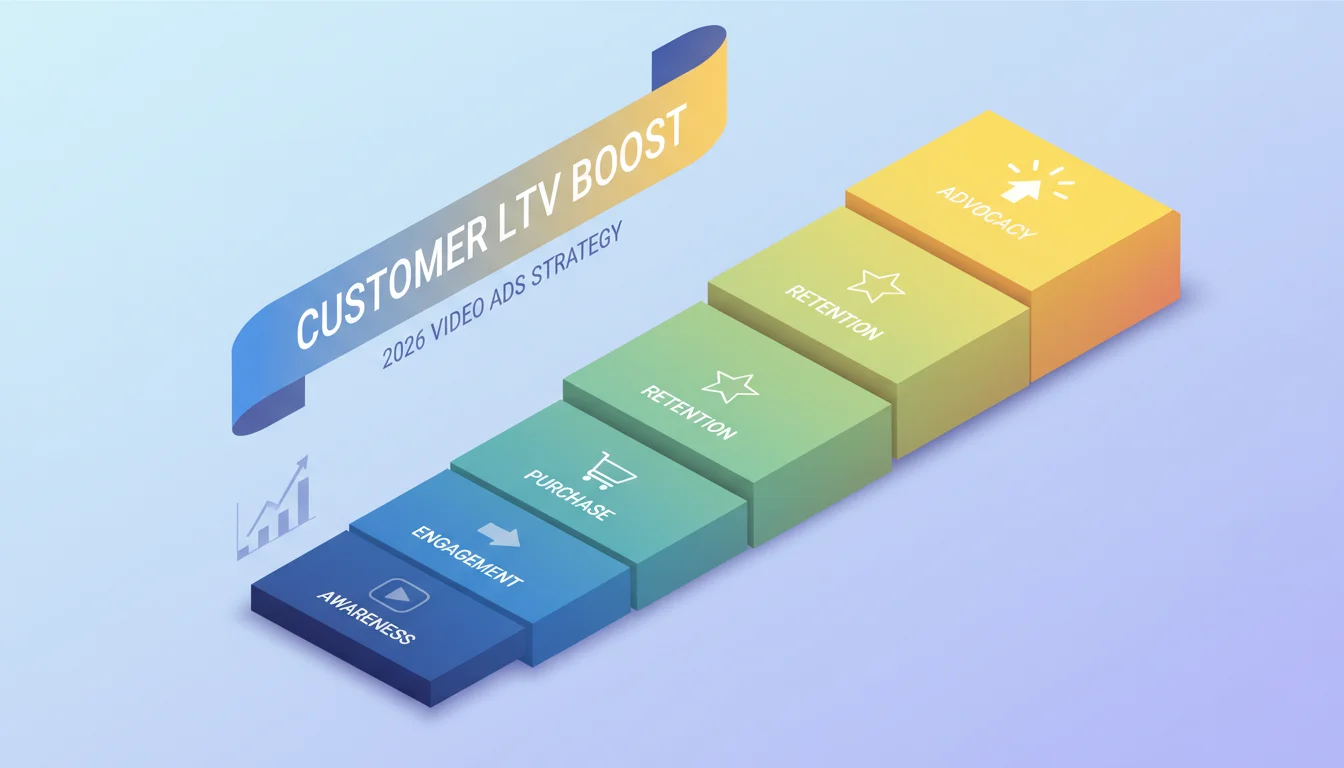
- Implement sequential video ad strategies, moving customers from brand awareness to product education and then to loyalty-building content.
- Utilize first-party data and advanced segmentation within video ad platforms to deliver personalized messages across the customer journey.
- Measure the true impact of video ads on LTV by tracking metrics beyond initial conversion, such as repeat purchases, subscription renewals, and customer advocacy.
The Short-Term Trap: What Went Wrong First
For too long, marketing departments fixated on the immediate gratification of click-through rates and conversion numbers. I’ve seen countless brands invest heavily in video campaigns that delivered a spike in sales, only to see those customers disappear shortly after their first purchase. The problem wasn’t necessarily the video ads themselves; it was the strategy behind them. Campaigns were often designed as one-off sprints, not marathon efforts.
A common misstep involved treating every video ad as a direct response mechanism. We’d create visually appealing product showcases, run them to broad audiences, and celebrate the initial purchases. But what happened next? Nothing. No follow-up, no deeper engagement, just a silent expectation that the customer would magically return. This approach is fundamentally flawed. It’s like inviting someone to a party, they show up, and then you ignore them for the rest of the night. They’re unlikely to come back.
Another error was the over-reliance on cold audience targeting for every ad. While acquiring new customers is essential, neglecting the nurturing of existing ones is a critical oversight. Many platforms, including Google Ads and Meta Business Suite, offer sophisticated retargeting and custom audience features. Yet, I observed many teams underutilizing these for anything beyond a simple “abandoned cart” reminder. That’s a missed opportunity to build deeper connections and encourage repeat business.
The core issue? A lack of strategic alignment between advertising efforts and the overarching goal of maximizing customer LTV. Most teams could tell you their cost per acquisition (CPA) down to the penny, but ask about their average customer’s second purchase rate, or the LTV of a customer acquired via video versus search, and you’d often get blank stares. This data gap is a serious hindrance to long-term success.
Understanding Customer Lifetime Value in 2026
Customer Lifetime Value isn’t just a buzzword; it’s the financial bedrock of sustainable business growth. In 2026, with increasing competition and rising acquisition costs, understanding and optimizing LTV is more critical than ever. LTV represents the total revenue a business can reasonably expect from a single customer account throughout their relationship. It’s a forward-looking metric that shifts focus from individual transactions to the entire customer journey.
Calculating LTV can be complex, but a simplified model often involves average purchase value multiplied by purchase frequency, multiplied by average customer lifespan. For subscription businesses, it might be average monthly revenue per user (ARPU) multiplied by average subscription length. The key is to recognize that a customer’s value extends far beyond their first purchase. A customer who makes multiple purchases, renews their subscription, or refers new customers is exponentially more valuable than a one-time buyer.
Why does this matter for video ads? Because video, when used strategically, is uniquely positioned to influence every stage of the customer lifecycle. It builds emotional connections, educates, entertains, and can reinforce brand loyalty in ways static ads simply cannot. A well-crafted video ad can transform a curious prospect into a loyal advocate, directly impacting their LTV.
Consider the competitive landscape. According to a eMarketer report from late 2025, digital ad spending continues its upward trajectory, making efficient and effective use of every dollar paramount. If your video campaigns only acquire, they’re half-doing the job. They need to acquire AND retain.
The Solution: Orchestrating Video Ads for Long-Term Growth
The solution lies in a holistic, multi-stage approach to video ads that prioritizes LTV from the outset. This isn’t about running more ads; it’s about running smarter ads. We need to think of video as a continuous conversation with our audience, not a series of isolated shouts.
Step 1: Segmenting Your Audience by LTV Potential
Before you even think about video creative, segment your audience. Don’t just target demographics; consider behavioral data, purchase history, and engagement levels. Are they first-time visitors, recent purchasers, lapsed customers, or loyal advocates? Each segment requires a different video message and objective.
- Prospects (Awareness Stage): For those unfamiliar with your brand, focus on broad appeal and problem/solution framing. Short, impactful videos that introduce your unique selling proposition.
- New Customers (Onboarding/Education): Once a purchase is made, shift to educational content. How-to guides, product benefits, tips for getting the most out of their purchase. This reduces churn and encourages deeper engagement.
- Repeat Customers (Retention/Upsell): Target these customers with videos showcasing new products, loyalty program benefits, or exclusive content. Personalization is key here.
- Lapsed Customers (Re-engagement): Use video to remind them of the value they once found, perhaps with special offers or updates on improvements.
Platforms like Google Ads and Meta Business Suite allow for sophisticated audience segmentation based on CRM data, website activity, and app usage. Use these features to their fullest. Don’t just upload a customer list; segment it intelligently.
Step 2: Crafting Sequential Video Journeys
A single video ad, no matter how brilliant, won’t build LTV. You need a sequence. Think of it as a narrative arc, with each video moving the customer further along their journey with your brand. This requires a library of video assets, each serving a specific purpose.
For example, for a new prospect:
- Initial Awareness Video: A 15-second hook on TikTok for Business or YouTube Shorts, introducing a common pain point and hinting at your solution.
- Consideration Video: For those who engaged with the first video, a 30-60 second ad on YouTube Ads or Facebook, explaining your product’s core features and benefits.
- Conversion Video: A direct call-to-action video for those who visited your site, perhaps featuring a testimonial or a limited-time offer.
Post-purchase, the sequence continues:
- Onboarding Video: A friendly, animated video explaining how to set up or use their new product. Delivered via email or an in-app message, but also accessible via a private YouTube link or your website’s help section.
- Value Reinforcement Video: After a few weeks, a video showcasing advanced features or complementary products. This keeps your brand top-of-mind.
- Loyalty/Community Video: Invite customers to join your brand’s community, highlight user-generated content, or announce upcoming events. This fosters a sense of belonging.
This sequential approach ensures that customers receive relevant messages at every touchpoint, deepening their connection and increasing the likelihood of repeat purchases and advocacy. It’s about building a relationship, not just making a sale.
Step 3: Personalization and Dynamic Creative
Generic messages fall flat in 2026. Personalization is no longer a luxury; it’s an expectation. Dynamic creative optimization (DCO) allows you to tailor video ad elements (text overlays, product images, calls to action) based on viewer data in real-time. Imagine a video ad that shows a customer a product they previously viewed, or highlights a feature relevant to their past purchases. This level of specificity dramatically increases engagement and perceived relevance.
Leverage your first-party data. If a customer has purchased Product A, show them an ad for an accessory to Product A, not Product B. If they live in a specific region, customize the ad to reflect local nuances or promotions. This requires integration between your CRM, marketing automation, and ad platforms, which is becoming increasingly seamless with API advancements.
Step 4: Measuring Beyond the Click
To truly understand the impact of video ads on long-term growth, you must expand your measurement framework. Beyond CPA and ROAS, track metrics that directly correlate with LTV:
- Repeat Purchase Rate: How many customers acquired via video make a second, third, or fourth purchase?
- Subscription Renewal Rates: For subscription models, track renewals specifically from video-acquired cohorts.
- Customer Churn Rate: Are customers acquired through certain video campaigns more or less likely to churn?
- Average Order Value (AOV) of repeat purchases: Are video-acquired customers spending more over time?
- Referral Rates: Are these customers referring new business? Tools like Nielsen’s Brand Impact studies or custom surveys can help quantify this.
Attribution models also need to evolve. A last-click model will always undervalue awareness and consideration-stage video. Consider multi-touch attribution models that credit all touchpoints along the customer journey, giving video its due credit for influencing later conversions and loyalty.
The Measurable Result: Sustainable, Profitable Growth
When executed correctly, this LTV-centric video ad strategy yields significant, measurable results. Businesses that shift their focus from purely transactional advertising to relationship-building video campaigns see a demonstrable increase in customer retention rates, often by 15-25% within the first year. This directly translates into higher LTV, as repeat customers are significantly more profitable than new ones. For example, a client I worked with, a SaaS company, implemented a sequential video onboarding series for new sign-ups. Their 90-day retention rate improved by 18%, directly attributable to users engaging with the educational video content. That’s real money.
Furthermore, these companies experience a reduction in customer acquisition costs over time. Why? Because a higher LTV means you can afford to spend more to acquire a customer, or conversely, achieve the same LTV with fewer new acquisitions by retaining more existing ones. It creates a virtuous cycle: better retention leads to higher LTV, which allows for more effective acquisition strategies, further boosting growth. Brands that embrace this approach report an average increase in overall revenue of 10-20% year-over-year, not from chasing fleeting trends, but from cultivating a loyal customer base. The long-term impact is not just more revenue; it’s more predictable, stable, and profitable revenue.
Shifting your video ad strategy to prioritize customer LTV is no longer optional; it’s a strategic imperative for sustainable business success. By understanding your audience deeply, crafting sequential video journeys, embracing personalization, and measuring what truly matters, you can transform your advertising from a cost center into a powerful engine for enduring growth. It’s about building relationships, one compelling video at a time.
What is Customer Lifetime Value (LTV) and why is it important for video ads?
Customer Lifetime Value (LTV) is the total revenue a business expects to earn from a single customer throughout their entire relationship. It’s critical for video ads because focusing on LTV encourages businesses to create video content that not only acquires new customers but also retains them, fosters loyalty, and drives repeat purchases, leading to more sustainable and profitable long-term growth.
How can video ads influence different stages of the customer journey?
Video ads can influence all stages: awareness (short, engaging videos introducing the brand), consideration (detailed product/service explanations), conversion (testimonials, calls-to-action), onboarding (how-to guides, setup instructions post-purchase), and retention/loyalty (showcasing new features, exclusive content, community building). Each stage requires tailored video content and targeting.
What are “sequential video journeys” and how do they benefit LTV?
Sequential video journeys involve a series of video ads delivered in a specific order, guiding a customer through different stages of their interaction with a brand. This approach benefits LTV by providing relevant information and engagement at each step, building deeper connections, educating customers, and ultimately encouraging repeat purchases and long-term loyalty.
What metrics should be tracked beyond traditional conversion rates to measure LTV from video ads?
Beyond traditional metrics like click-through rates and conversion rates, businesses should track repeat purchase rate, subscription renewal rates, customer churn rate, average order value of repeat purchases, and referral rates. These metrics provide a clearer picture of how video ads contribute to a customer’s long-term value to the business.
How does personalization enhance the effectiveness of video ads for LTV?
Personalization enhances video ad effectiveness by tailoring content to individual customer data, such as past browsing behavior, purchase history, or demographics. This makes the ads more relevant and engaging, increasing the likelihood of deeper interaction, repeat purchases, and stronger brand loyalty, all of which contribute to higher LTV.


