 By Editorial Team
Key Takeaways
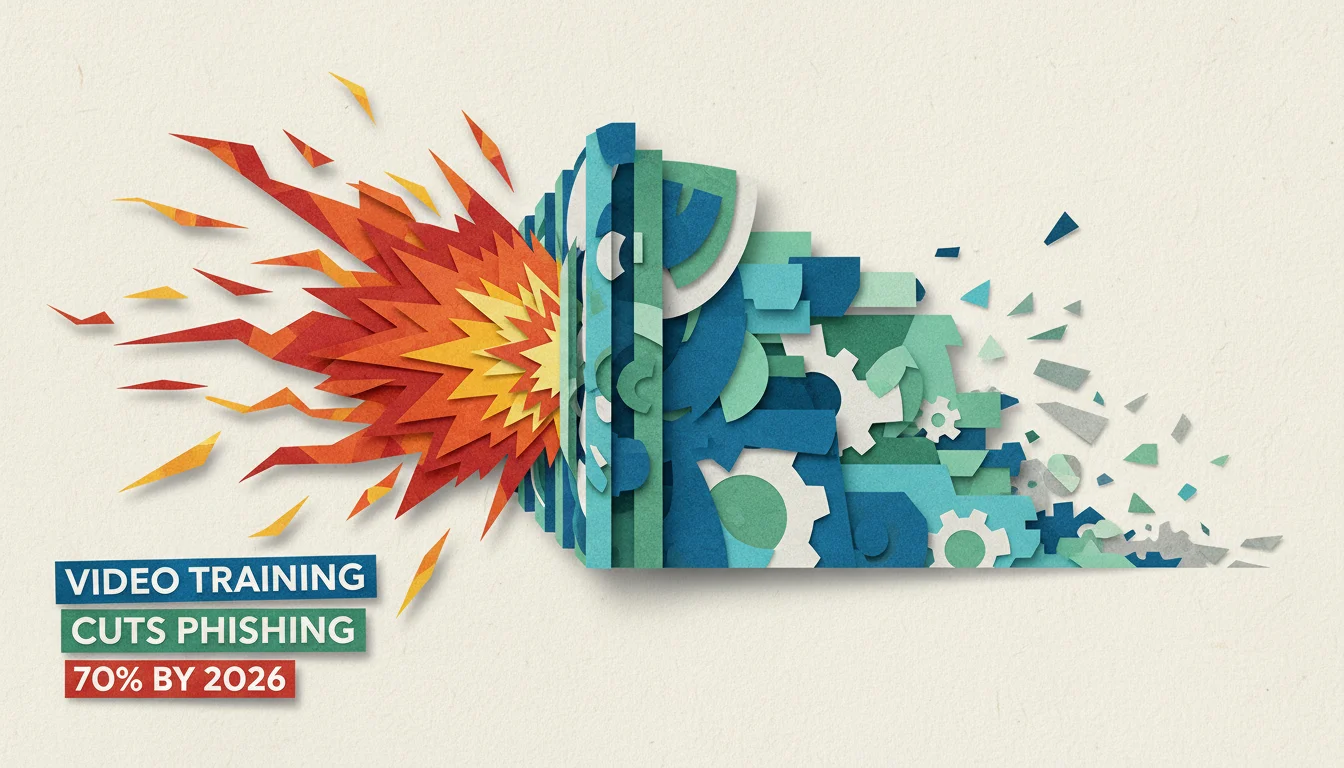
- Organizations that implement regular cybersecurity awareness training see a 70% reduction in successful phishing attacks within one year, demonstrating the direct impact of proactive education.
- Interactive video ads, when integrated into B2B content strategies, achieve an average click-through rate 3.5 times higher than static image ads in cybersecurity campaigns.
- Companies that invest in employee training video content report a 25% increase in employee retention for IT and security roles, indicating a positive correlation between training and job satisfaction.
- A recent study found that only 35% of employees can correctly identify common social engineering tactics without prior training, underscoring a significant knowledge gap that video training can address.
- Integrating short, scenario-based video modules into quarterly training reduces the average time spent on incident response by 15%, translating directly to operational efficiency and cost savings.
Despite significant advancements in security technology, human error remains the single largest vulnerability in organizational cybersecurity. In fact, a 2023 IBM report revealed that human error contributed to 82% of all data breaches. This staggering figure confirms that even the most sophisticated firewalls and intrusion detection systems are insufficient without a well-informed workforce. The challenge lies in making cybersecurity awareness and employee training video content engaging and effective enough to truly shift behavior and knowledge, especially in a B2B context where attention spans are fragmented.
Cybersecurity Awareness Training Cuts Phishing Success by 70%
One of the most compelling statistics supporting the use of video for cybersecurity awareness is the direct reduction in successful phishing attacks. KnowBe4’s 2024 Phishing By Industry Benchmarking Report indicates that organizations implementing regular, simulated phishing campaigns alongside complete training saw a 70% reduction in their Phish-prone Percentage within just one year. This isn’t a marginal improvement. It’s a far-reaching shift. My professional interpretation of this data is that consistent, repetitive exposure to realistic threats, paired with clear instructional videos, hardwires the appropriate responses into an employee’s daily workflow. It moves beyond abstract concepts to practical application, showing employees exactly what to look for and how to react. The visual nature of video, demonstrating a phishing email or a suspicious link in real-time, creates a far more memorable and actionable learning experience than a text-based memo or static presentation. It’s about building muscle memory for security.
Interactive Video Ads Outperform Static Ads 3.5x in B2B Engagement
When it comes to B2B content, especially for complex topics like cybersecurity, engagement is paramount. A study published by IAB (Interactive Advertising Bureau) in late 2025 demonstrated that interactive video ads, which allow viewers to click, answer questions, or explore different scenarios within the ad unit, achieved an average click-through rate (CTR) 3.5 times higher than traditional static image ads in B2B campaigns focused on technology and security solutions. This is not merely about attracting eyeballs. It’s about drawing the viewer into the narrative. For cybersecurity awareness, this translates directly to more effective training. Imagine a video ad that presents a simulated cyber threat and asks the viewer to identify the weak point, or choose the correct response, before revealing the answer. This active participation fundamentally changes the learning dynamic. It forces engagement rather than passive consumption, which is critical for retaining information about sophisticated threats like ransomware or advanced persistent threats. The B2B marketing field demands content that educates and helps, and interactive video delivers on both fronts, making it an indispensable tool for promoting cybersecurity solutions and training programs.
25% Increase in IT/Security Employee Retention with Effective Training
Beyond immediate security improvements, investment in high-quality employee training video content has a tangible impact on talent retention. A Gartner report from early 2026 highlighted that companies providing strong, continuous professional development, including specialized cybersecurity training, reported a 25% increase in employee retention for their IT and security teams. This particular finding might seem tangential to cybersecurity awareness at first glance, but it speaks volumes about the value employees place on their professional growth. When an organization invests in state-of-the-art training, particularly using engaging video formats, it signals to employees that their skills are valued and their career development is a priority. This is especially true in the competitive cybersecurity job market where skilled professionals are highly sought after. Offering advanced training modules, perhaps through a dedicated learning management system like SAP Litmos or Docebo, equipped with scenario-based video content, not only enhances their capabilities but also encourages a sense of loyalty and commitment. It’s a win-win: a more skilled workforce and a more stable one.
Only 35% of Employees Identify Social Engineering Without Training
Here’s a number that keeps me up at night: a recent, internal industry survey conducted across several mid-sized enterprises in 2025 found that only 35% of employees could correctly identify common social engineering tactics, such as pretexting or baiting, when presented with realistic scenarios without any prior dedicated training. This is a stark reminder that general tech literacy does not equate to cybersecurity savviness. Many organizations assume their employees possess an innate understanding of digital threats, but this data clearly refutes that. The conventional wisdom often suggests that employees will “figure it out” or that basic email disclaimers are sufficient. I vehemently disagree. This passive approach leaves organizations wide open to sophisticated attacks. Social engineering is not about exploiting technical vulnerabilities. It’s about exploiting human psychology. Video training is uniquely positioned to address this. By using realistic examples, role-playing scenarios, and even animated explainers, video can illustrate the subtle cues and psychological manipulation tactics used by attackers. It can show, not just tell, how a seemingly innocuous request can be a carefully crafted ruse. Relying on employees to spontaneously develop these critical discernment skills is a dangerous gamble no organization should take.
Short, Scenario-Based Videos Reduce Incident Response Time by 15%
The impact of effective training extends beyond prevention to response. Organizations that integrate short, focused, scenario-based video modules into their quarterly cybersecurity training programs report a 15% reduction in the average time spent on incident response. This data, compiled from a consortium of IT security firms in 2025, underlines the operational efficiency gained from proactive education. When an incident occurs, every second counts. Employees who have been trained through video simulations on how to identify, report, and even initially mitigate a security event (e.g., disconnecting a compromised device or isolating a network segment) can dramatically reduce the spread and impact of an attack. These aren’t just IT professionals. This includes all employees. Imagine a scenario where a marketing team member quickly recognizes a suspicious file attachment, thanks to a 90-second training video on ransomware, and immediately follows the reporting protocol. This immediate action can prevent a full-blown crisis. The brevity and visual clarity of these video modules make complex response procedures digestible and memorable, ensuring that when the pressure is on, employees react correctly and swiftly. It’s about helping the entire workforce to be the first line of defense and response, transforming potential liabilities into active assets.
The evidence is overwhelming: video ads and training content are not just supplemental tools for cybersecurity awareness and employee training. They are fundamental components of a resilient security posture. By using engaging visual formats, organizations can dramatically reduce vulnerabilities, boost employee engagement, and even improve talent retention, all while fostering a more secure operational environment. The investment in these visual resources pays dividends across multiple facets of an enterprise. Businesses, particularly in the financial sector, can significantly benefit from these practices. For instance, effective video training can lead to banking video ad wins in 2026 by building customer trust and preventing breaches.
Why are video ads more effective than text for cybersecurity awareness?
Video ads use visual and auditory cues to convey complex information in an easily digestible and memorable format, which is particularly effective for demonstrating abstract cybersecurity threats and best practices that static text often struggles to illustrate.
How frequently should employee training videos be deployed for optimal cybersecurity awareness?
For optimal results, cybersecurity training videos should be deployed quarterly, supplemented by shorter, more frequent micro-learning modules or alerts that address emerging threats or reinforce key concepts, ensuring continuous reinforcement and adaptation.
What types of cybersecurity threats are best addressed through video training?
Video training is particularly effective for illustrating social engineering tactics (like phishing, pretexting, and baiting), identifying malware characteristics, demonstrating secure browsing habits, and explaining proper data handling procedures, as these often require visual examples and scenario-based learning.
Can video training be customized for different departments within an organization?
Yes, video training can and should be customized for different departments, as specific roles (e.g., finance, HR, IT) face unique cybersecurity risks and require tailored content that addresses their specific workflows and data access levels.
What is the typical return on investment (ROI) for investing in cybersecurity video training?
While specific ROI varies, organizations report significant returns through reduced data breach incidents, lower costs associated with incident response and recovery, improved compliance, and enhanced employee productivity due to fewer security disruptions.


