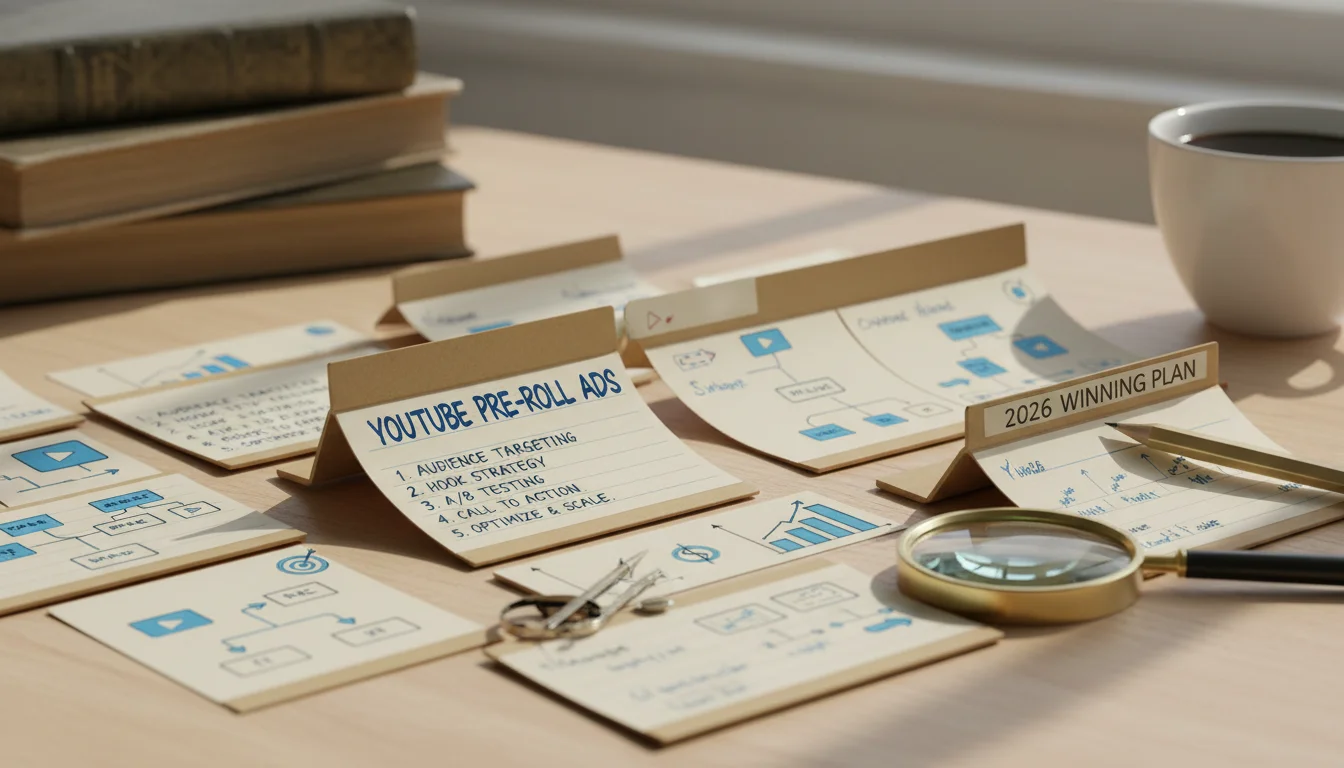
 By Editorial Team
The year was 2025, and Sarah Chen, marketing director for “GreenThumb Gardens,” a niche e-commerce brand selling heirloom seeds and organic gardening tools, faced a familiar challenge. Their latest product line, a smart indoor hydroponics kit, was struggling to gain traction despite glowing reviews from early adopters. Sarah knew the product was exceptional, but their traditional social media campaigns weren’t generating the necessary buzz. Their customer acquisition cost (CAC) was creeping up, and the board was asking tough questions. Sarah believed the answer lay in a more direct, impactful visual strategy, specifically through mastering YouTube ad formats, especially pre-roll ads.
Key Takeaways
- Implement a sequential ad strategy on YouTube, starting with short, high-impact bumper ads to build brand awareness, followed by more detailed pre-roll ads for product education.
- Optimize pre-roll ad creative for the first five seconds, focusing on immediate value propositions to combat user skip rates and maintain viewer engagement.
- Use custom intent audiences and detailed demographic targeting within Google Ads to reach users actively searching for relevant products or content, improving ad relevance and performance.
- Allocate at least 20% of your YouTube ad budget to testing different ad creatives and targeting parameters for both pre-roll and bumper formats to identify top-performing combinations.
- Develop distinct calls to action (CTAs) for each ad format. Bumper ads might drive brand recall, while pre-roll ads should aim for website visits or product page views.
Sarah’s problem wasn’t a lack of budget. It was a lack of precision. Their previous YouTube efforts involved uploading a single 30-second commercial and hoping for the best. “We were essentially throwing spaghetti at the wall,” she admitted during a team meeting, “and expecting a Michelin-star meal.” The team analyzed their existing campaign data. The skip rate on their longer ads was astronomical, often exceeding 70% within the first five seconds, according to their Google Ads performance reports. This meant their carefully crafted product benefits were rarely seen.
The solution, I suggested when Sarah consulted me, involved a two-pronged approach focusing on two distinct YouTube ad formats: the short, punchy bumper ad and the more informative skippable in-stream pre-roll ad. Bumper ads, at a maximum of six seconds, are non-skippable and ideal for brand awareness and quick, memorable messages. Pre-roll ads, on the other hand, play before a video and can be longer, offering the option to skip after five seconds. The strategic interplay between these formats is what converts casual viewers into engaged customers.
“Think of it like this,” I explained to Sarah, “bumper ads are your billboard, quick and impactful. Pre-roll ads are your detailed brochure, but you only have five seconds to convince someone to open it.” We decided to target users based on their viewing habits and search queries related to indoor gardening, hydroponics, and sustainable living. This wasn’t just about broad demographic targeting. It was about reaching individuals who had actively shown interest in the problem GreenThumb Gardens’ product solved.
Designing for Impact: Bumper Ad Strategy
For bumper ads, the challenge was distilling the core message of the hydroponics kit into six seconds. We focused on a single, compelling visual and a clear benefit. One ad showed a time-lapse of lush basil growing rapidly under the kit’s LED lights, with the tagline: “Fresh herbs, year-round. GreenThumb Hydroponics.” Another featured a family harvesting lettuce, emphasizing convenience: “Grow your own. Effortlessly.” The goal was brand recall and intrigue, not a hard sell. According to a 2024 IAB report, short-form video ads under ten seconds consistently demonstrate higher ad recall rates compared to longer formats, particularly on mobile devices. (See IAB State of Video Advertising 2024 for details).
The creative team at GreenThumb Gardens, initially skeptical about such brevity, embraced the constraint. They understood that every millisecond counted. The audio, often an afterthought, received significant attention. A catchy, upbeat jingle was developed, designed to be memorable even if the visual was only passively observed. We ran A/B tests on different bumper ad variations, monitoring view-through rates and brand lift studies directly within the Google Ads platform. This iterative process allowed us to quickly identify the most effective creative elements.
Mastering the Pre-Roll: Hooking Viewers in Five Seconds
The pre-roll strategy was more complex. We knew most users would skip if not immediately engaged. Therefore, the first five seconds were critical. For GreenThumb Gardens, we identified the primary pain points of their target audience: lack of space for a traditional garden, inconsistent results from outdoor gardening, and the desire for fresh, organic produce. Our pre-roll ads opened by addressing these directly.
One ad began with a shot of wilted store-bought herbs, followed by a lively, thriving hydroponic garden. The voiceover started: “Tired of disappointing produce? Discover effortless gardening.” This immediate contrast and problem-solution framing was designed to grab attention. The next 25 seconds (for a 30-second ad) then detailed the kit’s features: self-watering system, app-controlled lighting, and nutrient delivery. The call to action (CTA) was a clear overlay button: “Learn More at GreenThumbGardens.com.” We also implemented companion banners, which appear alongside the video, to reinforce the message and provide an additional click opportunity.
We specifically used custom intent audiences within Google Ads, targeting users who had recently searched for terms like “best indoor gardening kits,” “hydroponic systems for beginners,” or “grow vegetables indoors.” This ensured our pre-roll ads reached an audience already primed for our solution. The precision of this targeting was a big deal. According to a recent HubSpot study, highly targeted video ads can achieve a 2.5x higher conversion rate than broadly targeted campaigns (HubSpot Video Marketing Statistics 2025).
The true power came from combining these formats sequentially. We set up campaigns where users who saw a GreenThumb Gardens bumper ad would then be shown a pre-roll ad for the same product within a few days. This created a subtle, reinforcing narrative. First, brand awareness was established with the short, memorable bumper. Then, the pre-roll ad provided deeper product information, capitalizing on the initial brand recognition.
Budget allocation was carefully considered. We started with a higher proportion on bumper ads to cast a wider net for initial brand exposure, then shifted more budget to pre-roll ads for users who had already shown some level of engagement or were within our custom intent segments. This wasn’t a static plan. We continuously monitored performance metrics like view-through rates, click-through rates (CTR), and conversion rates for each ad format and adjusted spending accordingly. A common mistake I see is setting a budget and forgetting it. Effective ad management is a continuous process of analysis and adjustment.
For example, if a particular bumper ad creative was generating high recall but not leading to pre-roll views, we would refine the pre-roll creative’s opening hook. Conversely, if pre-roll ads had a low skip rate but a weak CTR, we’d adjust the CTA or the value proposition presented within the ad itself. Google Ads offers strong reporting tools that allow for this granular analysis, including metrics on how long viewers watched before skipping, providing invaluable insights into creative effectiveness.
Within three months, GreenThumb Gardens saw a significant turnaround. Their CAC for the hydroponics kit decreased by 28%, and sales increased by 45%. Brand searches for “GreenThumb Hydroponics” also climbed, indicating the bumper ads were effectively building awareness. Sarah was thrilled. “We stopped guessing and started strategizing,” she remarked, “The sequential approach, using both bumper and pre-roll formats, gave us the precision we needed to tell our story effectively without wasting ad spend on uninterested viewers.”
This success wasn’t just about the formats. It was about understanding audience behavior and tailoring the message to the medium. Bumper ads aren’t just shorter versions of longer ads. They are a distinct creative challenge requiring extreme conciseness. Pre-roll ads demand an immediate hook, often a problem statement or a compelling visual, to prevent the skip. The integration of these two, guided by intelligent targeting and continuous optimization, transformed GreenThumb Gardens’ YouTube advertising into a powerful growth engine. The specific settings within Google Ads for audience segmentation, frequency capping, and sequential ad delivery were all carefully configured to support this overarching strategy.
Effective YouTube advertising demands a deep understanding of each ad format’s strengths and weaknesses, combined with precise targeting and a commitment to iterative creative refinement. This approach ensures your message resonates with the right audience at the right time, driving measurable results. For more on maximizing your video ad revenue, consider incorporating these strategies. You can also explore how agencies scale video ads in 2026 for broader campaigns. Finally, understanding ad algorithms is important for optimizing your video ad performance further.
What is the primary difference between a pre-roll ad and a bumper ad?
A pre-roll ad plays before a YouTube video and is typically skippable after five seconds, allowing for longer, more detailed messaging. A bumper ad is a non-skippable video ad, maximum six seconds in length, designed for quick brand awareness and memorable messaging.
How can I prevent users from skipping my pre-roll ads?
To minimize skips on pre-roll ads, focus on creating a compelling hook within the first five seconds. This can involve directly addressing a pain point, showing an immediate benefit, or presenting an intriguing visual or question that encourages viewers to continue watching. Strong creative is paramount.
What is sequential ad serving on YouTube?
Sequential ad serving is a strategy where you show users a series of ads in a specific order. For example, a user might first see a short bumper ad for brand exposure, and then later be shown a longer pre-roll ad with more product details, building a narrative over time.
Are bumper ads effective for direct response campaigns?
While bumper ads primarily excel at brand awareness and recall due to their brevity, they can contribute to direct response campaigns by building initial familiarity. However, for immediate calls to action like “Buy Now” or “Sign Up,” longer, skippable in-stream ads or other formats often provide more space for persuasive messaging and clear CTAs.
How do custom intent audiences improve YouTube ad performance?
Custom intent audiences allow advertisers to target users who have recently searched for specific keywords on Google, indicating a high level of interest in those topics. This precision targeting ensures your YouTube ads are shown to individuals already actively looking for products or solutions related to your offerings, significantly increasing ad relevance and potential conversion rates.


