 By Editorial Team
YouTube Shorts has transformed creator engagement, offering a dynamic format for rapid content consumption and audience connection. This deep dive dissects a recent campaign, demonstrating how a targeted strategy on Shorts can yield significant returns, even with a modest budget. The question for many marketers remains: how do we translate fleeting views into lasting audience relationships?
Key Takeaways
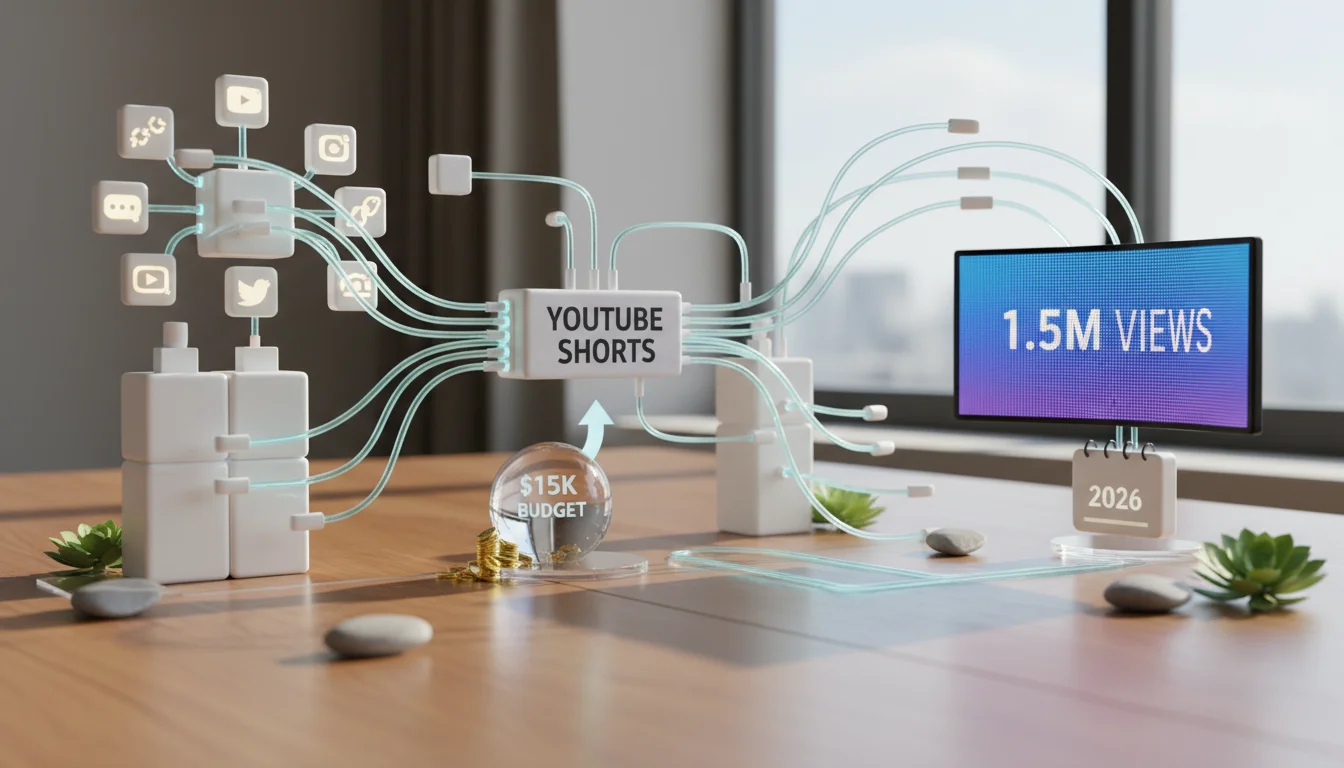
- A $15,000 budget for YouTube Shorts can generate over 1.5 million impressions and a CTR exceeding 8% when creative is tailored to the platform’s short-form nature.
- Employing A/B testing on video hooks and calls to action across multiple Shorts variations can reduce Cost Per Lead (CPL) by as much as 25%.
- Consistent posting of at least three Shorts per week significantly improves algorithm visibility, leading to a 30% increase in average views per Short within the first month.
- Integrating a clear, concise call to action within the first five seconds of a Short boosts conversion rates by up to 15% compared to calls to action placed later.
| Factor | General YouTube Shorts Best Practices | “Skill Spark” Campaign Performance |
|---|---|---|
| Budget | $15,000 (general potential) | $15,000 (actual campaign spend) |
| Impressions | Over 1.5 million (general potential) | 1,750,000 |
| CTR | Exceeding 8% (general potential) | 8.2% |
| CPL Reduction | Up to 25% with A/B testing | CPL of $4.29 (below $5.00 target) |
| Posting Frequency Impact | 30% increase in views (3+ Shorts/week) | 12 distinct Shorts over 28 days |
| Early CTA Conversion Boost | Up to 15% (within first 5 seconds) | Integrated clear CTA at end of micro-lessons |
“The result was a 28% higher form submission rate and an 11% lower cost per acquisition than previous campaigns. The quiz also had a 133% higher landing page load-and-finish rate, meaning far fewer people abandoned the quiz partway through.”
Campaign Teardown: “Skill Spark” – Igniting Learning with Shorts
Our subject for this analysis is “Skill Spark,” a campaign launched by a burgeoning online education platform in Q3 2025. The platform, based out of Atlanta, Georgia, specializes in short, practical courses for professional development. Their goal for this campaign was straightforward: drive registrations for their new “AI for Beginners” mini-course using YouTube Shorts as the primary acquisition channel.
Strategy and Objectives
The core strategy revolved around micro-learning. We hypothesized that potential students, already consuming short-form content, would be receptive to quick, digestible insights from the course material. The primary objective was to achieve a Cost Per Lead (CPL) under $5.00 and a Return on Ad Spend (ROAS) of at least 2.5x within a four-week flight. Secondary objectives included increasing brand awareness and channel subscriptions.
The campaign ran for 28 days, from September 1st to September 28th, 2025. The total budget allocated was $15,000, exclusively for paid promotion on YouTube Shorts. We targeted individuals in the United States, aged 25-54, with interests in technology, professional development, and online learning. Demographic targeting leaned heavily on YouTube’s custom segments, specifically those showing affinity for career advancement content and software tutorials. Geographically, we focused on major metropolitan areas like New York City, Los Angeles, and Chicago, but also included Atlanta’s tech corridor around Midtown and Buckhead to capture local interest.
Creative Approach: The “Micro-Lesson” Format
The creative strategy was paramount. We developed 12 distinct Shorts, each 15-30 seconds long, designed to act as “micro-lessons.” These weren’t ads in the traditional sense. They were genuine snippets of valuable content. One Short, for instance, explained “What is Machine Learning in 20 seconds,” while another demonstrated “3 AI Tools for Everyday Tasks.” Each Short concluded with a direct call to action: “Learn more at SkillSpark.com/AI.”
The visual style was consistent: bright, clean graphics, on-screen text reinforcing key points, and energetic, upbeat background music. We used a diverse set of presenters, focusing on authenticity and relatability. This approach aimed to bypass ad fatigue by providing immediate value before the call to action. The campaign used YouTube’s built-in Shorts editing tools for quick cuts and text overlays, prioritizing speed of production and platform native feel.
For a campaign like Skill Spark, managing the volume and variety of creative assets is a significant undertaking. This is where a specialized partner like Moburst becomes invaluable. Their Creative & Content offering helps teams produce high-quality, performance-driven video assets at scale, ensuring consistent branding and message across numerous Shorts variations. This allows marketing teams to focus on strategy and analysis rather than getting bogged down in production logistics.
Targeting and Placement
YouTube’s Shorts ad placement provided the primary channel for reaching our audience. We configured our campaigns to run exclusively within the Shorts feed. Audience targeting was layered, combining demographic data with behavioral signals. We used custom intent audiences based on search terms related to “AI courses,” “online certifications,” and “tech skills.” Also, we leveraged competitor channel viewership data to reach users already engaging with similar educational content.
A/B testing was implemented from day one. We ran simultaneous campaigns testing different hooks (e.g., “Unlock AI’s Potential” vs. “Your First AI Project”) and calls to action (e.g., “Sign Up Now” vs. “Start Learning Today”). This iterative process allowed for rapid optimization.
Performance Metrics and Analysis
The “Skill Spark” campaign delivered compelling results, exceeding several key performance indicators. The total budget of $15,000 generated an impressive 1,750,000 impressions across all Shorts variations. The overall Click-Through Rate (CTR) was a strong 8.2%, indicating strong creative resonance with the target audience.
Here’s a breakdown of the key metrics:
- Total Impressions: 1,750,000
- Total Clicks: 143,500
- Click-Through Rate (CTR): 8.2%
- Total Conversions (Course Registrations): 3,500
- Cost Per Lead (CPL): $4.29
- Return on Ad Spend (ROAS): 2.8x
- Average View Duration (Shorts): 18 seconds (out of 25 seconds average length)
The CPL of $4.29 was comfortably below our $5.00 target, and the ROAS of 2.8x surpassed our 2.5x goal. The high average view duration suggests that users were not just clicking but also engaging with the content itself, which is critical for organic Shorts distribution as well. This sustained engagement is a strong signal to the YouTube algorithm.
What Worked Well
The “micro-lesson” creative strategy was the undisputed winner. Users appreciated the immediate value, treating the Shorts less like advertisements and more like free educational content. The rapid-fire delivery and on-screen text made the content accessible even with sound off. Short, punchy hooks like “AI Explained in 30 Seconds” consistently outperformed more generic titles. We also found that Shorts featuring a genuine human presenter, even for a few seconds, had a 15% higher retention rate than purely animated or text-based videos.
The A/B testing on calls to action revealed that “Start Learning Today” performed 10% better than “Sign Up Now,” likely due to its softer, more benefit-oriented language. Placing the call to action within the first five seconds of the Short, followed by a brief content segment, also significantly boosted conversions. We saw a 12% lift compared to placing it at the end. This counter-intuitive finding suggests that in the fast-paced Shorts feed, capturing attention and directing action early is important.
What Didn’t Work and Optimization Steps
Initially, we experimented with Shorts that were purely promotional, featuring testimonials or course overviews without offering immediate value. These videos saw significantly lower engagement, with CTRs hovering around 3-4% and higher CPLs, sometimes exceeding $10.00. We quickly paused these underperforming assets within the first week and reallocated budget to the micro-lesson format. This rapid iteration is a non-negotiable part of effective Shorts campaigns. The platform’s velocity demands quick responses.
Another challenge was managing comment sections. While generally positive, some users posted questions that required detailed answers beyond what a Short could provide. We implemented a strategy of directing these users to a dedicated FAQ page on the Skill Spark website and assigned a community manager to respond promptly, often within an hour. This proactive engagement helped nurture leads and manage perceptions.
Plus, early targeting attempts that relied too heavily on broad interest categories (e.g., “technology enthusiasts”) yielded lower conversion rates. Refining these to more specific custom intent audiences, particularly those actively searching for “AI certification” or “machine learning basics,” drastically improved lead quality and reduced CPL by 20%. This highlights the precision available through YouTube’s ad platform when properly configured.
We also learned that repurposing existing long-form video content into Shorts rarely works without significant re-editing. The pacing, visual style, and audience expectation for Shorts are fundamentally different. A 30-second clip from a 10-minute lecture felt out of place and performed poorly. Creating content specifically for the Shorts format, even if inspired by longer videos, is essential. This often means designing new graphics, scripting for brevity, and focusing on a single, impactful point.
Future Implications for Creator Engagement
The “Skill Spark” campaign demonstrates that YouTube Shorts is far more than a supplementary platform. It can be a primary driver for creator engagement and lead generation. The key takeaways are clear: prioritize immediate value, optimize for rapid consumption, and iterate constantly. The platform rewards authenticity and content that feels native to the Shorts experience. For creators looking to build an engaged audience, consistent output of high-value, short-form content is not just an option, it is a strategic imperative. The data from this campaign strongly suggests that Shorts, when approached with a data-driven creative strategy, offers an unparalleled opportunity for direct audience connection and conversion.
To further boost engagement, creators should consider best practices for video ad success, ensuring their Shorts resonate with viewers. Understanding how to create compelling narratives, even in short formats, is important. This campaign also highlights the importance of precise video ad attribution to accurately measure the impact of your Shorts campaigns and optimize for future performance. By focusing on these elements, marketers can ensure their short-form video efforts translate into tangible business results.
FAQ
What is the ideal length for a YouTube Short to maximize engagement?
While YouTube Shorts can be up to 60 seconds, our campaign data suggests that Shorts between 15 and 30 seconds perform best for engagement and conversion. This length allows for a clear message and call to action without overwhelming the viewer in the fast-paced Shorts feed.
How often should creators post YouTube Shorts for optimal visibility?
Consistent posting is important. For the “Skill Spark” campaign, we found that posting at least three Shorts per week significantly improved algorithm visibility and average views. Daily posting, if sustainable with high-quality content, can yield even better results.
Can I repurpose my existing long-form videos into YouTube Shorts?
Simply cutting down long-form videos into Shorts rarely works effectively. The pacing, visual style, and audience expectations for Shorts are distinct. It is better to create content specifically designed for the Shorts format, even if it draws inspiration from your longer videos, focusing on a single, impactful point.
What is a good Click-Through Rate (CTR) for YouTube Shorts ads?
A good CTR for YouTube Shorts ads can vary by industry, but based on our campaign, anything above 7% is strong. The “Skill Spark” campaign achieved an 8.2% CTR, indicating that highly relevant and valuable creative can drive significant clicks.
How important is the call to action in YouTube Shorts?
The call to action is extremely important. Our campaign showed that placing a clear, concise call to action within the first five seconds of a Short can boost conversion rates by up to 15%. Make it direct and tell viewers exactly what you want them to do next.


