 By Jennifer Poole
There’s a staggering amount of misinformation out there regarding effective digital marketing, particularly when it comes to truly empowering marketers and content creators to maximize their ROI. Many cling to outdated notions, hindering their ability to adapt to the dynamic 2026 digital landscape. How can we cut through the noise and focus on what truly drives results?
Key Takeaways
- Attribution models beyond last-click are essential for accurately valuing touchpoints across the customer journey, with data-driven models often outperforming simpler alternatives.
- Organic reach on social media is not dead; strategic content distribution and community engagement are vital for visibility and fostering authentic connections.
- Short-form video content demands a distinct creative strategy focused on immediate hooks and brand messaging, rather than repurposing longer-form assets.
- AI tools should be viewed as powerful assistants for efficiency and insight generation, not replacements for human creativity, strategic thinking, or empathy in marketing.
- Continuous testing and iterative refinement of campaigns, including A/B testing ad copy, visuals, and targeting, are non-negotiable for sustained performance improvement.
Myth 1: Last-Click Attribution Is Sufficient for Measuring ROI
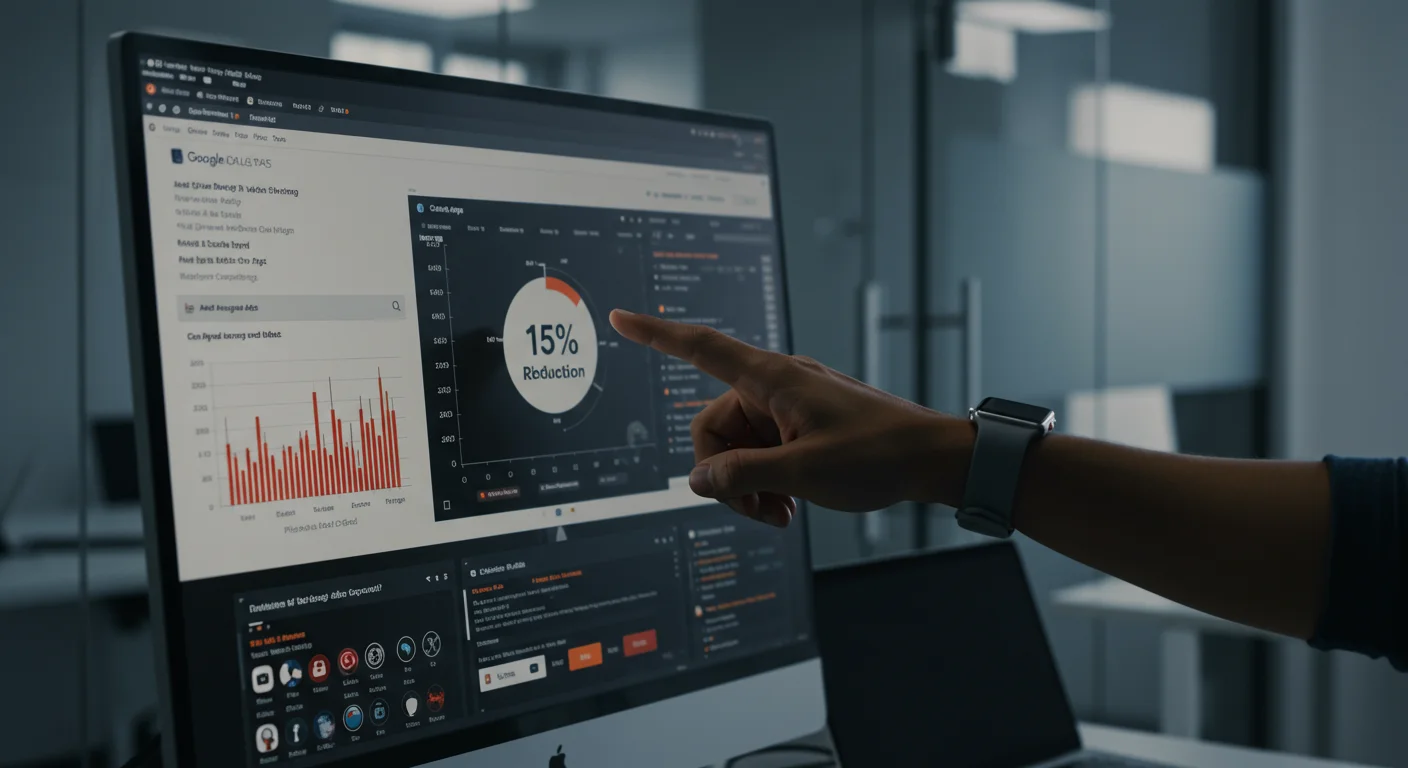
The idea that the final touchpoint before conversion gets all the credit is a relic of a simpler digital age. I’ve seen countless clients, especially those new to advanced analytics, fall into this trap. They’ll look at their Google Ads report, see a conversion, and assume that ad did all the heavy lifting. This couldn’t be further from the truth. According to a recent report by HubSpot, only about 15% of marketers in 2025 were using sophisticated attribution models, despite overwhelming evidence that they provide a more accurate picture of campaign effectiveness.
The reality is that a customer’s journey is rarely linear. Think about it: someone might see a brand mention on a podcast, then a sponsored post on Instagram, later click an organic search result, and finally convert after seeing a retargeting ad. If you only credit the last ad, you completely devalue the brand building and awareness efforts that primed that customer for conversion. We moved past this years ago! At my agency, we advocate for data-driven attribution models, which use machine learning to assign fractional credit to each touchpoint based on its actual impact on conversions. Google Ads has offered this for years, and platforms like AdRoll and Criteo have also developed robust solutions. Ignoring this means you’re likely under-investing in top-of-funnel activities and over-investing in what appears to be the “closer,” even if it’s just the final push. It’s like giving all the credit for a touchdown to the player who carried the ball over the goal line, ignoring the offensive line, the quarterback, and the wide receivers who made it possible.
Myth 2: Organic Social Media Reach Is Dead
“Organic reach is dead; you have to pay to play.” This is a common lament I hear, particularly from marketers feeling the squeeze on platforms like Instagram and Facebook. While it’s true that algorithmic changes have made organic visibility more challenging than it was five or six years ago, proclaiming its death is an oversimplification that leads to missed opportunities. It’s a lazy excuse, frankly.
The truth is, organic reach has evolved, not died. Platforms prioritize content that drives engagement and keeps users on their apps. This means focusing on high-quality, authentic, and truly valuable content that resonates with your specific audience. We ran an experiment last year for a local Atlanta boutique, “The Peach Thread,” located just off Peachtree Street in Midtown. Their initial strategy was solely paid ads. We introduced a robust organic strategy focusing on behind-the-scenes content, stylist tips, and interactive polls on Instagram Stories and Reels. Within six months, their average organic reach per post increased by 45%, and their follower growth jumped by 30%. More importantly, their direct messages and website traffic from organic social increased by 60%. This wasn’t about virality; it was about consistent, community-focused content. We saw similar results with a series of educational webinars promoted organically through LinkedIn for a B2B SaaS client based out of the Atlanta Tech Village. The key was not to chase vanity metrics but to foster genuine conversation and provide utility. Yes, you need to understand the nuances of each platform’s algorithm – for instance, Instagram’s focus on Reels and carousels, or LinkedIn’s preference for native video and long-form posts – but dismissing organic entirely is a strategic blunder. You’re giving up a powerful channel for building brand loyalty and trust, which paid ads alone can’t replicate.
Myth 3: Repurposing Long-Form Video for Short-Form Platforms Works Just Fine
I’ve seen this mistake derail so many campaigns. A client will produce a beautiful, cinematic two-minute brand video, then simply chop it into 15-second segments and wonder why their TikToks aren’t performing. This isn’t repurposing; it’s butchery. The assumption is that “video is video,” and if it’s good in one format, it’ll be good in another. This simply isn’t true for the attention economy of 2026.
Short-form video requires a completely different creative strategy. Platforms like TikTok and YouTube Shorts demand immediate hooks – something captivating within the first 1-3 seconds. The storytelling is often non-linear, reliant on quick cuts, trending audio, and text overlays. A long-form video is designed to build narrative, establish mood, and often has a slower pace. You can’t just take a 30-second explanation of a product feature and expect it to work on a platform where users are swiping every 5-10 seconds. My team and I discovered this firsthand with a regional restaurant chain trying to promote their new seasonal menu. Their agency delivered stunning 90-second spots for traditional broadcast and YouTube pre-roll. When we tried to cut these down for TikTok, they flopped. The solution? We went back to the drawing board, filming entirely new, hyper-fast-paced content specifically for short-form, showcasing dishes from unique angles, using popular sound bites, and incorporating user-generated style elements. The engagement soared by over 300% on TikTok compared to the repurposed content. It’s about understanding the platform’s native language, not just its duration limits. For more insights on this, check out our guide on Vertical Video Marketing’s 3-Second Rule.
Myth 4: AI Will Replace Human Marketers and Content Creators
This is perhaps the loudest myth echoing through our industry right now, creating a lot of unnecessary anxiety. The fear is that tools like ChatGPT and Midjourney will render human creativity obsolete, leading to widespread job displacement. While it’s true that AI is incredibly powerful and evolving at an astonishing rate, the narrative of complete replacement is fundamentally flawed.
My perspective is that AI is a co-pilot, not an autopilot. It’s a phenomenal assistant for efficiency and generating initial drafts, but it lacks the nuance, emotional intelligence, and strategic foresight that define a truly effective marketer or content creator. For example, I use AI daily to brainstorm content ideas, generate first drafts of social media captions, or even analyze large datasets for trends. But I would never, ever publish AI-generated copy without significant human review, refinement, and injection of unique brand voice. A 2025 IAB report on AI in advertising highlighted that while 70% of agencies are experimenting with AI for content generation, only 10% believe it can fully replace human creative input. We’re seeing AI excel at repetitive tasks, data synthesis, and accelerating the ideation process. It can help you identify target audiences more precisely or predict campaign performance, but it can’t devise a truly innovative campaign concept that captures cultural zeitgeist, nor can it build genuine relationships with influencers or interpret the subtle emotional cues of a focus group. The marketers who will thrive are those who learn to effectively wield AI as a tool to augment their capabilities, freeing up their time for higher-level strategic thinking, creative problem-solving, and human connection – the things AI simply can’t replicate. For more on this, consider how AI drives marketing creativity.
Myth 5: Once a Campaign Is Live, You Just Let It Run
This is a classic “set it and forget it” mentality that burns through budgets faster than a flash sale on Black Friday. I’ve seen this happen too often, especially with smaller businesses or those managing their own ads without specialized expertise. They launch a campaign, maybe check the numbers once a week, and then wonder why performance dips or costs skyrocket.
The reality is that campaign optimization is an ongoing, iterative process. The digital advertising landscape is constantly shifting – new competitors emerge, audience behaviors change, and platform algorithms update. A campaign that performed brilliantly last month might be mediocre today. We implement a rigorous A/B testing framework for all our clients. This means constantly experimenting with different ad creatives (visuals and video), headlines, body copy, calls-to-action, and even landing page elements. For a recent e-commerce client specializing in artisanal goods from Georgia, we continuously tested different combinations of ad copy focusing on either “local craftsmanship” or “unique gift ideas.” We found that pairing specific product visuals with the “unique gift ideas” copy consistently delivered a 20% higher conversion rate over the “local craftsmanship” angle for cold audiences, while the latter performed better for retargeting. This level of granular testing, often using tools like Google Ads’ Experiment feature or Meta’s A/B Test functionality, is non-negotiable. You also need to be regularly reviewing performance metrics, adjusting bids, refining targeting parameters, and pausing underperforming assets. My advice: never assume your initial setup is perfect. Always be testing, always be learning, and always be adapting. That’s how you truly maximize ROI in this business. This continuous improvement is also key to preventing marketing targeting strategy mistakes.
The digital marketing world is dynamic, demanding constant vigilance and a willingness to challenge ingrained assumptions. By debunking these common myths, marketers and content creators can focus their efforts on strategies that genuinely empower them to maximize their ROI, driving sustainable growth and impactful engagement in 2026 and beyond.
What is a data-driven attribution model?
A data-driven attribution model uses machine learning to analyze all touchpoints in a customer’s journey and assign fractional credit to each one based on its actual contribution to a conversion. Unlike simpler models, it doesn’t just credit the first or last interaction, providing a more accurate understanding of marketing effectiveness.
How can I improve organic reach on social media in 2026?
To improve organic reach, focus on creating high-quality, authentic content that is native to each platform (e.g., Reels for Instagram, native video for LinkedIn). Prioritize content that encourages genuine engagement (comments, shares, saves), participate in trending topics or sounds, and consistently interact with your community.
Why can’t I just cut my long-form video for short-form platforms?
Long-form and short-form videos have fundamentally different creative requirements. Short-form platforms like TikTok demand immediate hooks, fast pacing, non-linear storytelling, and often rely on trending audio and text overlays. Simply cutting a longer video usually results in content that fails to capture attention quickly enough or convey a cohesive message for the short-form environment.
How should marketers use AI tools effectively?
Marketers should use AI tools as powerful assistants to enhance efficiency and provide insights. This includes leveraging AI for content brainstorming, generating initial drafts, analyzing data trends, optimizing ad targeting, and automating repetitive tasks. However, human oversight, creativity, strategic thinking, and emotional intelligence remain crucial for refining AI output and developing truly impactful campaigns.
What is the most important thing to remember about campaign optimization?
The most important thing is that campaign optimization is an ongoing, continuous process, not a one-time setup. You must constantly test different ad elements (creatives, copy, calls-to-action), monitor performance metrics, adjust bids and targeting, and iterate based on data to maintain and improve campaign effectiveness over time.


