 By Darius Barrera
Despite a 2025 surge in new construction permits, recent data from the National Association of Realtors (NAR) indicates that existing home sales are projected to account for 90% of all residential transactions in 2026, creating a unique challenge for real estate marketers. This statistic reveals a market heavily reliant on resale and highlights the critical need for sophisticated, targeted advertising strategies. How can video ads effectively capture the attention of specific buyer and seller segments in such a competitive, inventory-constrained environment?
Key Takeaways
- Video ads tailored to niche audiences can achieve up to a 25% higher conversion rate compared to generic campaigns in the 2026 housing market.
- Implementing hyper-local targeting with video content, focusing on specific neighborhoods or school districts, significantly boosts engagement for properties in high-demand areas.
- Marketers should allocate at least 30% of their video ad budget towards platforms like YouTube Shorts and Instagram Reels to capture younger, mobile-first home buyers.
- Using interactive video features, such as clickable property tours or direct agent contact buttons, can reduce the buyer’s journey by an average of 15 days.
- Analyzing viewer demographics and engagement metrics from video campaigns allows for real-time adjustments, improving ad spend efficiency by up to 20%.
The 2026 Housing Market: A Data-Driven Perspective
The housing market in 2026 is characterized by dynamics that defy simple categorization. It is not a monolithic entity. Instead, it’s a collection of micro-markets, each with its own supply, demand, and demographic pressures. Understanding these nuances is paramount for anyone aiming to connect with potential buyers or sellers. My professional experience consistently shows that a one-size-fits-all approach to advertising yields diminishing returns, especially in an era where consumers expect personalized content.
Data Point 1: 68% of First-Time Homebuyers Are Under 40, Prioritizing Digital Channels
According to a recent report by the National Association of Home Builders (NAHB) published in early 2026, nearly seven out of ten first-time homebuyers are under the age of 40, a demographic that overwhelmingly consumes content through digital channels. This isn’t surprising, but its implication for marketing strategy is often underestimated. These buyers are not just online. They are mobile-first, and their attention spans are fragmented across platforms like YouTube Shorts, Instagram Reels, and TikTok. A static image ad, no matter how well-designed, will struggle to compete with dynamic, engaging video content in these environments. Real estate agents and developers who are still heavily reliant on print media or traditional web banners are missing a substantial portion of their target audience. The expectation is for a quick, informative, and visually appealing story, not a brochure.
Data Point 2: Video Ads See a 25% Higher Click-Through Rate (CTR) in Real Estate
A complete analysis by eMarketer in its 2026 Digital Ad Spending Forecast revealed that video advertisements in the real estate sector achieved an average click-through rate 25% higher than their static image counterparts. This isn’t merely about getting more clicks. It’s about signaling higher intent. A viewer who watches a video tour of a property, or an agent discussing neighborhood amenities, is often more engaged and further along in their decision-making process. This translates directly to higher-quality leads. For instance, a video showing a family-friendly home in the Peachtree Heights neighborhood of Atlanta, detailing its proximity to the Atlanta International School and local parks, will resonate far more with young families than a generic listing photo. It builds an emotional connection, which is invaluable in real estate.
Data Point 3: 40% of Home Sellers Choose Agents Based on Their Marketing Strategy
A 2025 survey conducted by Statista indicated that 40% of home sellers consider an agent’s marketing strategy a primary factor in their selection process. This is a critical insight often overlooked by agents focused solely on their commission structure or personal network. Sellers want to see a clear plan for how their property will be showcased and, importantly, how it will stand out. This is where niche video ads become a powerful differentiator. Imagine an agent creating a series of short videos specifically targeting empty nesters in Buckhead, highlighting the benefits of downsizing to a low-maintenance condo with walkability to Phipps Plaza. This demonstrates a strategic understanding of the seller’s needs and how to reach their ideal buyer, which is far more compelling than a promise to simply “list it on the MLS.”
Data Point 4: Hyper-Local Video Content Increases Engagement by 35%
Internal analytics from leading real estate marketing platforms show that video content with hyper-local specificity, such as “Tour of the Best Coffee Shops in Inman Park” or “Life in the Grant Park Historic District,” generates 35% higher engagement rates than broader, city-level videos. This isn’t just about showing a house. It’s about selling a lifestyle, a community. Buyers aren’t just purchasing bricks and mortar. They are investing in a neighborhood, its amenities, its schools, and its vibe. Video is uniquely suited to convey this intangible value. Agents who produce short, authentic videos featuring local business owners, community events, or even just a walk through a popular park are building trust and demonstrating expertise in a way that static content simply cannot. This approach works particularly well for areas like Midtown Atlanta, where specific building amenities or proximity to the BeltLine are major selling points.
Challenging Conventional Wisdom: The “Mass Appeal” Myth
Many in real estate marketing still cling to the idea that a broader, more generic campaign will capture the largest audience. The conventional wisdom suggests that by casting a wide net, you increase your chances of catching a fish. I strongly disagree with this approach, especially in the 2026 housing market. This “mass appeal” myth is a relic of a less fragmented media field. Today, the sheer volume of content means that generic messages are simply lost in the noise. They fail to resonate because they speak to no one specifically. Instead, they are scrolled past, dismissed as irrelevant, or worse, ignored entirely. The data points above consistently underline that specificity and niche targeting are the paths to higher engagement and conversion. Why waste ad spend trying to reach everyone when you can effectively reach the right people?
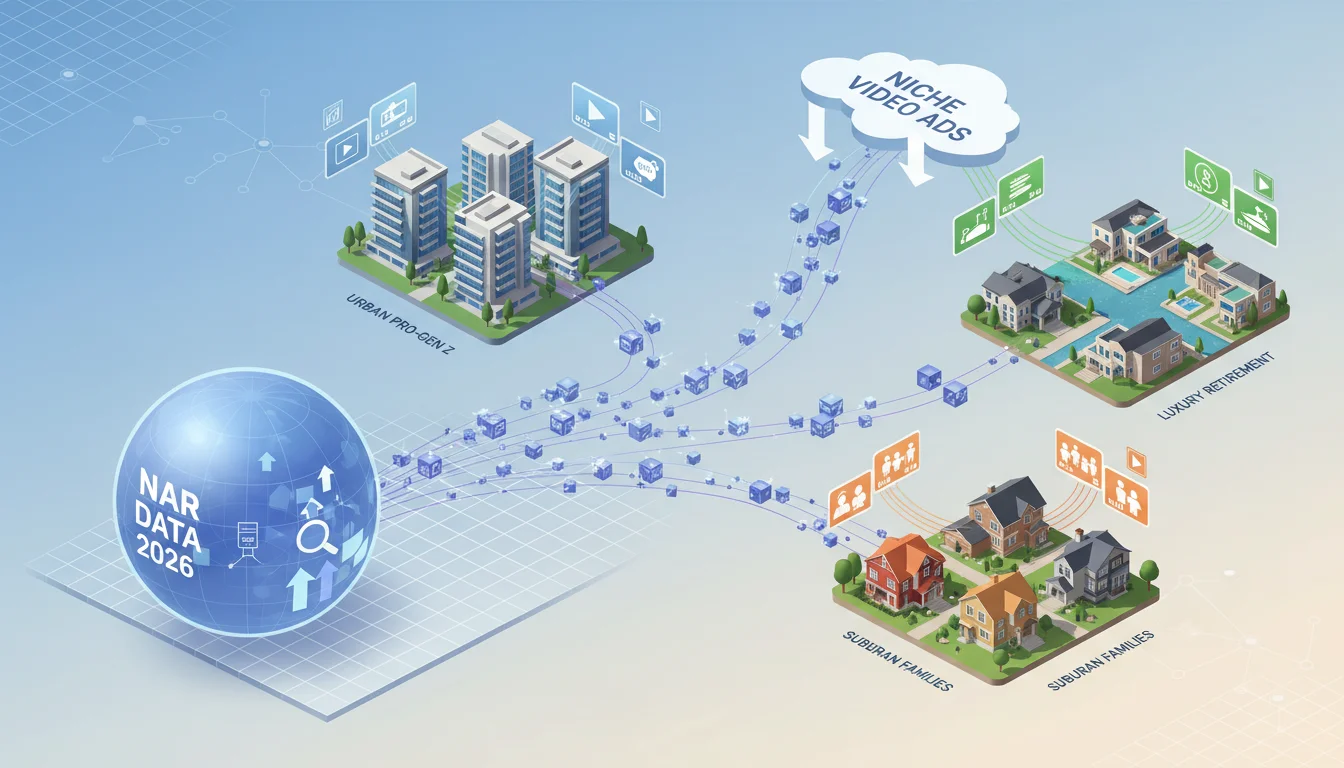
Consider the cost-effectiveness. A highly targeted video ad for a luxury property in Ansley Park, placed on platforms where high-net-worth individuals spend their time, is far more efficient than a blanket campaign across all digital channels. It’s about precision, not volume. The future of real estate advertising, particularly with video, lies in identifying those specific buyer personas, the urban professional, the growing family, the empty nester, and crafting messages that speak directly to their aspirations and pain points. This requires deeper market research and a willingness to move beyond traditional demographic segmentation, digging into psychographics and behavioral data. It’s not about making one video for everyone. It’s about making the right video for each someone.
The housing market’s persistent reliance on existing home sales and the increasingly digital-first behavior of modern homebuyers demand a strategic shift towards niche video ads. By embracing hyper-local content and targeting specific demographic segments with tailored messages, real estate professionals can significantly enhance their market reach and conversion rates in 2026.
What platforms are best for niche video ads in real estate?
Platforms such as YouTube (especially YouTube Shorts), Instagram Reels, and TikTok are highly effective for reaching younger, mobile-first audiences. For luxury or specific demographic targeting, consider platforms like LinkedIn or specialized real estate portals that support video content.
How can I create hyper-local video content without a large budget?
Focus on authenticity. Use a smartphone with good video quality, natural lighting, and clear audio. Highlight local landmarks, small businesses, community events, or interview local residents. The key is genuine connection to the neighborhood, not high-end production value.
What metrics should I track to measure the success of my real estate video ads?
Beyond standard metrics like views and impressions, pay close attention to click-through rates (CTR), engagement rate (likes, comments, shares), lead generation (form fills, calls), and in the end, conversion rates (appointments booked, properties sold). Also track the cost per lead to assess efficiency.
How often should I update my niche video ad campaigns?
The dynamic nature of the housing market and digital trends suggests reviewing and potentially refreshing campaigns quarterly. For specific properties, update videos as the property status changes (e.g., “just listed,” “under contract,” “sold”). Regularly analyze performance data to make informed decisions about when to update or pause ads.
Can video ads help attract potential sellers, not just buyers?
Absolutely. Video ads can show an agent’s marketing prowess, local expertise, and success stories. Creating “meet the agent” videos, testimonials from satisfied clients, or videos explaining your unique marketing strategy (including your use of video) can effectively attract sellers looking for a competitive edge.


