 By Editorial Team
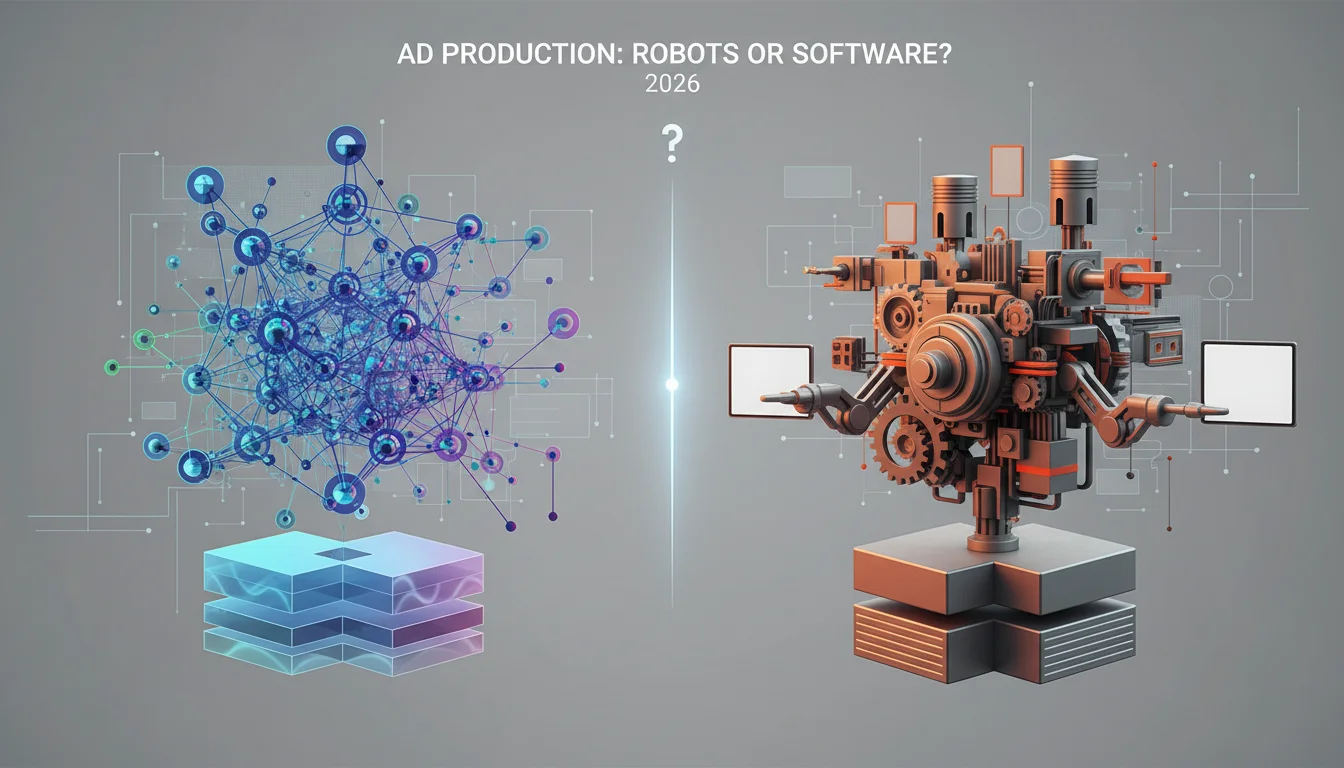
There is a surprising amount of misinformation circulating about the role of robotics in ad production, particularly concerning the future of creative automation. Many marketers still envision assembly lines of physical robots churning out billboards, when the reality is far more nuanced and, frankly, more impactful.
Key Takeaways
- Robotics in ad production refers primarily to software automation, not physical robots, enabling scaled creative output.
- Generative AI tools, a core component of creative automation, can produce thousands of ad variations in minutes, significantly reducing human effort in repetitive tasks.
- Data-driven insights from automated systems allow for real-time optimization of ad campaigns, leading to improved performance metrics like conversion rates.
- Human creative input remains indispensable for strategic direction, emotional resonance, and brand storytelling, even with advanced automation.
- Implementing creative automation requires a clear strategy for data integration, workflow redesign, and upskilling teams to manage AI-driven processes.
Myth 1: Robotics in Ad Production Means Physical Robots Making Ads
This is perhaps the most common and persistent misconception. When people hear “robotics in ad production,” their minds often jump to scenes from science fiction movies: mechanical arms painting posters or drones filming commercials autonomously. That’s a fun image, but it’s not what we’re talking about in 2026. The “robotics” here refers almost entirely to software robotics and advanced automation protocols. We’re discussing algorithms, machine learning models, and generative AI systems that execute tasks traditionally performed by humans, not physical androids in a studio. Consider the complexity of modern digital ad campaigns. A single campaign might require hundreds, even thousands, of different ad variations across multiple platforms like Google Ads, Meta’s ad ecosystem, and various programmatic channels. Each variation might need different image sizes, copy lengths, calls to action, and audience segmentations. Manually producing all these assets is not just time-consuming. It’s practically impossible to do at scale while maintaining consistency and quality. This is where creative automation, powered by sophisticated algorithms, steps in. These systems can dynamically assemble ad creatives from a library of assets, tailoring them to specific audience demographics, geographic locations, and even real-time behavioral data. According to a 2025 IAB report on AI in advertising, over 60% of surveyed agencies reported using generative AI for at least a portion of their display ad creation, a clear indicator that the “robots” are digital, not physical.
Myth 2: Creative Automation Will Eliminate Human Creatives
The fear that AI and automation will render human creative professionals obsolete is a familiar refrain, but it misinterprets the true value proposition of these technologies. Creative automation is not designed to replace the strategic thinking, emotional intelligence, or unique storytelling capabilities that human creatives bring to the table. Instead, it’s a powerful tool for amplifying human potential and freeing up valuable time. Think about the workflow of a typical creative team. A significant portion of their time is often spent on repetitive, low-value tasks: resizing images for different platforms, generating minor copy variations, A/B testing dozens of headlines, or manually assembling different ad combinations. These are precisely the tasks where creative automation excels. Generative AI models, for instance, can produce hundreds of headline options based on a given brief and target audience in minutes. They can also create numerous visual layouts by combining approved brand elements. This offloads the grunt work, allowing human creatives to focus on higher-order tasks: developing overarching campaign strategies, crafting compelling brand narratives, defining the emotional core of an ad, and iterating on truly innovative concepts. A recent eMarketer study from Q4 2025 indicated that while 72% of marketing teams are adopting AI tools for creative generation, only 15% reported a reduction in their creative staff, with most reallocating talent to strategic roles. The reality is that the demand for truly original, impactful creative direction is only growing, and automation helps creatives to deliver more of it.
Myth 3: Automated Ads Lack Authenticity and Emotional Resonance
Critics often argue that ads generated by algorithms will feel cold, generic, and unable to connect with audiences on an emotional level. This perspective overlooks the sophistication of current generative AI and the critical role of human oversight in the automation process. While an algorithm might not “feel” emotion, it can be trained to recognize and replicate patterns that evoke specific emotional responses in human audiences. Modern creative automation platforms use extensive datasets of successful ads, audience engagement metrics, and psychological principles to inform their output. They can analyze what types of imagery, language, and narrative structures resonate most effectively with particular demographics. For example, a system could identify that ads featuring genuine, unscripted moments perform better for a younger audience segment, and then generate variations that align with that insight. On top of that, the human touch remains paramount. Automated tools provide a starting point, a vast array of options. It’s the human creative director or copywriter who curates, refines, and injects the final layer of brand voice and emotional depth. They guide the AI, provide specific parameters, and make the ultimate selections that align with the brand’s identity and campaign objectives. The output isn’t purely machine-driven. It’s a human-machine collaboration. A 2025 Nielsen report on ad effectiveness highlighted that AI-assisted campaigns, when properly managed, showed a 15% average increase in brand recall compared to purely human-produced campaigns of similar budget, often due to the ability to rapidly test and optimize for emotional impact.
Myth 4: Implementing Creative Automation is Too Complex and Costly for Most Businesses
The perception that creative automation is an exclusive domain for large enterprises with massive budgets and dedicated AI teams is outdated. While advanced, bespoke solutions certainly exist for industry giants, the field of creative automation tools has broadened considerably, making it accessible to businesses of all sizes. Many platforms now offer intuitive interfaces, template-driven approaches, and scalable pricing models that cater to small and medium-sized businesses. Many contemporary marketing platforms, such as Google Ads and Meta Business Manager, already incorporate elements of creative automation directly into their interfaces. Features like “responsive search ads” and “dynamic creative optimization” are essentially forms of creative automation, allowing advertisers to provide multiple headlines, descriptions, images, and videos, which the system then intelligently combines and tests to create the best-performing ad combinations. Beyond these integrated solutions, there are numerous standalone platforms that specialize in automating creative tasks. These tools often integrate smoothly with existing digital asset management (DAM) systems and advertising platforms, simplifying the setup process. The initial investment might involve subscription fees and some training, but the long-term return on investment (ROI) often far outweighs these costs. By reducing manual labor, accelerating time to market, and enabling more effective A/B testing, businesses can achieve significant efficiencies and improved campaign performance. I’ve personally seen smaller agencies reduce their creative production time for display ad campaigns by upwards of 40% within the first six months of adopting a dedicated creative automation platform, allowing them to take on more clients without increasing headcount.
Myth 5: Creative Automation Only Works for Performance Marketing
There’s a common belief that automation is best suited for direct-response or performance-based marketing where metrics are clear and optimization is straightforward. The idea is that brand building, with its focus on abstract concepts like perception and affinity, is too nuanced for machines. This is a narrow view of what creative automation can achieve. While it undoubtedly excels in performance marketing, its capabilities extend significantly into brand marketing and storytelling. Creative automation can play a vital role in maintaining brand consistency across all touchpoints, which is fundamental to brand building. It can ensure that all ad creatives adhere to brand guidelines, including color palettes, typography, and logo usage, even when producing thousands of variations. Plus, generative AI can assist in developing brand narratives by analyzing successful storytelling elements within a specific industry or for a target audience. Imagine an AI generating several short video scripts or social media post ideas that align with a brand’s core values and then allowing human creatives to refine and produce the final pieces. This accelerates the ideation phase and ensures a consistent brand voice. Even in areas like personalized content at scale, automation allows brands to deliver highly relevant messages to individual consumers, fostering deeper connections and loyalty, which are direct drivers of brand equity. A brand can use automation to dynamically insert a customer’s local landmark into an ad image or reference their past purchase history in ad copy, creating a far more personal and memorable brand interaction than a generic message ever could. The future of ad production is undeniably intertwined with creative automation, offering marketers unprecedented scale and efficiency. The key takeaway for any marketing professional is to embrace these tools not as replacements, but as powerful enhancements to human ingenuity.
What is the primary difference between robotics and creative automation in advertising?
In advertising, “robotics” generally refers to software robots or algorithms, not physical machines. Creative automation uses these algorithms and AI to automate repetitive tasks in ad creation, such as generating ad variations, optimizing copy, and resizing images.
Can creative automation generate entirely new ad concepts from scratch?
While generative AI can produce a vast array of ideas and variations, truly novel and strategically bold ad concepts still require significant human input. Automation excels at iterating on established creative directions and optimizing existing assets, rather than originating a campaign’s core creative strategy.
How do automated ad campaigns ensure brand consistency?
Creative automation platforms are typically configured with strict brand guidelines, including approved logos, fonts, color schemes, and messaging parameters. This ensures that all automatically generated ad creatives adhere to the brand’s visual and verbal identity, maintaining consistency across all campaign touchpoints.
What data sources are typically used to power creative automation?
Creative automation leverages various data sources, including historical campaign performance data, audience demographics and psychographics, real-time behavioral data, A/B test results, and brand asset libraries. This data informs the algorithms on what creative elements are most likely to resonate with specific audiences.
Is creative automation only suitable for large companies with extensive resources?
No, the field of creative automation tools has expanded significantly. Many platforms offer scalable solutions and integrated features within major ad platforms, making it accessible and beneficial for businesses of all sizes, including small and medium-sized enterprises, to improve their ad production efficiency.


