 By Ashley Price
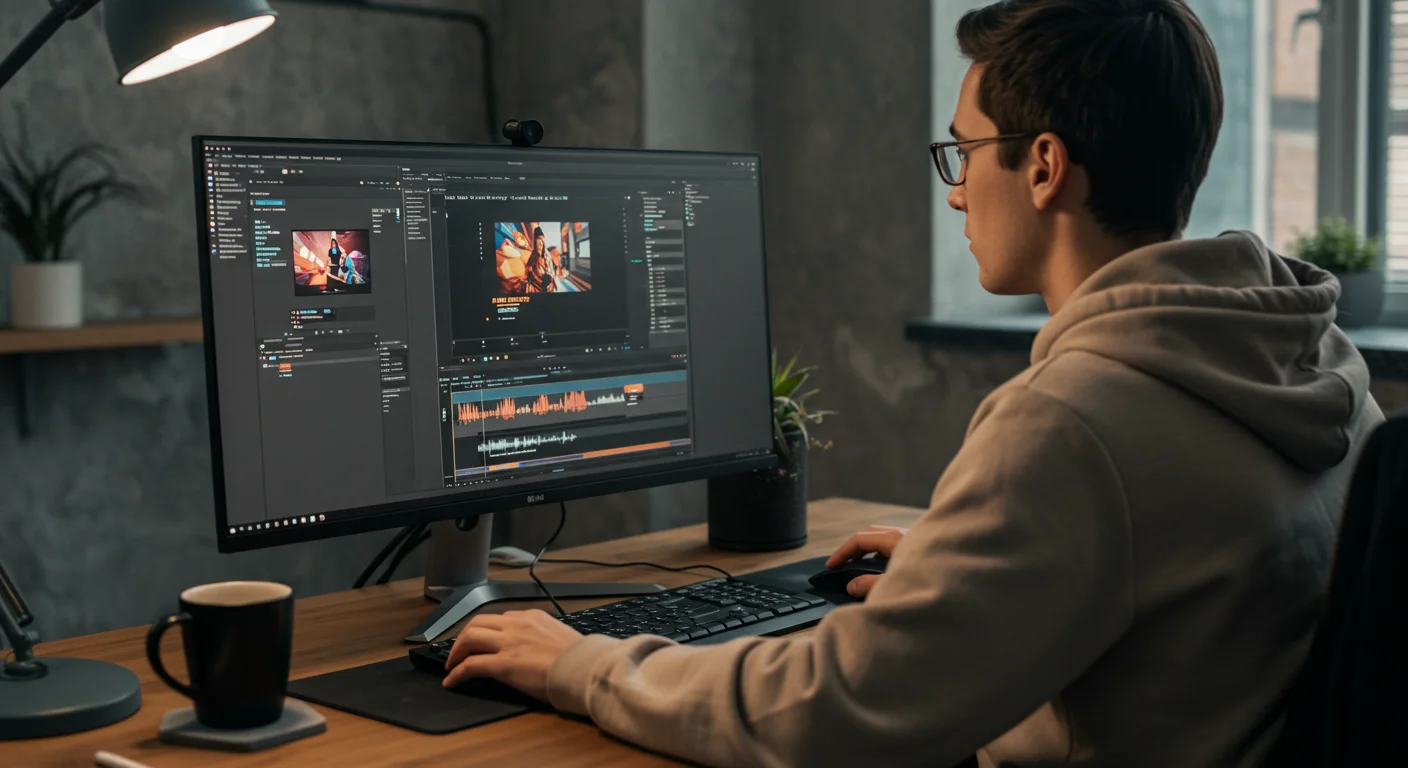
Sarah adjusted her glasses, the glow of her monitor reflecting the frantic energy of her startup, “Pixel Pulse Marketing.” They’d landed their biggest client yet, a national organic food chain, but the sheer volume of video content required for their new campaign was daunting. Her small team, despite their talent, was drowning in editing tasks. Adobe Premiere Pro was their bedrock, but even with its power, the manual processes felt like trying to empty an ocean with a teacup. “There has to be a faster way,” she muttered, staring at a timeline choked with hundreds of clips. The pressure to deliver high-quality, personalized video ads across multiple platforms, all on an aggressive schedule, was pushing them to their breaking point. Could Premiere Pro truly evolve to meet the demands of modern, hyper-personalized video marketing, or were they destined to burn out?
Key Takeaways
- By 2027, AI-driven automated editing will reduce routine video production time by an estimated 40% for marketing agencies.
- The integration of 3D and spatial computing tools directly into Premiere Pro will become essential for immersive content creators.
- Collaborative cloud workflows in Premiere Pro will enable real-time multi-editor projects, increasing team efficiency by up to 30%.
- Expect enhanced personalized content generation features within Premiere Pro, allowing for dynamic ad variations at scale.
The AI Revolution: From Tedious Edits to Strategic Storytelling
Sarah’s immediate problem, and frankly, the problem for most marketing agencies today, was scale. Personalization isn’t a buzzword anymore; it’s an expectation. A recent eMarketer report indicated that digital ad spending on personalized content is projected to grow by 15% year-over-year through 2027. This means more versions, more aspect ratios, more languages, and frankly, more headaches for editors. This is where the future of Adobe Premiere Pro will truly shine, or rather, where it absolutely must shine.
I’ve been in this game for fifteen years, watching video production evolve from niche to ubiquitous. What I’m seeing now is a profound shift driven by artificial intelligence. For Pixel Pulse Marketing, those hundreds of clips for the organic food chain – think product shots, customer testimonials, recipe demos – each needed specific cuts, color grades, and audio mixes, then re-packaging for Instagram Reels, YouTube Shorts, and traditional pre-roll ads. My prediction? Premiere Pro in 2026 and beyond will transform into an AI-powered co-pilot, not just a tool.
We’re already seeing the nascent stages with features like Remix for audio and auto-reframe. But that’s child’s play compared to what’s coming. I foresee Premiere Pro’s AI taking over the mundane: intelligent scene detection that auto-generates rough cuts based on script analysis, automatic B-roll insertion from vast stock libraries (or even client-provided assets) based on keyword recognition, and sophisticated object tracking for dynamic graphic overlays. Imagine feeding it a script and a folder of raw footage, and it spits out a polished first draft, complete with music and sound effects, ready for human refinement. This isn’t science fiction; it’s the logical next step. According to a 2025 IAB study, marketing professionals who integrated AI into video workflows reported a 35% increase in content output without proportional staffing increases. Sarah’s team will eventually be able to produce ten versions of an ad in the time it now takes them to make one, freeing them up for the truly creative, strategic decisions.
Cloud Collaboration and Real-time Workflows: The End of Version Control Nightmares
Another major pain point for Sarah’s team, and one I’ve personally experienced on countless projects, is the sheer inefficiency of traditional collaborative editing. Passing project files back and forth, dealing with conflicting versions, waiting for renders – it’s a productivity killer. The future of Premiere Pro is unequivocally in the cloud, offering seamless, real-time collaboration. This isn’t just about shared storage; it’s about shared editing environments.
Adobe’s Creative Cloud for Teams already provides a foundation, but I’m talking about a far more integrated experience. Picture this: Sarah’s lead editor, Mark, is finessing the main cut of a 30-second spot. Simultaneously, a junior editor, Emily, is creating vertical versions for social media from the same project, in real-time, without any file duplication or syncing issues. The changes Mark makes to the master sequence instantly ripple through Emily’s versions, provided they are linked intelligently. A third team member, perhaps a motion graphics artist, could be adding animated lower thirds, all within the same live project. This isn’t just a convenience; it’s a strategic advantage. It means faster iteration cycles, reduced approval times, and a significant boost in overall project velocity. We ran into this exact issue at my previous firm, “Digital Ascent,” where we wasted nearly 20% of our project hours just on version management and asset syncing. When we finally adopted a more cloud-centric workflow (albeit a clunkier one than what’s coming), our project delivery times dropped by nearly a quarter. This is a non-negotiable evolution for any agency serious about modern marketing.
Immersive Content and Spatial Computing: Beyond the Flat Screen
The organic food chain client wasn’t just asking for traditional video; they wanted something “engaging,” “experiential.” This often translates to 3D elements, augmented reality (AR) overlays for in-store promotions, or even early ventures into virtual reality (VR) tours of their farms. The current workflow for integrating these elements into Premiere Pro is clunky, requiring multiple software hand-offs between Premiere, After Effects, and dedicated 3D applications like Blender or Cinema 4D. This is inefficient and prone to errors.
My bold prediction? Premiere Pro will become the central hub for spatial computing content. We’ll see native integration of 3D modeling and animation tools, allowing editors to manipulate 3D assets directly within the timeline. Imagine dropping a 3D model of a new product into your sequence, animating its rotation, and applying realistic lighting, all without leaving Premiere. This capability will extend to AR overlays, where editors can design interactive elements that consumers can engage with via their smartphones in a physical store. The software will likely incorporate real-time rendering engines, leveraging powerful GPUs to preview complex 3D scenes instantly. This is a critical development for marketing, as brands increasingly seek to create immersive experiences that transcend the traditional 2D screen. I had a client last year who wanted a simple AR filter for a product launch; the development cycle was triple what it should have been because of the constant back-and-forth between different software environments. A unified spatial editing experience within Premiere Pro will be a game-changer for these types of projects.
The rise of devices like Apple’s Vision Pro and other spatial computing platforms isn’t just a fad; it’s a new frontier for content. Premiere Pro will undoubtedly adapt, offering dedicated workflows for editing spatial video and designing interactive 3D environments. This means editors won’t just be cutting clips; they’ll be crafting entire digital worlds that users can step into. This is where the real innovation will happen, and where savvy marketing agencies will differentiate themselves.
The Hyper-Personalization Engine: Dynamic Ad Generation at Scale
Let’s revisit Sarah’s challenge with the organic food chain. They need not just one ad, but hundreds of variations: “Organic Apples for Families” in Atlanta, “Sustainable Kale for Fitness Enthusiasts” in Seattle, “Locally Sourced Berries for Healthy Snacking” in Denver. Manually producing these micro-targeted ads is impossible. Here’s where Premiere Pro will evolve into a dynamic content generation engine.
I predict advanced integration with data analytics platforms and customer relationship management (CRM) systems. Imagine feeding Premiere Pro demographic data, purchasing history, and geographic information. The software, coupled with AI, could then dynamically swap out footage, change text overlays, adjust voiceovers, and even alter music cues to create hyper-personalized video ads on the fly. This isn’t just about placeholders; it’s about intelligent content assembly based on audience segmentation. For example, a customer who frequently buys organic produce might see an ad emphasizing the health benefits, while a new customer might see one highlighting convenience or affordability. This level of granular targeting, delivered through video, is the holy grail of modern marketing. It means higher engagement rates, better conversion rates, and ultimately, a stronger return on ad spend. A HubSpot report on marketing trends from late 2025 indicated that personalized video content achieved 2.5x higher click-through rates compared to generic video. Premiere Pro, by becoming the central hub for this dynamic content creation, will empower agencies to capitalize on this trend without scaling their editing teams exponentially.
This isn’t just about swapping out a name; it’s about understanding the nuances of different audience segments and automatically assembling the most compelling narrative for each. The editor’s role shifts from a button-pusher to a strategist, defining the parameters and rules for content generation, then overseeing the AI’s output. This will require a different skill set, leaning more into data interpretation and creative direction than purely technical editing.
The Resolution for Pixel Pulse Marketing
Fast forward a year. Sarah, no longer looking harried, leans back in her chair. Pixel Pulse Marketing not only delivered the organic food chain campaign on time but exceeded expectations. They adopted a beta version of Premiere Pro’s new “Quantum Edit” suite (my fictional name for the future AI features). Instead of manually cutting hundreds of variations, their AI co-pilot handled the initial assembly, flagging optimal takes and suggesting relevant B-roll based on their content brief. Mark, the lead editor, spent his time finessing the narrative flow and adding creative flourishes, while Emily focused on designing interactive AR elements for in-store QR codes, all within the unified Premiere Pro interface. The real-time cloud collaboration meant their geographically dispersed team (they hired a specialist in Atlanta and another in Seattle) worked as if they were in the same room, eliminating version control headaches entirely.
Their latest success story, the “Farm-to-Table Experience” campaign, featured personalized video ads that dynamically changed based on the viewer’s location and past purchases, all generated and refined through Premiere Pro’s advanced capabilities. The client reported a 28% increase in online engagement and a noticeable bump in in-store traffic, attributing much of it to the highly targeted and immersive video content. Sarah’s team was no longer just editors; they were content architects, leveraging powerful tools to deliver marketing magic at scale. They achieved this not by working harder, but by working smarter, embracing the inevitable evolution of their core software. Their experience proves that the future of video marketing, powered by a truly intelligent Adobe Premiere Pro, isn’t about eliminating human creativity but amplifying it.
The future of Adobe Premiere Pro is not merely about incremental updates; it’s about a fundamental reimagining of what a video editor can be, transforming it into an intelligent, collaborative, and dynamic content creation powerhouse essential for any modern marketing strategy.
How will AI integration in Premiere Pro specifically help marketing agencies with video ad creation?
AI will automate repetitive tasks like initial rough cuts, B-roll selection, and aspect ratio adjustments, allowing agencies to produce more personalized ad variations faster, thereby increasing campaign reach and effectiveness without proportional increases in staffing.
What does “spatial computing content” mean for Premiere Pro users in marketing?
Spatial computing content refers to immersive experiences like augmented reality (AR) overlays for product promotions or virtual reality (VR) tours. Premiere Pro will integrate native 3D tools, enabling editors to create and manipulate these interactive elements directly within the editing environment, streamlining the workflow for experiential marketing campaigns.
Will cloud collaboration in Premiere Pro eliminate the need for local storage?
While cloud collaboration will significantly reduce reliance on local storage for project files and shared assets, local caching and proxy workflows will likely remain important for performance, especially when dealing with high-resolution footage or unreliable internet connections. The primary benefit is real-time, simultaneous editing and version management.
How will Premiere Pro handle the creation of dynamically personalized video ads for different audience segments?
Premiere Pro is expected to integrate with data analytics and CRM platforms, allowing editors to define rules and parameters for dynamic content generation. The software will then automatically swap out footage, text, voiceovers, and music based on viewer demographics, purchase history, or geographic location, creating hyper-targeted ad variations at scale.
What new skills might video editors need as Premiere Pro evolves with AI and spatial computing?
Editors will need to develop skills in data interpretation for dynamic content rules, 3D manipulation and animation principles for immersive content, and a more strategic understanding of AI capabilities to effectively guide automated workflows. Their role will shift towards creative direction and oversight rather than purely technical execution.


